
Now Reading: Invisible museum: A disappearing architecture for birds, humans, and the wetland ecosystem
- 01
Invisible museum: A disappearing architecture for birds, humans, and the wetland ecosystem

Invisible museum: A disappearing architecture for birds, humans, and the wetland ecosystem

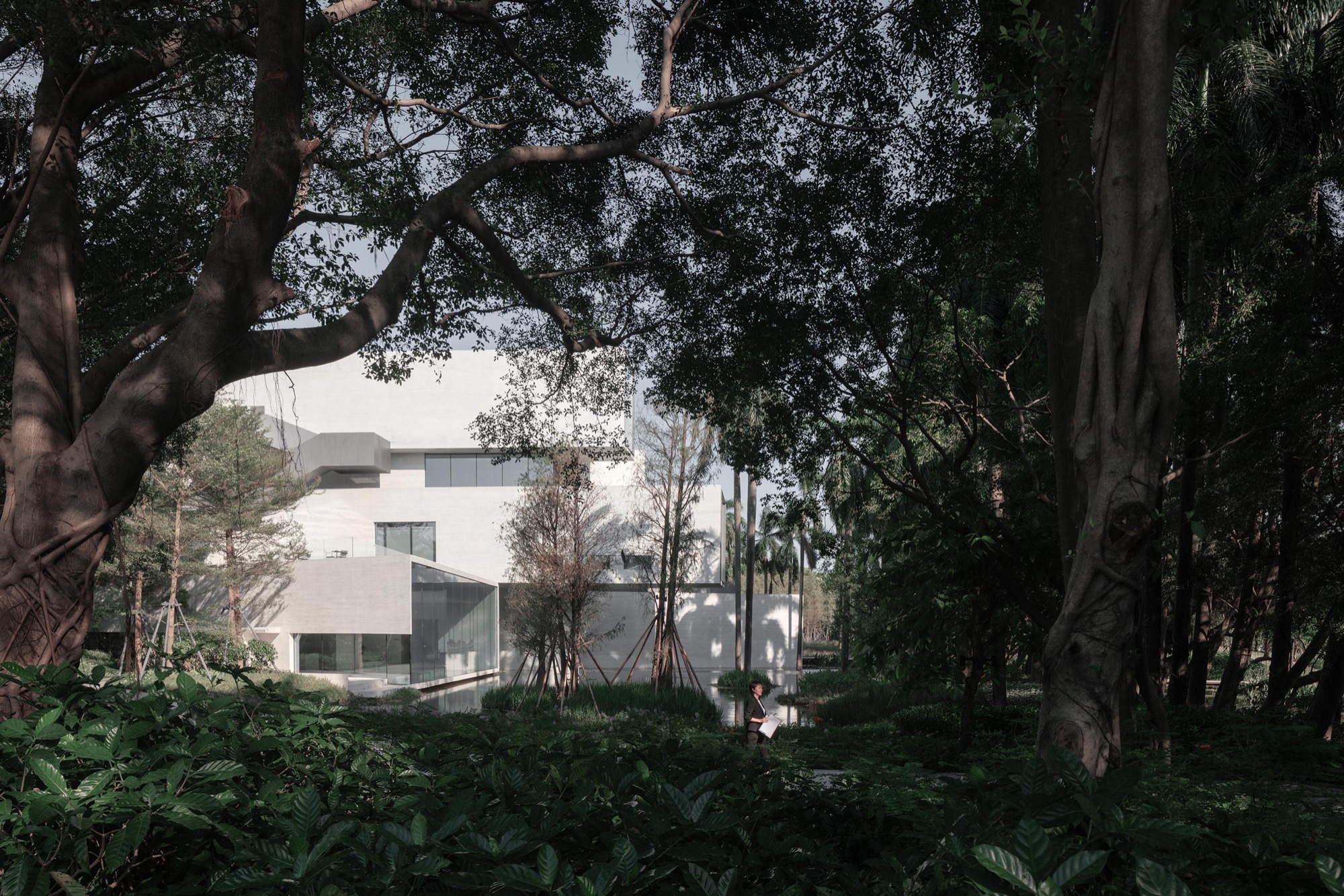
Set within Yunlu Wetland Park in Shunde, the Yunlu Wetland Museum sits beside an ecological island inhabited by twenty five thousand egrets. Conceived as an architectural instrument for observing the rhythms of wetland life, the project combines a bird watching tower with an environmental museum. The design encourages visitors to understand the fragile ecology of the site while experiencing intimate proximity with its winged inhabitants.

A MUSEUM BORN FROM AN EGRET SANCTUARY
The project traces its origins to a bamboo forest planted twenty six years ago by local guardian Xian Quanhui, known affectionately as Uncle Bird. His long term stewardship transformed a modest oasis into an urban refuge for egrets. The Shunde government has since extended the protected area many times over, collaborating with scientists and designers to restore waterways, renew bamboo forests, and establish Yunlu Wetland Park as a vital ecological corridor.


Studio Link Arc responded with an architecture that retreats behind existing cedar trees, allowing the forest to serve as the museum’s true façade. Emerging subtly among the trunks, the building comprises four vertically stacked concrete tubes, each one rotated to align with a distinct view of the wetland. These cylindrical forms operate like optical lenses, capturing the movements of the birds with quiet precision. Seen from Egret Island, the building dissolves into the subtropical canopy and becomes nearly invisible.

A SCATTERED PERSPECTIVE ROOTED IN NATURE
Each of the four tubes is oriented to frame a different layer of the wetland environment. Visitors ascend from the level of roots to trunks, then to crowns, and finally to the upper reaches of the treetops as the floors rise. The result is a sequential deconstruction of the human viewpoint and a shift toward a nature oriented perspective. Within the museum, tree shadows, shifting light, and the flight of egrets become part of a continuous spatial experience.

The four tubes intersect around a triangular vertical atrium carved out by a Boolean subtraction. This void weaves the floors together and acts as a shared vantage point. Standing in the atrium, visitors can gaze through the tubes in multiple directions at once, as though the landscape has been reframed into a series of suspended paintings.

The building employs a box type concrete structural system in which the side walls, roof, and floor plates of each tube work together to carry load. Deep beams soften incoming light, allowing daylight to filter through skylights and down into the interior. As visitors move through the space, they sense the passing of seasons, the humidity of the wetland, and the slow changes in the surrounding forest.


To safeguard the delicate ecosystem, the architects began with a detailed survey of five hundred sixty existing trees. The footprint was minimized, the building carefully positioned, and each floor rotated to avoid damaging the root systems. This strategy also maximizes bird watching opportunities, aligning the museum’s openings with the birds’ preferred routes of movement.
A MATERIAL LANGUAGE THAT ECHOES THE WETLAND FOREST
The exterior is formed from cast in place concrete poured into pine molds. The subtle grain of the wood transfer gives the façade a gentle texture that resonates with the cedar trunks rising around it. On the roof, lotus ponds and ecological water systems obscure the presence of the building when viewed from above, further embedding the museum within its landscape.
Inside, the palette responds to the clarity of the environment. The use of stone with wood grain, textured paint, and warm veneer creates a calm and contemplative atmosphere, shaping a space where visitors can focus on the delicate behaviors unfolding beyond the windows.


ARCHITECTURE THAT WITHDRAWS SO NATURE CAN TAKE THE STAGE
The Yunlu Wetland Museum represents Studio Link Arc’s belief that architecture should sometimes step back to let nature become the protagonist. By disappearing behind the forest, aligning itself with the habits of birds, and treading lightly on the land, the museum performs an inversion of conventional architectural presence. It becomes a frame rather than an object, a device for seeing rather than a monument.

The building encourages visitors to experience the wetland through the shifting lens of the tubes, reconnecting them with an ecosystem shaped by decades of care. In doing so, the museum becomes more than a cultural facility. It becomes an invisible partner in the preservation of Egret Paradise, reminding visitors that the most meaningful forms of architecture often reveal themselves not by standing out, but by allowing the landscape to speak.

Project Credit
Name: Shunde Yunlu Wetland Museum
Location: Guangdong, China
Area: 1,800 sqm
Design Stage: 09/2023-04/2024
Construction Stage/Completion: 09/2024
Firm: Link Arc
Photography: Tian Fangfang, Arch-Exist
More Photos


Studio Link Arc is an international architecture and design practice based in New York. Its work spans urban planning, architecture, spatial art, and landscape. The firm approaches each project as a collaboration across cultures, disciplines, and forms of knowledge, uncovering the essential truths of a site before transforming them into refined architectural expressions. Link Arc seeks to create environments that foster contemplation, imagination, and a renewed understanding of context, embracing diversity and openness as the foundation of its design philosophy.