Now Reading: HW Studio frames architecture through voids and human perception
- 01
HW Studio frames architecture through voids and human perception

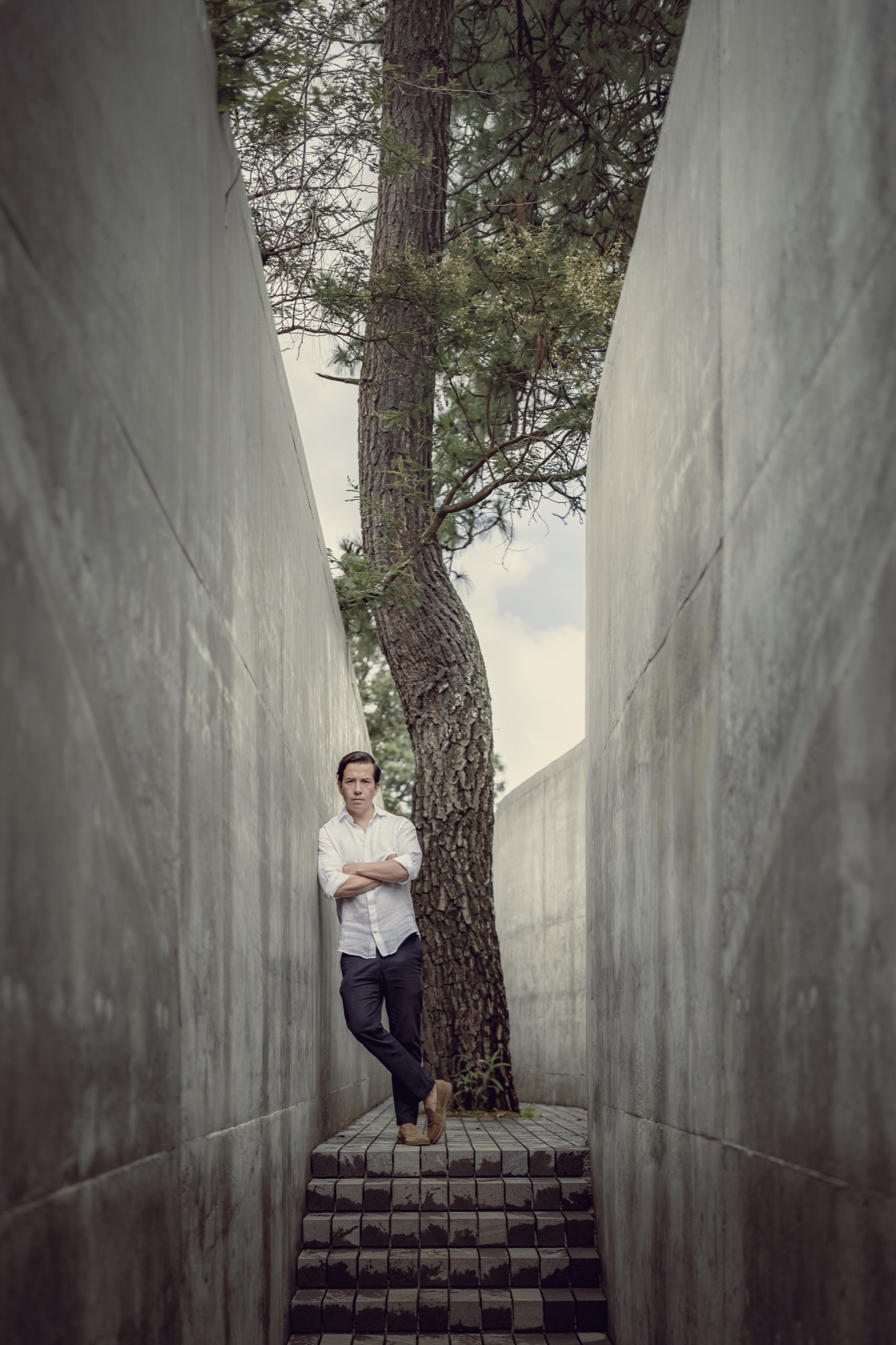

In the work of HW Studio, architecture is rarely conceived as a self-contained object. Instead, it emerges as a condition that mediates between body, landscape, and perception. Speaking about the Mountain House in Guanajuato, co-founder Rogelio Vallejo Bores reflects on a design process that begins not with form, but with an attentive reading of place.

Rather than capturing the landscape as an image, the project acknowledges it as a presence. The mountain that dominates the site is neither framed nor monumentalised in a traditional sense. It is allowed to remain distant, yet is carefully brought into a condition of intimacy through a series of architectural gestures. What results is not a house defined by enclosure, but one that disperses itself into the territory, asking its inhabitants to move, to step outside, and to continuously renegotiate their relationship with the environment.

Your projects often begin with an almost introspective reading of place. For this mountain house in Mineral de Pozos, what was the first intuition or emotional response that triggered the design?
Rogelio Vallejo Bores: The house is actually closer to San Miguel de Allende than to Mineral de Pozos, but it belongs to the same territory.
The first thing I discovered upon arriving at the site was the monumental and silent presence of the mountain in the background. It dominated everything, almost infinitely, with a quiet force that did not impose itself, yet could not be ignored. It was less an object to look at and more a presence to be acknowledged.
Because of this, the first gesture was a vertical plane, a stone wall, where that mountain could rest, lie down, and somehow be held. A surface that allows distance to become more intimate. At the same time, this gesture established a physical threshold between the path of arrival and the inner condition of the house.
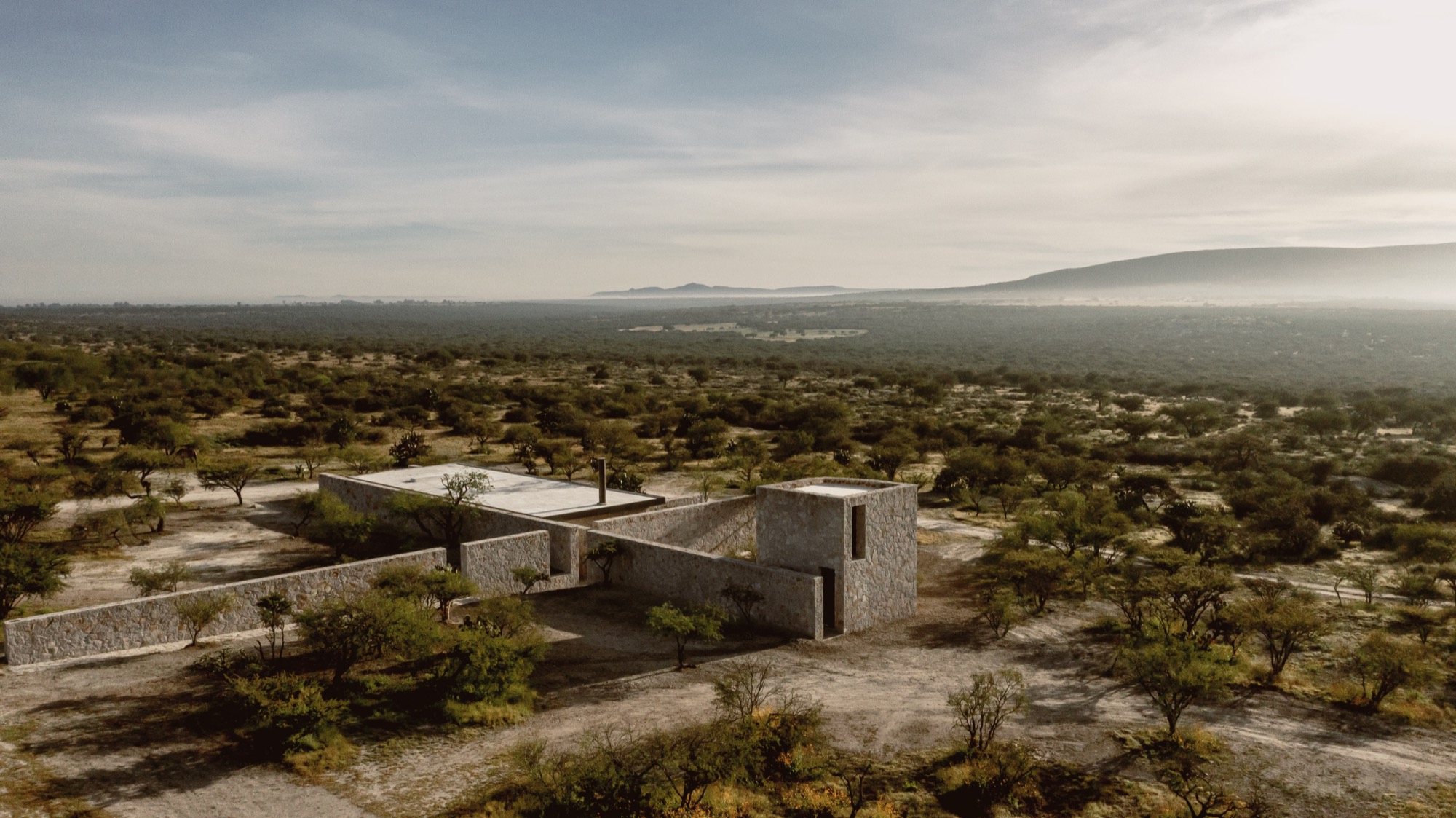
The second movement was a path that accompanies the inhabitant from the street into the interior. A path that is not only a means of access, but a way of aligning the body and the gaze. This path became perpendicular to the first gesture, and we reinforced it with another wall that generates shadow, an essential condition in this climate, so that the movement through it is not only directional, but also sensorial.
This path is always directed toward the mountain, which had already defined the first gesture.
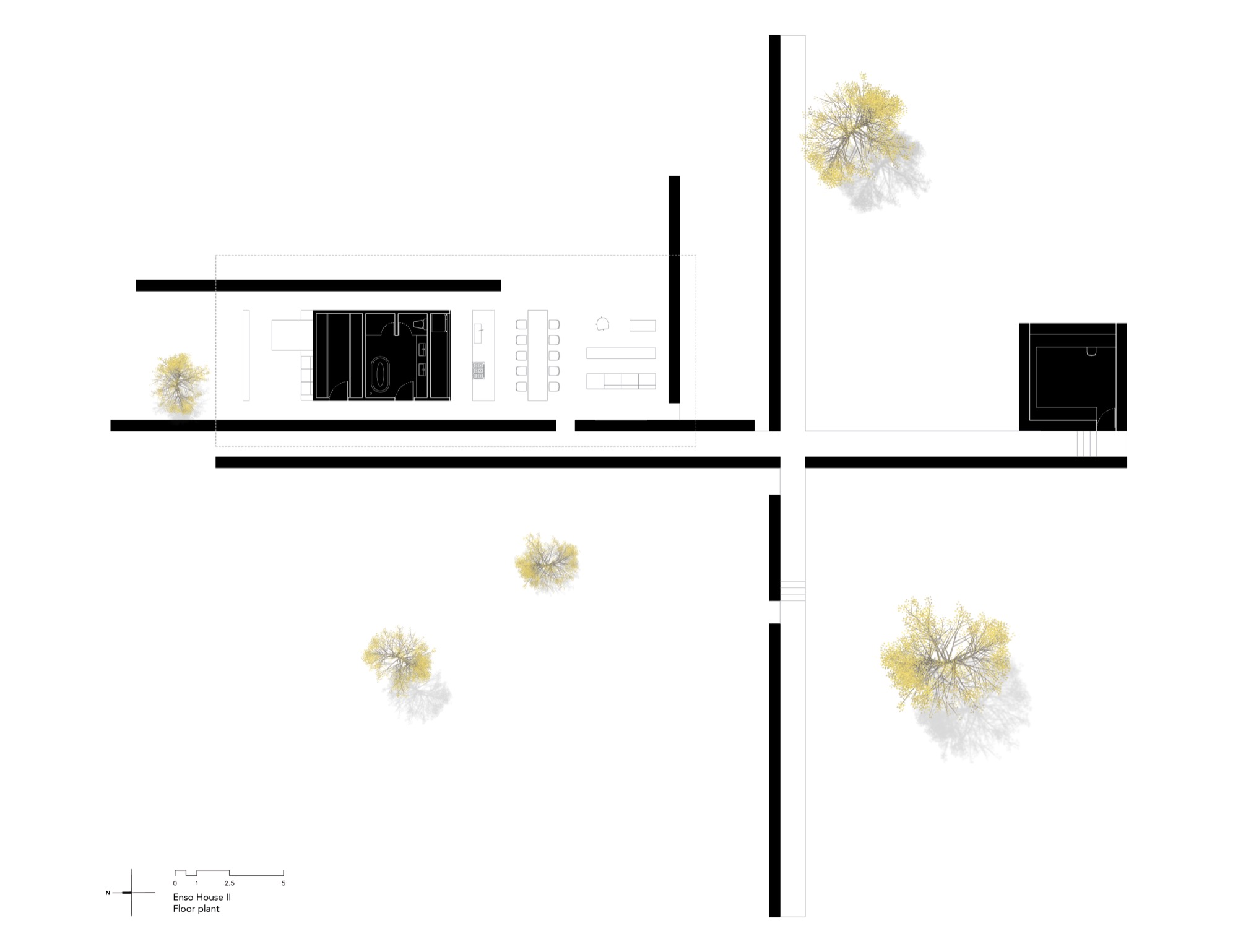
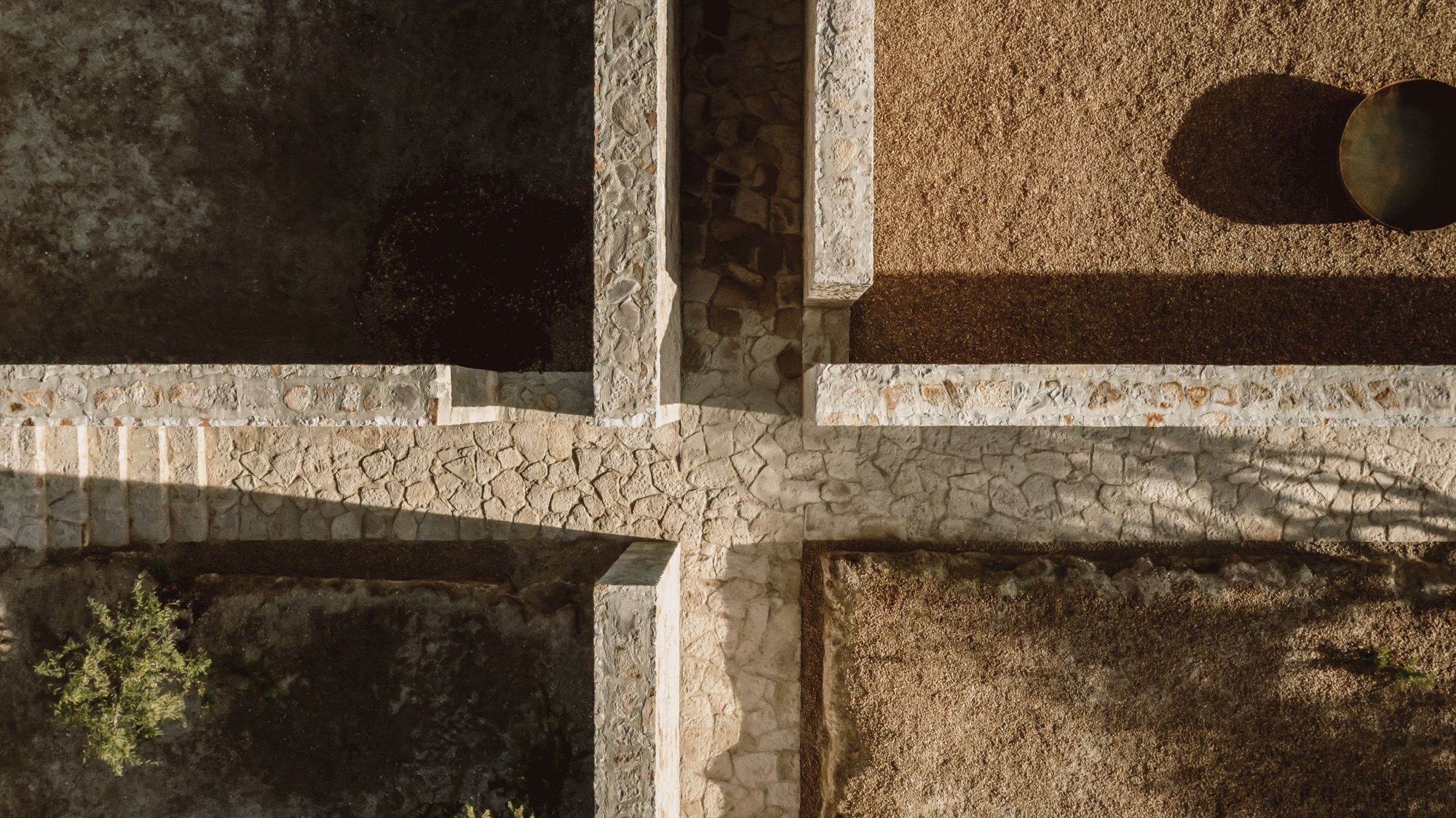
The intersection of these two movements formed a cross. Beyond its symbolic weight in our culture, this condition generated four quadrants, and it became natural to assign each one a function: an endemic garden that receives you, the parking area, a place for work, and the house itself.
In this way, the project is not understood as a single object, but as a sequence of spaces to be traversed, almost as if a monk were walking through a stone monastery dispersed in the desert.
The project is organized through dispersed volumes that require movement between spaces, almost like a ritual journey. Were you consciously referencing monastic or pilgrimage typologies, or did this spatial narrative emerge more intuitively?
Honestly, I am not sure I can fully answer that.
I do not know if it comes from intuition, from an internal image of oneself moving or wandering between spaces, or if the first gesture simply led to this condition. The creative process is often confusing, somewhat nebulous, almost like a dream where things appear without a clear origin.
What we did know was that we wanted to disintegrate the house. To break it apart in order to force the inhabitant to go outside, to encounter the desert, the mountain, the wind.
Modern life has gradually confined us within our homes, almost as if we were living in a permanent state of isolation. We have become too comfortable indoors, too distant from what surrounds us.
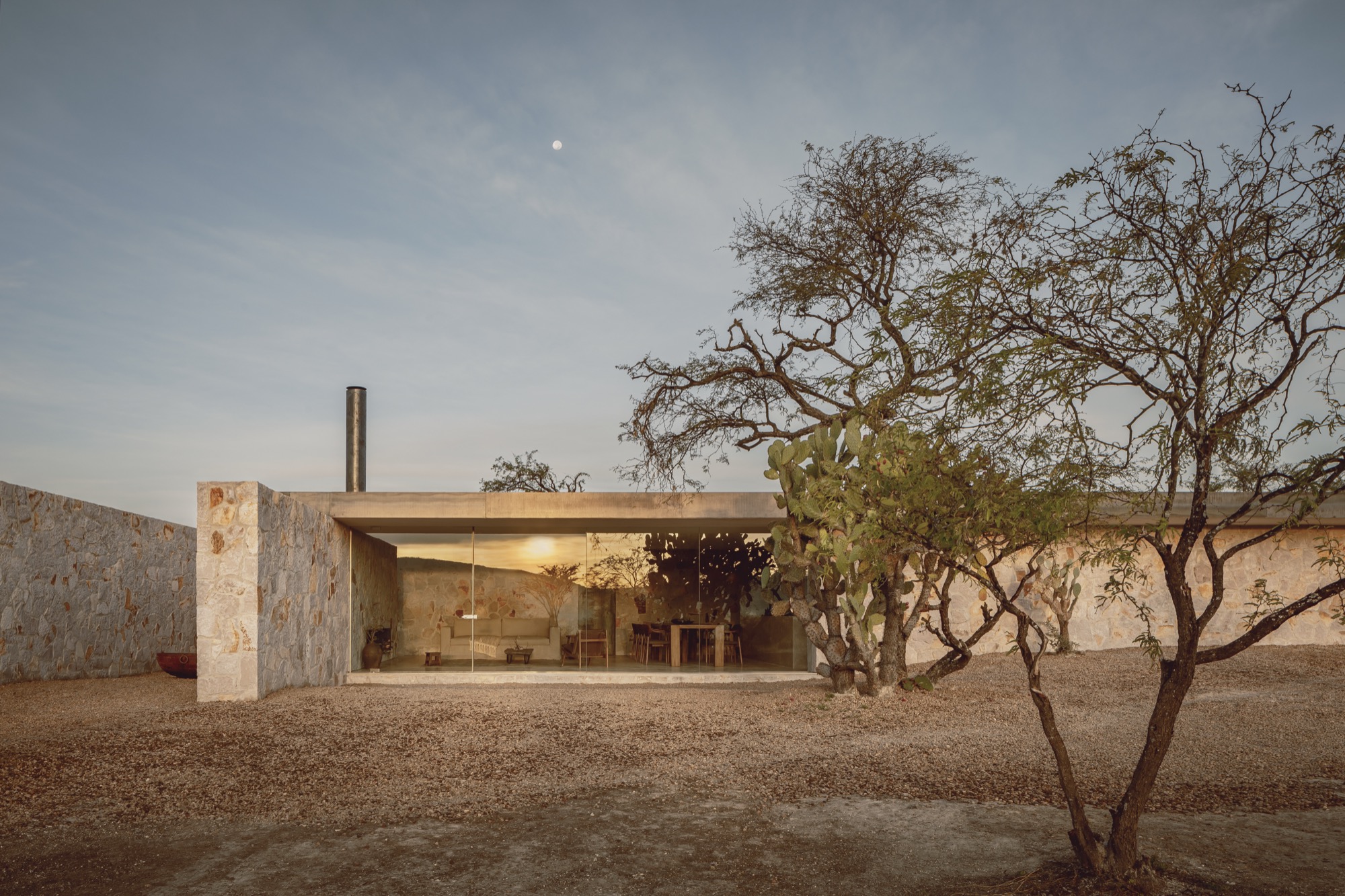
By obliging movement, by requiring the inhabitant to step outside and move between spaces, the project reintroduces a necessary exposure to the world. It is in that movement, in that crossing, where the experience of the place begins to unfold.
I have always believed that houses are not lived only through their rooms, but through their paths, through what happens in between.
In this project, walking the desert became essential.
The cruciform layout structures both circulation and perception. How did this geometry help you negotiate between orientation, landscape framing, and the fragmentation of domestic life?
It helped us a lot, but the form itself was never the origin.
The mountain is what truly matters in this place. The cross was a natural consequence of that presence, not a decision imposed from outside.
Once it appeared, however, it gave us a certain clarity. It allowed us to organize the different aspects of life, garden, parking, work, dwelling, in a very direct way.
At the same time, the walls that define this cross generate shadow, which becomes fundamental. When this shadow meets the wind, it produces a cooling effect that transforms the experience of moving through the space. In that sense, there is perhaps an unconscious connection to how other cultures, like the Arab world, have historically used architecture to temper climate through space rather than technology.
There is also another condition: the horizon in this place can be overwhelming. It is vast, continuous, almost excessive. The presence of the walls allows you to confront that horizon in fragments, to experience it without being entirely exposed to it at all times.
Like many projects, this one is not the result of a single idea, but of multiple reflections that, at some point, find a moment of harmony.
There is a tension in your work between framing the landscape and disappearing within it. In this project, how did you calibrate that balance between presence and absence?
How do you calibrate that, I am not sure I could explain it precisely.
I suspect it has more to do with life than with the architectural object itself, with the relationships that are established between a tree and a wall, between materials, between distances, between what is built and what is left untouched. If you approach a project focusing only on the object, without considering the life that will inhabit it and the life that will surround it, this tension might never appear, because you never allowed the other side to exist.
Your question made me reflect on this, and I believe that this tension already exists in the world. It is inherent to it. What architecture can do, at best, is reveal it, make it more perceptible. It is not something we invent, but something we learn to see.

Stone appears not just as a construction material, but as a cultural and territorial expression of Guanajuato. How do you approach material selection as a form of storytelling rather than mere tectonics?
It was something very natural.
When a place has such a strong material presence, the decision becomes almost inevitable. You only need to walk through Guanajuato or San Miguel de Allende, to taste a molcajete salsa, or to understand a bit of its history, to realize that stone holds something essential, something that goes beyond construction.
In that sense, the material is not chosen, it is recognized.
Facing that weight, it would be difficult to justify another material.
There is also a continuity: the same stone that forms the mountain that first moved us becomes part of the walls that define the project. This creates a dialogue between nature and construction, not as opposition, but as continuity.
The tension between what is given and what is made becomes visible, but it is a respectful tension, one that does not seek to dominate, but to coexist.
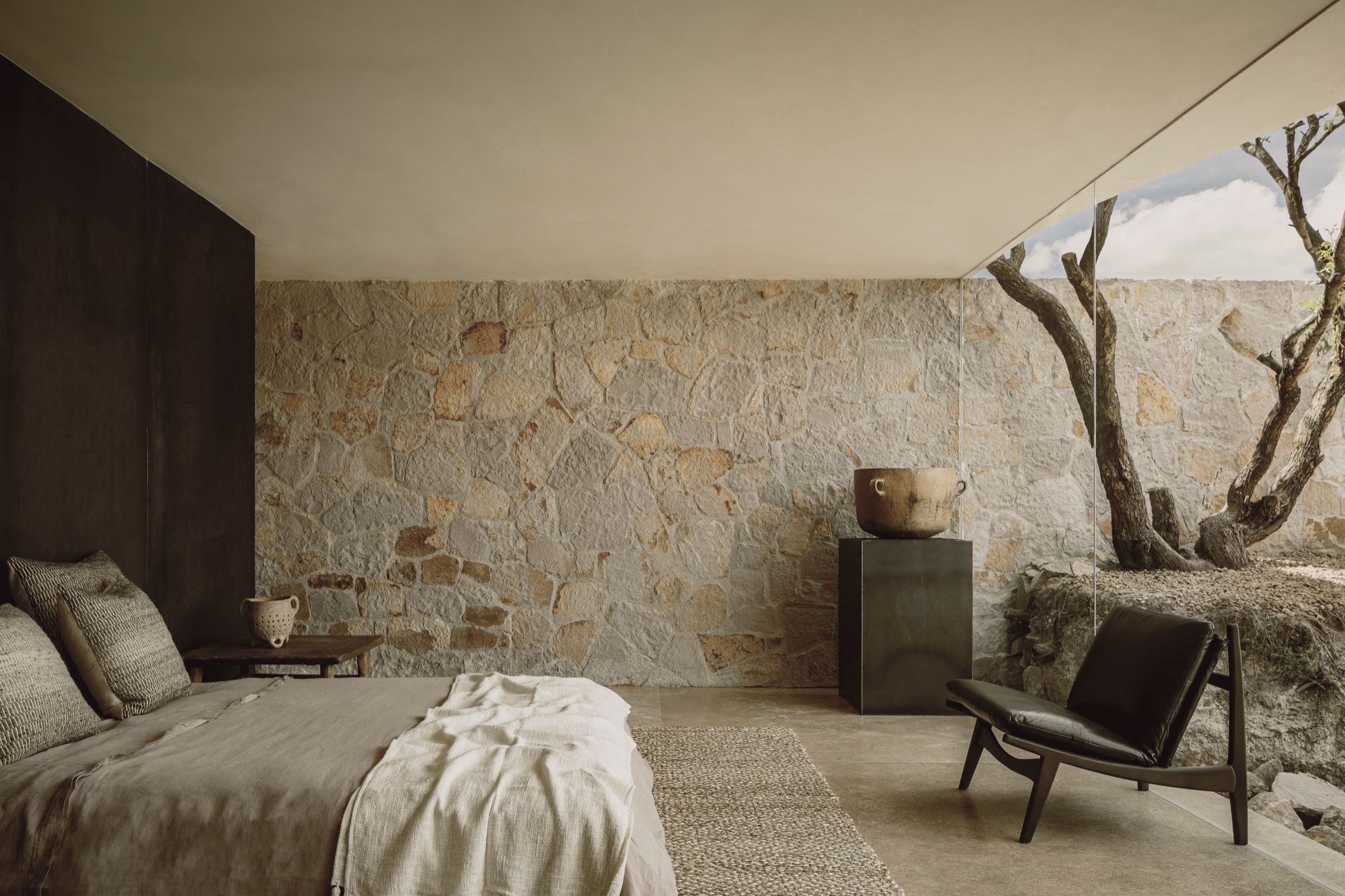
Your buildings seem designed to evolve slowly with light, shadow, and weathering. How do you anticipate the passage of time as an active design parameter in this house?
I think it would be arrogant to say that we anticipate time. What we do is leave the door open.
We allow the project to be affected by light, by weather, by animals, by use, by the slow and inevitable transformations that occur over time. Architecture, in that sense, is not a closed object, but something that continues to evolve.
It is a collective act, not only because of the people involved in its construction, but because of everything that interacts with it afterward.
The question is not how to resist time, but whether you choose to fight it or align yourself with it.
Some materials naturally acquire beauty through aging. Choosing them is simply a way of allowing time to participate.
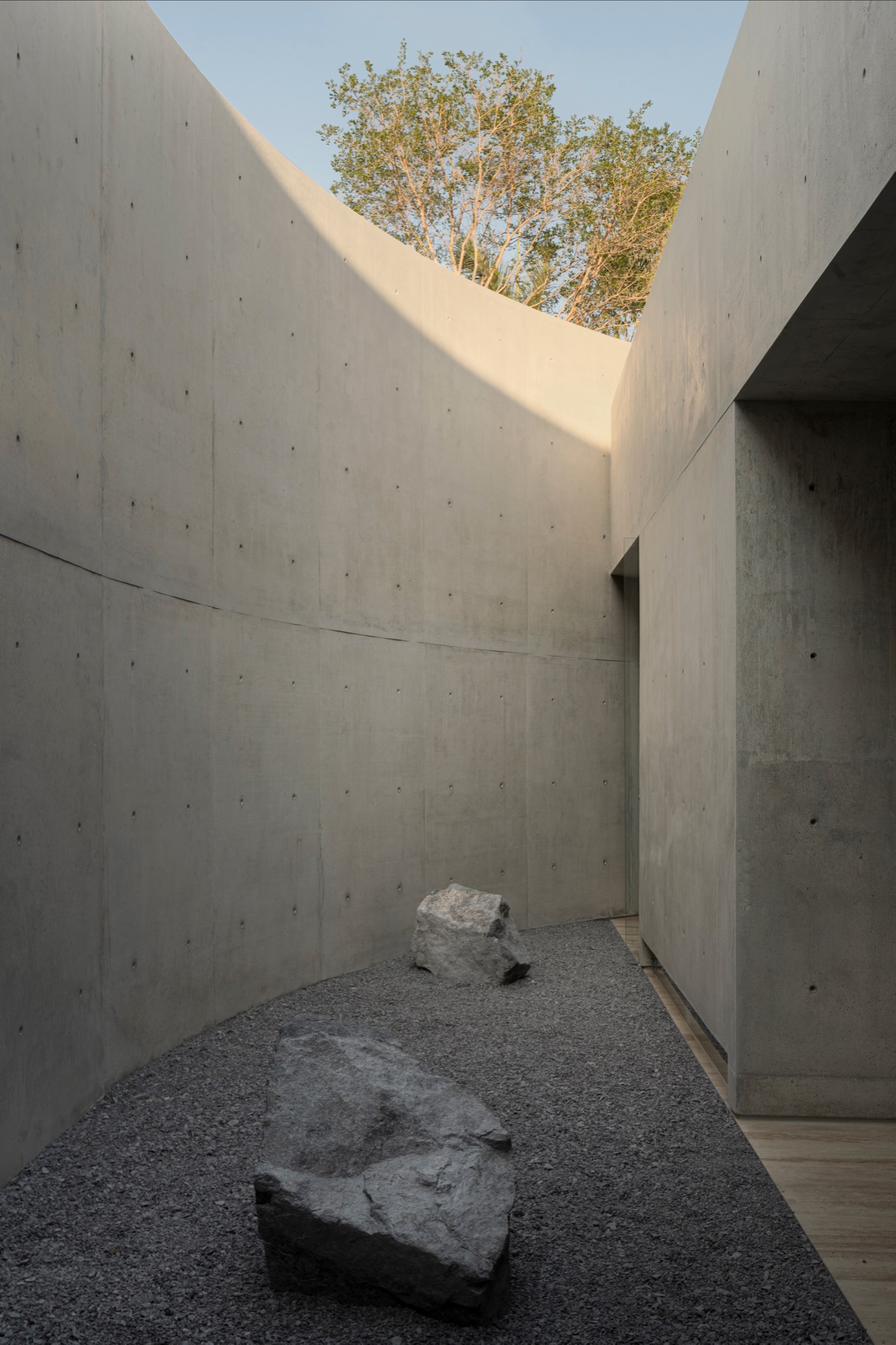
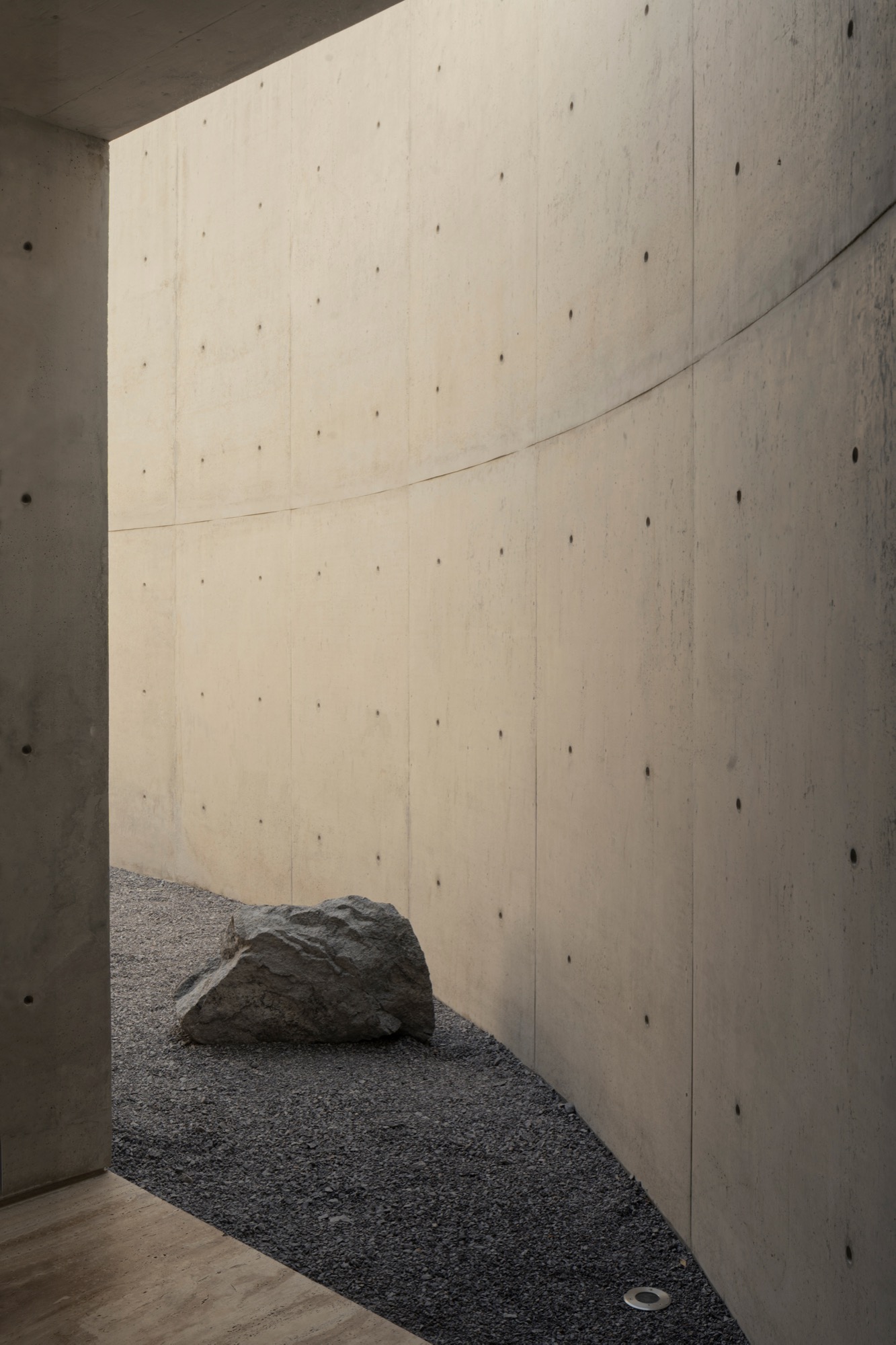
HW Studio often speaks about silence as a spatial quality. In a project that is so open to the elements, how do you construct a sense of silence without enclosing space?
It is paradoxical to speak about silence. By speaking, we move away from it. Perhaps the most accurate answer would be a pause.
But understanding your question, I would say that silence is not achieved by closing off the world. It is not about isolating oneself from stimuli. In the meditation practice I follow, one is encouraged not to close the eyes, because doing so can amplify the inner voice, which is often louder than anything outside.
Silence, then, has more to do with presence, with being fully here.
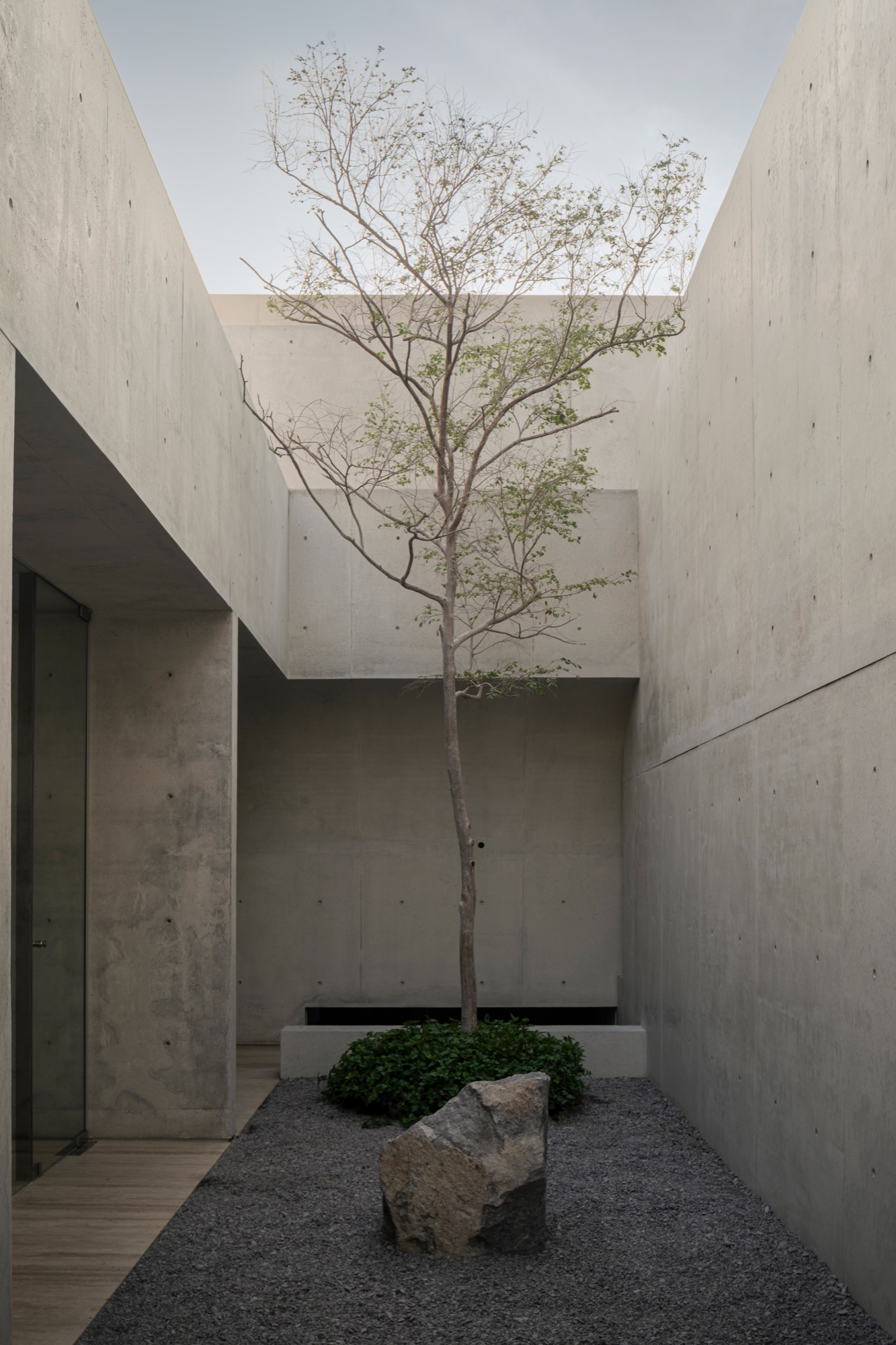
When architecture frames something, a tree, a stone, a bird’s nest, it does not remove it from the world, but allows you to see it more clearly.
And in that act of attention, something quiets within.
Silence is not constructed. It is revealed.
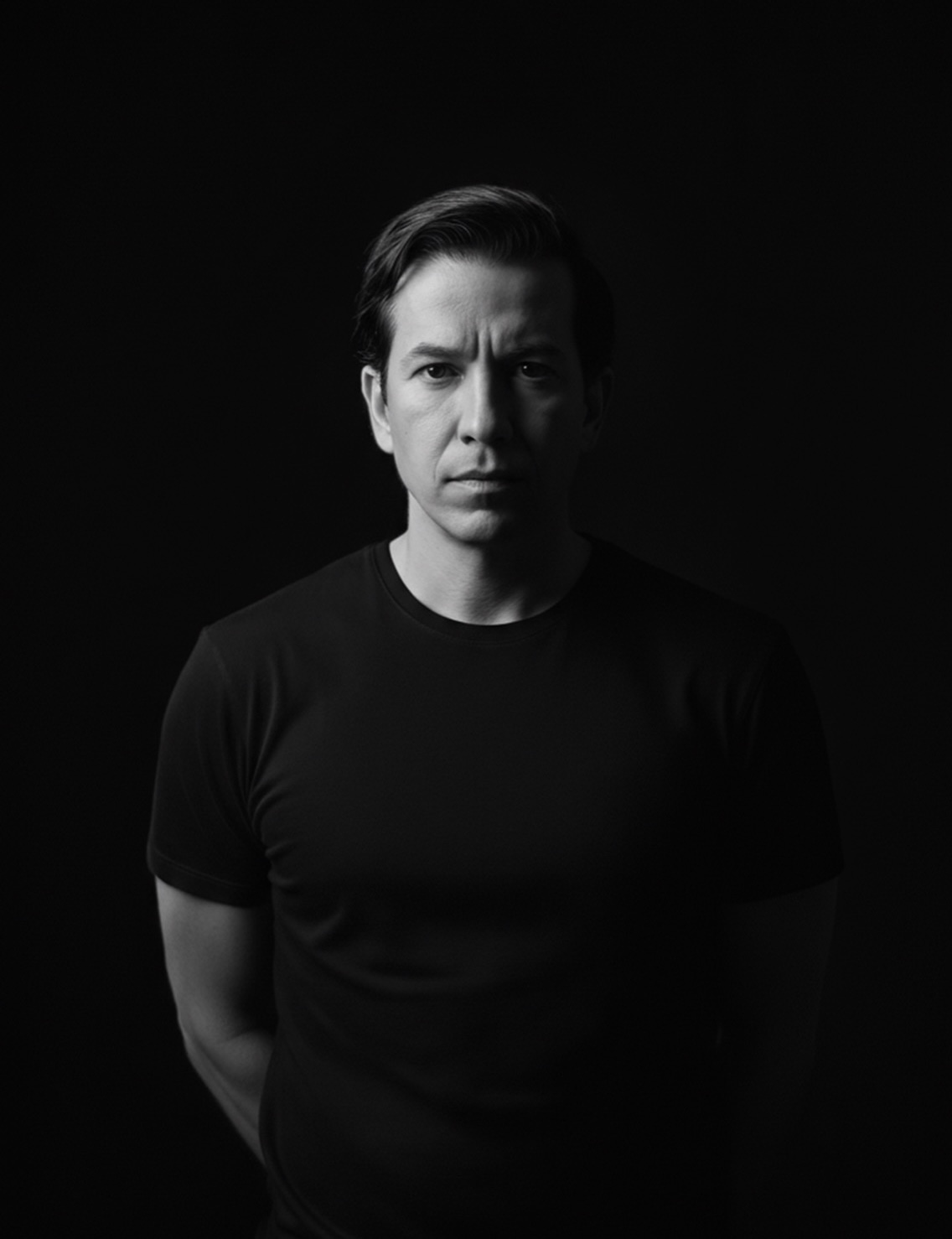
In Casa Tao, the architecture turns inward, creating introspective spaces shaped by shadow and memory. In contrast, this mountain house opens outward to the landscape. How do these two approaches reflect different interpretations of contemplation in your work?
In the city, we tend to work in a more hermetic way. We close the architecture in order to create controlled views, spaces where beauty is not given and therefore must be constructed. We often use the sky, or the tops of trees, as a way of bringing the universe into the house. In contrast, when we work in nature, the beauty is already there. It does not need to be created.
In those cases, architecture simply frames what already exists. In both situations, however, the intention is the same: to create a pause in the mind, to interrupt the constant internal dialogue. And in that pause, perhaps, to encounter something that resembles peace. Architecture is always secondary. What truly matters is what it allows you to perceive.
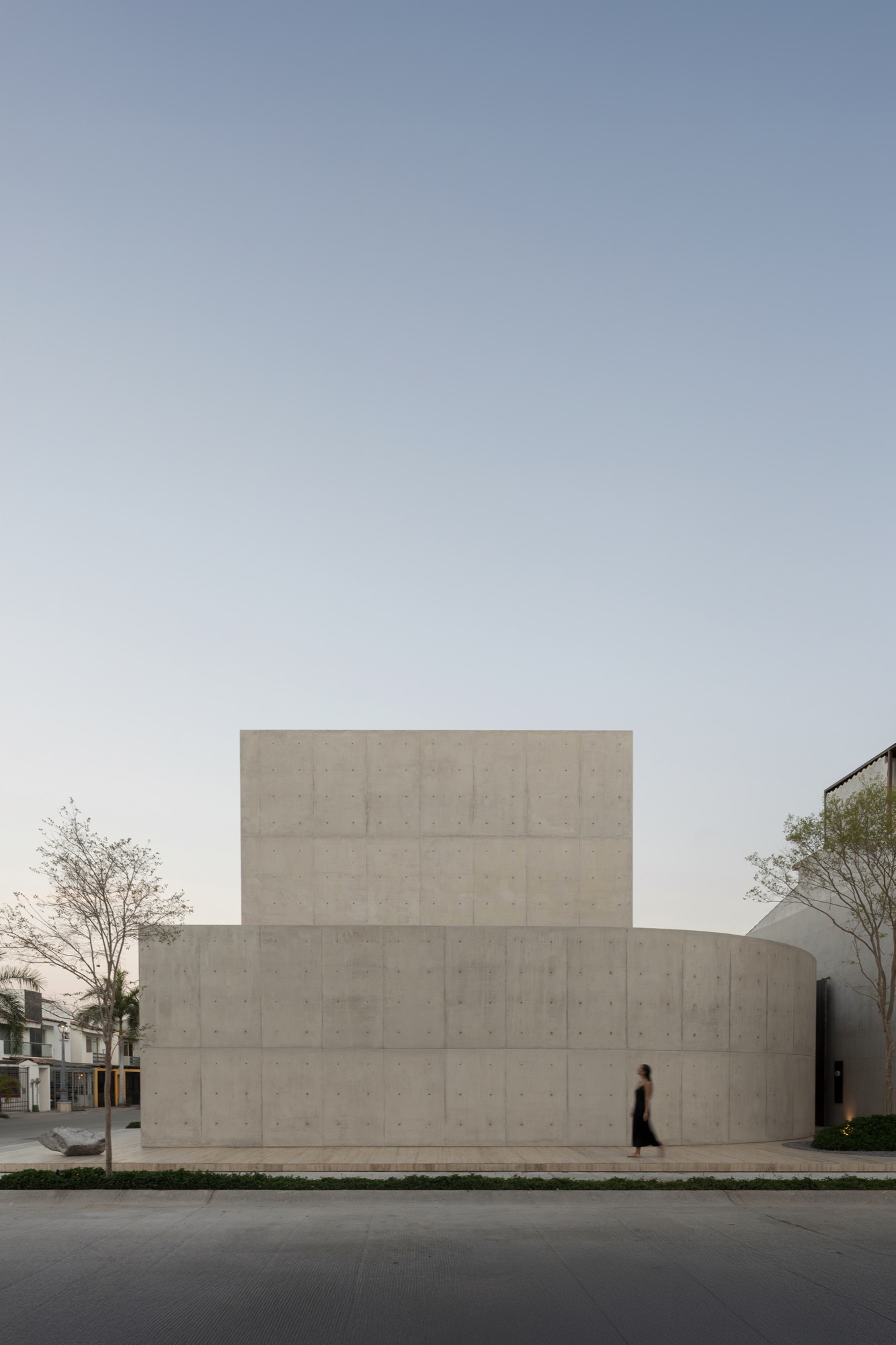
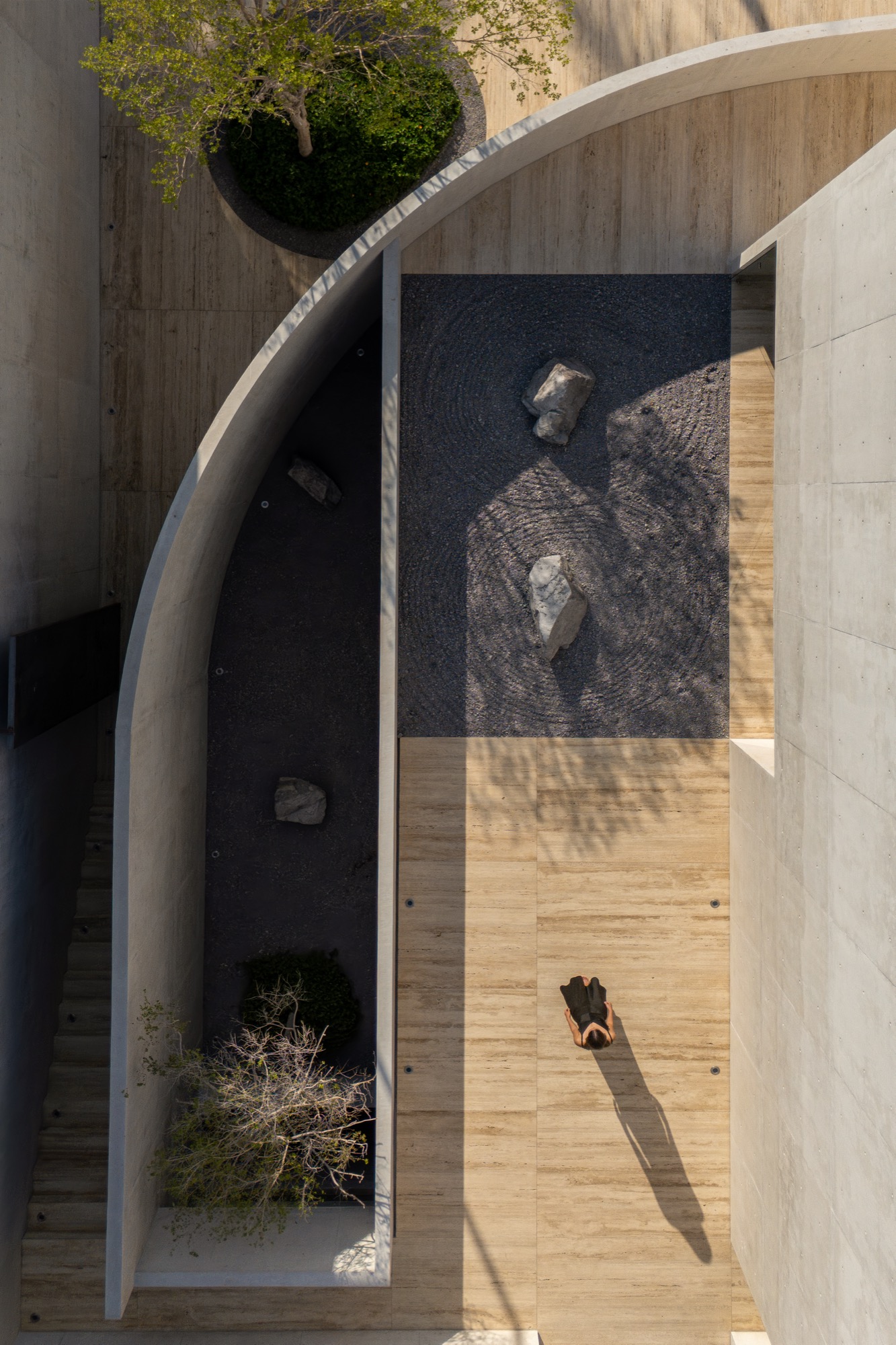
Your work frequently bridges Eastern philosophical ideas with local Mexican construction traditions. In this project, where do you see that dialogue becoming most visible or most subtle?
The connection lies in the void, in space, in what is not there.
What the Japanese call Ma is not something that belongs to a culture, but something that transcends it. It is the space between things, not the things themselves. In that sense, what connects our architecture to theirs is not form, but the way space is understood and constructed.
Across history, the most important architects have worked with the same elements: light and space. From Palladio to Le Corbusier, what remains constant is not style, but the way emptiness is shaped.
Curiously, the bridge between Mexico and Japan, between East and West, is not something visible, but something that exists precisely in that shared understanding of the void.
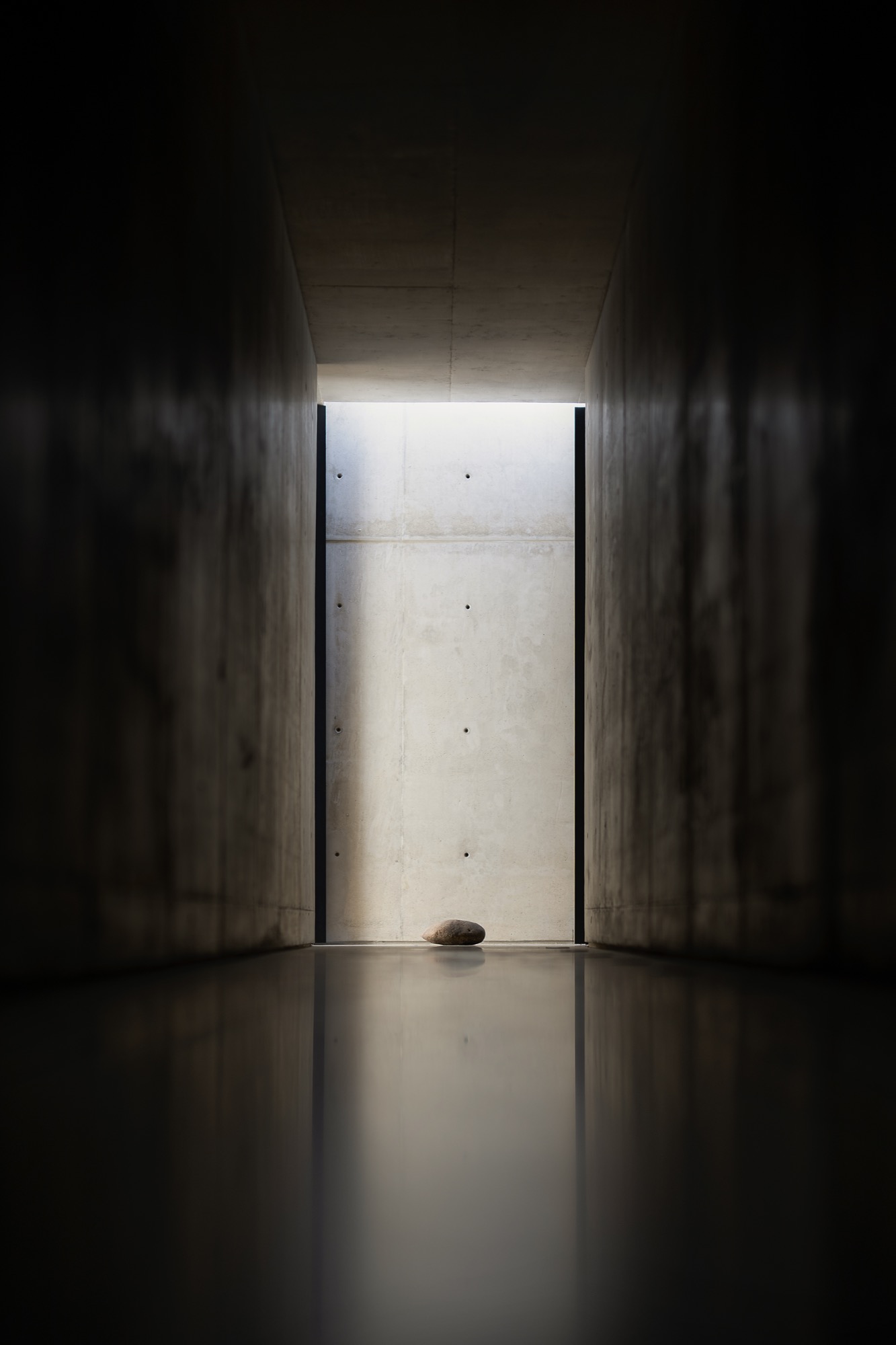
Across your projects, architecture seems less about solving a program and more about shaping a way of being. What kind of life, or state of mind, did you hope this house would cultivate in its inhabitants?
Even if it may not seem so, the house must function well. It must respond to the needs of those who inhabit it.
We are not trying to shape the way someone lives, nor to impose a state of mind.
Our search is more modest, more human.
We simply try to place the inhabitant in front of something so inexplicably beautiful that their internal monologue pauses, even if only for a moment.
In that pause, there is presence.
And in that presence, perhaps something else can emerge, but that does not belong to architecture.
Architecture, at most, can point. It can suggest a direction.
But it can never be the path itself.
Article Credit
Text: Rafael Cunha
Time: 03.2026
Photo: Gustavo Quiroz, Hugo Tirso Domínguez, César Belio, César Béjar
More Studio’s Photos: