
Now Reading: Casa Tao shaped by shade and silence
- 01
Casa Tao shaped by shade and silence


Some houses are not designed so much as remembered. Casa Tao began with the quiet memory of the people who would live inside it, long before it became a plan, a section, or a façade. It does not chase an image. It answers a life, and more precisely, a way of living.
Gustavo grew up in a modest home built more from effort than from materials. He is the son of farmers and craft merchants, people with rough hands and generous eyes, who despite studies interrupted too soon, passed on a hunger to understand the world. His childhood unfolded in Puerto Vallarta on Mexico’s Pacific coast, where sun and humidity set the tempo of the day, and where shade is not decorative comfort but a real asset, a form of protection.

From the start, the house needed to translate that need for shelter, seclusion, and coolness. Shade was not treated as a simple physical effect, but as an emotional condition, a promise of calm and breath, a silent defense against a loud world.


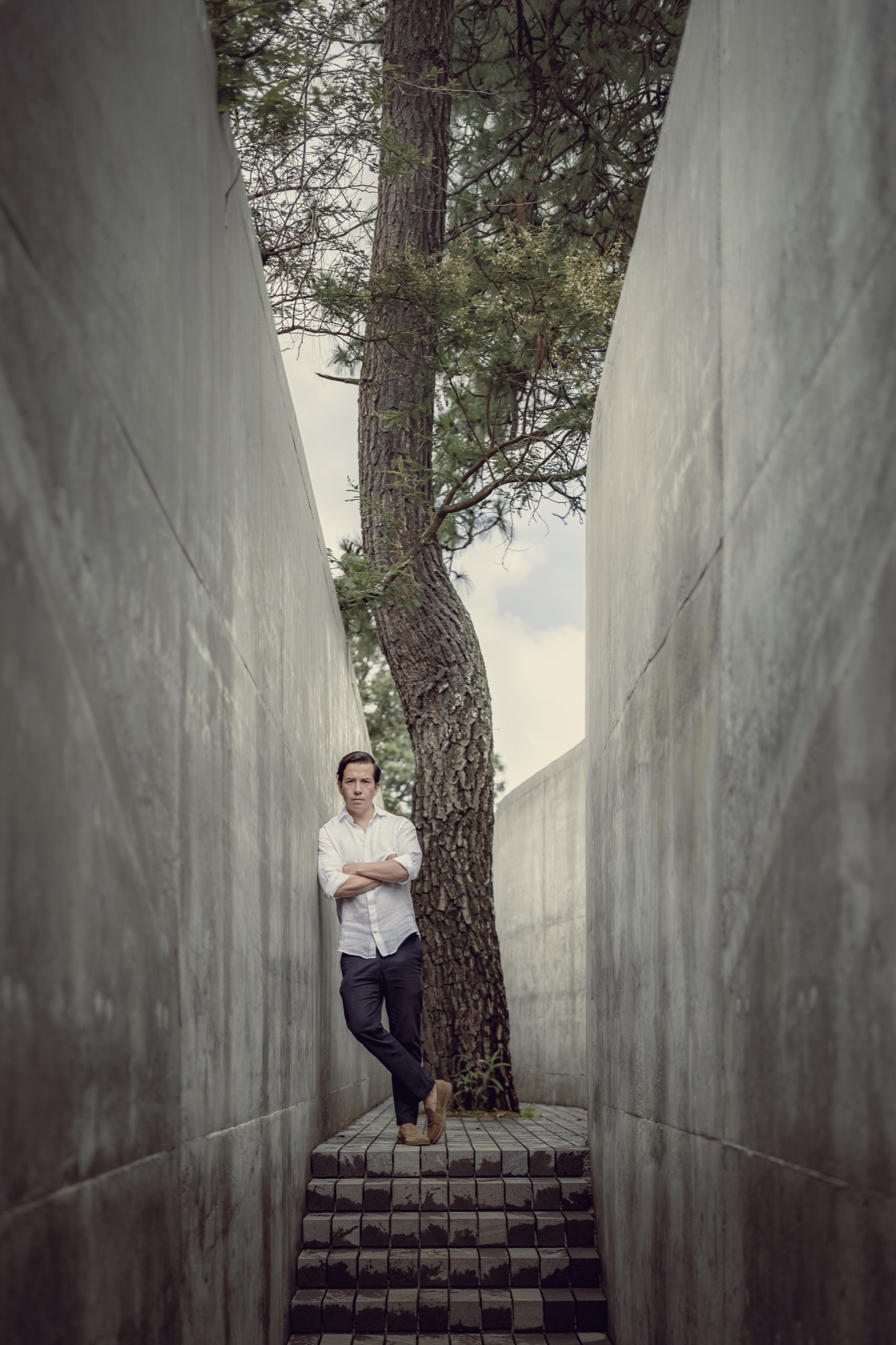
Casa Tao is shaped as much by Gustavo’s character as by climate. He has the uncommon curiosity of someone who built his own education over time. Philosophy, architecture, music, photography, little seems foreign to him. His library moves between formal clarity and poetic rigor, from Alberto Campo Baeza to Fan Ho to Tarkovsky, and reveals a steady attraction to essential geometry, quiet courtyards, and the charged relationship between emptiness and light. Speaking with him feels like stepping into a view that is open to the world, sensitive yet exact.


His partnership with Cynthia, the second inhabitant of the house, is equally central to its atmosphere. Together with their daughters, Mila and Anto, they took their first trip abroad to Japan. That journey stayed with them, not as a souvenir but as a lens: the aesthetics of emptiness, compositional restraint, and the stillness contained in architectural gesture.
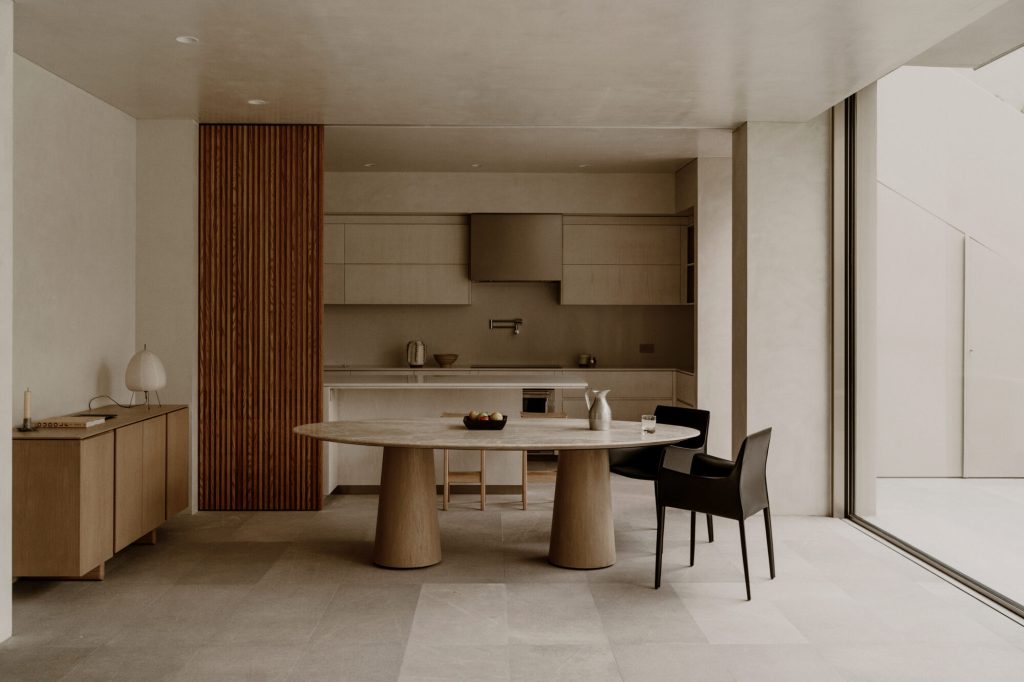
They said it plainly, with a smile. They wanted to feel as if they were living inside a Japanese museum. Not the museum as an institution, but the museum as a type of space where time slows, light settles softly, and silence becomes tangible.


The neighborhood offered no spectacular views. What it did offer was a tree lined plaza with shade and a moving breeze, a rare kind of freshness in a coastal city. The architecture turns toward that gift, but not frontally, and not through the easy solution of large glazed surfaces that would intensify heat and glare.
Instead, the house establishes an oblique relationship to the plaza. It allows the presence of trees, wind, and the faint trace of sea air to be felt without fully exposing the interior to the heavy sun. The act of dwelling is framed indirectly, as if the house were looking on at a diagonal, modestly, letting the breeze and fragrance pass through while holding on to privacy.
This is a house that does not perform openness. It edits openness, calibrates it, and protects it.


The program is organized in a clear stratification. The larger and more private components, including bedrooms, garage, and service spaces, sit at the base. Above, a lighter double height volume holds the social life of the home.
By lifting the living areas, the house raises everyday life above street level, surrounds it with air, and opens it toward the plaza’s canopy and the salt softened breeze that crosses it. Elevated patios become terraces for contemplation, small platforms where the scent of flowers, the movement of leaves, and the murmur of wind are not background, but part of the room.


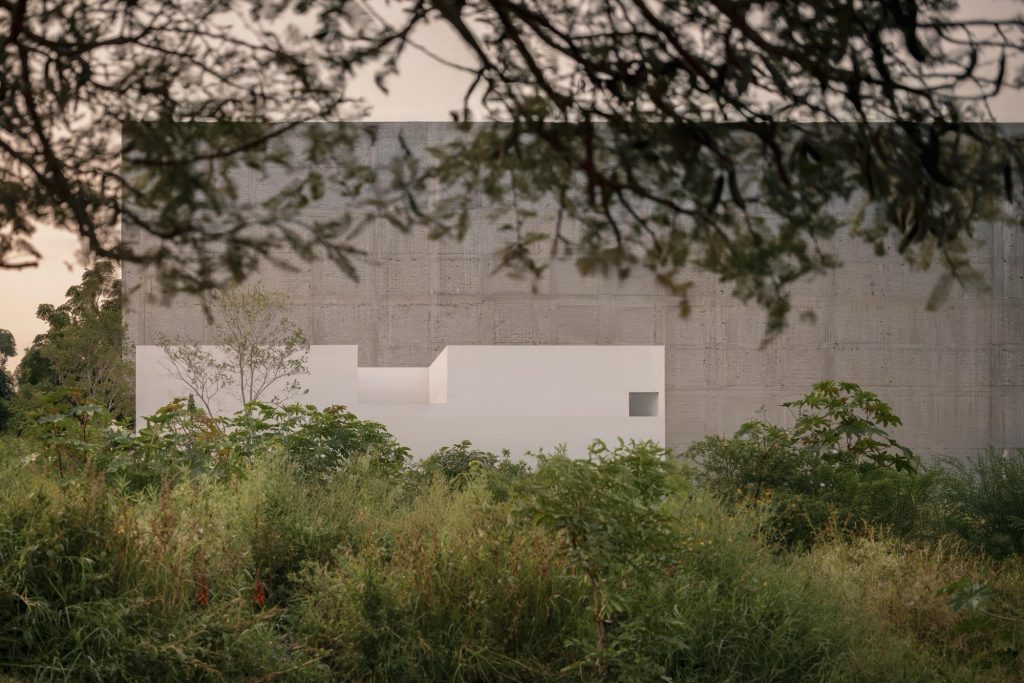
The bedrooms gather around an inner patio, organized for silence and air. Intimacy is expressed through enclosure, not as confinement, but as the making of an interior world. A curved wall receives the visitor with a soft turn, marking a threshold that feels welcoming rather than assertive. A tree greets you like an arrangement, placed with care, as if nature itself were part of the composition.

Casa Tao does not look outward toward the neighborhood as a spectacle. It turns inward as a gesture of refuge. Yet it does not seal itself. It opens to the sky, to shade, to the plaza beyond, and to the slow, daily gradients of light. Everything is arranged so that living happens at a calmer pace, fuller, more open to what cannot be photographed.


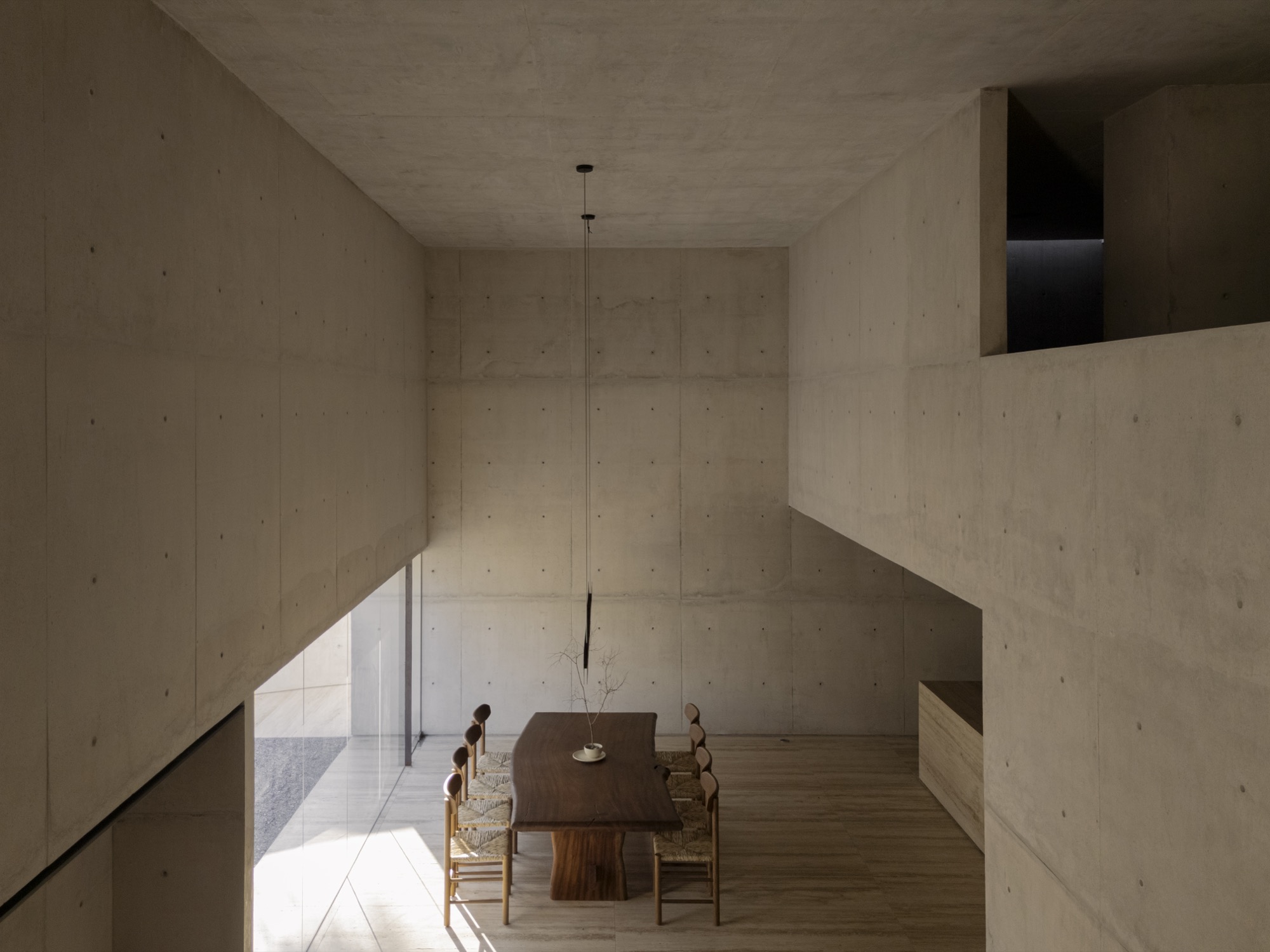
Material choices follow the same logic of restraint. Whiteness holds and amplifies the coastal brightness, while concrete absorbs it with a quiet steadiness. It is a material that becomes warmer through use and time, gaining a kind of human patina rather than losing purity. In this concrete, light does not bounce aggressively. It settles. It lingers. It becomes something you feel on the skin rather than something that announces itself to the eye. The result is tactile and sensory, an architecture that treats comfort as atmosphere, and atmosphere as structure.


Casa Tao ultimately proposes dwelling as a form of attention. It withdraws discreetly and offers its rooms as settings for contemplation and memory. Every corner invites you to remain rather than pass through. Every shadow reads as a promise of well being.
This deliberate search for shade, both refuge and poetic quality, echoes a spatial sensibility described by Junichiro Tanizaki in In Praise of Shadows. Tanizaki does not celebrate darkness as the absence of light, but as a subtler way of seeing. Shadow becomes a veil that deepens things, allowing beauty to emerge slowly, with humility.


So too with this house. It is not lit to impress. It allows penumbra to suggest. Light filters in without violence, and each space becomes a contained sensory experience where time thickens and life grows quiet.
Casa Tao does not propose a new image of domestic life. It proposes a better pace for it.


Project Credit
Architects: HW STUDIO / @hwstudioarq
Location: Puerto Vallarta, Jalisco, México
Completion Year: 2025
Size: 472 mts2
Photo: Gustavo Quiroz, Hugo Tirso Domínguez, César Belio
More Photos