Now Reading: Casa Plan de Barrancas in Mexico City uses reflective plinth to blur indoor and outdoor living
-
01
Casa Plan de Barrancas in Mexico City uses reflective plinth to blur indoor and outdoor living

Casa Plan de Barrancas in Mexico City uses reflective plinth to blur indoor and outdoor living

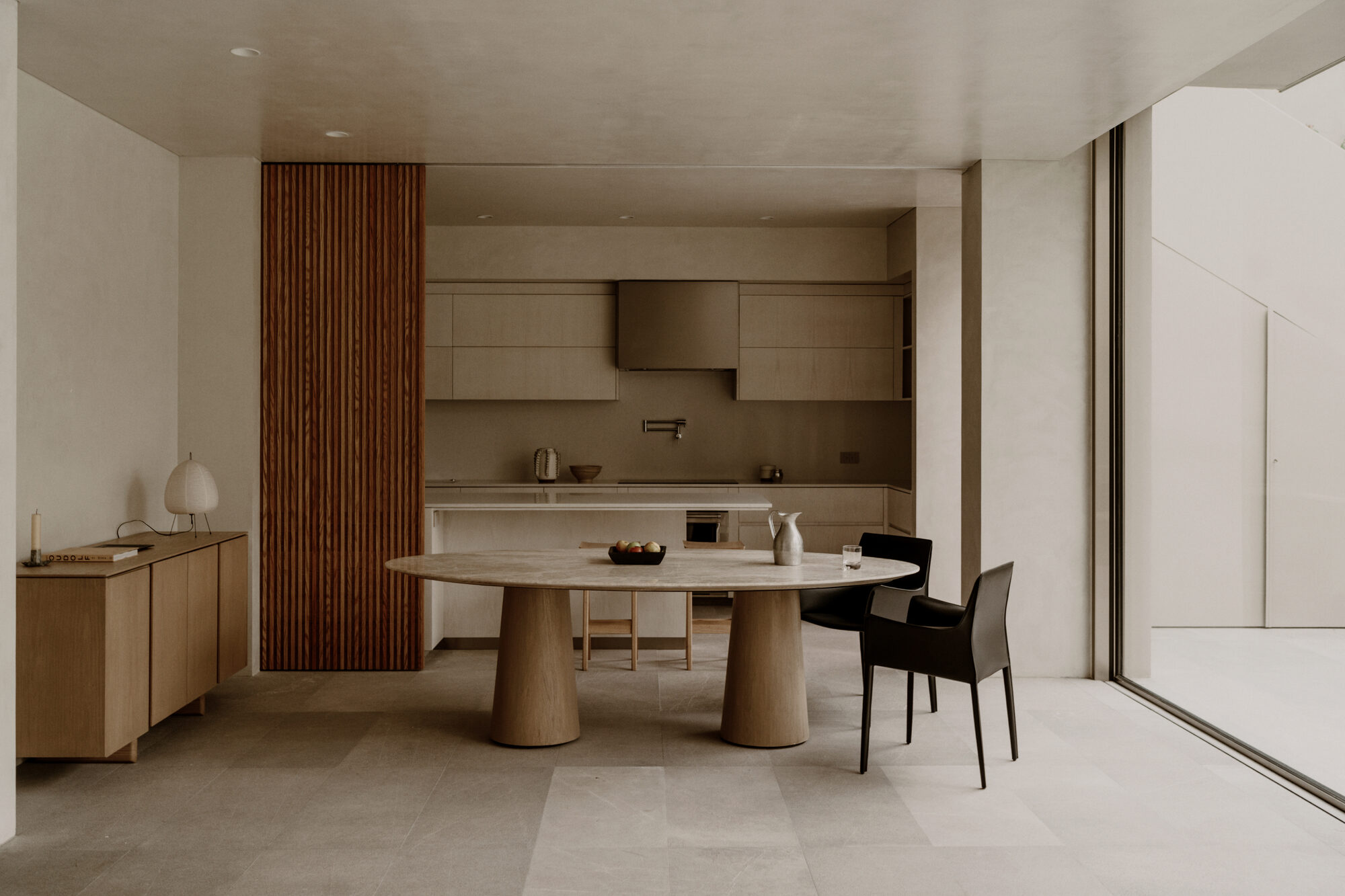
Set in western Mexico City, Casa Plan de Barrancas unfolds as a quiet negotiation between architecture, landscape and the city. Rather than asserting itself as a singular object, the house dissolves its boundaries, allowing vegetation and space to define its presence. The project proposes a way of living where interior and exterior are not opposites, but part of a continuous spatial experience.

The ground floor is conceived less as a conventional interior and more as an inhabitable landscape. A permeable and open plane extends fully toward the rear garden, establishing a direct relationship with existing vegetation. This continuity is reinforced through material choices, with natural plaster walls and bush hammered marble flooring running seamlessly from inside to outside.


Vegetation is not limited to the garden. It extends toward the street through an integrated planter, softening the threshold between public and private. The house resists the defensive logic typical of urban dwellings, instead positioning itself as an open system where greenery becomes spatial structure.

At ground level, a reflective material wraps the base of the building, amplifying the presence of plants and reducing the visual weight of the architecture. The effect is subtle but precise. Entrances and service areas are concealed, while the upper volume appears to hover above a continuous field of greenery.

This gesture shifts perception. The house reads not as a solid mass anchored to the ground, but as a layered composition where landscape becomes the primary figure.


Above this open base, the upper levels take on a different character. A solid, matte volume contains the private program, with controlled openings that frame views while maintaining intimacy. Bedrooms and study areas are enclosed within this quieter, more introspective layer.


The volume is carefully positioned in response to a jacaranda tree along the street. This displacement generates a terrace, a void that becomes as significant as the built form itself. Here, absence is treated as material, shaping how the house is experienced and inhabited.
Inside, the material language remains consistent yet calibrated. Public areas retain the mineral quality of plaster and stone, reinforcing openness and continuity. Private rooms introduce wood, bringing warmth and a sense of enclosure. The transition between these zones is gradual, guided by texture rather than boundaries.


Openings are selective, framing vegetation while maintaining a controlled relationship with the exterior. The result is an interior that feels both connected and contained.


Sustainability is embedded in the project as a fundamental condition rather than an added layer. The house is designed to operate independently from the electrical grid through solar energy. Electric systems for heating and cooking reduce reliance on fossil fuels, while material selection prioritises low carbon impact.


Environmental performance aligns with spatial intent. Cross ventilation, shading and material inertia contribute to a passive comfort that complements the technological systems.
Casa Plan de Barrancas is less about form and more about relationships. Between solid and void, interior and exterior, architecture and vegetation. The project suggests that living in the city can still be deeply connected to landscape, not by retreating from it, but by allowing it to enter and reshape domestic space.


In this sense, the house is not simply built. It is composed through layers of presence and absence, where architecture becomes a framework for inhabiting both matter and emptiness.
Project Credit
Project name: Plan de Barrancas
Location: Mexico City, Mexico
Year: 2024
Design Firm: PPAA / @perez_palacios_aa
Photo: Luis Garvan / @luisgarvan