
Now Reading: Deconstructed Minimalism at Alcova Milano: Coherence Inside the Irrational
- 01
Deconstructed Minimalism at Alcova Milano: Coherence Inside the Irrational


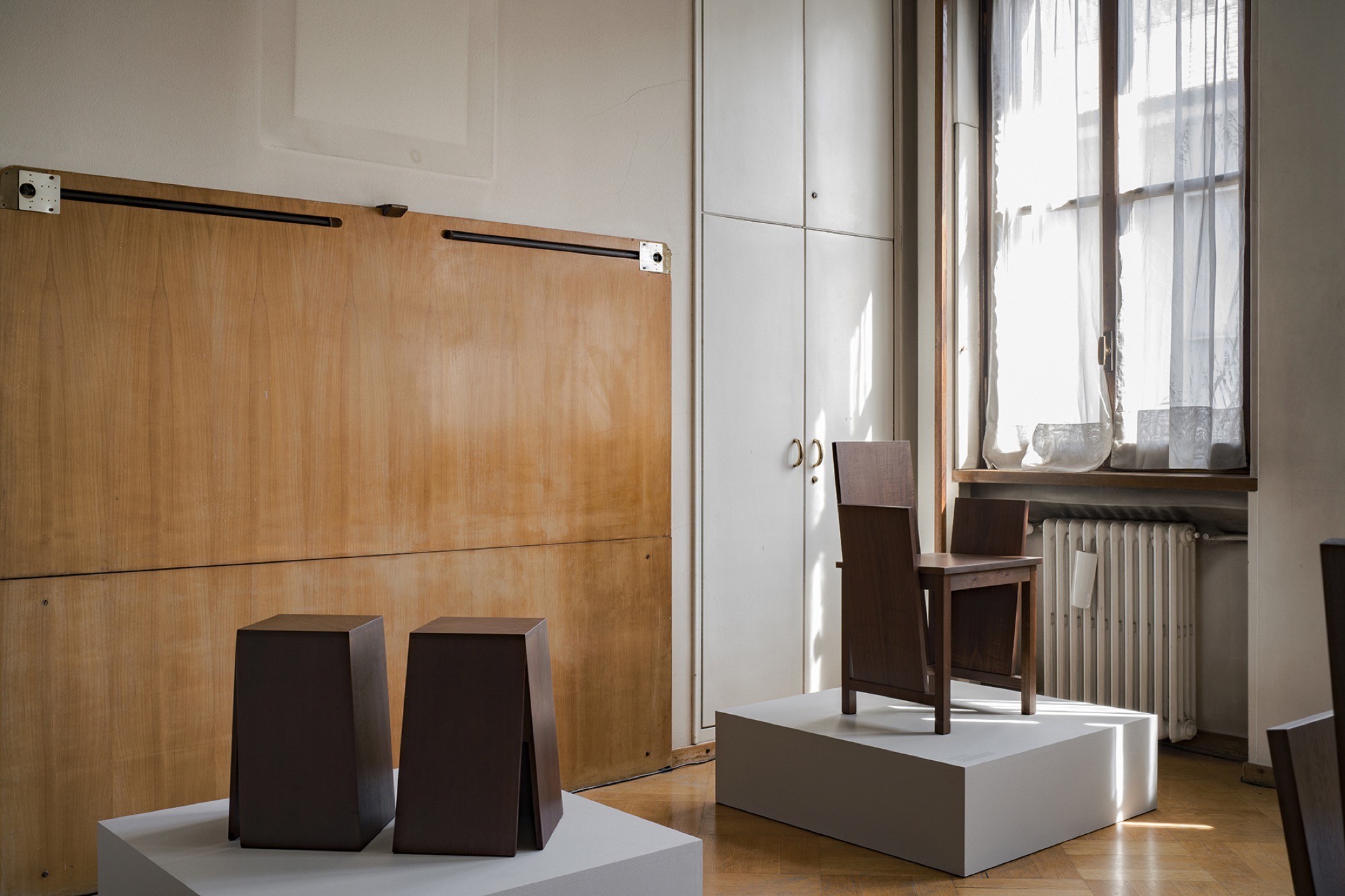
Minimalism has long been framed as an ethic of subtraction, a refusal of excess in favour of clarity, restraint, and quiet utility. Deconstructed Minimalism proposes a different kind of discipline: not less, but sharper. Rather than treating reduction as an end point, the exhibition reopens minimalism as a flexible language, one that can hold contradiction and still read as calm.
At its core is an insistence on coherence amid irrationality. The collection borrows the simple freedom of childhood crafts, where rules are loose, outcomes are surprising, and invention often begins with a cut, a fold, a twist. Here, that spirit is not nostalgia. It becomes a method for expanding what minimalist design can be, without abandoning its basic promises.

A MINIMALISM THAT ALLOWS DISOBEDIENCE
The exhibition challenges the conventional idea that minimalism must suppress detail. Instead, it asks what happens when the things typically edited out are permitted to return, carefully, deliberately, and with purpose. The pieces do not perform complexity for its own sake. They test the threshold where a design can accept “more” while still feeling inherently simple.
This is where the exhibition’s “deconstruction” becomes most legible: not as destruction, but as a controlled loosening of the form. Established values are not rejected; they are examined and rearranged. The result is a fresh perspective on the definition of minimalist design, one that does not treat form and function as opposing forces, but as partners negotiating a new balance.

FURNITURE AND LIGHTING AT THE EDGE OF RESTRAINT
Across furniture and lighting, the collection pushes minimalist expression by introducing finer elements that would normally be minimized or concealed. Yet the work remains grounded in practicality. The pieces respect human ergonomics and the everyday realities of use, holding onto a clean legibility even as they bend the rules of what “minimal” is allowed to show.


Subtle transformations become the main engine of impact. Rather than dramatic gestures, the exhibition relies on precise shifts that change how an object reads, how it occupies space, and how it meets the body. In that sense, the collection demonstrates how innovation inside a restrained framework can be more disruptive than novelty that announces itself loudly.


OBJECTS THAT TRANSFORM WITHOUT LOSING CALM
The transformable stool, in particular, drew attention for turning function into a form of quiet surprise. The action of change becomes part of the design’s identity, but the object does not drift into gimmick. It stays anchored by a clear logic of making, and by a silhouette that remains composed even when its configuration shifts.

The lighting fixtures extend the same approach, using distinctive design decisions to create presence without spectacle. Their appeal lies in how they alter familiar minimalist cues while keeping the overall language coherent. The effect is immediate in the space: small deviations that register as new, then linger as you notice what has been allowed back in.

A QUIET STANDOUT AT ALCOVA MILANO
Presented at Alcova Milano, the exhibition was praised for its imaginative rethinking of minimalism, and for the clarity with which its concept translated into objects. The Frame Structured Chair, described as “minimal, simple, and solid,” distilled the project’s ambition into a single statement: timelessness is not only about reducing form, but about refining the relationships inside it.
Modest in presentation yet memorable in result, the collection left a lasting impression within the Milan context. Deconstructed Minimalism makes a persuasive case that minimalism is not a fixed style, but a living practice, capable of absorbing contradiction and still delivering clarity. It offers a reconciliation not by choosing between form and functionality, but by showing how each can sharpen the other when the rules are rewritten with care.
Project Credit
Project name: Deconstructed Minimalism
Location: Italy, Varedo
Design firm: RKDS / @ryuichikozeki
Completed: 2025
Photo: Shunsuke Watanabe
More Photos