
Now Reading: Vu Dan Tan and the art of cultural hybridity
- 01
Vu Dan Tan and the art of cultural hybridity

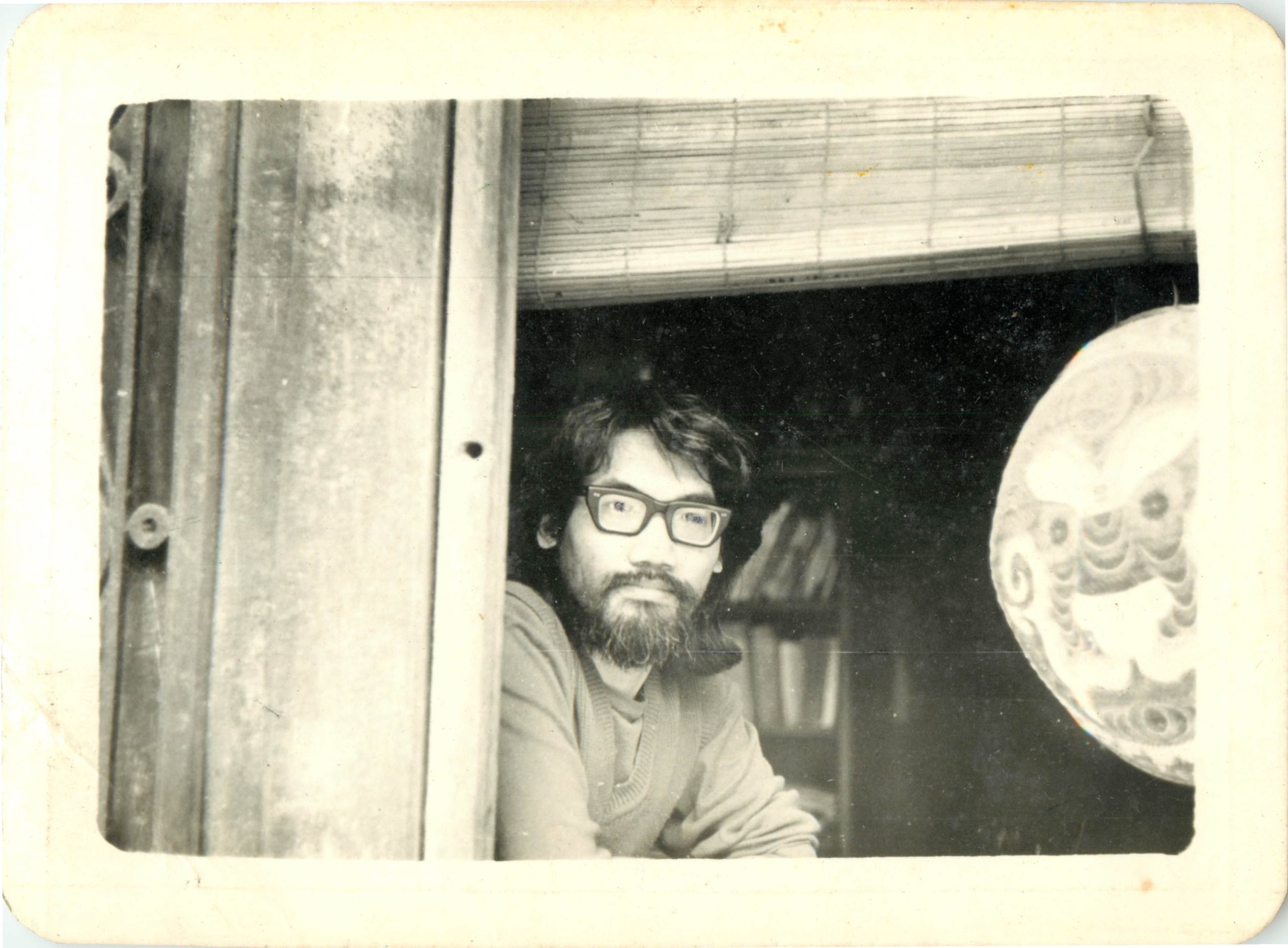

Vu Dan Tan (1946 – 2009) occupies a singular position in the formation of Vietnam’s contemporary art. A self-taught polymath working largely outside institutional frameworks, his practice negotiated the ideological rigidity of socialist realism while anticipating the hybrid, transnational conditions that emerged in the wake of Đổi Mới. Long before the vocabulary of installation, performance, and sound art gained local legitimacy, Tan pursued an expansive artistic language that fused sculpture, music, text, and public intervention. His work did not seek stylistic coherence so much as cultural alchemy, scavenging fragments from East and West to articulate new, unstable identities within a society undergoing rapid transformation.
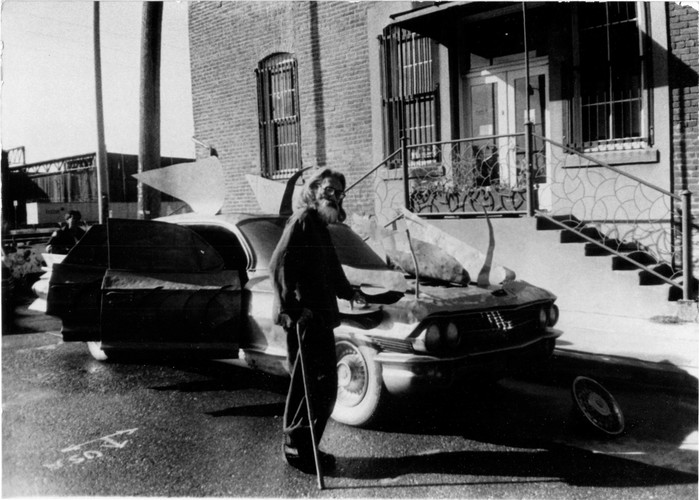
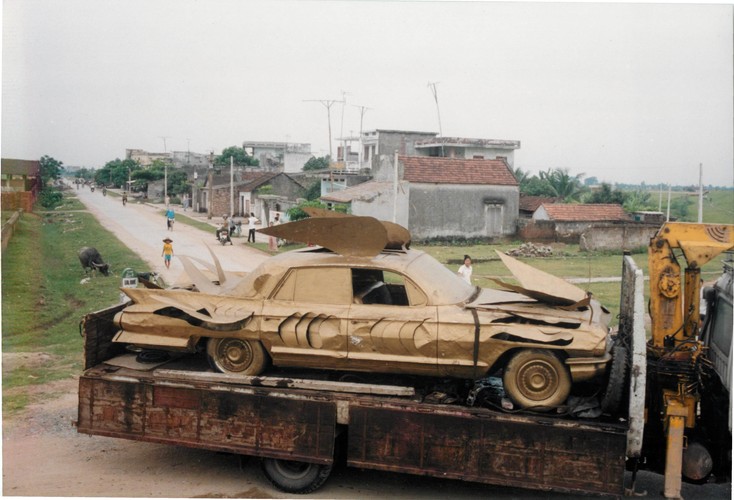
A battered 1961 Cadillac, transformed in the late 1990s into the gilded, winged sculpture Cadillac–Icarus, offers an entry point into Tan’s world. Gold-plated and fitted with makeshift wings, the car invoked the Greek myth of Icarus, ambition soaring toward transcendence only to risk collapse. Executed during Tan’s residency at the Pacific Bridge Gallery in Oakland, the work repurposed an American icon of excess into a precarious monument to aspiration and failure. When Cadillac-Icarus was shipped back to Hanoi in 2000, it was activated through a raucous street performance: artist Đào Anh Khánh embodied the fallen Icarus amid blaring traditional instruments and percussive sounds drawn from car parts. Neither triumphant nor tragic, the procession staged a collision of myth, mobility, and post-socialist spectacle, situating Vietnam’s tentative encounter with global capitalism within a broader, unstable narrative of flight and fall.
Far removed from the figurative painting that dominated Vietnam’s official salons throughout the 1980s and 1990s, Tan’s practice developed through scavenging and recombination. Everyday refuse such as cigarette packs, cardboard, packaging, and discarded posters became the raw material for a deliberately impure visual language. Born in Hanoi in 1946 to playwright Vũ Đình Long, Tan grew up in an intellectual household shaped by literature and performance. Denied formal art training under the prevailing socialist regime, he worked as an animator at Hanoi Film Studio between 1967 and 1972, and later at Vietnam National Television until 1982, including a period of study in Cuba in 1973. These early encounters with animation and stagecraft cultivated a sensitivity to movement, rhythm, and temporality that would later underpin his interdisciplinary approach.
A three-and-a-half-year sojourn in the Soviet Union during the late 1980s, split between Moscow and Astrakhan, exposed Tan to the cultural shifts accompanying perestroika. Returning to Hanoi in 1990, he brought with him a sharpened awareness of art’s capacity to operate beyond ideological prescription. That same year, together with his Russian wife Natalia (Natasha) Kraevskaia, he co-founded Salon Natasha in their home at 30 Hàng Bông Street. Widely recognised as Hanoi’s first independent art space, Salon Natasha functioned outside state oversight and commercial imperatives, offering a rare platform for experimentation during a period of institutional constraint.
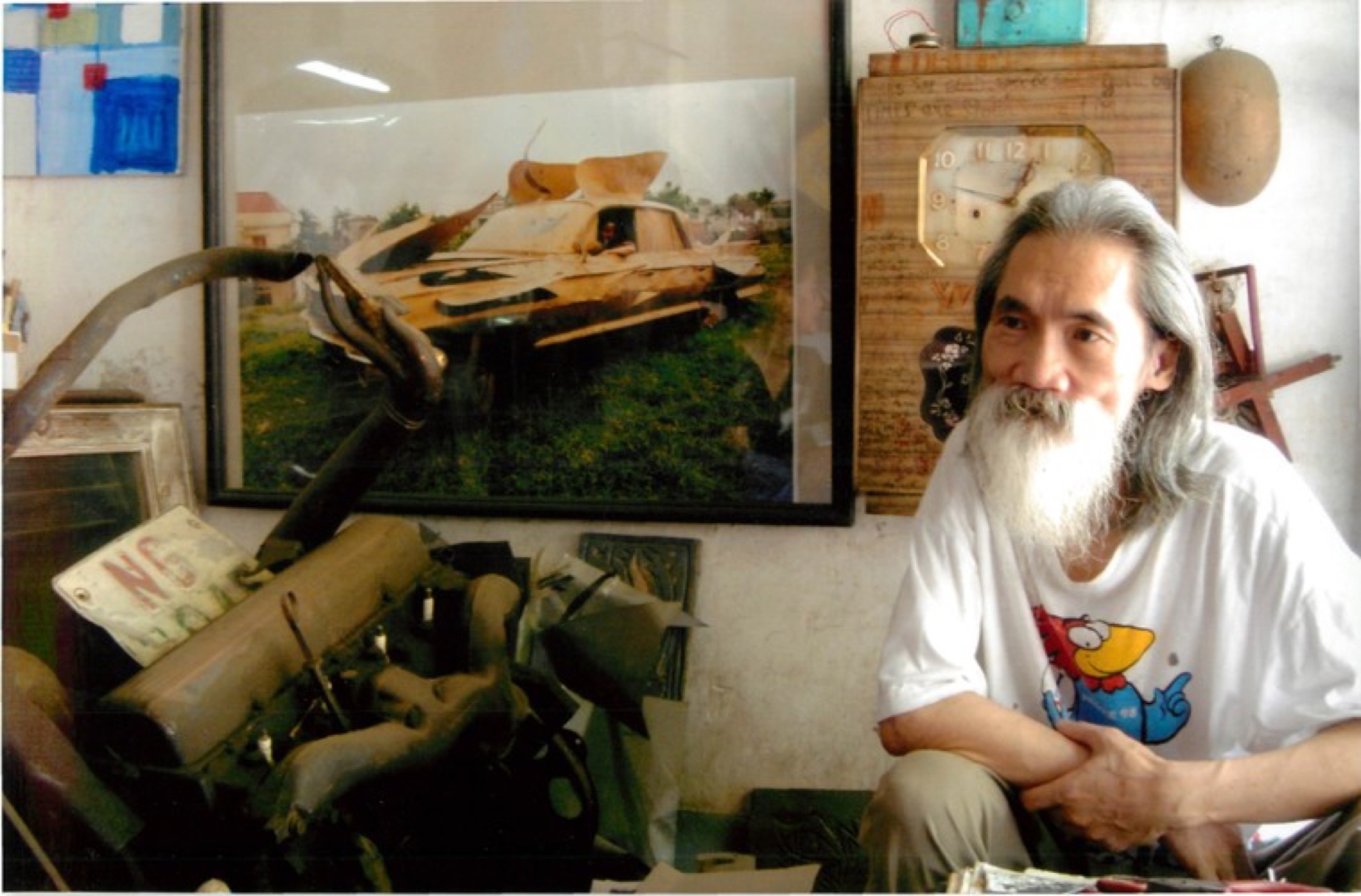
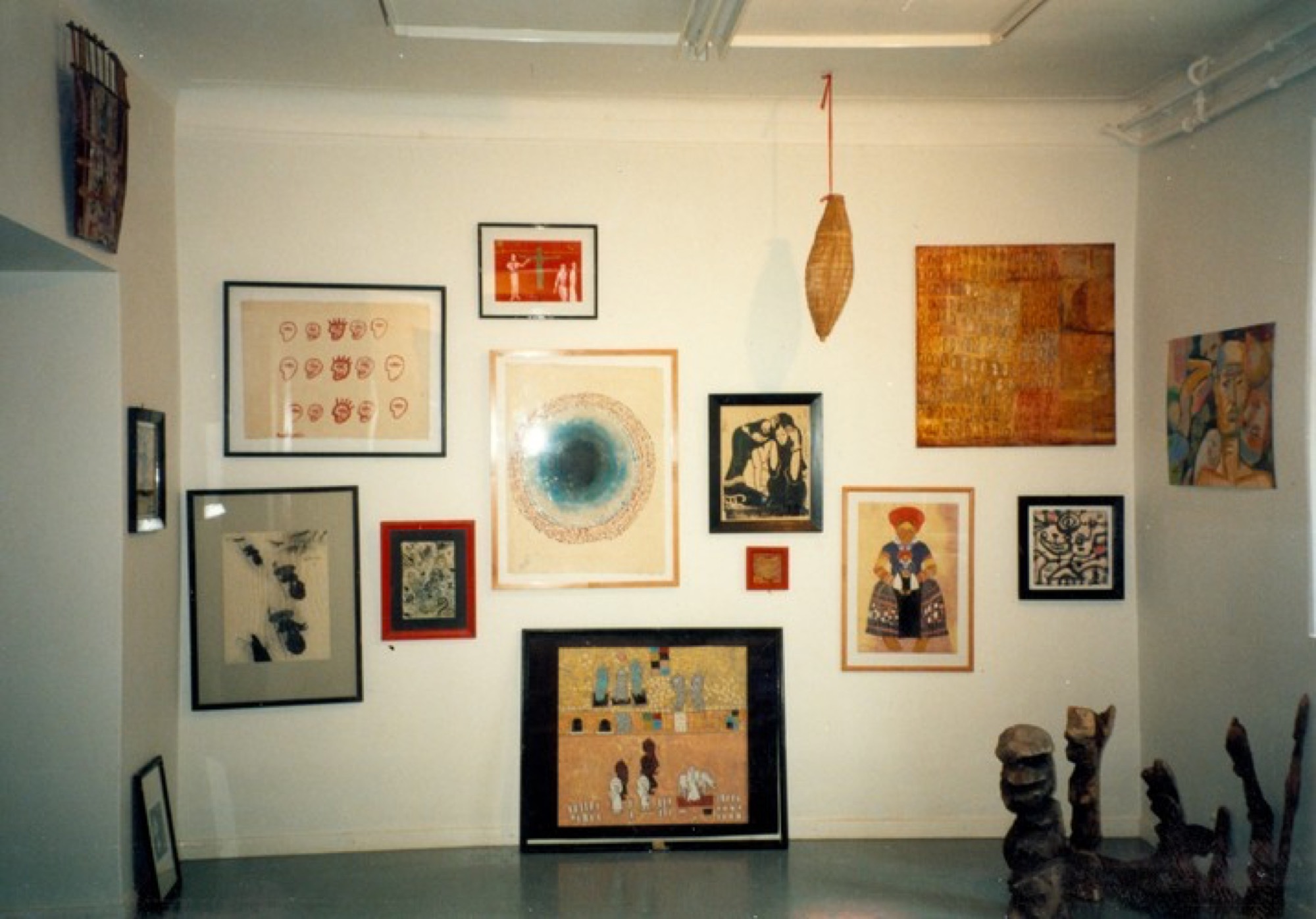
Operating as both domestic salon and informal laboratory, the space nurtured a generation of artists including Trương Tân, Nguyễn Văn Cường, and Nguyễn Quang Huy. Exhibitions, workshops, and open discussions unfolded in an atmosphere that echoed French and Russian salon traditions while responding directly to the urgency of Hanoi’s emerging avant-garde. Salon Natasha was less a gallery than a living system, its porous boundaries mirroring Tan’s own resistance to disciplinary purity.
Tan’s philosophy has been described as “bowerbird art,” a term introduced by art historian Birgit Hussfeld in Art Asia Pacific in 1997. Like the bird that gathers disparate materials to construct elaborate nests, Tan assembled hybrid creatures from urban detritus: monsters, devils, insects, and angels that combined surreal humour with pointed social observation. These assemblages probed consumerism, authority, and identity in post-Đổi Mới Vietnam, refusing moral didacticism in favour of ambiguity and play. Text frequently entered his compositions, transforming fragments of propaganda slogans, street signage, and handwritten notes into a graphic language that blurred the boundary between artwork and environment.

Sound formed an equally critical dimension of Tan’s practice. A trained pianist and composer, he approached music not as accompaniment but as a conceptual medium. In the 1990s, when sound-based work remained marginal within Southeast Asian contemporary art, Tan integrated auditory elements to articulate states of flux and instability. Projects such as the three-piano installation Spring (1999) at the House of World Cultures in Berlin, and One Day (2005) at the Huntington Beach Art Center, layered street sounds with live piano performance, dissolving distinctions between composition and noise. As noted by art historian Iola Lenzi, Tan’s use of sound expanded the parameters of regional contemporary practice, positioning music as a vehicle for both formal experimentation and cultural critique.

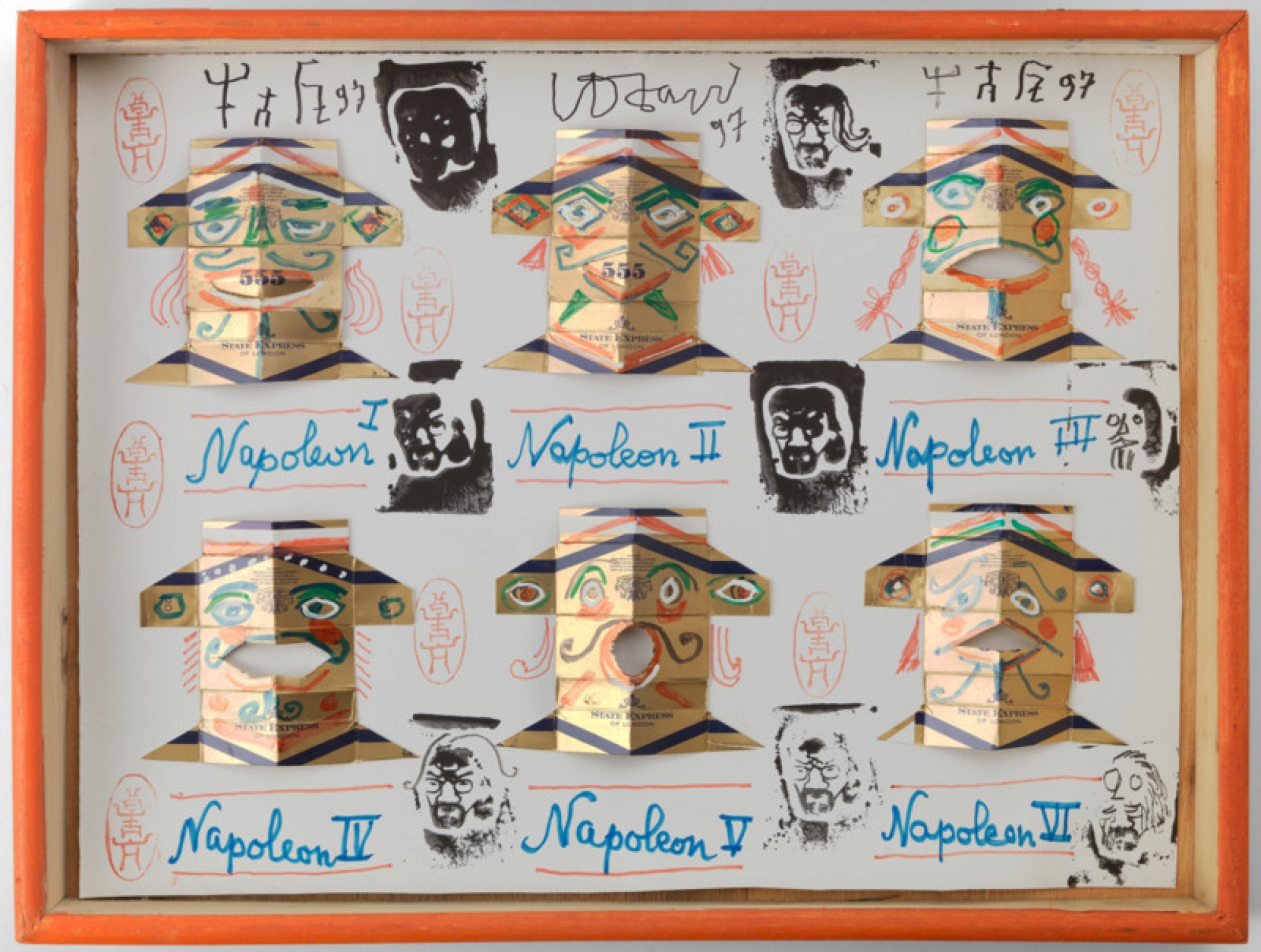
Among Tan’s most sustained bodies of work is Suitcases of a Pilgrim (1995 – 2009), first presented internationally at the Second Asia-Pacific Triennial of Contemporary Art in Brisbane in 1996. Constructed from the cardboard boxes used by street vendors to sell cigarettes, the suitcases housed miniature shrines populated by clowns, phoenixes, angels, and other mythic figures cut from packaging and painted with gouache. Portable and modest in scale, the works evoked both itinerant commerce and spiritual pilgrimage, reframing everyday materials as vessels of imagination rather than economic necessity.

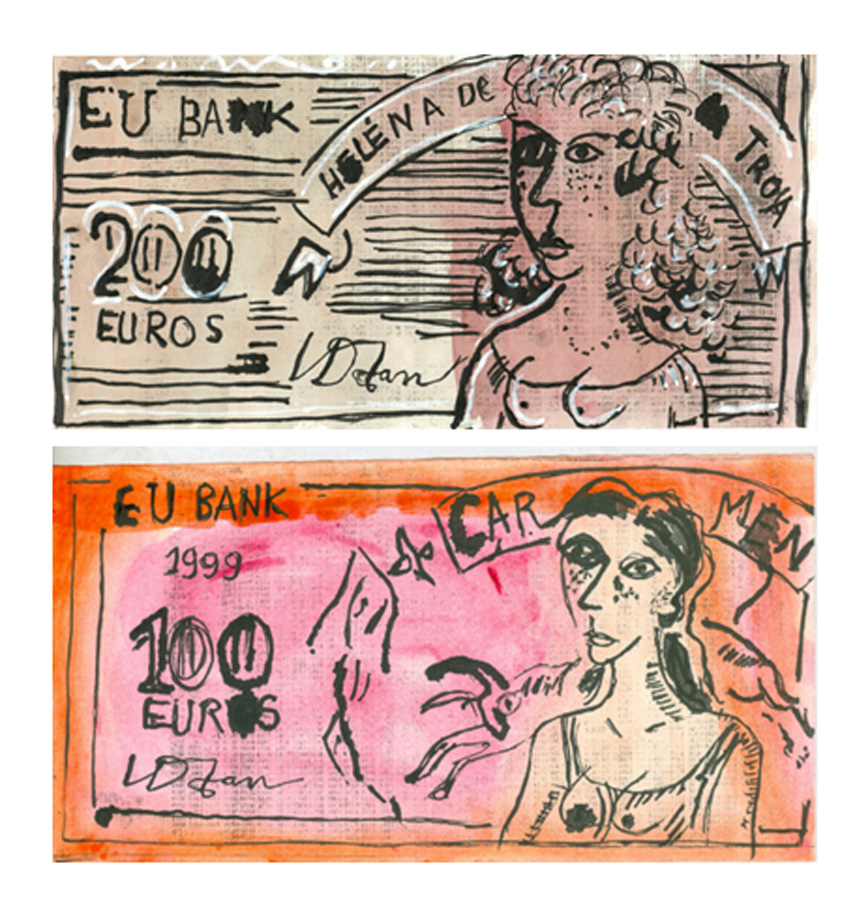
The Money series (1992 – 2003) pursued a parallel strategy. By duplicating and hand-colouring banknotes, including dollars, euros, and other currencies, and replacing state figures with global cultural icons, Tan subtly destabilised the authority embedded in monetary imagery. Circulating as both objects and ideas, these works foregrounded the symbolic power of money while exposing its susceptibility to reinterpretation.

Despite increasing international recognition through exhibitions in Australia, Germany, Japan, and the United States, Tan remained marginal within Vietnam’s official art structures. His methods, resistant to both socialist realism and emerging market-driven aesthetics, positioned him as an outsider within his own context. Following his death in 2009, this marginality has gradually given way to reassessment. The opening of the Vu Dan Tan Museum in 2025 in Long Biên, Hanoi, marks a significant step in preserving his installations, archives, and sound works for future generations.
In Tan’s practice, hybridity was neither strategy nor style but necessity. His art resists closure, remaining mobile, unresolved, and insistently impure. Like Cadillac–Icarus, suspended between ascent and collapse, Vu Dan Tan’s work mirrors the unfinished cultural negotiations of a society in transition, where fragments are continually reassembled and meaning is never fully grounded.

Photo Cover
Vu Dan Tan with his signature masks, embodying the hybrid and scavenging spirit of his practice.
Credit: Courtesy of Wikipedia / Artist’s archive.