
Now Reading: Textile roof sports hall organised around public walkway
- 01
Textile roof sports hall organised around public walkway

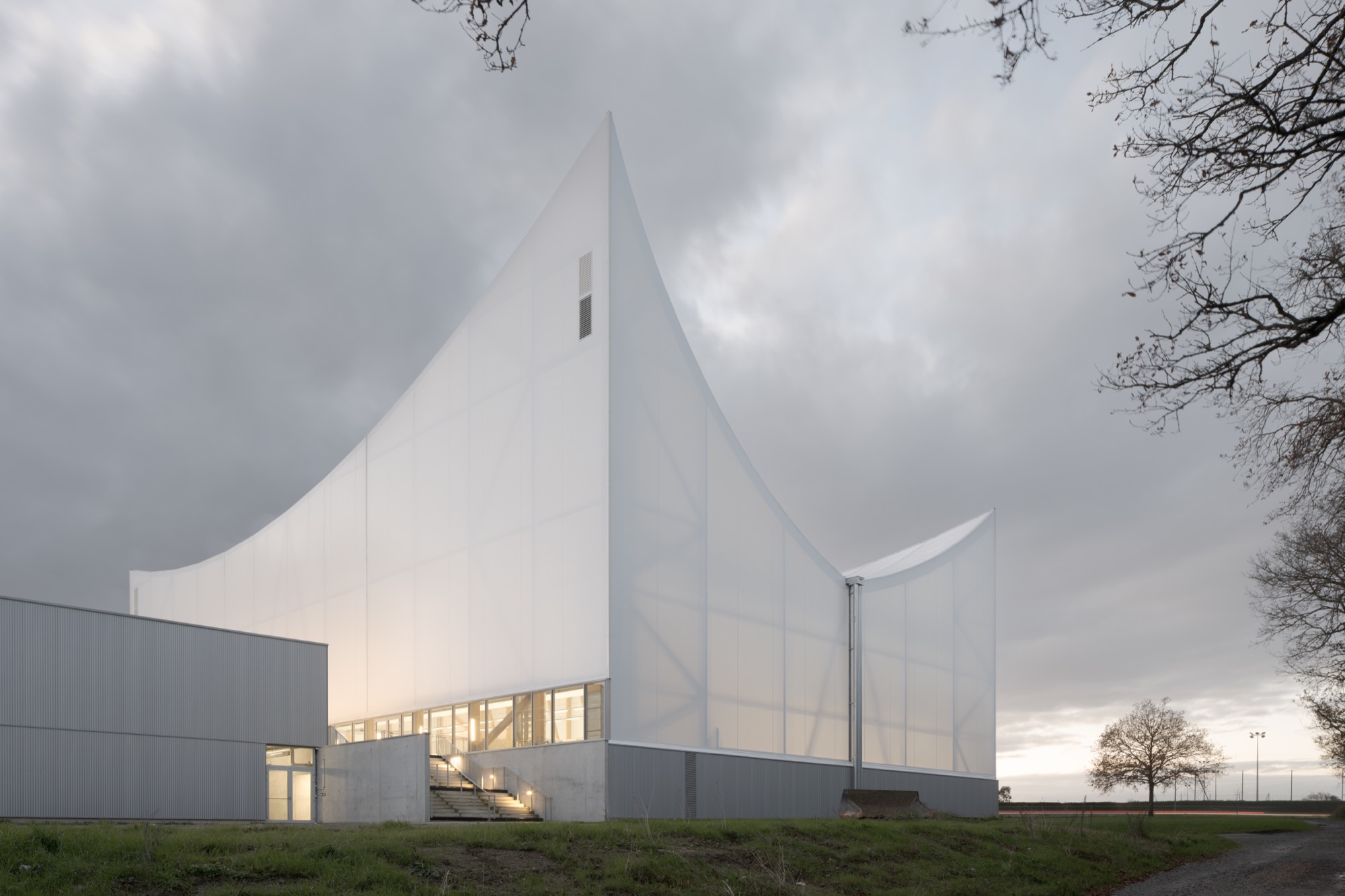

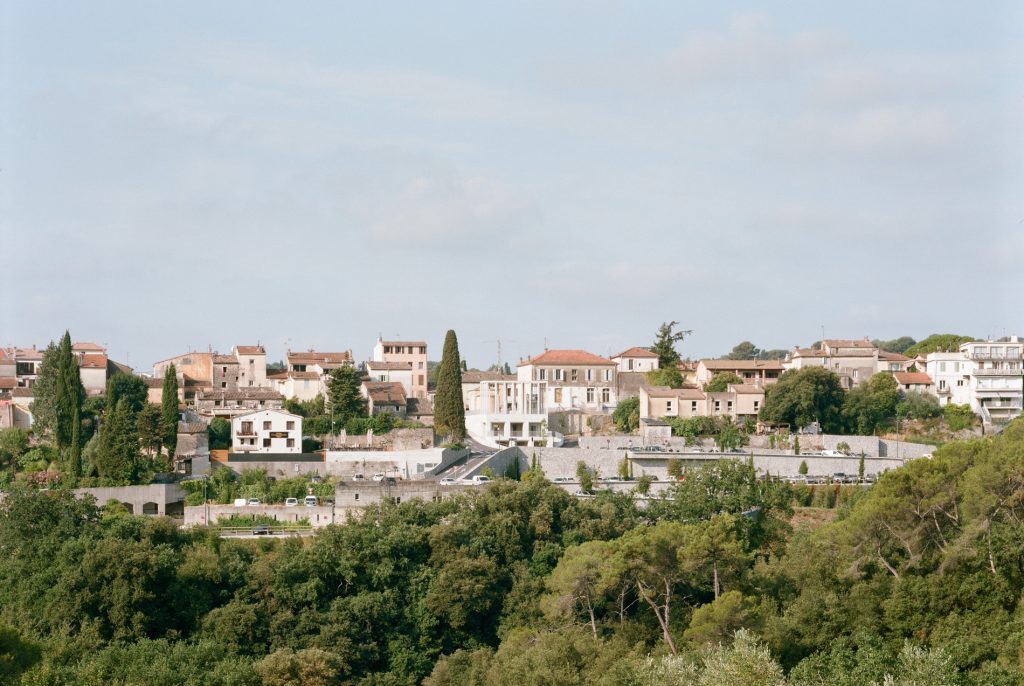
At the edge of the city, where scattered recreational infrastructures have long coexisted without coherence, a new cultural and sports facility proposes a different urban narrative. Positioned beside the Pierre de Coubertin sports complex and the André Blot cultural centre, the project does more than add another building to the site. It redefines the entire precinct as a unified civic landscape, capable of hosting regional level competitions while reconnecting fragmented amenities into a legible public hub.
Until now, the nearby stadium, tennis courts, bowling green and BMX track have operated as isolated entities. The new intervention treats their proximity as latent potential. By reorganising circulation and establishing a clear spatial hierarchy, the scheme transforms a peripheral zone into a shared destination, extending its influence to adjacent residential districts.

Central to the proposal is the reinterpretation of a planned pedestrian path identified in the Town Planning Scheme. Originally intended to run south of the existing cultural centre and link to a neighbouring housing development, the route is strategically realigned to become the organising axis of the new ensemble.
Rather than skirting the buildings, the pathway cuts through them. It becomes both connector and generator. The axis passes directly through the new sports hall, dividing it into two distinct volumes. To the north sits the multi sports hall designed for regional competitions. To the south, a more compact block accommodates squash courts and a dance hall. The promenade crosses the complex at two levels, choreographing a layered public experience.


On the upper level, the walkway traverses the building externally, functioning as an elevated belvedere. This route leads directly to the top of the tribunes, offering visitors a framed view into the sports hall before they even enter. The gesture transforms circulation into spectacle, allowing the city to glimpse the life within. At ground level, the promenade connects seamlessly to the main public foyer and social spaces. Here, access is direct and inclusive, reinforcing the building’s civic openness.

The extended programme, defined by varied temporal uses and contrasting climate requirements, is addressed through two distinct construction strategies. The southern volume, housing the squash and dance facilities, forms a compact and insulated mass. It incorporates entrances at different levels and contains the heated spaces required for year round activity.


In contrast, the sports hall is conceived as a lighter, unheated pavilion. Covered by a white textile membrane stretched across four inverted points, its geometry promotes natural ventilation and passive cooling during summer months. The membrane roof gives the hall an ephemeral quality, reducing its visual weight while ensuring the scale necessary for competition.
This duality of mass and membrane articulates the functional differences within the programme while maintaining a cohesive architectural identity.


After dusk, the fabric envelope transforms the sports hall into a softly glowing lantern. Backlit from within, the pavilion signals the renewal of the entire sports and cultural centre. Its luminous presence marks the site as a civic landmark and reasserts its role as a place of collective gathering.

By turning a simple pedestrian path into a structuring device and combining contrasting construction logics, the project establishes a new urban anchor. More than a venue for sport, it is an instrument for spatial integration, social interaction and territorial regeneration.


Project Credit
Location: La Bouëxière, Ille-et-Vilaine, France
Completed: 2025
Design firm: Onze04 Architectes / @onze04archi
Photo: Juan CARDONA / @juan_cardona_a
More Photos