Now Reading: The Mezzanine as Manifesto: Paul Rudolph and the Sculpted Psychology of Space
- 01
The Mezzanine as Manifesto: Paul Rudolph and the Sculpted Psychology of Space


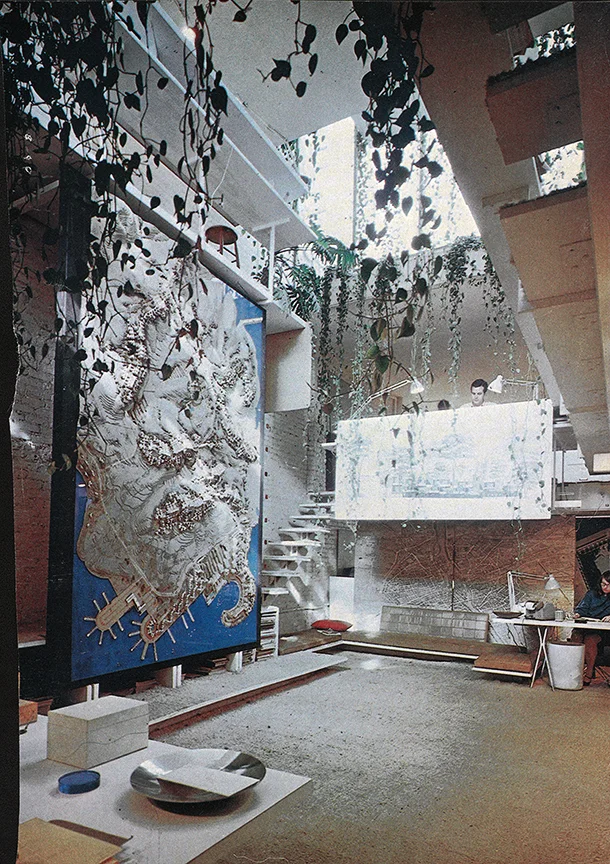
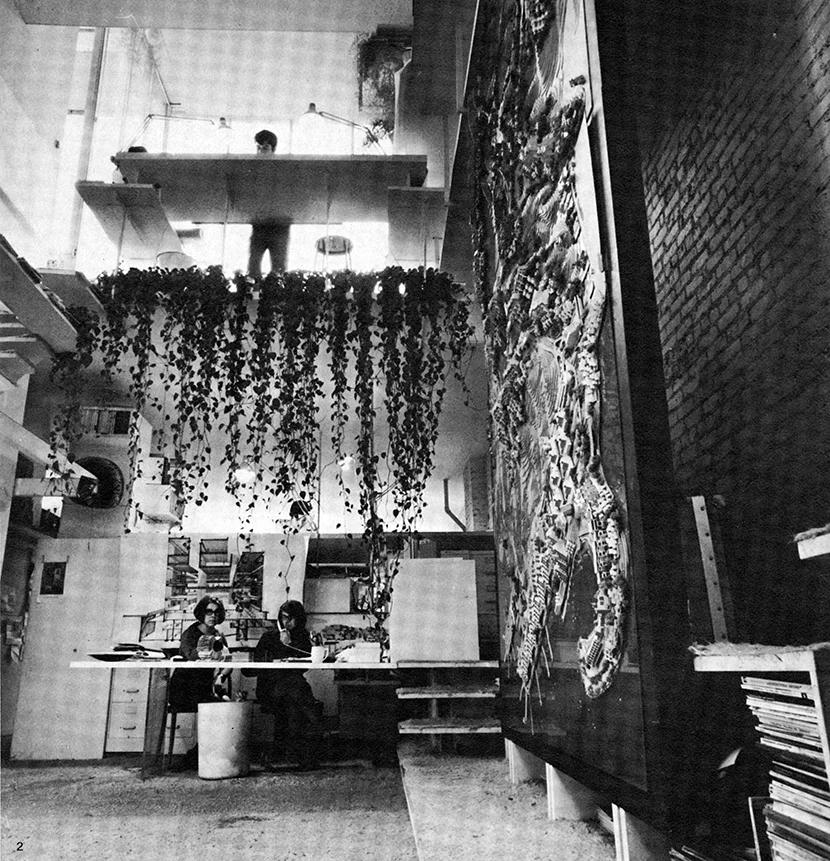
In 1965, on the top floor of a six storey loft building at 26 West 58th Street in Manhattan, Paul Rudolph constructed an office that functioned less as a workplace and more as a spatial thesis. By raising the roof over part of the existing structure, he created sufficient height to insert a mezzanine drafting level. He then organized the floor not horizontally but vertically, cutting into it, lifting portions of it, and opening a tall central volume that redefined how the space was read and occupied.

Visitors arriving at the office did not encounter a conventional reception area. Instead, they entered a layered interior in which platforms overlapped, half levels shifted against one another, and movement unfolded diagonally. A glass enclosed volume contained conference and work areas, while Rudolph’s own perch hovered above, its drafting surface cantilevered over the space below. Steel brackets anchored to party walls carried suspended planes that appeared improbably light. The result was a compact but spatially dense interior that resisted immediate comprehension.
Rudolph described the experience as free flowing vertically, comparable to a Miesian plan turned upright. The remark is revealing. He was not rejecting modernism. He was rotating it, thickening it, giving it depth. The office became a demonstration that space could be continuous without being flat.

Rudolph left the building in 1969. The structure was demolished in the early 1970s as the site was redeveloped. Yet the disappearance of the office has not diminished its importance. On the contrary, it clarifies its status as a concentrated expression of a principle Rudolph would articulate repeatedly throughout his career. Architecture, he insisted, is used space modified to satisfy man’s psychological needs.

This definition, expressed in interviews during the early 1980s, shifts attention away from façade or stylistic classification and toward experience. For Rudolph, architecture was not primarily about visual composition but about how a body moves, how an eye adjusts, how enclosure and exposure alternate. Psychological need, in his formulation, encompassed privacy and community, tension and calm, compression and release.
The 58th Street office offered a precise experiment in those conditions. By inserting the mezzanine and opening the central void beneath it, Rudolph ensured that occupants were aware of one another without being forced into constant interaction. One could work below and glimpse a colleague above. A figure crossing a platform briefly appeared against light before disappearing again. Proximity was calibrated rather than imposed. The space felt active even in moments of stillness.

In conversation later in life, Rudolph argued that structure is only one of the organizing principles available to an architect. Principles, he suggested, often conflict. The art of architecture lies in reconciling those conflicts. The Manhattan office performs that reconciliation at a domestic scale. It combines raw construction with careful choreography, exposed surfaces with refined spatial transitions, openness with protected pockets of retreat.
Preservation documents from New York describe the interior as suggesting a terraced garden, a sequence of interconnected and overlapping levels. The metaphor is apt. The office does not behave like a single room. It behaves like a landscape, with vantage points, edges, and micro climates. Movement produces awareness. Awareness produces psychological charge.
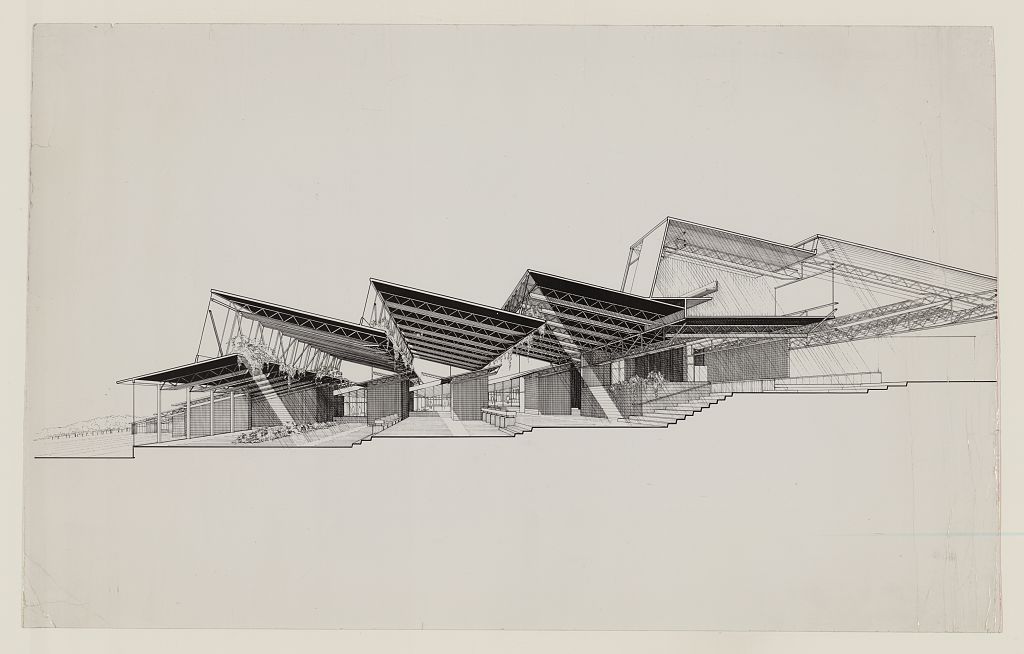
If psychology was Rudolph’s thesis, section was his grammar. He frequently emphasized the primacy of section over plan, arguing that section carries the true drama of inhabitation. It reveals how light penetrates, how sound travels, how sightlines intersect. In the 58th Street office, circulation unfolds vertically. One does not simply cross the floor. One ascends, descends, turns, pauses, and reorients.
Light is equally deliberate. Rudolph arranged the glazing so that daylight penetrated deeply into the lower portion of the tall central space while avoiding glare. Illumination was modulated rather than uniform. Brightness gathered at certain levels, while other areas remained subdued. This gradation produced an emotional rhythm. Space alternated between revelation and introspection.

Material reinforced that rhythm. Even in projects associated with concrete monumentality, Rudolph’s surfaces were rarely inert. They were textured, patterned, and shadowed. In the Yale Art and Architecture Building, completed in the early 1960s, concrete reads less as mass than as articulated terrain. Studios overlap in section. Voids cut through the volume. Students are visible across levels. The building becomes pedagogical not only because of what it houses, but because of how it exposes the act of making.


A fire in 1969 and subsequent alterations profoundly altered the Yale building. Rudolph lamented those changes, yet he measured the building’s success by its capacity to provoke strong reaction. Indifference, for him, was failure. Emotional intensity was proof that space was doing psychological work.

The Tuskegee Chapel clarifies another dimension of his approach. There, Rudolph proposed a continuous slot of glass just below the roofline so that light entered diagonally. The hyperbolic paraboloid roof form supported acoustic requirements, but it also directed perception. Light did not fall passively from above. It entered at an angle, drawing the eye upward. Rudolph described the space as rising diagonally and escaping through glass. The description is exact. Space, in his conception, possessed direction and momentum.
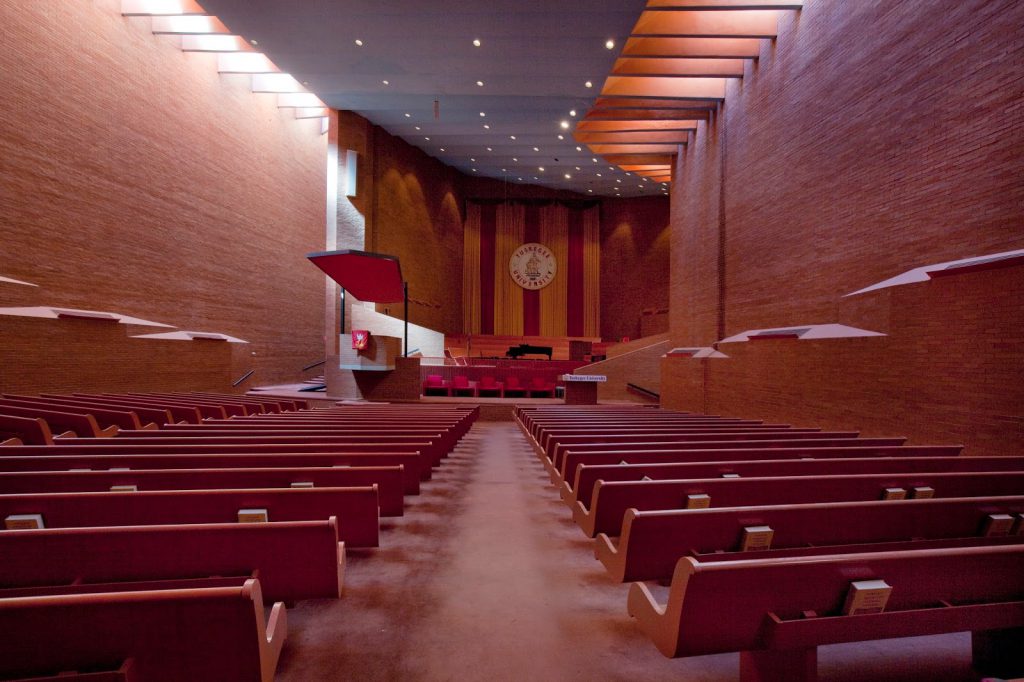
Asymmetry played a crucial role in generating that momentum. Rudolph regarded symmetry as potentially static, even intimidating when aligned too directly with an axis of entry. Asymmetry, by contrast, introduces tension. It invites adjustment. It requires the body to participate in the act of orientation. In both the chapel and the Manhattan office, entry is never simply frontal. It is negotiated.
The Boston Government Service Center expands these principles to the civic scale. Completed in phases around 1970 and 1971, the ensemble frames a large public plaza with deeply modelled concrete forms. Stairs curve and descend. Recessed openings produce shadow. The plaza becomes an outdoor room rather than an exposed void. Critics have often focused on the weight of the concrete, but the more telling reading concerns depth and inhabitation. Edges are thick. Thresholds are layered. The public realm is given sectional complexity rather than planar emptiness.


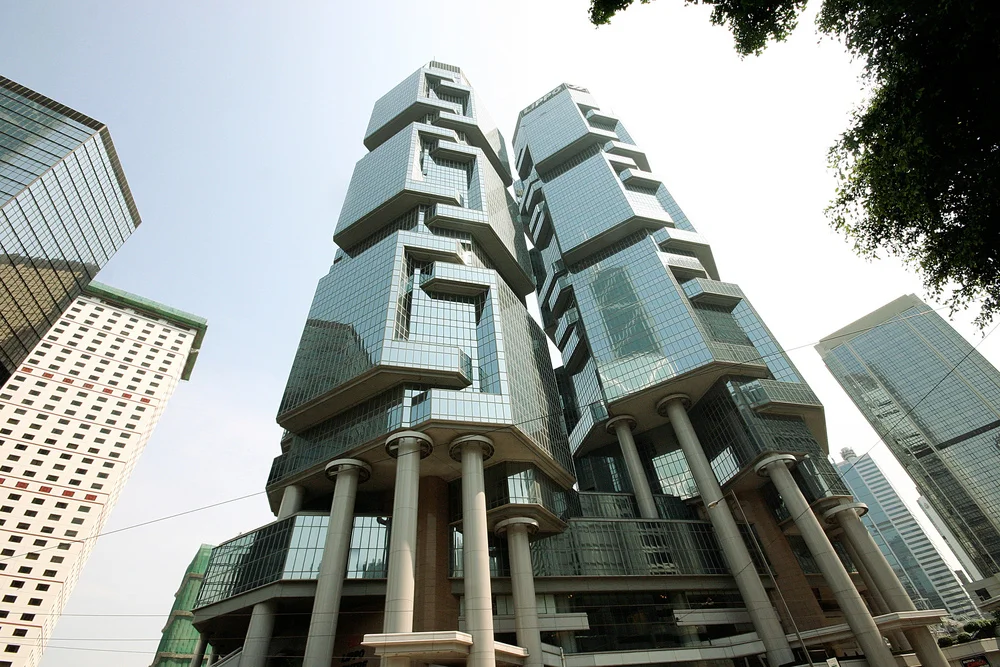
Even in his later Asian projects, where commercial towers dominate the skyline, Rudolph retained a concern for articulation and layered thresholds. The Bond Centre in Hong Kong, completed in 1988, breaks its mass into readable modules and recessed planes, resisting the smooth abstraction of the glass curtain wall. In Jakarta, Wisma Dharmala Sakti explores terrace and void as devices for climate and perception. The scale shifts dramatically from the Manhattan office, yet the underlying preoccupation remains. Space is never a single volume. It is a sequence of negotiated conditions.
Rudolph’s drawings illuminate this continuity. His perspective sections are not mere representations. They are investigative tools. By slicing a building open in perspective, he tested how light and movement might be experienced. Section, in his hands, becomes an instrument for predicting emotional temperature. It anticipates whether a space will feel compressed, expansive, intimate, or exposed.

This insistence on drawing as inquiry carries particular resonance today. Digital modelling can describe geometry with extraordinary precision, yet it can also obscure experiential nuance behind surfaces of optimization. Rudolph’s work reminds us that architecture is not data alone. It is perception structured in space.
The 58th Street office remains the most concentrated distillation of these concerns. Within a relatively modest footprint, Rudolph transformed a conventional loft into a vertical field of relationships. The mezzanine was not an afterthought or a space saving device. It was the hinge of the composition. It established hierarchy without authoritarianism. It allowed simultaneous separation and connection. It created vantage without surveillance.
The office no longer stands. The mural, the suspended planes, the shifting half levels have vanished. What remains is the argument embedded within them. Architecture, in Rudolph’s view, must do more than shelter. It must calibrate awareness. It must mediate between the individual and the collective. It must shape the psychological atmosphere in which daily life unfolds.
In an era increasingly defined by smooth surfaces and controlled environments, the lesson is neither nostalgic nor reactionary. It is structural. Rudolph demonstrates that spatial complexity need not be gratuitous. When disciplined, it can intensify attention and enrich experience. The mezzanine at 26 West 58th Street was therefore not simply an elevated platform. It was a manifesto in built form, a declaration that section, light, and asymmetry can be mobilized in the service of human perception.
From that small Manhattan interior, Rudolph projected a lifelong exploration of sculpted psychology. Whether in a chapel, a school of architecture, a civic center, or a commercial tower, the ambition remained consistent. Space should feel alive. It should resist neutrality. It should acknowledge that human beings require both refuge and exposure, both solitude and spectacle.
The mezzanine made that demand visible.
Photo Cover
Paul Rudolph’s office at 26 West 58th Street, New York, 1965. A raised roof and central void created a vertical spatial thesis of psychological depth and sectional continuity. Credit: © Paul Rudolph Institute for Modern Architecture / Ezra Stoller (Esto).