Now Reading: Studio in Gushichan: Where architecture and making converge
- 01
Studio in Gushichan: Where architecture and making converge

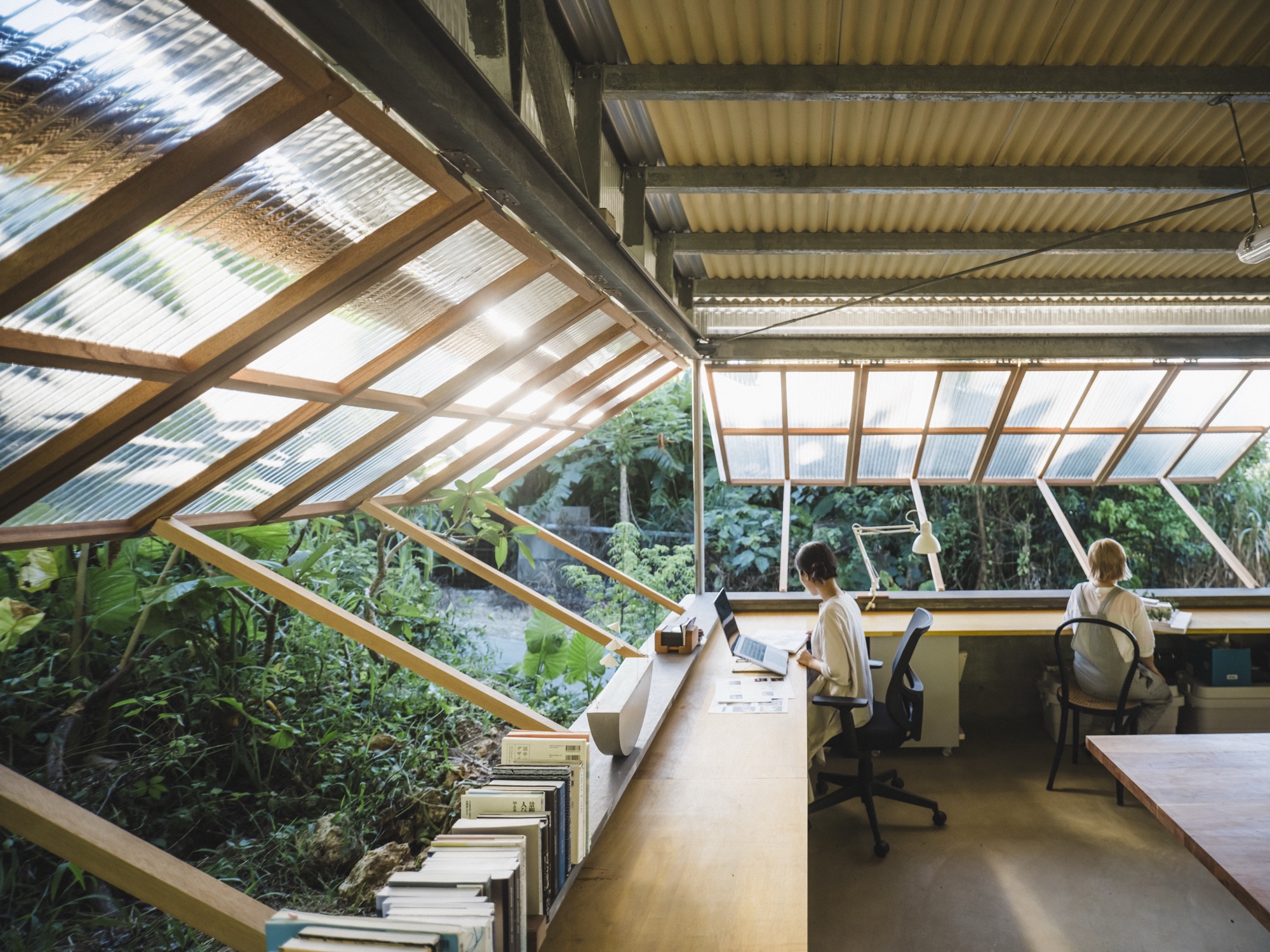

Studio in Gushichan is conceived as a hybrid building that brings an architectural office and a woodworking workshop into a single operational framework. Rather than separating design from fabrication, the project positions making as an integral part of architectural thinking, embedding production directly within everyday practice.


In Okinawa, commercial architecture is largely defined by reinforced concrete frames combined with aluminum sashes. While efficient and durable, this standard solution often neglects the tactile qualities of architecture. In contrast, the studio has consistently pursued wooden sashes for openings, elements that are handled daily and significantly shape the atmosphere of interior space. Wood offers warmth, texture, and a capacity to age gracefully. Yet the local scarcity of craftspeople experienced in wooden exterior fittings and furniture has made precision, scheduling, and long term development difficult. With each project relying on a different workshop, technical knowledge could not accumulate, making sustained improvement nearly impossible.


Studio in Gushichan emerged from this challenge. By establishing an in house woodworking shop, the studio gained full control over the process, from drawings and fabrication to maintenance. Design adjustments can be tested immediately, problematic details refined on site, and new construction methods explored through direct experimentation. The close proximity between designers and makers allows drawings to be discussed alongside full scale samples, creating a continuous feedback loop between concept and execution.


The building is located a short drive from the studio’s former workplace, The Tamagusuku House, in a setting slightly detached from the village and surrounded by forest and cultivated land. This peripheral context allows the office and factory to coexist without compromise, while maintaining a strong relationship with the landscape.
A steel frame structure was selected for its openness, speed of construction, and cost efficiency, characteristics commonly associated with industrial buildings. Construction unfolded in two phases. The factory was completed first and immediately put into operation, producing the fittings and fixtures required for the office. In this way, the act of building became part of the production process itself.


The layout follows the natural slope of the site, where bedrock lies close to the surface. By distributing the required volumes along the incline, excavation was kept to a minimum. Between the office and the workshop, a semi external garden was inserted. This space extends seamlessly from the surrounding forest and functions as a buffer, mitigating noise and dust while preserving spatial continuity with the terrain.

Given the functional demands of a woodworking workshop, air conditioning was not considered a viable solution. Instead, the building prioritises natural ventilation, while retaining the ability to close the space for shade and protection from heavy rain.
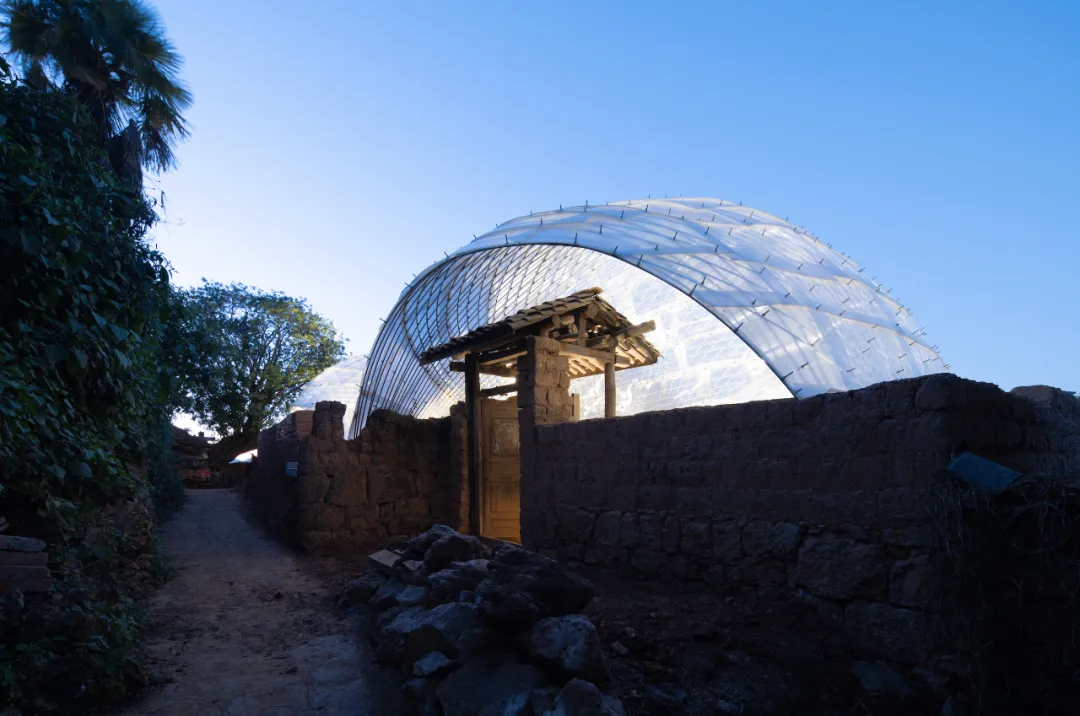
A double skin system was developed using insect netting typically found in Okinawan agricultural greenhouses, combined with roll up vinyl sheets. This assembly allows air to circulate freely, withstands typhoon conditions, and remains inexpensive and easy to replace. The solution reflects a pragmatic response to climate, drawing on local, non architectural technologies.

The office area adopts a deliberately restrained language. Sliding doors are set between exposed steel structural members, while polycarbonate corrugated sheets are used as lightweight facing material to reduce the load of the fixtures. The resulting spaces are bright, adaptable, and closely aligned with the logic of construction.


Because the building is designed, occupied, and maintained by the studio itself, Studio in Gushichan serves as a testing ground for alternative materials and construction methods. Techniques more commonly associated with agriculture and industry become valuable references when carefully adapted to architectural use.
Rather than presenting a fixed prototype, the project remains open to change. It represents an ongoing collaboration between design and craft, exploring how architecture can respond more precisely to Okinawa’s climate, resources, and working culture. In Studio in Gushichan, architecture is not merely designed and delivered. It is produced, inhabited, and continuously reexamined through use.
Project Credit
Project name: Studio in Gushichan
Design firm: Studio Cochi Architects / @studiocochiarchitects
Location: Okinawa, Japan
Photo: Studio Cochi Architects