Now Reading: Ecological farm in Beijing reimagines farm to table architecture
- 01
Ecological farm in Beijing reimagines farm to table architecture


Located on the rural outskirts of Beijing, where gentle mountains meet the Chaobai River corridor, ZAOHE Ecological Farm occupies a landscape deeply layered with agricultural memory and folklore. This region is traditionally regarded as the birthplace of the Legend of the Zao Shen, the Kitchen God who presides over nourishment and domestic life. Within this cultural and geographical context, the project emerges as both a contemporary farm and a spatial narrative, where cultivation, cooking, and communal life are brought into a renewed relationship.


Designed by Fon Studio, the project draws from the ancient notion of “Zao”, a primitive cooking device formed from earth and stone, once central to rural households. Rather than treating agriculture as a backdrop, the design integrates farming as an active spatial and social force. Dining, agricultural experience, and family interaction coexist, redefining the idea of “from land to table” as a lived, sensory continuum rather than a linear process.

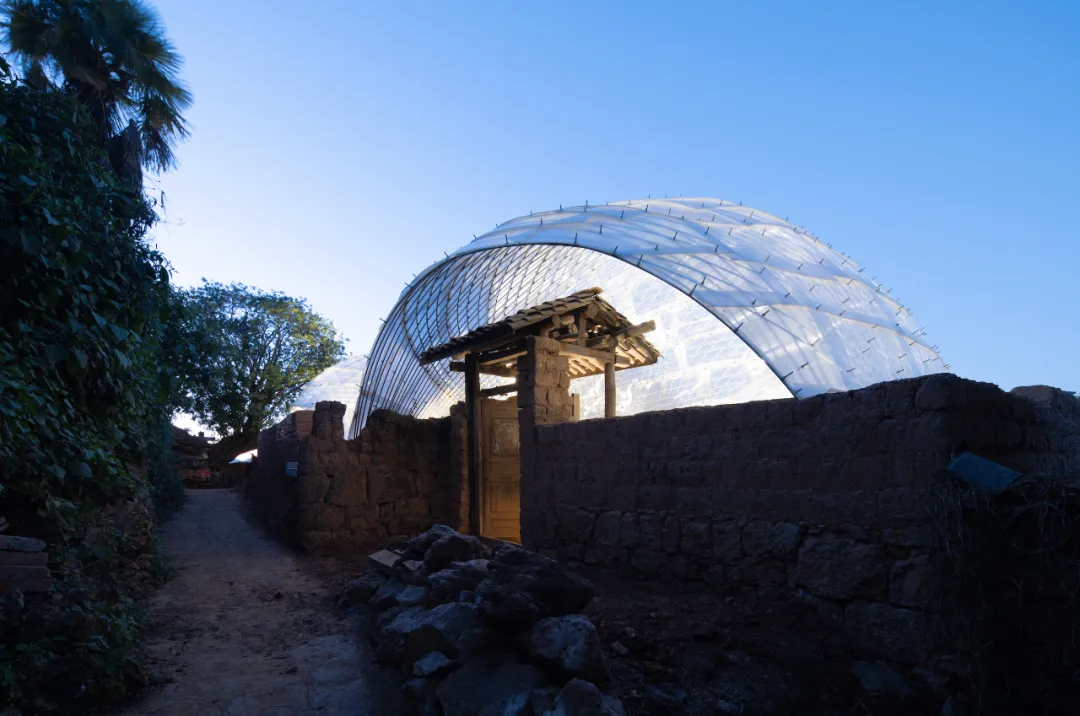
The masterplan unfolds from a forty acre farmland and a glass greenhouse that together establish the project’s foundation. Architecture is not imposed but gradually revealed through movement across the site. Circulation paths, planting zones, and gathering spaces are interwoven, allowing daily agricultural rhythms to shape spatial experience. The ambition is not spectacle, but calm continuity, a countryside scene shaped by restraint and observation.


Irregular circular forms are subtly introduced at the entrance, within planting areas, and across outdoor dining spaces. As crops grow and seasons shift, vegetation softens these geometries, dissolving the boundary between built form and cultivated land. Infrastructure elements such as irrigation and internal transport systems balance practicality with a deliberately restrained rural expression. Gravel embankments and preserved native weeds contribute to the restoration of local ecology, reinforcing the project’s environmental grounding.

The farm’s perimeter is defined by a modest gray brick wall that establishes a clear yet understated boundary. A minimalist entrance sequence guides visitors inward, where semi transparent brick walls recall traditional Chinese garden architecture. Perforated masonry allows light and air to pass through, casting shifting patterns on the ground and creating a gradual transition from enclosure to openness. This choreography of light and movement leads visitors gently into the cultivated fields beyond.


Outdoor dining areas are formed by parallel pitched roof canopies and fan shaped awnings that respond to the scale and language of existing structures. Crops define the ground plane, while fruit trees and shrubs are dispersed organically throughout the site. The resulting landscape feels both deliberate and unforced, a contemporary rural environment shaped by coexistence rather than contrast.


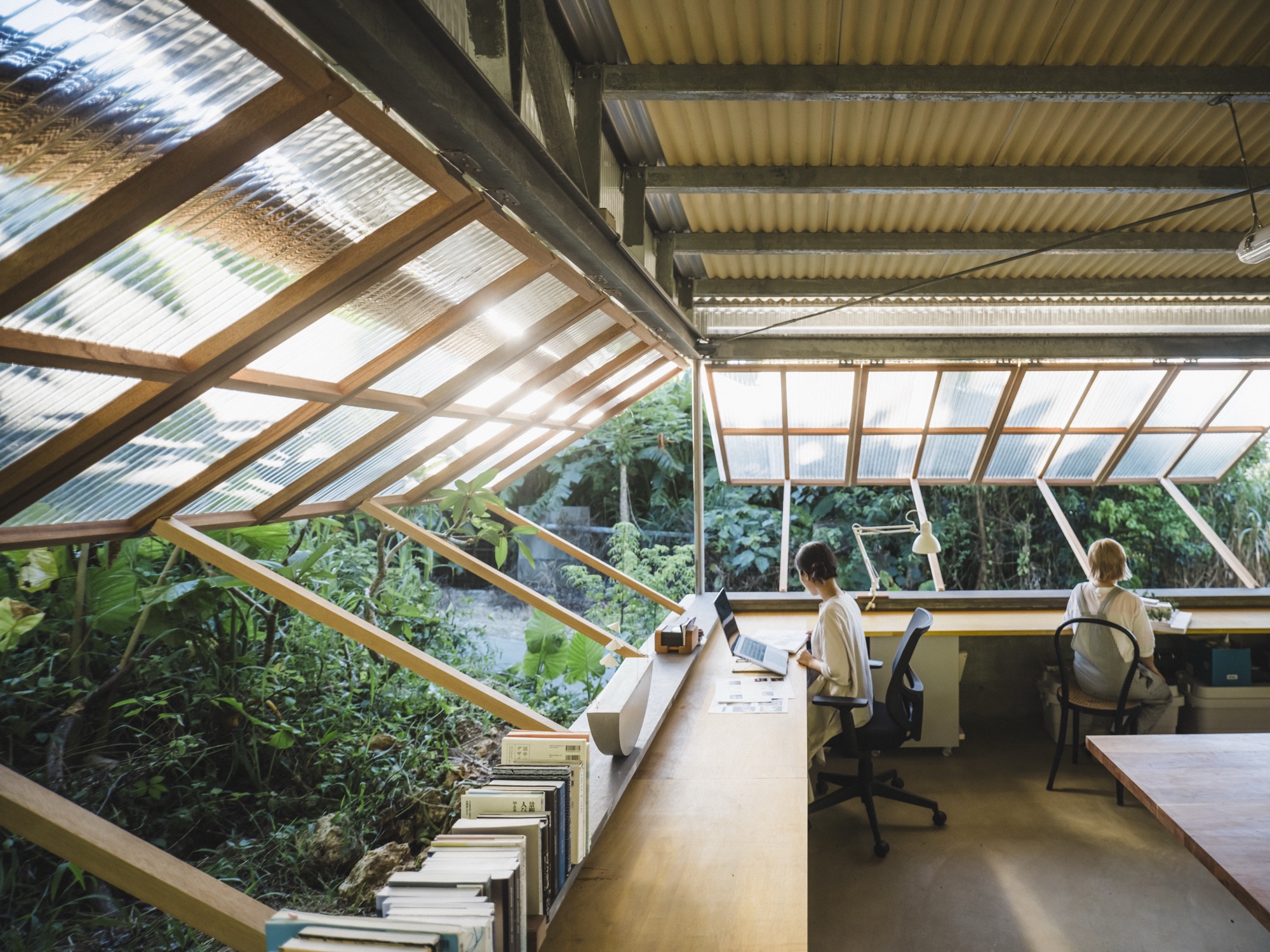
The renovation of the restaurant building preserves the original steel structure and corrugated steel roof, retaining the site’s industrial memory. Modular wall systems ensure thermal comfort across seasons, while carefully positioned vertical and horizontal windows on the north and south elevations frame views of the farmland. Exterior finishes of reclaimed timber and rusted steel plates echo agricultural tools and processes, allowing weathering to become part of the architecture’s expression.


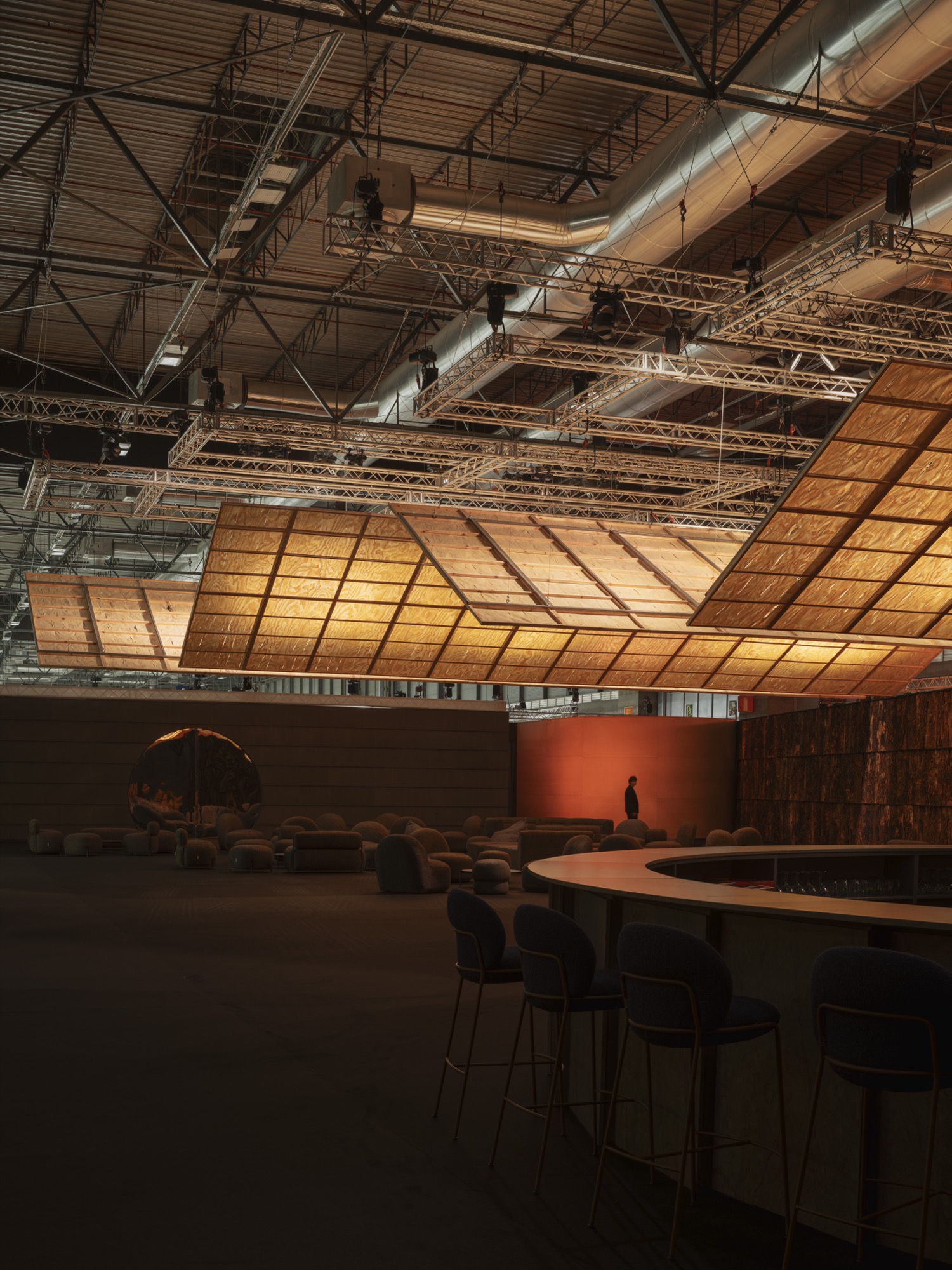
Inside, the atmosphere shifts toward quiet tactility. Wood fiber acoustic panels, reclaimed wood surfaces, and terrazzo flooring create a restrained interior that absorbs sound and light. Rather than isolating diners from the landscape, the interior maintains a constant visual dialogue with the fields outside, reinforcing the project’s central premise.


Spatial planning is organized around a centrally positioned circulation core, allowing flexible access from both the north and south. Openings can be adjusted to create distinct zones or a continuous dining environment. A large landscape window on the east anchors the interior, aligning a long communal table with the fields beyond, as if meals were set directly within the farmland. To the west, a coffee and beverage bar integrates seamlessly into the dining space, while a more secluded lounge area at the far end offers privacy for conversation and rest.


ZAOHE Ecological Farm represents a continuation of Fon Studio’s exploration of contextual design, where architecture functions as a mediator rather than an object. From material choices on the façade to interior spatial organization and the broader ecological framework of the farm, the project centers on authenticity and continuity. Architecture here becomes a container for memory, daily rituals, and shared experience, reconnecting people with land and food in a way that feels both contemporary and deeply rooted.
In a rapidly urbanizing context, ZAOHE Ecological Farm proposes an alternative rural future, one where design does not romanticize the countryside but carefully recalibrates it, allowing agriculture, architecture, and everyday life to evolve together.
Project Credit
Project name: ZAOHE ECOLOGICAL FARM – A Cartography of Organic Ecology
Location: Zhanggezhuang Village, Zhangzhen, Shunyi District, Beijing
Design firm: Fon Studio
Completion: 06.2025
Project Area: 280 sqm (building), 26400 sqm (landscape)
Photography and Videography: Qin Wei
More Photos