
Now Reading: Architecture as a quiet act of coexistence
- 01
Architecture as a quiet act of coexistence

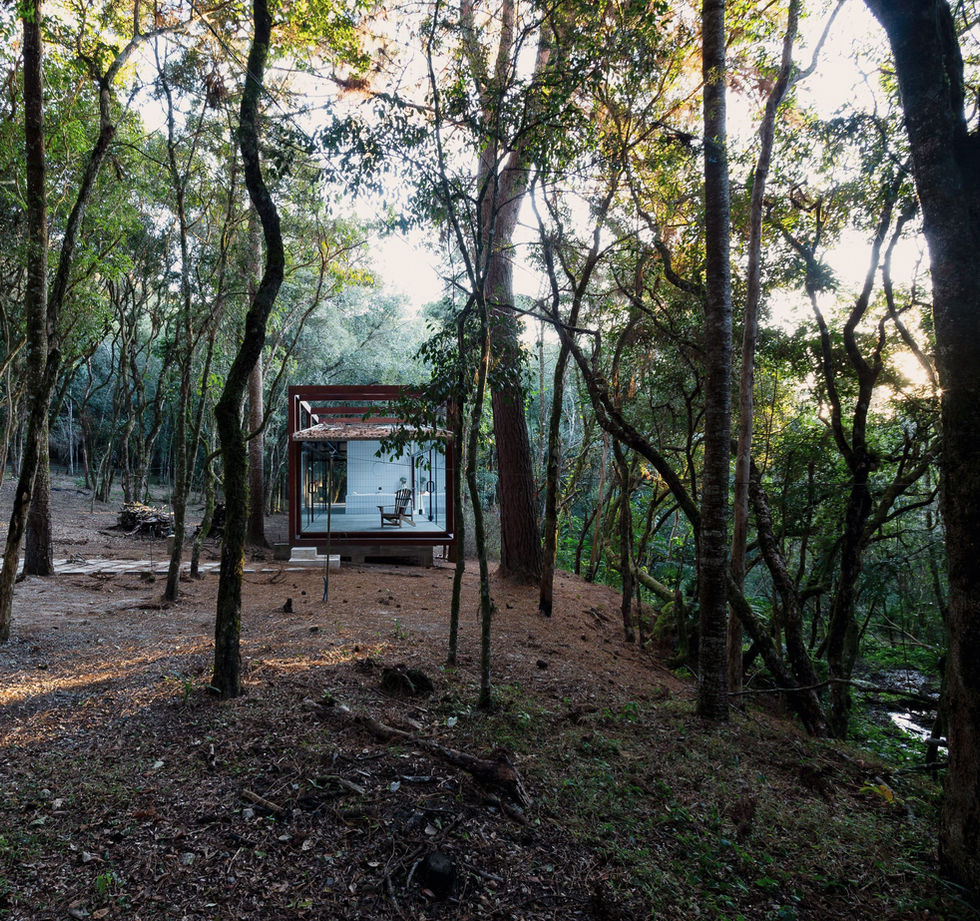

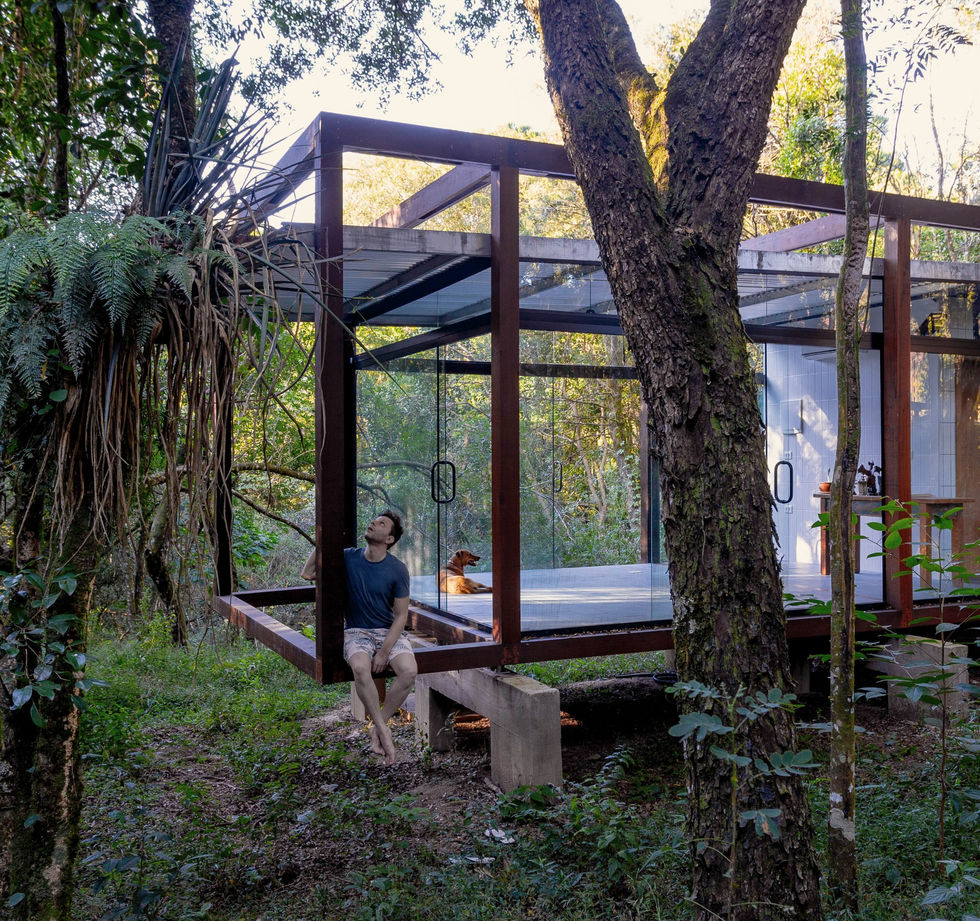
Set within the Atlantic Forest of southern Brazil, the Guaju Pavilion proposes an architecture that does not seek attention, but attunement. Rather than arriving as an object placed in the landscape, the pavilion emerges from a careful reading of geography, climate, and silence. Conceived as a space for physical practice, bathing, and meditation, it reflects a broader inquiry into how architecture might support life rather than disrupt it.
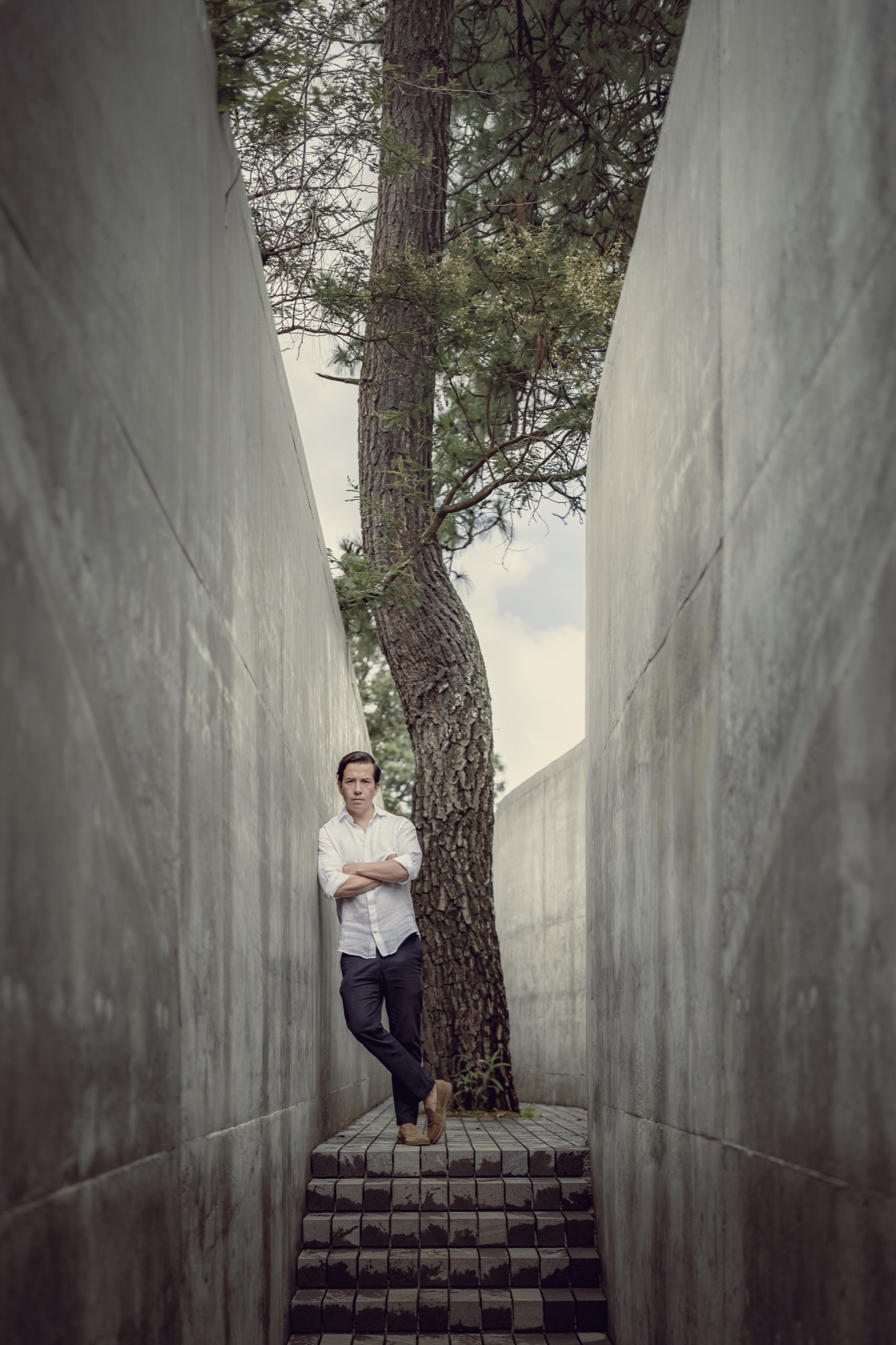
This interview unfolds through a conversation with Yuri Vasconcelos, founder of YVA Arquitetura, whose practice is shaped by prolonged observation of place and a deliberate ethic of restraint. Through a lightweight prefabricated structure, elevated from the ground and enclosed by movable glass, the pavilion dissolves conventional boundaries between inside and outside. Wind, sound, humidity, and light become active participants in the spatial experience. What emerges is not an architecture of form, but of coexistence, where building recedes so that landscape, memory, and the living forest can come forward.

What were the primary sources of inspiration for the Guaju Pavilion, and how did they shape your initial conceptual sketches?
When we began, there wasn’t a deliberate or conscious search for inspiration. Creation often works in a quieter way. Over time, the object reveals its own genealogy, and only then do you recognize the references that were silently present from the beginning. Looking back, certain forms and spatial ideas we’ve long admired were clearly operating beneath the surface. There is an undeniable reference to the Farmer’s House and the structural rigor of Mies van der Rohe, as well as echoes of Japanese architecture in the way modularity organizes the wooden structure. Modernist principles of material honesty, structural clarity, and the absence of excess were always there. But above all, the natural context guided the project. The pavilion does not impose itself on the environment. It does not arrive as an object placed in the landscape; it emerges from it.
Could you elaborate on the core design philosophy behind the pavilion and its relationship with tranquility, movement, and introspection?
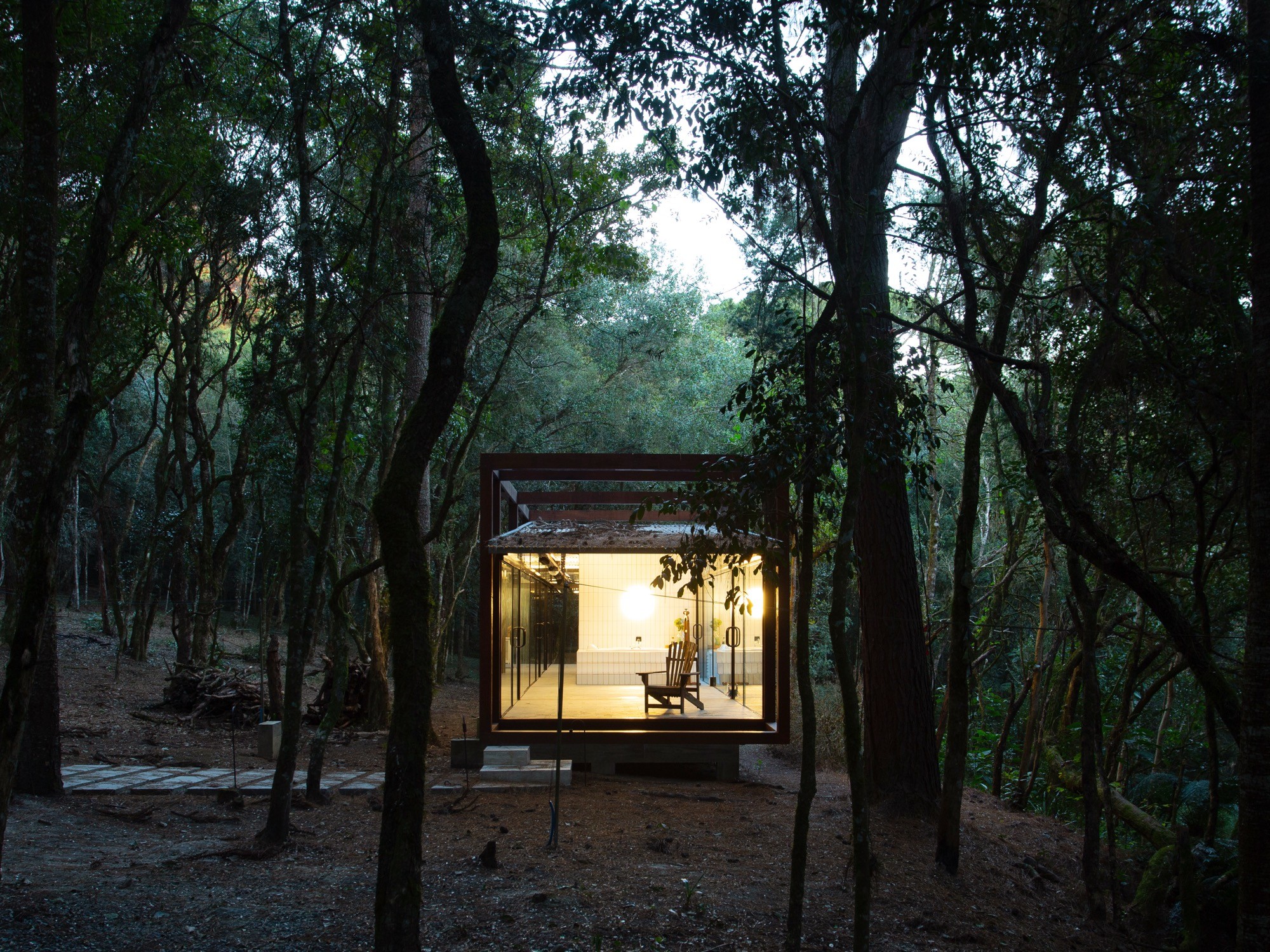
The heart of this project is not the structure; it is the place. It is the geography. Every decision, from the volume to the materials and the construction system, was a response to what already existed here. Before drawing a single line, I spent hours on the site at different times of day, in silence, simply observing. In that silence, I realized the center of the project was already complete. It was the wind moving through the trees, the light shifting across the canopy, the sound of water, and the discreet life of the forest.
Architecture often distances us from our origins by turning buildings into landmarks that separate us from nature. We believe this is a fundamental error. This pavilion was never meant to be a boundary. It is a support for tranquility, for body care, and for meditation.These activities already belonged to the place.
From an architectural standpoint, how did you approach the idea of dematerialization, and what role did the 3.5-meter grid play?
To truly connect with the natural world, transparency alone is not enough. We were searching for dematerialization, when the boundary between inside and outside visually disappears.
We used tempered glass so the gaze encounters no resistance. From certain angles, the pavilion almost vanishes. The eye passes through it to discover the forest beyond. Achieving this lightness requires discipline. The structure must remain silent. We reduced thickness, eliminated the unnecessary, and focused only on what was essential.
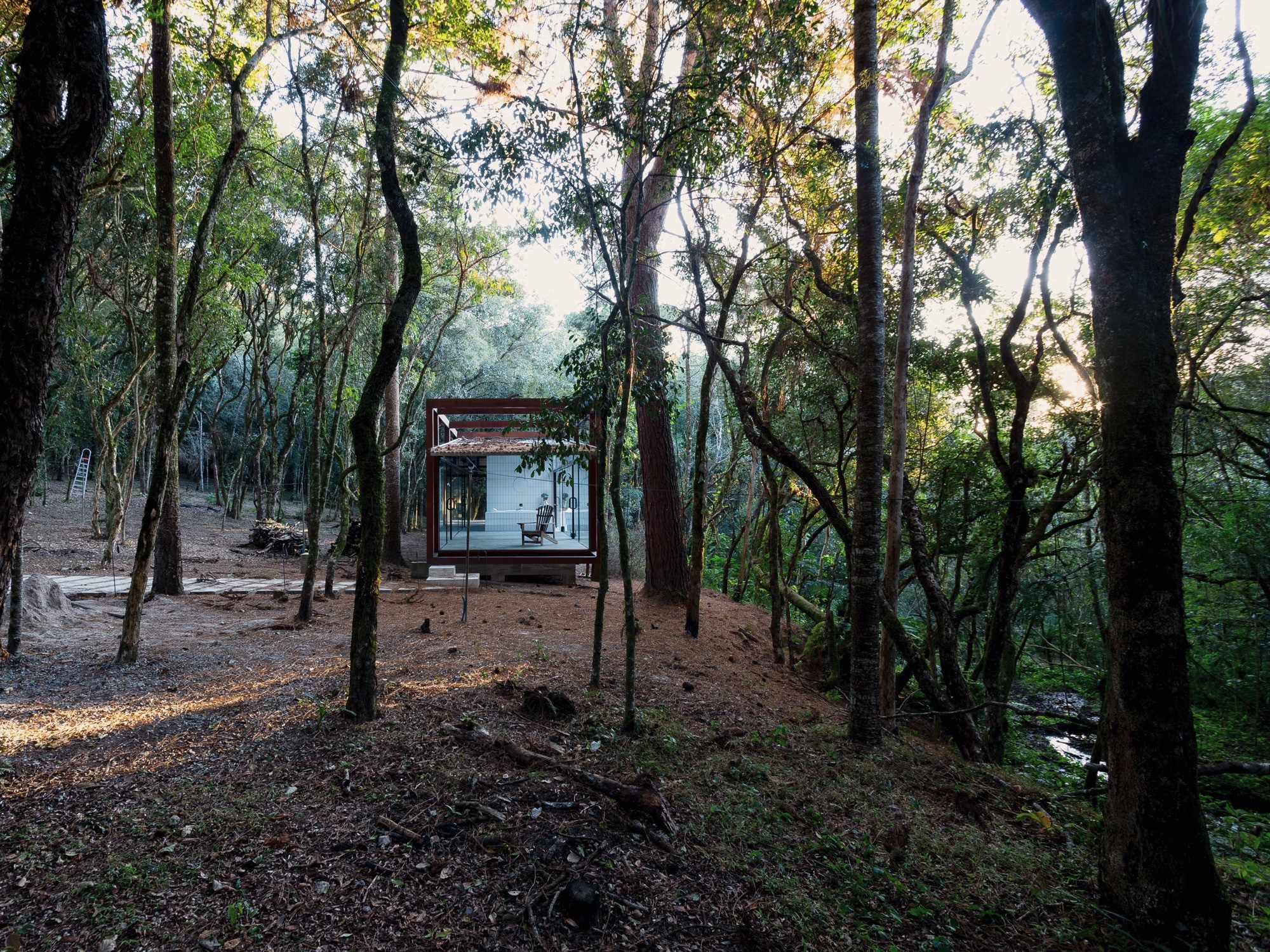
By raising the floor, the building no longer presses itself into the ground; it floats above it. But architecture is not only about what we see. The glass panels are movable; they breathe. When they open, the architecture recedes, and wind, humidity, temperature, and sound enter freely. At that moment, the forest becomes the experience itself.
What influenced your choice of materials such as solid Itaúba wood and glass?
Material choice was guided by two constraints: minimizing interference with the soil and working within a realistic budget. Prefabrication offered a clear path forward.
The design was shaped by the reality of the material, including the maximum dimensions of locally available solid wood and a ceiling height of three meters. These parameters defined the 3.5-meter module and led us to conceive the pavilion as a sequence of wooden cubes.
There is also a deeper responsibility behind these choices. We decided that every supplier and every hand involved in construction should come from the region. By using local Itaúba wood and slate stone, we reduced transportation impacts while supporting family businesses. When materials come from the place itself, the construction gains a genuine sense of belonging.
How did you organize the interior spaces within the pavilion’s compact footprint?
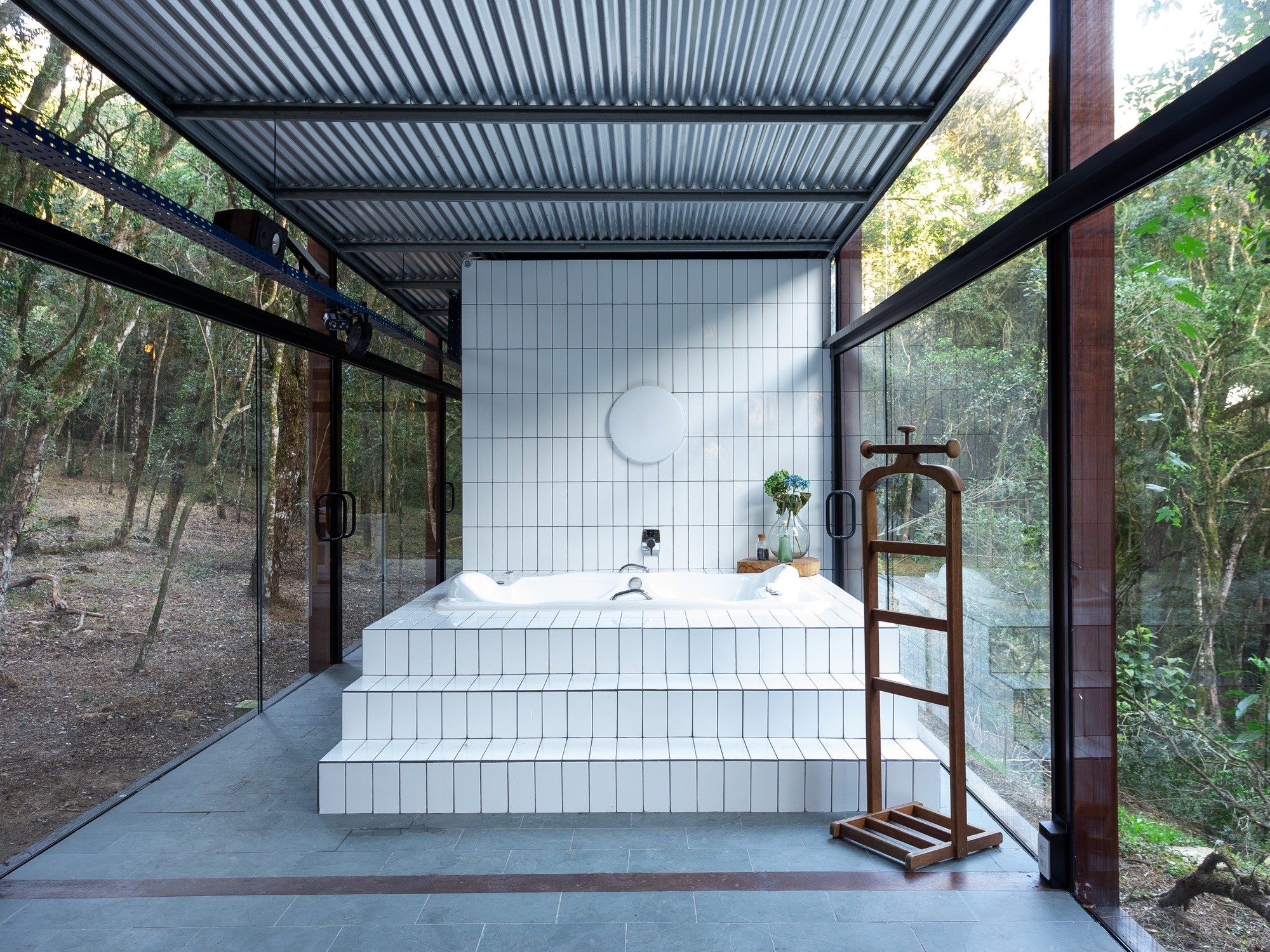
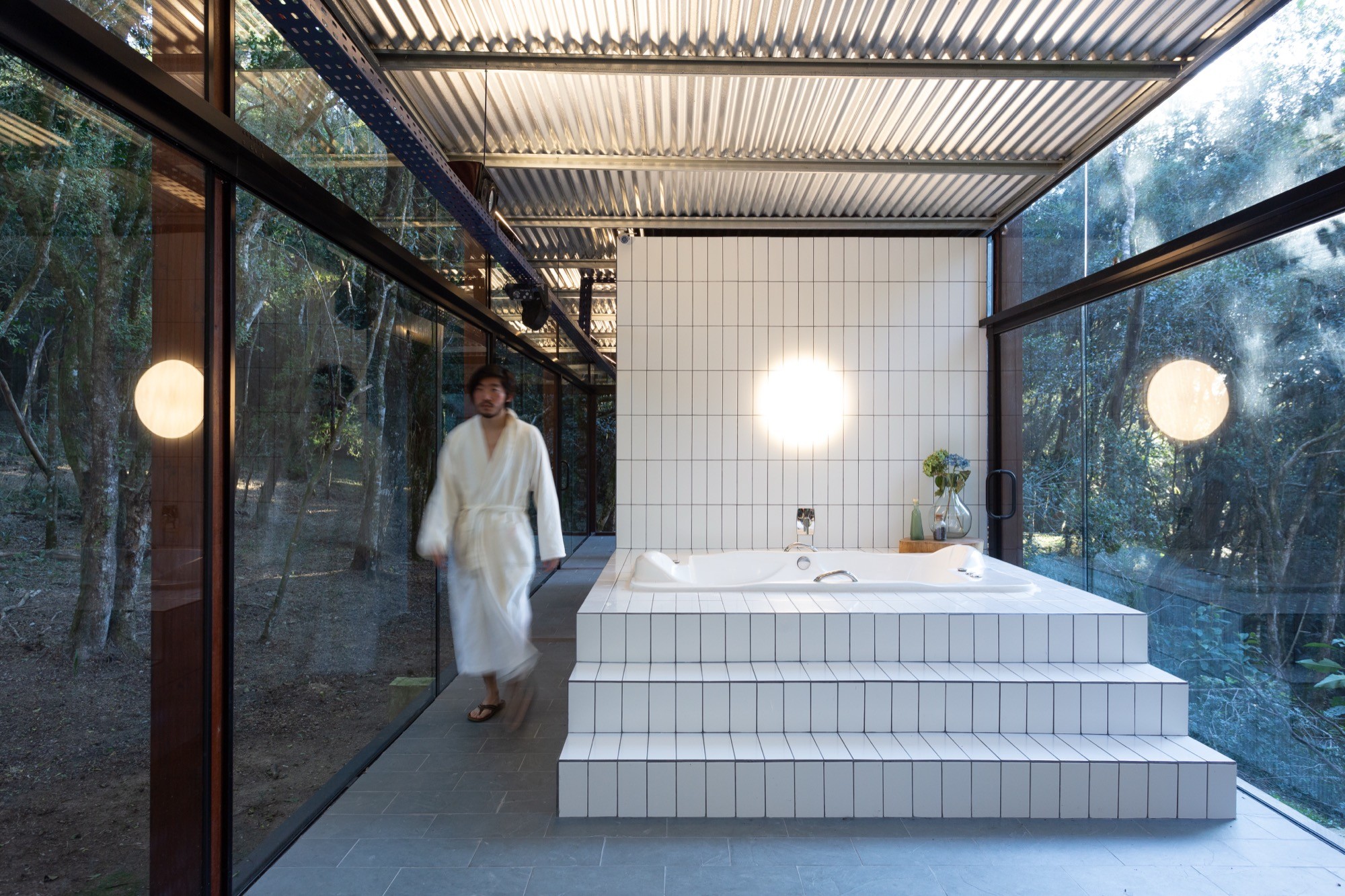
The spatial organization was guided primarily by sound and light. Entry occurs from the east, where we placed the gym and bathroom, spaces associated with movement and vitality. The bathroom volume acts as a buffer, protecting the silence of the rest of the pavilion. As you move west, the forest becomes denser and quieter. This is where we placed the meditation space, which becomes the point of maximum stillness. Circulation follows a deliberate sequence, creating what we think of as a gradient of consciousness. You move from physical effort, through the ritual of bathing, and finally into silence. It’s not simply a functional layout; it’s a gradual withdrawal from the noise of the world and a movement closer to oneself.
Why did you choose to elevate the pavilion, and how does this reflect your environmental values?
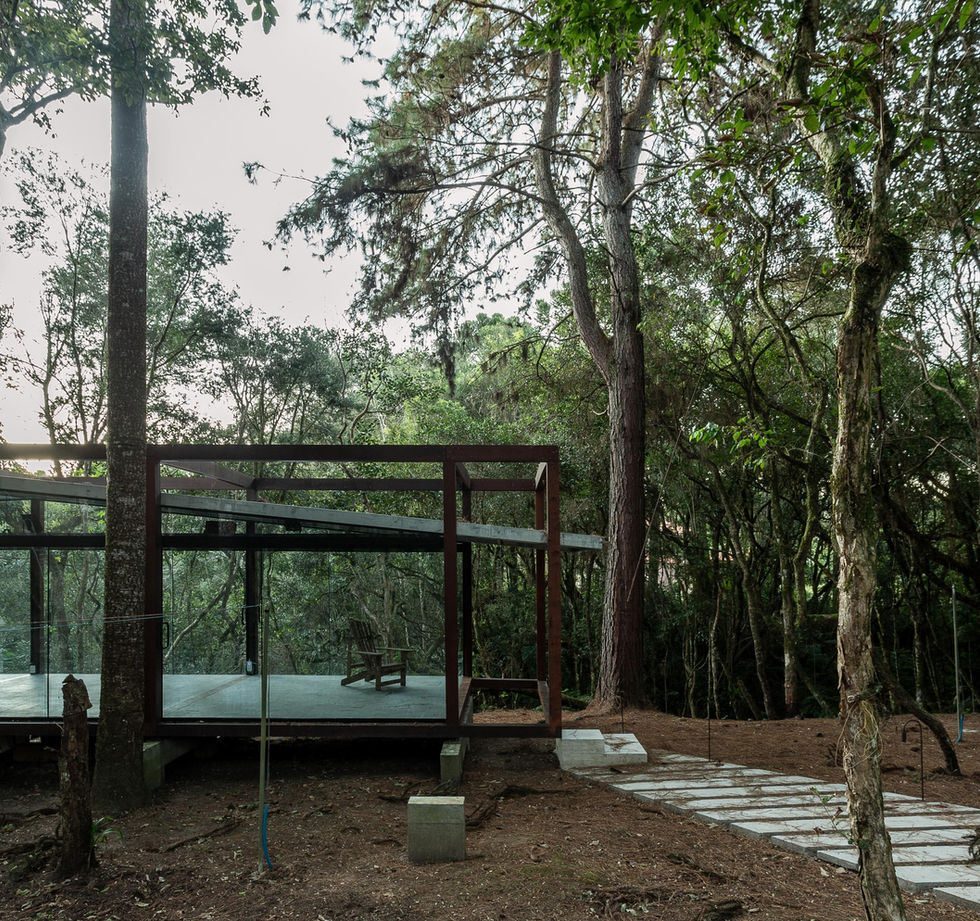
Raising the pavilion was not only a visual decision; it was an ethical one. Our clients, guided by a Buddhist perspective, asked us how architecture could preserve life rather than disrupt it.
We limited the foundations to what was strictly necessary so the building does not crush the soil. The ground remains free for insects and small animals to move uninterrupted. Elevation also ensures that natural drainage continues beneath the structure. Rainwater flows exactly as it did before we arrived. The pavilion does not act as a dam; it simply coexists.
What sustainability strategies were central to the project?
Unlike traditional masonry, this is a lightweight, dry construction. Each component arrived on site with precise measurements, allowing for an almost surgical assembly process. There was no waste, only execution. The glass envelope maximizes daylight, reducing reliance on artificial lighting. When the panels open, natural ventilation replaces mechanical systems. In Brazil, energy efficiency is not only an environmental concern; it is an economic one. We also designed the pavilion to be reversible. It can be dismantled, reused, and relocated. From assembly to potential disassembly, the impact on the land remains minimal. It leaves no scar on the earth.
How did acoustics and sensory experience shape the pavilion’s design?
Architecture is experienced with the entire body, not just the eyes. In a time when vision dominates our relationship with the world, we wanted to preserve the full sensory experience of the site. The sound of the forest, the movement of air, the smell of the earth, and even the weight of silence were already present. The pavilion does not create these qualities; it simply allows them to remain. There is a necessary humility in this approach. The most powerful aspect of this building, its soul, belongs to the forest, not to us.
What were the most significant challenges during design and construction?
The first challenge was honesty. We explored multiple sites and went through five or six versions before arriving at the final solution. Discarding good ideas is essential if you want to find what is truly necessary.
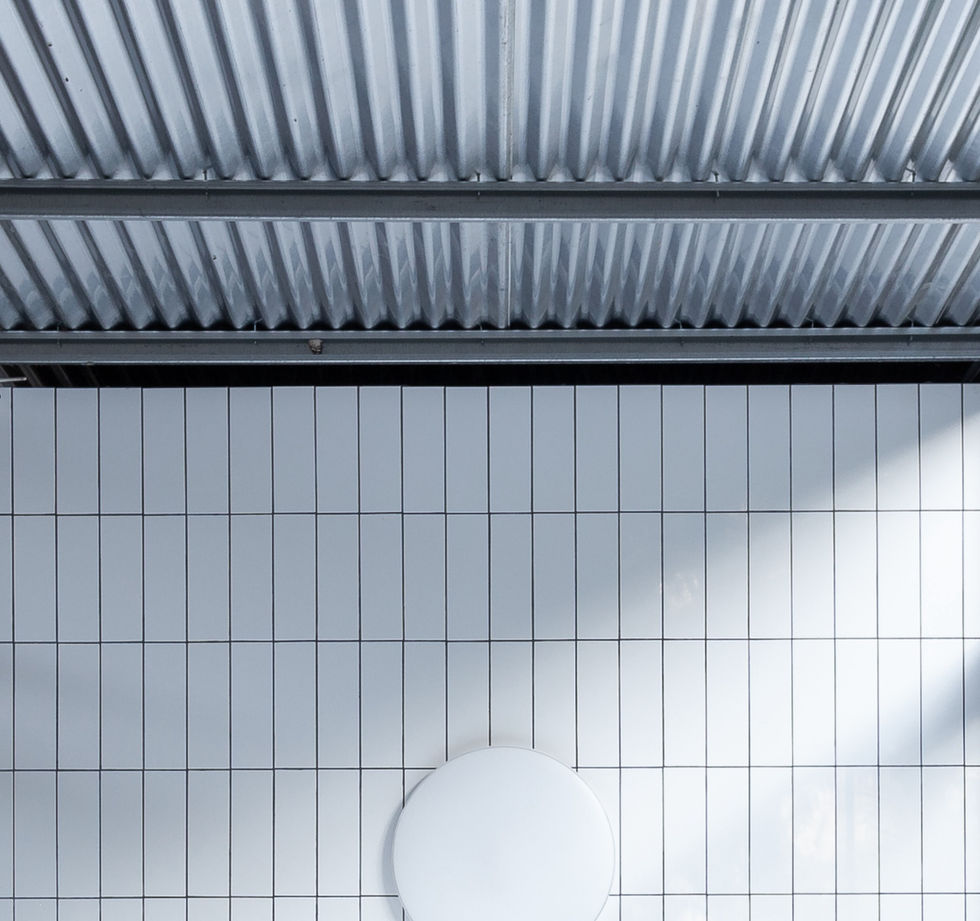
There were also tangible, physical challenges. The corrugated metal roof is extremely thin, almost like a blade. During construction, a colleague cut his hand while handling it. That moment reminded us that behind the visual lightness and poetic atmosphere lies real physical effort, risk, and manual labor. The material demanded absolute respect.
What lessons from the Guaju Pavilion will influence your future work?
This project transformed our understanding of construction. Seeing a site that functioned more like a precise assembly than a conventional building process was deeply convincing. It was our first experience with this level of prefabrication, and we are already applying what we learned to new projects.
Minimal interference is not only a technical strategy; it is a philosophical position. The idea of a structure that can be dismantled, both ephemeral and dignified, feels especially relevant when working within fragile natural systems. It offers a way for architecture to exist lightly, responsibly, and with humility.
Thanks for your meaning time!
Text: Rafael Cunha
Photo: Gabriel Tomich