
Now Reading: Timber architecture on Helsinki’s waterfront
- 01
Timber architecture on Helsinki’s waterfront


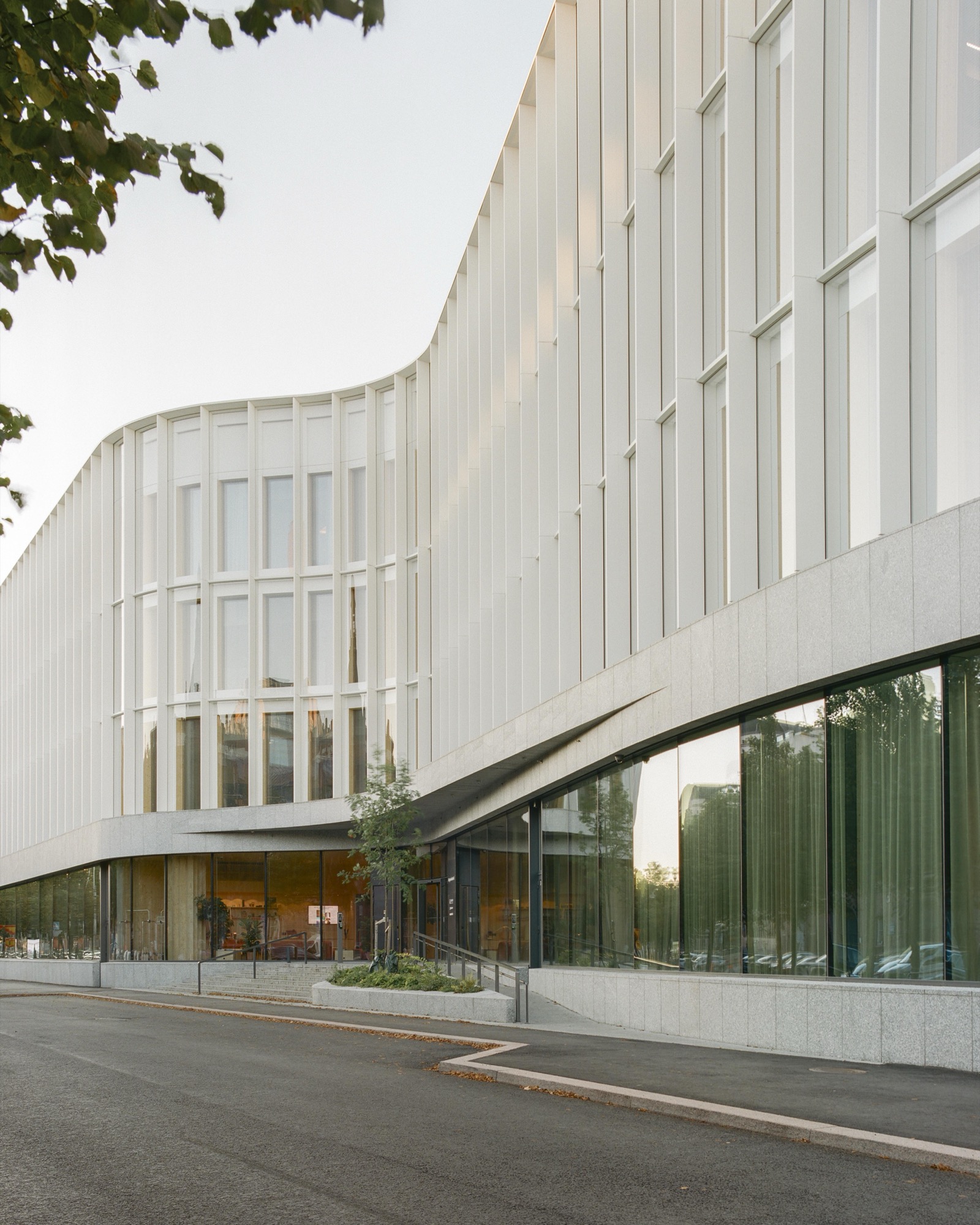
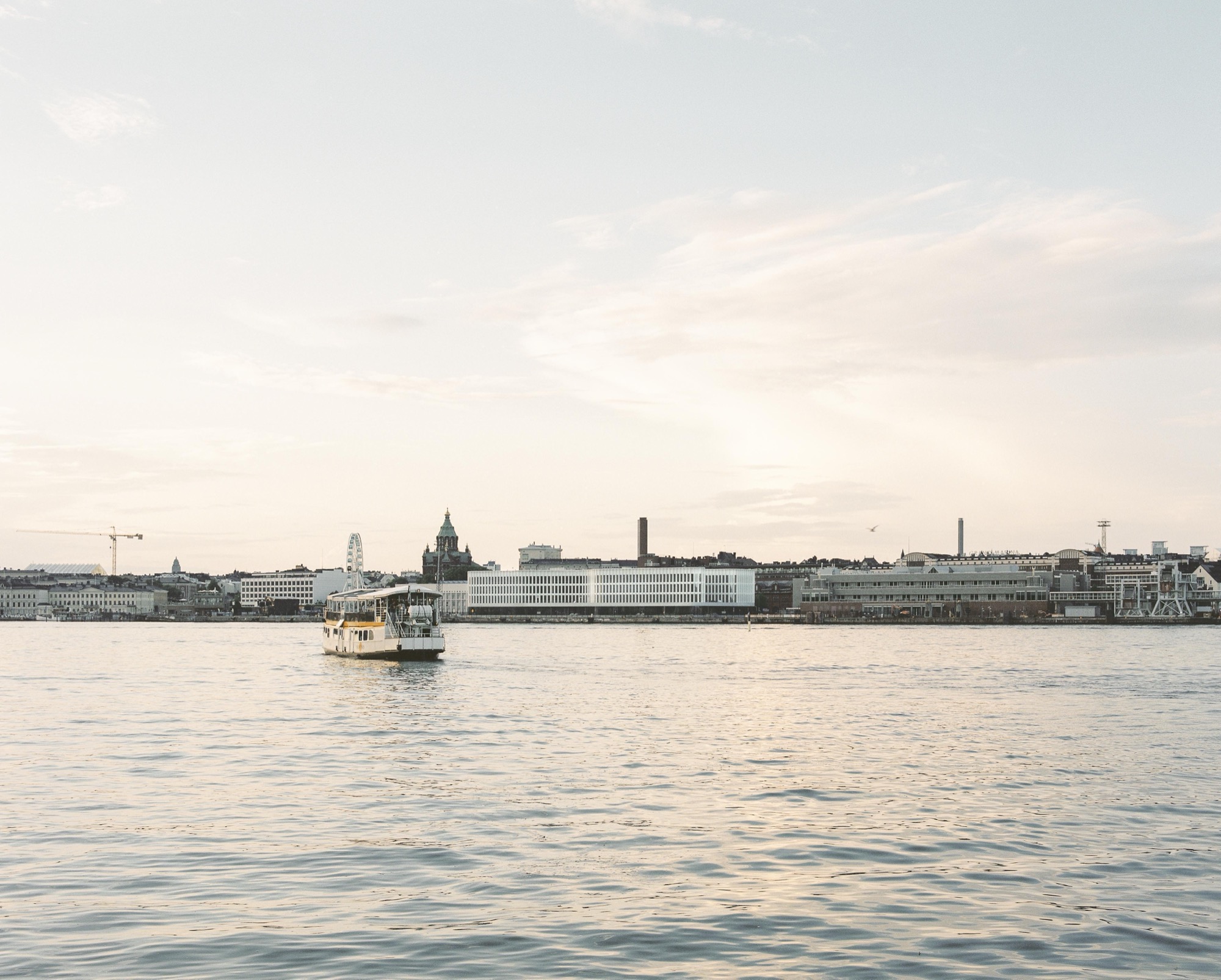
On the edge of the Baltic Sea, where Helsinki’s neoclassical southern shoreline meets the layered fabric of the Katajanokka peninsula, Katajanokan Laituri emerges as both an architectural statement and an urban proposition. Designed by Anttinen Oiva Architects, the project introduces a large scale solid wood office and hotel building to a historically sensitive waterfront, setting a new benchmark for timber construction in dense maritime contexts.

As the first new building on the formerly industrial Katajanokka embankment, Katajanokan Laituri plays a catalytic role. It initiates the transformation of the waterfront into an open, publicly accessible urban landscape while reinforcing Helsinki’s iconic maritime silhouette. Rather than competing with the city’s restrained skyline, the building continues its rhythmic, neoclassical profile. At the same time, the gently meandering articulation of the facade breaks down the overall mass, allowing the architecture to resonate with the peninsula’s heterogeneous building stock.

A FACADE THAT MEDIATES CITY, SEA, AND MATERIAL
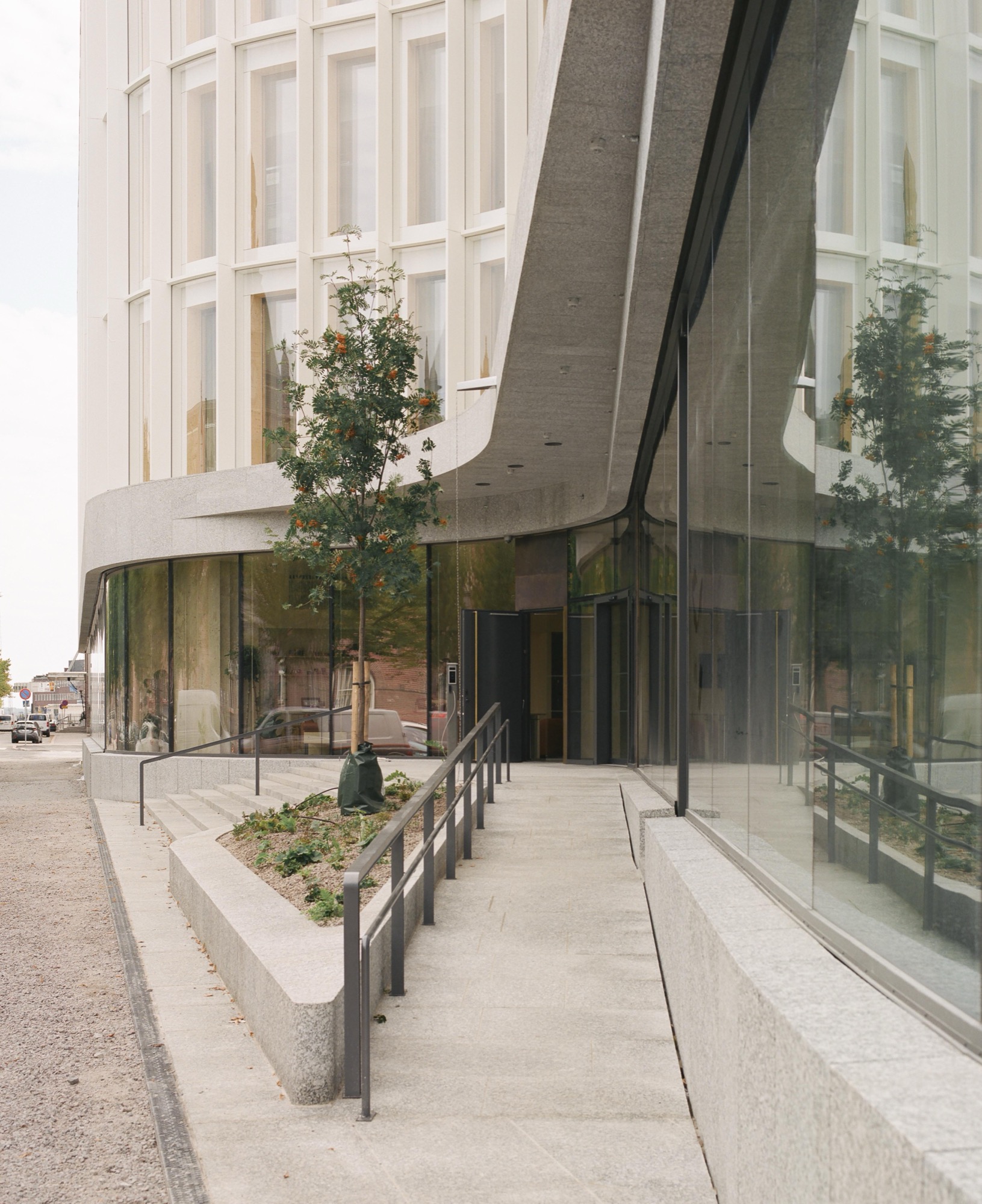
The building’s architectural identity is defined by a carefully engineered double facade. An outer layer of glass, aluminum, and light gray granite shields the exposed timber structure from the harsh maritime climate, while also acting as a visual mediator between the city and the sea. Throughout the day and across the seasons, the facade shifts in tone and depth, reflecting light, weather, and movement along the waterfront.


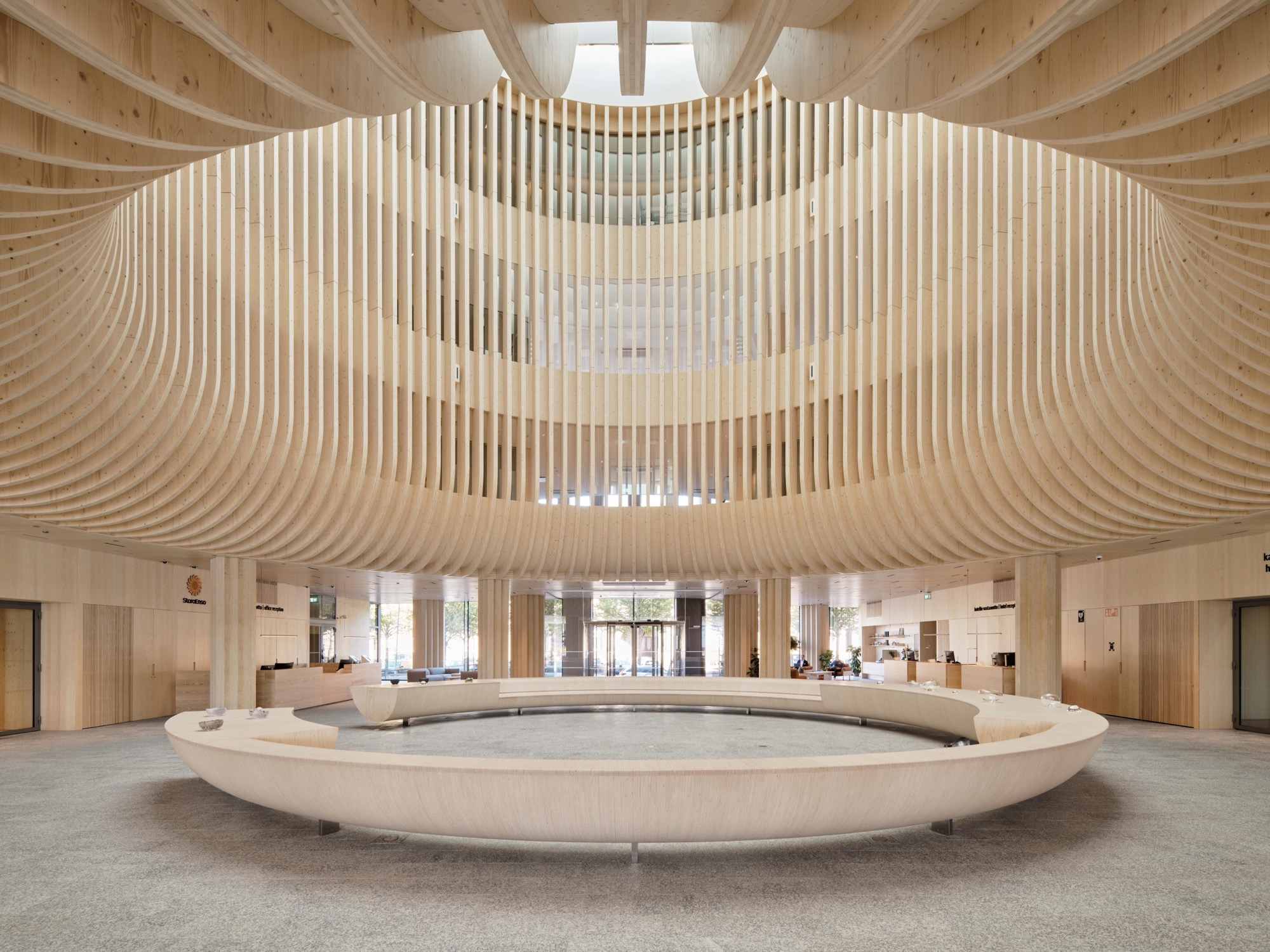
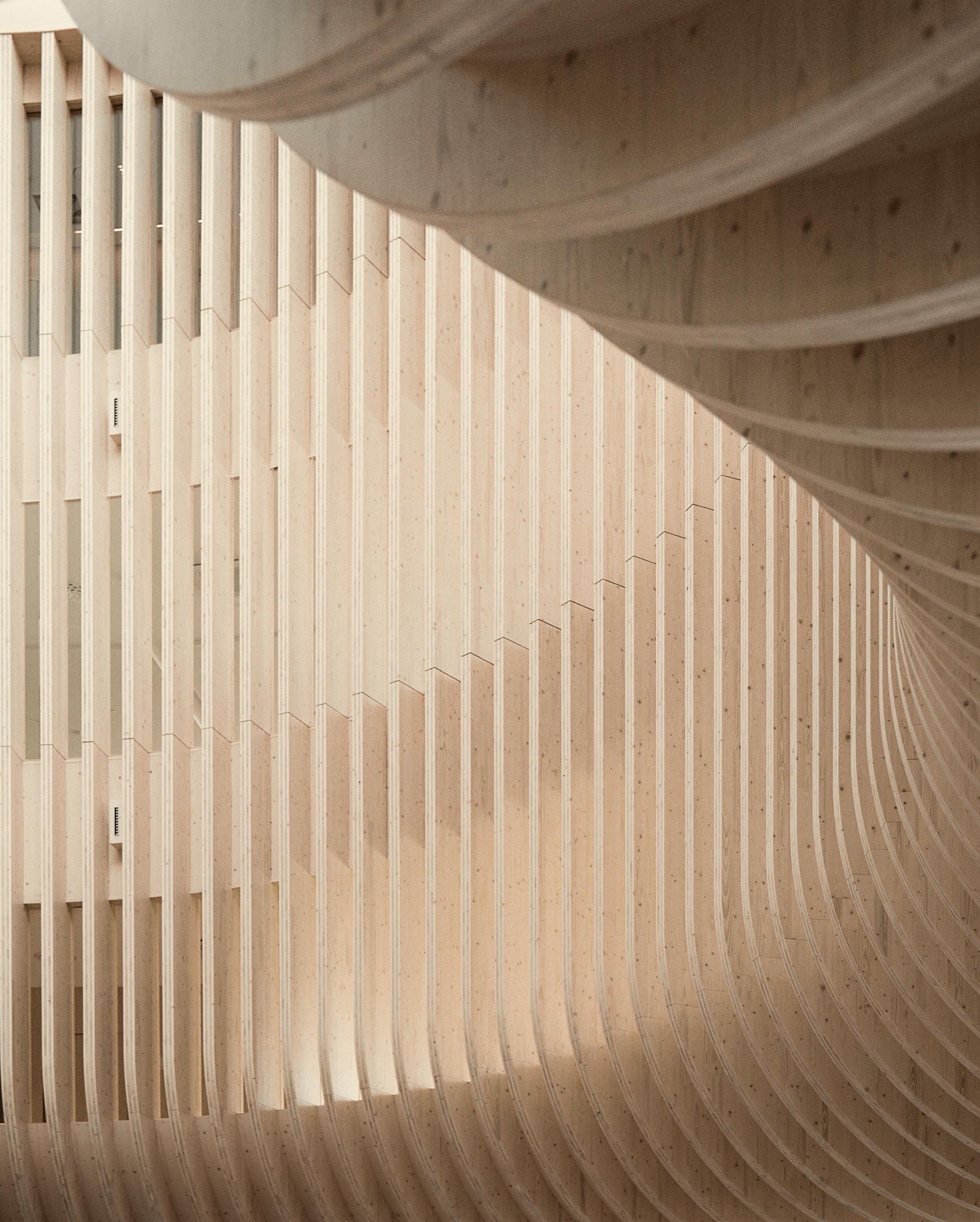
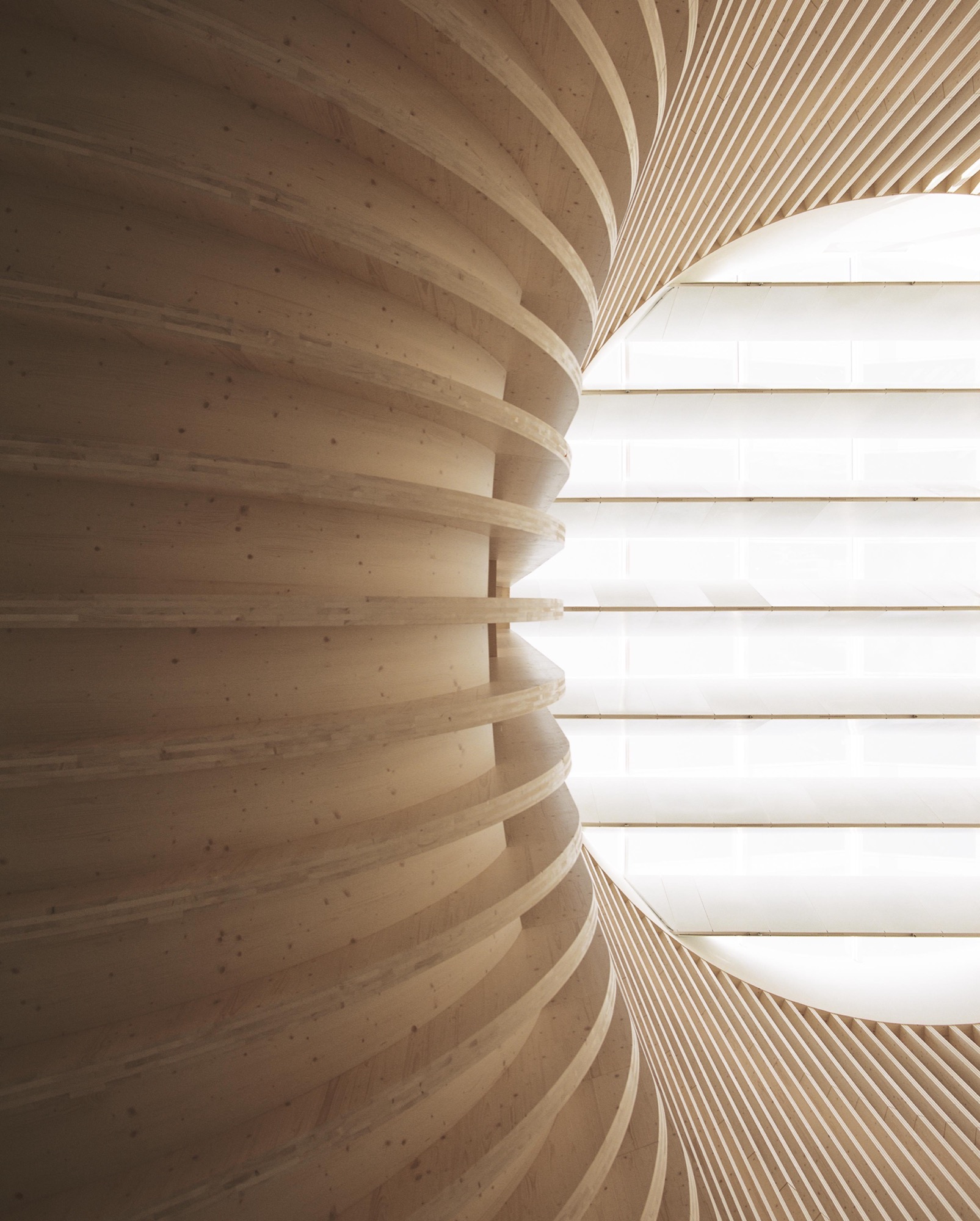
Behind this protective envelope, the exposed spruce structure becomes the project’s material core. Rather than concealing its construction, the architecture foregrounds wood as a contemporary structural and expressive medium, demonstrating how large scale timber buildings can be both technically robust and architecturally refined.


PUBLIC GROUND, SHARED INTERIOR, GREEN ROOF
Katajanokan Laituri rises four storeys above ground, with a publicly accessible green rooftop terrace and a basement accommodating technical facilities and parking. At street level, the building opens itself to the city on both sides, dissolving the boundary between private program and public life. A generous shared foyer connects office, hotel, restaurant, café, and conference spaces, creating an interior urban room rather than a closed corporate entrance.
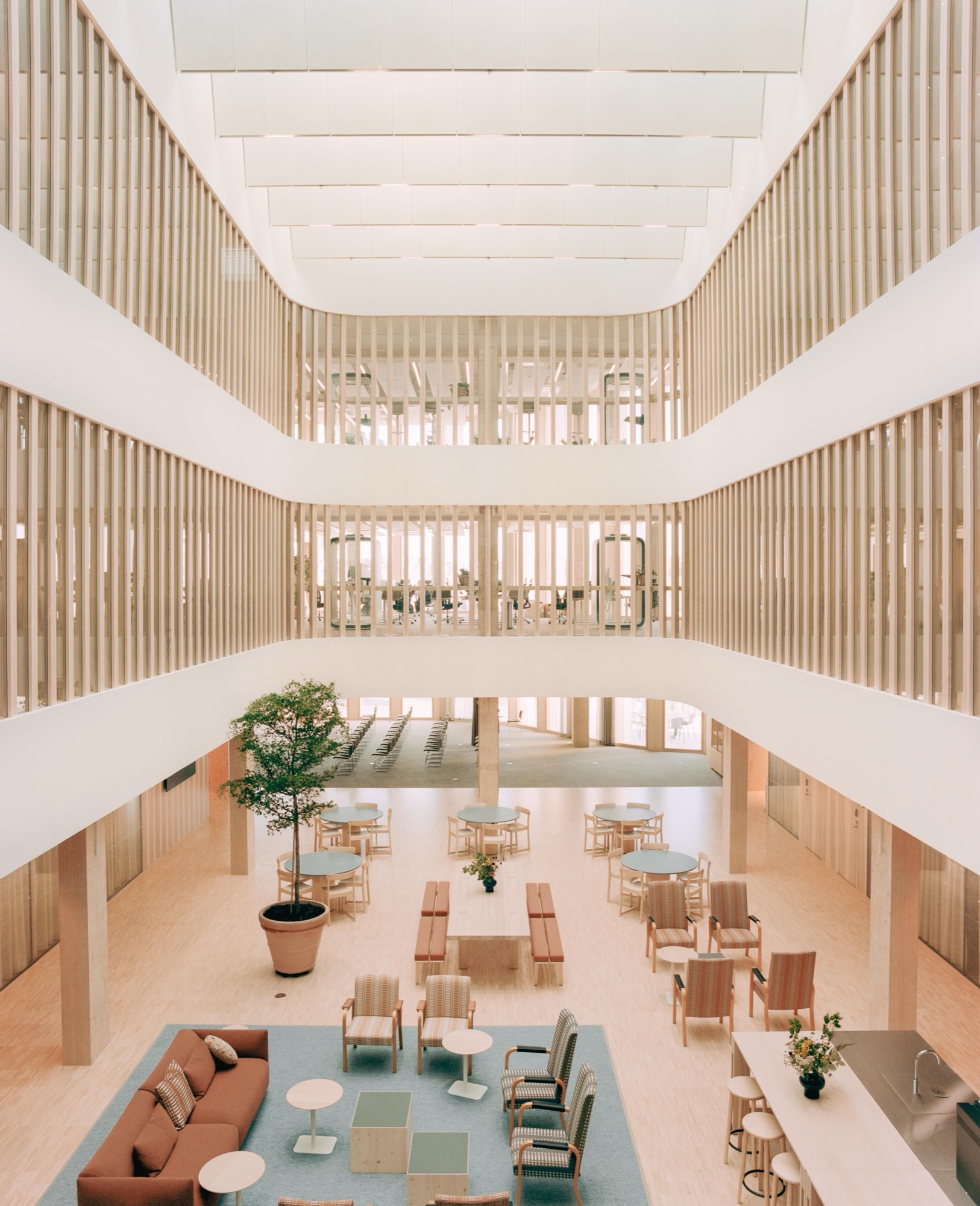
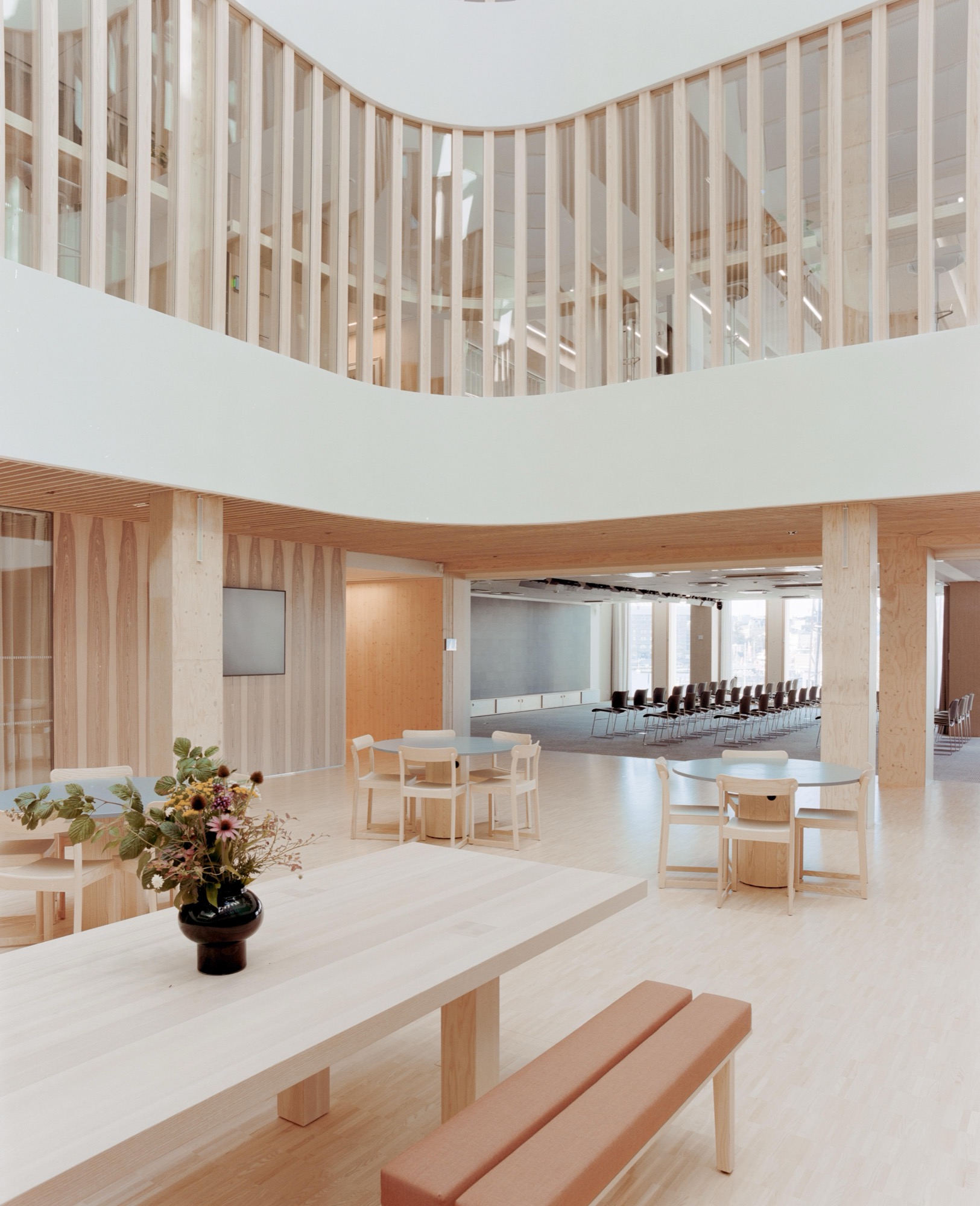


Originally conceived as the new headquarters of Stora Enso, half of the building is occupied by a hotel, reinforcing its mixed use character and ensuring continuous activity throughout the day. The spatial and structural logic allows for long term adaptability, enabling interiors to evolve over time without compromising architectural integrity.
Inside, spruce and ash detailing celebrates the natural variation of wood, while granite surfaces extend seamlessly from exterior pavements into interior spaces. The material palette is deliberately restrained, guided by durability, sustainability, and the capacity to age with dignity rather than novelty.


ARCHITECTURE SHAPED BY NORTHERN NATURE
Landscape design plays a critical role in extending the building’s relationship with its context. Outdoor spaces draw directly from northern ecologies, with a birch grove forming a sheltered courtyard and archipelago inspired meadows unfolding across the rooftop terrace. These planted environments soften the architectural mass while reinforcing a sense of place rooted in Finnish landscapes.

Beyond its architectural expression, Katajanokan Laituri is a deeply technical project driven by long term climate considerations. The above ground structure is composed entirely of industrially prefabricated massive timber elements developed by Stora Enso, customized for pioneering structural solutions. The post beam frame and facade structure are executed in laminated veneer lumber produced in Finland, while cross laminated timber elements from Sweden form the floors, roofs, inner walls, and stabilizing cores.


In total, the building incorporates 7,600 cubic meters of spruce across 2,500 timber elements. This approach significantly reduces embodied carbon while demonstrating how renewable materials can meet the demands of large scale commercial architecture.


BUILDING THE FUTURE WATERFRONT
The building’s proximity to the sea required extensive flood protection measures, transforming Katajanokan Laituri into a piece of coastal infrastructure as much as a building. As the first redevelopment on this stretch of waterfront, the project initiates the reinforcement and elevation of the embankment, laying the groundwork for a future continuous public promenade from Market Square to the tip of Katajanokka.
In this sense, Katajanokan Laituri is not only an office and hotel, but an urban instrument. It demonstrates how architecture can simultaneously address climate resilience, material innovation, and public life, positioning timber construction as a central component of contemporary Nordic urbanism in Helsinki.
Project Credit
Location: Helsinki, Finland
Architect: Anttinen Oiva Architects / @anttinen_oiva_architects
Photo: Kalle Kouhia, Tuomas Uusheimo