
Now Reading: Architecture in quiet resonance
- 01
Architecture in quiet resonance


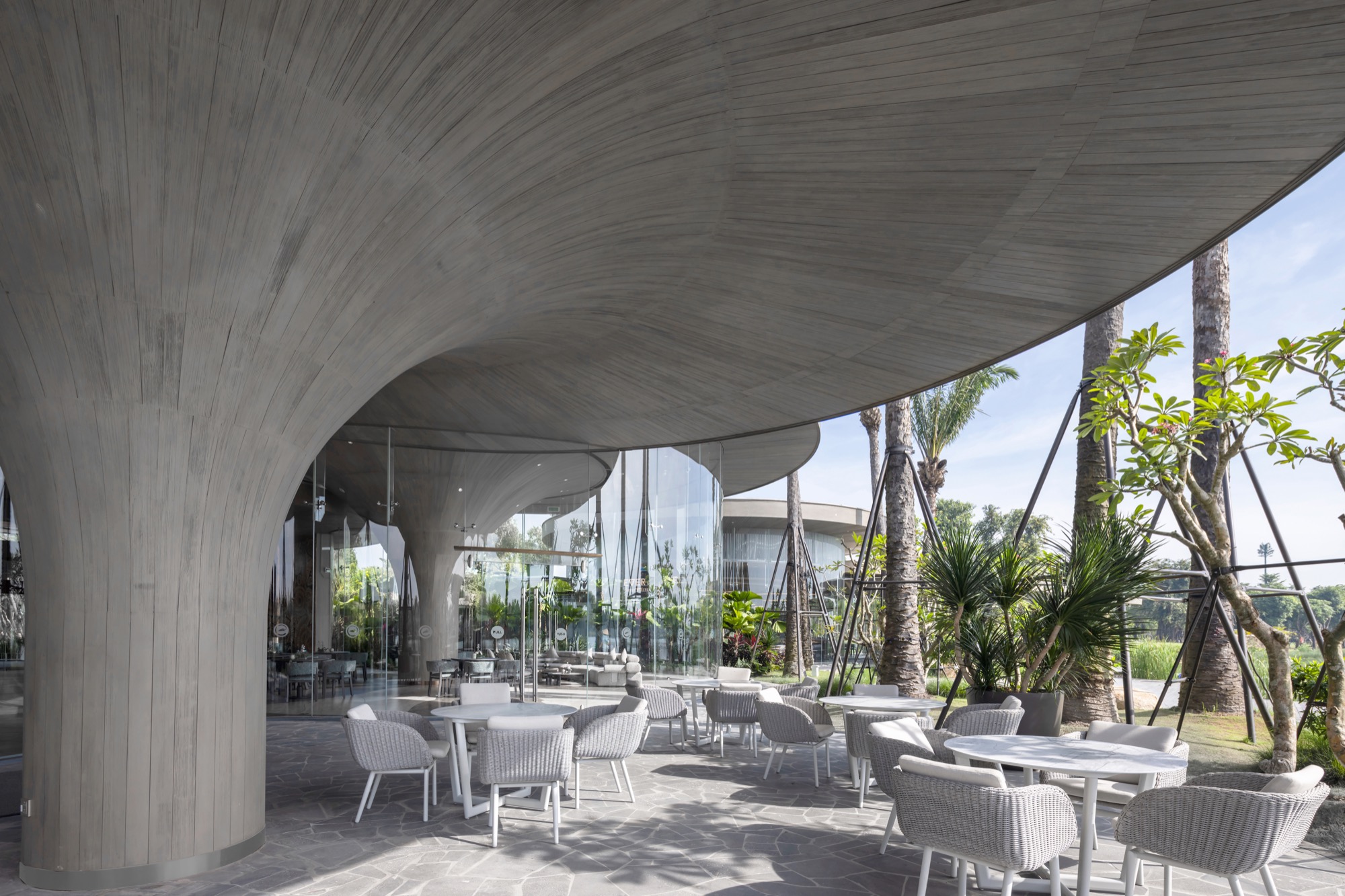
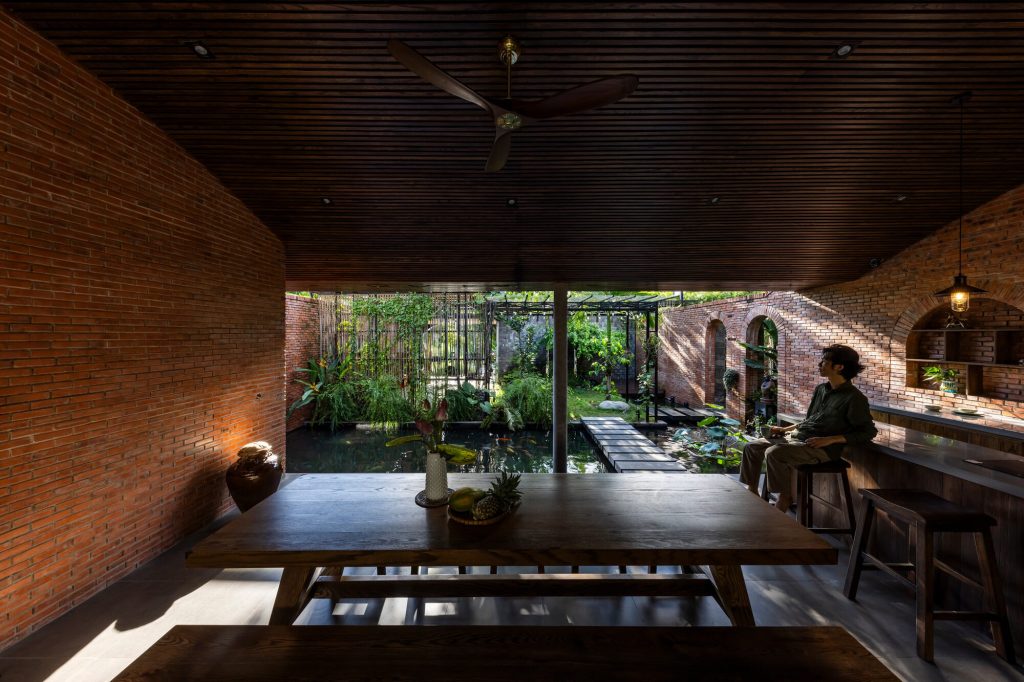
Conceived as a living organism rather than a singular architectural object, Lotus Clubhouse unfolds in close dialogue with terrain, water, and vegetation. Instead of asserting itself as an isolated mass, the building appears to rise gently from the ground, shaped by natural slopes, filtered views, and its orientation toward the lake. From the earliest sketches, the project was framed as an ongoing conversation between architecture, landscape, and local culture, reflecting MIA Design Studio’s long-standing philosophy of coexistence with nature. Here, architecture does not interrupt the environment. It becomes part of it.

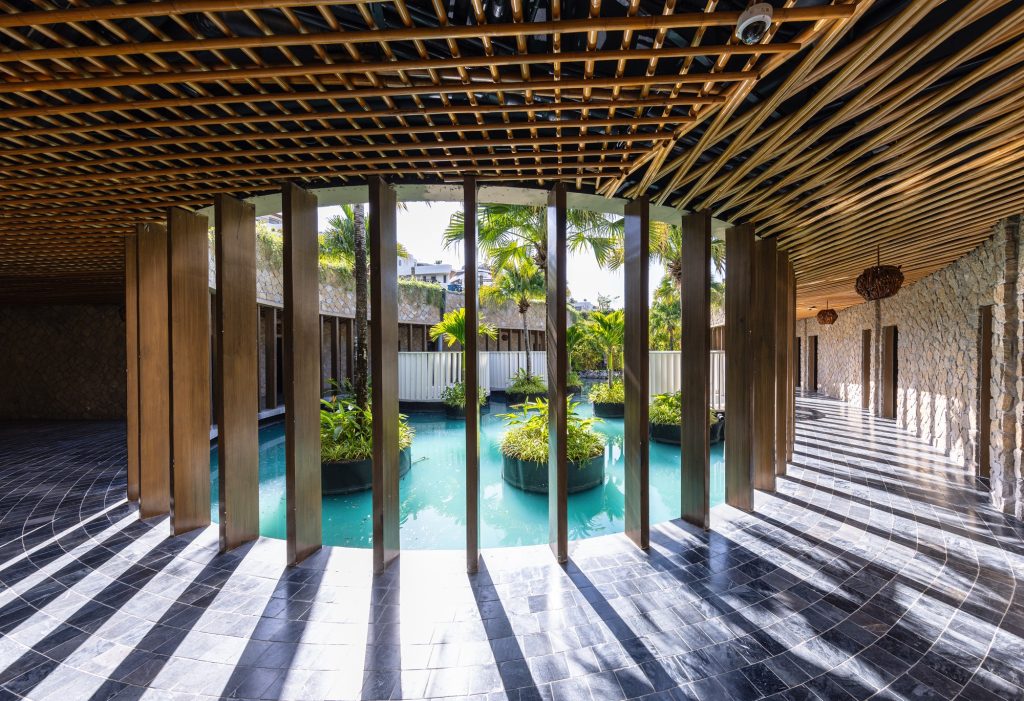
The clubhouse occupies approximately 2,000 square meters and is composed of a constellation of small volumes woven beneath the forest canopy. Each functional space is placed at a different elevation and linked by curving pathways, shallow water surfaces, and shifting layers of light and shadow. Movement through the building resembles a walk through a natural landscape, where spatial experiences alternate between openness and retreat, brightness and calm.


Social areas such as the restaurant and children’s play zones open fully toward the lake, while more introspective functions, including the spa, lounge, and meditation spaces, are embedded deeper within shaded pockets of greenery. Seen from a distance, the architecture almost dissolves, reducing its visual footprint while intensifying sensory engagement through air, water, sound, and filtered light.


Sustainability is not treated as an applied layer but as an intrinsic architectural logic. The project’s defining feature is its multi-layered green roof system, formed by three clusters of circular roofs at varying heights. Together, they create a soft topography that merges seamlessly with the surrounding forest canopy. Planted entirely with native species, the roofs function as a self-sustaining micro-ecosystem, reducing heat gain, enhancing passive cooling, supporting local biodiversity, and filtering rainwater before it returns to the lake. The roof profile subtly slopes down at the edges and rises toward the center, moderating daylight and limiting direct solar exposure. Tropical adaptive architecture is expressed here not through spectacle, but through an intelligent alignment of form, climate, and ecology.

From the water, the clubhouse appears almost weightless, hovering lightly above the landscape. Its relationship with the lake allows users to experience the shifting interplay of reflection, horizon, and light at every moment of the day. With a maximum height of 7.2 meters, the building maintains visual harmony with surrounding villas while preserving uninterrupted views across the site. The design makes a quiet yet firm statement that architectural identity emerges from restraint and sensitivity rather than iconic excess. Inside and outside dissolve into one continuous spatial experience, where boundaries are defined by atmosphere rather than walls.


At its core, Lotus Clubhouse proposes a broader architectural position. It suggests that the future of architecture lies in resonance with nature, not in domination over it. Sustainability here is understood not as a checklist of technologies, but as a deep reading of place and a disciplined approach to form making. The building honors its environment through stillness rather than monumentality, through presence rather than assertion. It is luminous without demanding attention, grounded without appearing heavy.

This ethos is present throughout the project. Architecture is conceived as a living ecosystem rather than a fixed object. The dispersed layout minimizes environmental impact while encouraging biodiversity. The green roof becomes a second landscape, bridging art, ecology, and climate responsiveness. Expression and humility are held in careful balance. More than a resort building, Lotus Clubhouse represents a way of thinking and a way of living, offering a contemporary narrative of harmony between people, architecture, and the natural world.

Project Credit
Project: Lotus Clubhouse
Design firm: MIA Design Studio / @miadesignstudio_official
Location: Eco Retreat Long An, Vietnam
Completed: 2025
GFA: 2000 m²
Photo: Hiroyuki Oki
More Photos