Now Reading: RF Studio’s Atol Lavascape transforms bronze, stone and resin into a volcanic terrain
- 01
RF Studio’s Atol Lavascape transforms bronze, stone and resin into a volcanic terrain

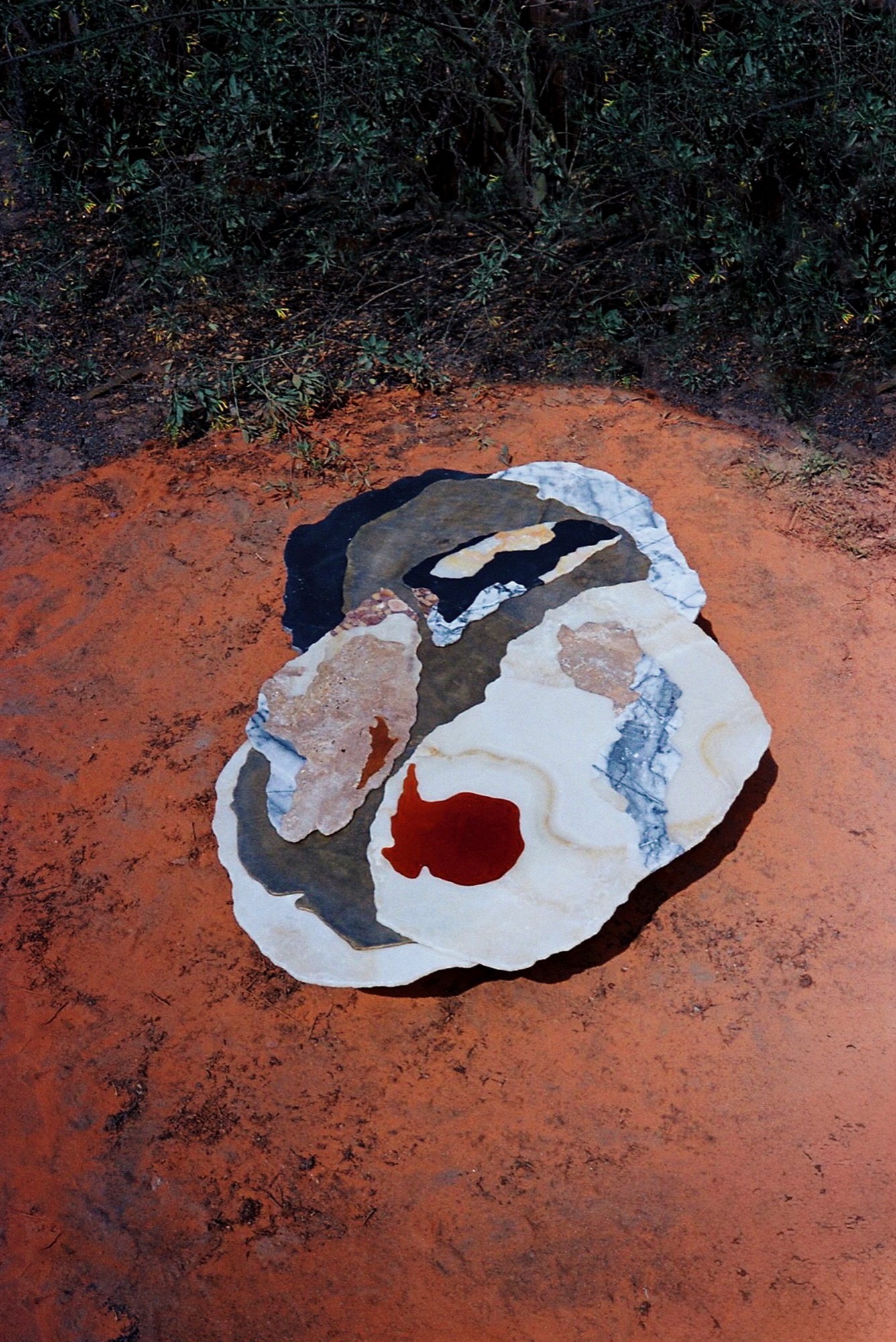
RF Studio’s Atol Lavascape transforms bronze, stone and resin into a volcanic terrain

A SUSPENDED GEOLOGICAL MOMENT
With Atol Lavascape, Peruvian experimental art and architecture practice RF Studio inaugurates Archipelago, a new body of work that investigates the birth of volcanic islands through material experimentation and sculptural form. Conceived as the first chapter of an evolving series, the piece translates geological transformation into an object-scale landscape where metals, stone and resin record the slow cycles of volcanic formation.


Viewed from above, the sculpture evokes the aerial perspective of an emerging island. Recycled bronze forms a rugged terrain scattered with fragments of marble and onyx, while translucent resin appears to capture molten flows in mid-transformation. The composition presents a moment suspended between liquidity and solidification, as if the island were still cooling after eruption.

The work proposes a landscape in formation rather than a finished terrain. Matter appears caught in transition, revealing the continuous processes through which volcanic ground emerges, erodes and reforms.


ARCHIPELAGO THINKING
The conceptual framework of the series draws on the notion of the archipelago articulated by Caribbean philosopher Édouard Glissant. In contrast to continental imaginaries that privilege unity, stability and transparency, the archipelago suggests a worldview grounded in plurality, opacity and relational exchange.
In this perspective, islands do not exist as isolated bodies but as interconnected fragments linked through tides, winds and geological forces. Territory becomes a dynamic condition rather than a stable surface.

For RF Studio founder Rafael Freyre, this idea emerged from his experience of living in Bali after spending most of his life in South America. The transition from continental landscapes to a volcanic island environment reshaped his understanding of land. Ground became process, and territory became formation.

Archipelago develops from this shift in perception. Each work within the series operates as a material chapter within a broader geographic inquiry, translating planetary forces into sculptural systems.
MATERIAL EXPLORATIONS
Material research forms the core of the project. The metal structure is produced from reclaimed bronze and recycled alloys melted and reformed through a controlled casting process. The molten metal is guided into sand-filled molds, allowing the flow of the material itself to determine the final surface texture. Once solidified, the bronze retains traces of its movement, making the casting process visible in the finished object.


The work also marks RF Studio’s first exploration of colophony, a natural pine resin derived from the defensive sap of trees. Sourced from forest regions across the Mediterranean, North America and Asia, the resin is distilled to separate turpentine, leaving a translucent material capable of recording fluid transformations.


To stabilize the resin, the studio blends colophony with beeswax and carnauba wax. The resulting substance achieves a controlled viscosity similar to honey, allowing it to flow slowly before hardening. The molten mixture is poured onto a preheated onyx slab, where heat removes air bubbles and produces a continuous surface.
When the resin solidifies, it fixes a precise moment within the transformation of matter. What was fluid becomes form, preserving a geological gesture within the sculptural landscape.


OBJECT AS SYSTEM
Atol Lavascape is conceived as an assemblage rather than a single monolithic sculpture. RF Studio approaches objects as systems in which material, structure and fabrication remain inseparable.
The work is cast, poured and assembled through a series of relationships between different elements. Stone fragments are detachable to facilitate transportation and installation. They are secured with a system of bolts and small bronze discs that protect the material at points of contact, while upper stones are stabilized by discreet bronze pins.

This modular construction allows the sculpture to remain structurally adaptable while preserving its compositional integrity. Process documentation also plays a role within the project. Analog photographs taken during fabrication and digital images of the final object function as parallel records, revealing both transformation and resolution within the work.


GEOLOGICAL LANDSCAPE IN MINIATURE
With dimensions of 220 × 160 × 45 centimetres and a total weight of 335 kilograms, Atol Lavascape operates simultaneously as sculpture, terrain model and geological narrative.
The stone components include pearl onyx from Ayacucho, black marble from Ancash, and multiple varieties of marble and travertine sourced from the Junín region of Peru. These fragments appear scattered across the bronze surface like geological strata exposed by volcanic activity.


Through this composition, the work suggests that landscape itself is a continuous cycle of formation. Lava rises, cools, fractures and erodes. What appears solid is only a temporary phase within a longer material transformation.
Atol Lavascape therefore becomes more than an object. It acts as a condensed model of planetary processes, translating the deep time of geology into a tactile sculptural field.
More Photos