
Now Reading: Rediscovering African vernacular architecture: Timeless lessons in sustainability from Built By Hand
- 01
Rediscovering African vernacular architecture: Timeless lessons in sustainability from Built By Hand

Rediscovering African vernacular architecture: Timeless lessons in sustainability from Built By Hand

In an era when buildings and construction account for nearly 37% of energy- and process-related CO₂ emissions, the search for regenerative building practices has never been more urgent—not as a fashionable posture, but as a basic condition for continuity. Yet some of the most compelling solutions may already exist in the hand-crafted traditions of the past, embedded in the everyday intelligence of communities that built without the luxury of excess, and therefore without the habit of waste. Built by Hand: Vernacular Buildings Around the World (Athena Steen, Bill Steen and Eiko Komatsu, 2003) offers a powerful testament to this idea. Through Yoshio Komatsu’s photography and the Steens’ commentary, the book documents vernacular structures across continents, revealing how people have long created durable, climate-responsive shelters using only local materials and human labour—architecture as an agreement with place, rather than a conquest of it.
The African section stands out for its breadth and contemporary relevance. Far from primitive relics, these buildings embody environmental intelligence in forms that feel both inevitable and radical: thick earthen walls that regulate temperature in extreme heat; elevated roofs that support natural ventilation; communal maintenance rituals that ensure longevity not as an afterthought, but as a social practice. With Africa’s urban population projected to double, from around 700 million today to 1.4 billion by 2050 and with nearly 90% of the increase in the world’s urban population expected to take place in Asia and Africa combined, these traditions offer prototypes worth revisiting, not as nostalgia, but as a disciplined way of thinking at a moment when cities expand at unprecedented speed.
HISTORICAL AND CULTURAL CONTEXTS: ADAPTATION ACROSS DIVERSE LANDSCAPES
African vernacular architecture is not monolithic, but a tapestry shaped by geography, climate and culture—an accumulated archive of choices made under pressure, refined through repetition, and made legible in wall thickness, roof pitch, street width, and the calibrated distance between shade and sun. Over generations, communities refined techniques that harmonise with demanding environments, from the arid Sahel to humid equatorial zones, creating forms that are, in effect, climatic instruments as much as they are shelters.

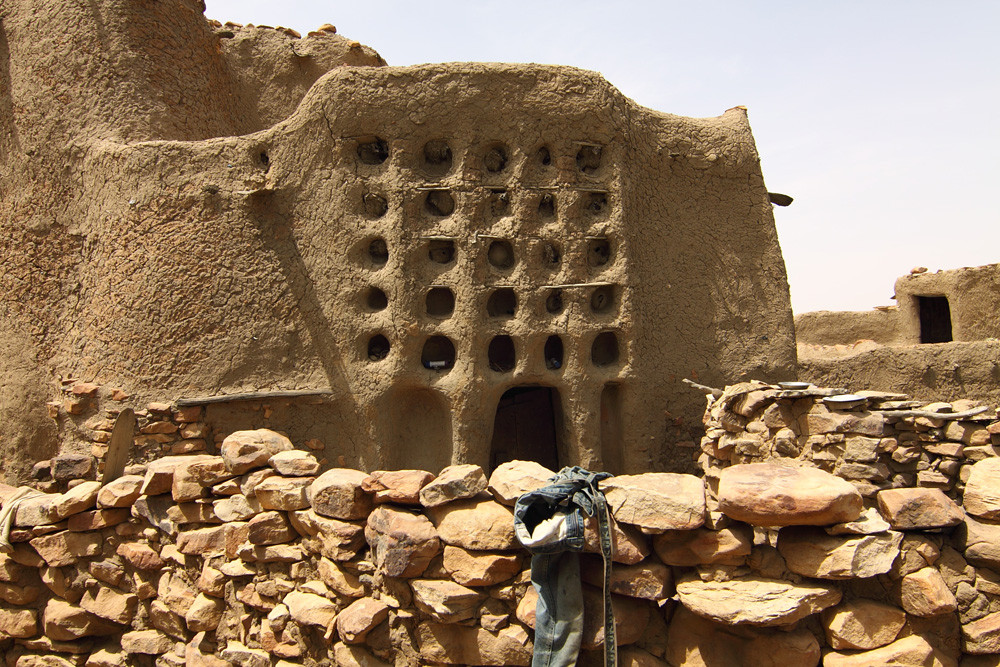
In West Africa, the Sudano–Sahelian style dominates, exemplified by the Great Mosque of Djenné in Mali, a UNESCO World Heritage site with origins in the 13th century (the current structure was completed in 1907). Built entirely from adobe (sun-dried mud bricks reinforced with organic fibres) this colossal structure features protruding wooden beams that double as scaffolding during annual re-plastering. The Crépissage festival turns maintenance into a communal celebration, reinforcing social bonds while protecting the building from erosion; it reminds us that endurance is not merely material but relational, sustained through collective attention. Similar earthen traditions appear in the cliffside villages of the Dogon people along Mali’s Bandiagara Escarpment, where homes are carved into rock or built against it, creating insulation and defensive advantage through a compact logic that treats landscape as both boundary and ally.
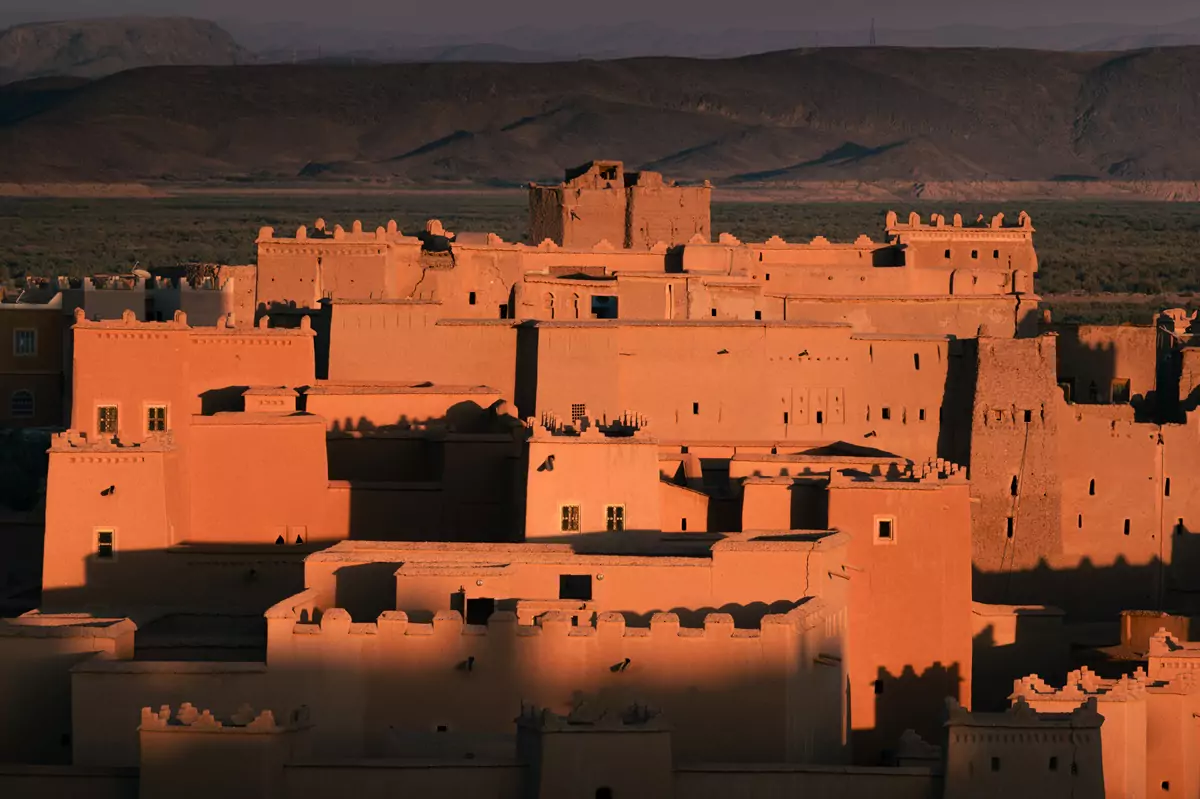
North Africa’s Berber communities favour rammed earth (pisé) for kasbahs and ksour—fortified villages in Morocco and Algeria. Structures such as Ait Ben Haddou demonstrate how compacted, layered earth can withstand desert winds and seismic forces, often within settlement patterns that integrate water-harvesting systems. Here, performance is inseparable from form: thermal mass, natural porosity and the close relationship to the landscape point toward design principles that contemporary low-carbon development continues to rediscover, sometimes under new names, but often in the same geometry of shelter and shade.
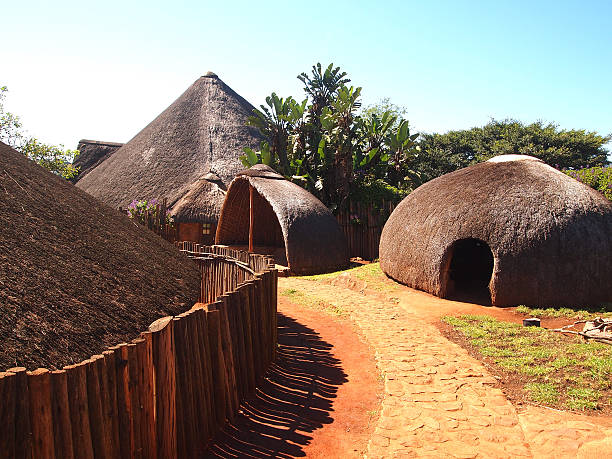
In Southern Africa, rondavels (circular huts with conical thatched roofs) remain prevalent among Zulu, Xhosa and other groups. Walls of cob (mud mixed with straw) and roofs woven from local grasses provide insulation while maintaining airflow; the circle, in plan, reads as both efficient and emblematic, a spatial figure that carries social meaning. Fractal patterns in decoration, seen in Gurunsi houses in Burkina Faso or painted Ndebele homes in South Africa, encode cosmological meaning—suggesting a worldview in which architecture mirrors the universe, and surfaces become scripts of belonging.

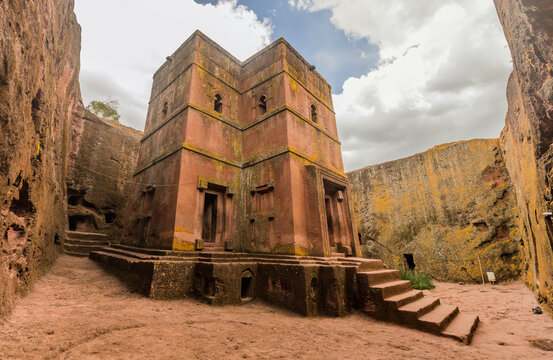
East Africa’s rock-hewn churches of Lalibela in Ethiopia represent monumental feats of vernacular engineering: 11 churches carved monolithically from volcanic tuff in the late-12th to early-13th century, demonstrating precision and endurance without modern tools. Their power is not only technical but experiential – space defined by subtraction rather than addition, by the patient choreography of carving that allows negative volume to become sanctuary.
These forms are not static. They evolve through intergenerational knowledge and social practice, often involving gendered roles, women frequently lead plastering and decoration, embedding architecture in daily ritual as much as in shelter, and ensuring that building remains a civic act, not merely a technical service.
TECHNICAL MASTERY: MATERIALS AND PERFORMANCE IN EXTREME CLIMATES
The ingenuity of African earthen construction lies in its empirically developed sophistication: knowledge tested in seasonal cycles, calibrated by the body, corrected by time. Adobe, cob and rammed earth share low embodied carbon, particularly when compared with cement-based systems and they can deliver strong thermal performance, not by machine, but by mass, porosity, and the slow exchange between interior comfort and exterior climate.
Earthen walls have high thermal mass, absorbing heat during the day and releasing it at night. In hot-dry climates, this can substantially improve interior comfort, reducing temperature swings and lowering reliance on mechanical cooling. Natural ventilation is strengthened through strategic openings, elevated roofs and courtyards (as seen in Cameroon’s impluvium houses), where air is treated as a resource to be guided rather than resisted. Thatched roofs, when well maintained, insulate while allowing airflow, turning what might appear as fragility into a renewable, repairable layer—an envelope that expects time, and therefore accommodates it.

Contemporary research and field practice have also helped refine vernacular methods. Compressed stabilised earth blocks (CSEBs) can improve consistency and durability, and in certain hot-climate design scenarios they have been associated with significant reductions in cooling demand. At the same time, performance remains contingent on climate, detailing and maintenance – factors that vernacular traditions have always treated as part of the system, because a building that cannot be repaired locally is, by definition, incomplete.
Challenges persist: vulnerability to heavy rain without proper overhangs, stabilisation or protective coatings. Traditional responses annual rendering, generous eaves and locally specific surface treatments, offer models for resilient upgrades that stay faithful to low-tech logic, and to the quiet insistence that longevity is built through care.
SOCIAL AND CULTURAL DIMENSIONS: COMMUNITY, IDENTITY AND CONTEMPORARY THREATS
Vernacular building across Africa is inherently participatory. Construction often mobilises entire communities, transmitting knowledge through doing and reinforcing cohesion; building becomes a social event, a training ground, a shared responsibility, and a shared pride. In many societies, homes also express social structure through scale, placement or symbolic elements and encode cosmology in pattern and orientation. Finishing work frequently carries gendered labour and artistry, with painted motifs and surface treatments acting as narrative as much as decoration, turning walls into repositories of memory as well as boundaries of space.
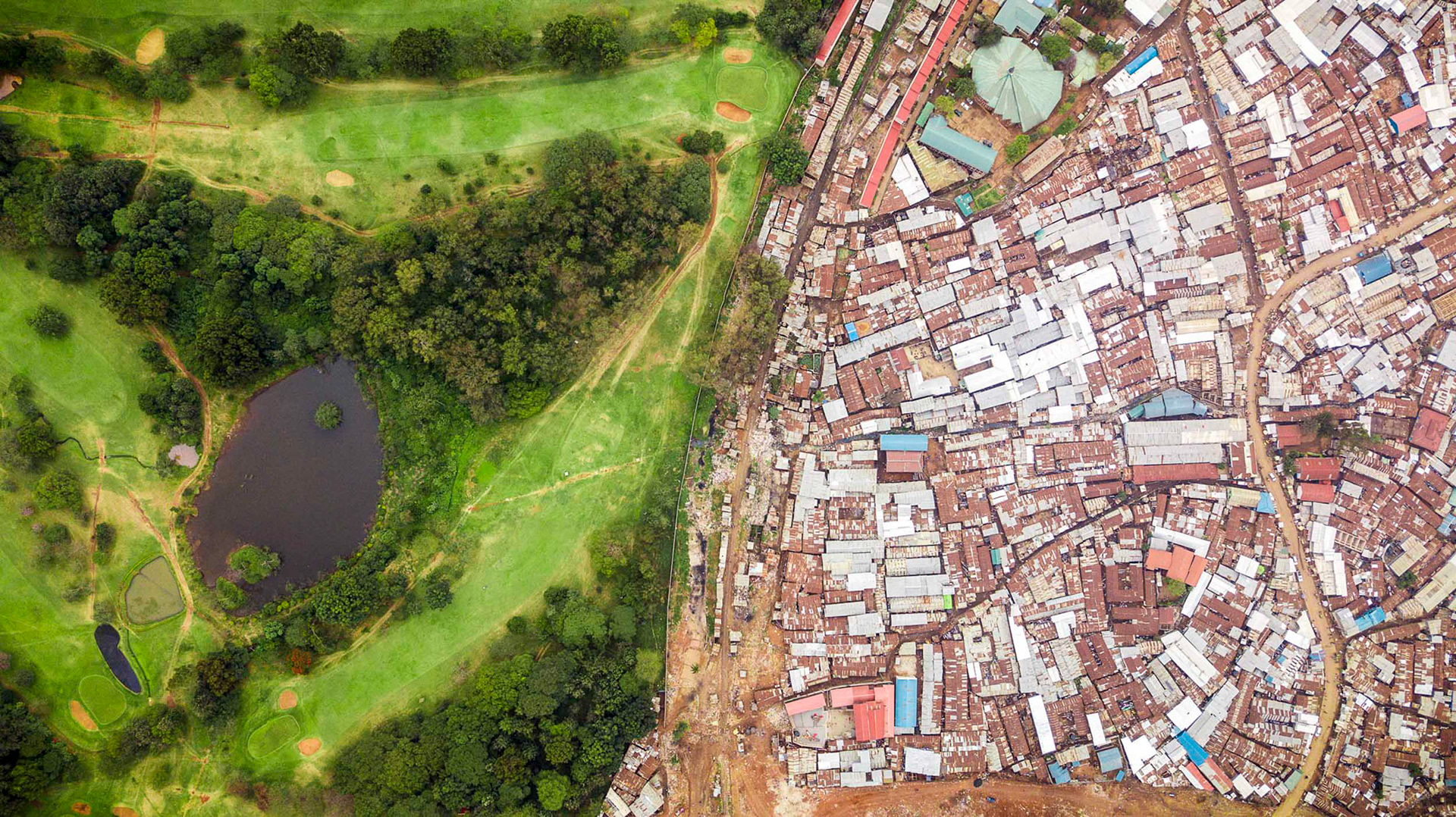
Yet rapid urbanisation threatens these traditions. Imported concrete and corrugated metal, widely perceived as “modern”, often replace earth, driven by aspiration, stigma and regulatory frameworks that privilege industrial materials. This shift can increase embodied carbon, intensify urban heat and accelerate cultural erosion; it can also narrow the idea of progress to a limited palette of products rather than a broadened capacity to inhabit climate intelligently. As informal settlements expand, affordable, climate-responsive earthen options are too often sidelined, deepening inequity rather than addressing it.
BRIDGING TRADITION AND MODERNITY: CONTEMPORARY AFRICAN ARCHITECTS
A new generation of architects is revitalising vernacular principles, demonstrating their viability at civic scale without stripping them of their social meaning. Diébédo Francis Kéré, the first African Pritzker Prize laureate (2022), exemplifies this approach. Born in Gando, Burkina Faso, Kéré’s early projects, such as the Gando Primary School (2001) used local clay bricks and passive ventilation strategies, including double roofs, while relying on community labour and shared ownership, so that the building could be read not only as a product, but as a process that distributes knowledge and agency.

His portfolio has since expanded: the Lycée Schorge secondary school; the Startup Lions Campus in Kenya (drawing on termite-mound analogies for cooling); and more recent works including the Centre des Cultures et Spiritualités Ewés in Togo (with construction beginning 2024 and completion anticipated 2026) using red laterite bricks. Upcoming projects include the Las Vegas Museum of Art (planned, with groundbreaking expected around 2027) and a kindergarten in Munich (2025). Across contexts, Kéré pairs local materials with contemporary detailing (CSEBs, improved ventilation and participatory design) to reduce costs and emissions while building local capacity, resisting the false choice between innovation and tradition.

Mariam Kamara of Atelier Masōmī in Niger similarly advances earthen design as civic infrastructure. Her Hikma Complex in Dandaji (2018) transformed a crumbling mosque into a secular–religious hub using earthen construction. Projects such as Niamey 2000 housing and the Niamey Cultural Centre prioritise breathable materials and public space, responding to climate and to gendered urban realities – architecture not as a neutral container, but as an instrument that shapes access, comfort and visibility.

Other voices include David Adjaye’s vernacular, inflected public work and emerging studios that combine earth, based construction with contemporary tools and workflows. Beyond practice, institutions such as CRATerre in France continue to advance research and standards that influence policy and broaden acceptance of earthen systems, shifting the conversation from “alternative” to “established”.
TOWARDS A REGENERATIVE FUTURE
As illuminated in Built by Hand, African vernacular architecture is not a relic but a blueprint – one that aligns cultural continuity with climatic intelligence, and does so with an economy of means that feels newly relevant in a resource-constrained century. As construction emissions strain global targets, earthen methods offer low-carbon, adaptable possibilities amid Africa’s rapid urban growth, where the question is not only how to build more, but how to build better without severing ties to place.
Preserving these skills will require education, incentives that counter stigma and policy frameworks that recognise earth as a legitimate, durable construction system. The central lesson is as practical as it is philosophical: sustainability emerges from community and place, not from imported materials alone, and not from technology separated from the people who must maintain it.
In reclaiming hand, built legacies, architecture can strengthen equity, resilience and cultural confidence, proving that the future may, in fact, be built by hand.