
Now Reading: A wind driven gateway pavilion revives a forgotten pier on Chaishan island
- 01
A wind driven gateway pavilion revives a forgotten pier on Chaishan island


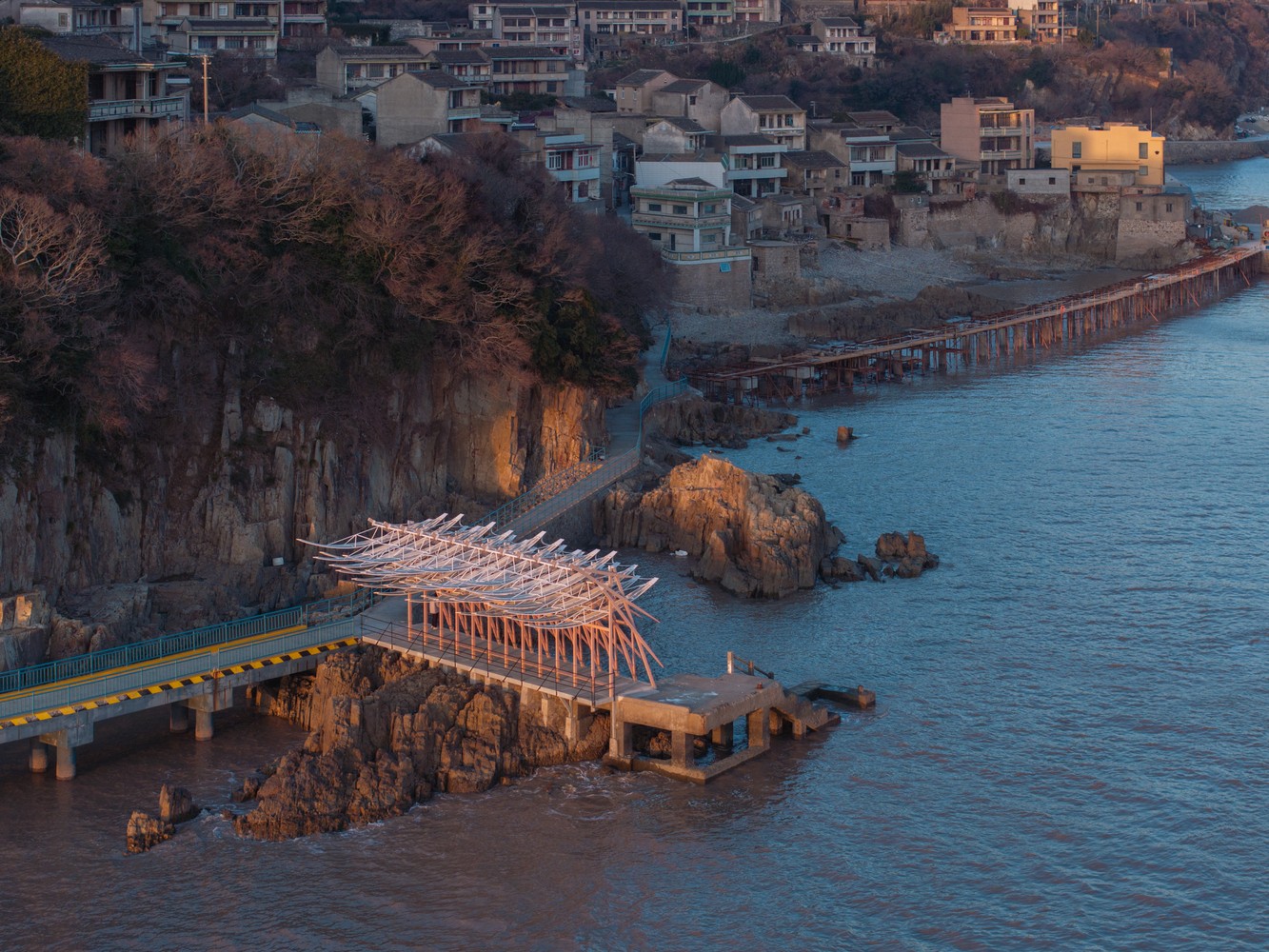
At the threshold of Chaishan Island in Zhoushan, a kinetic pavilion reframes the simple act of arrival. Positioned as a landmark at the village edge, it gives the coastline a new point of orientation while strengthening what already exists: the everyday rhythm of ferries, the rugged drama of rock and sea, and the quiet presence of the local community.

The first idea followed the logic of tides. The pavilion was imagined as an installation that would rise and fall with the water, syncing architecture with the island’s natural pulse over time. But the project’s main audience would be tourists, and the design team wanted an effect that could register instantly. The concept pivoted from tidal change to wind energy, shaping a form that could move within seconds, turning the sea breeze into a visible event.
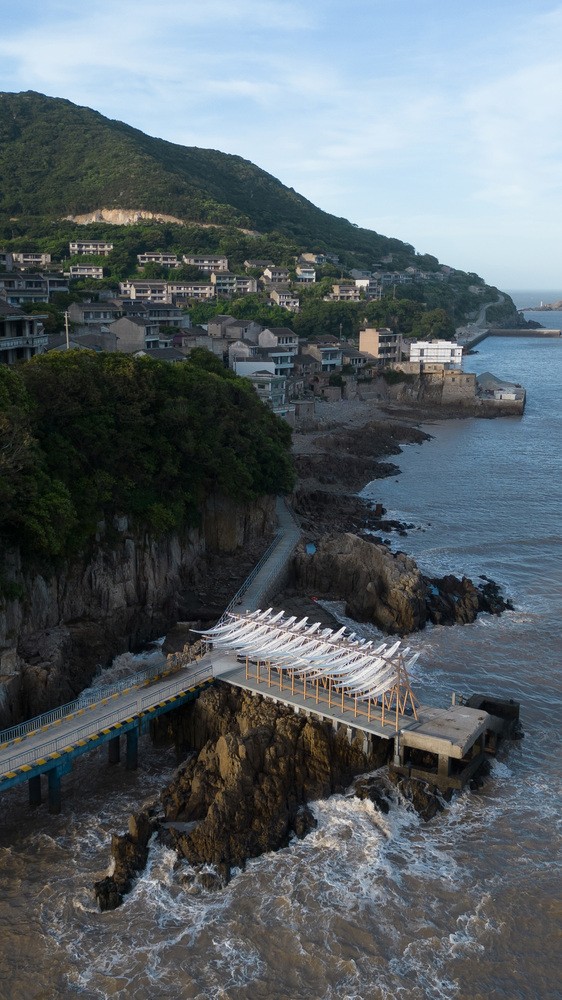
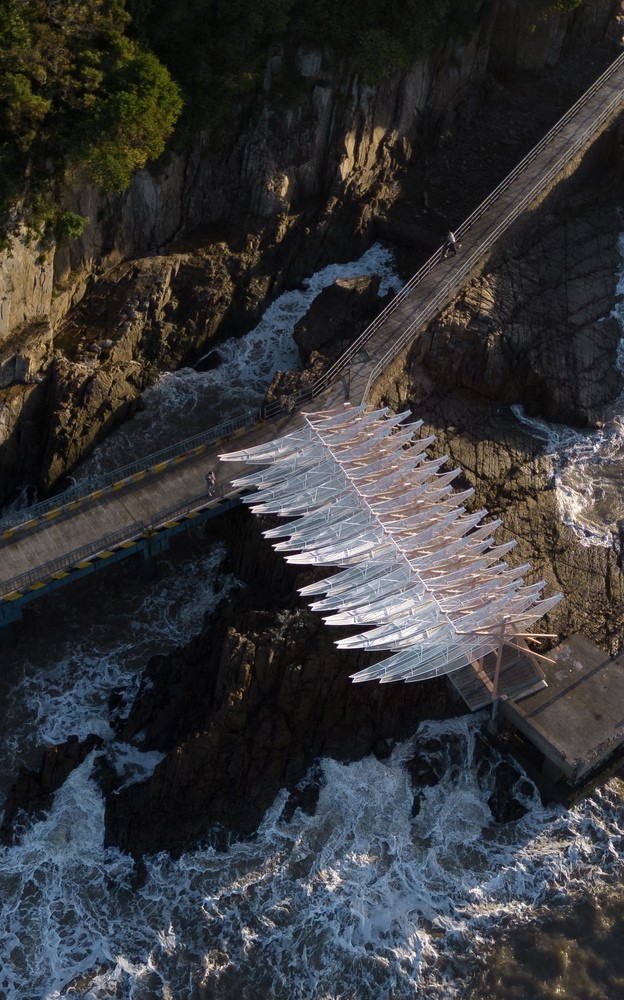
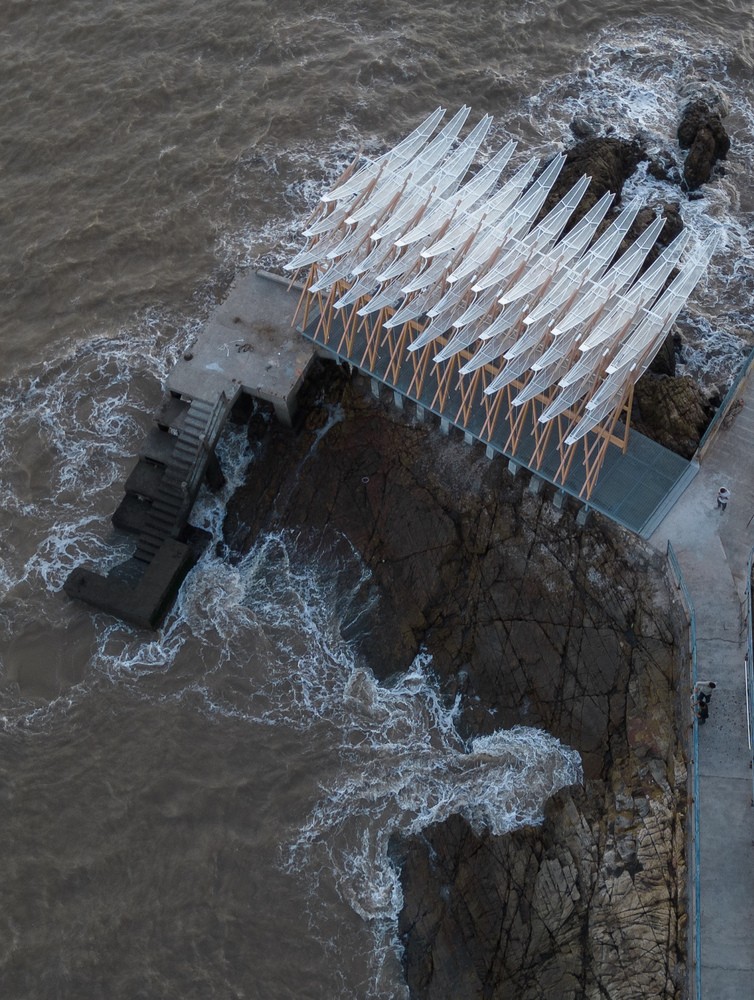
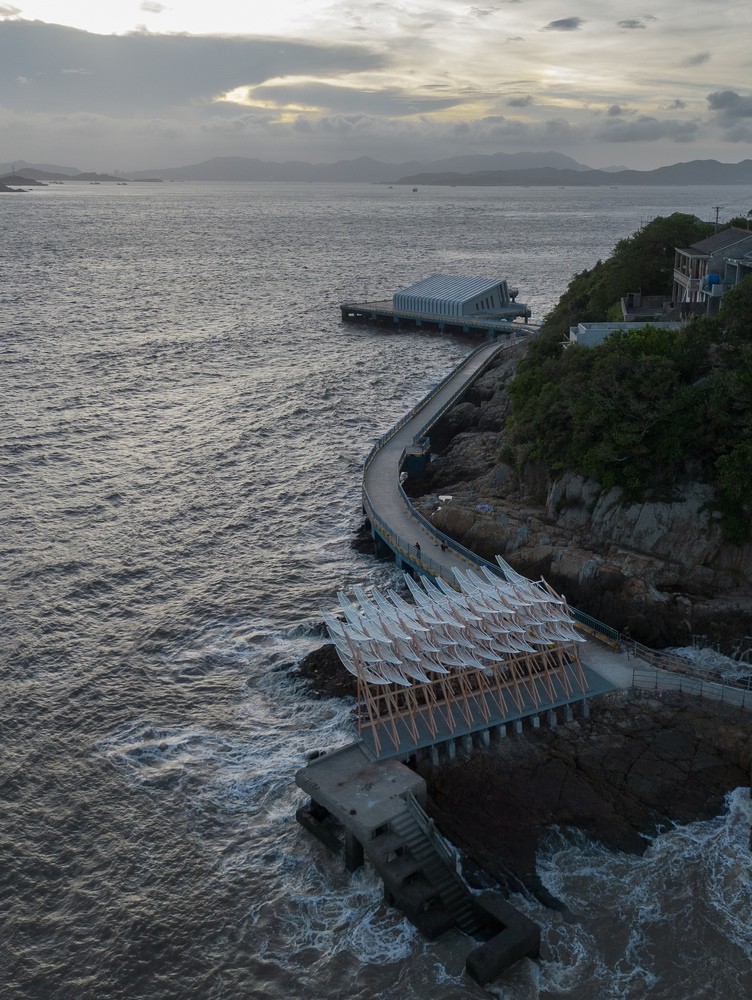
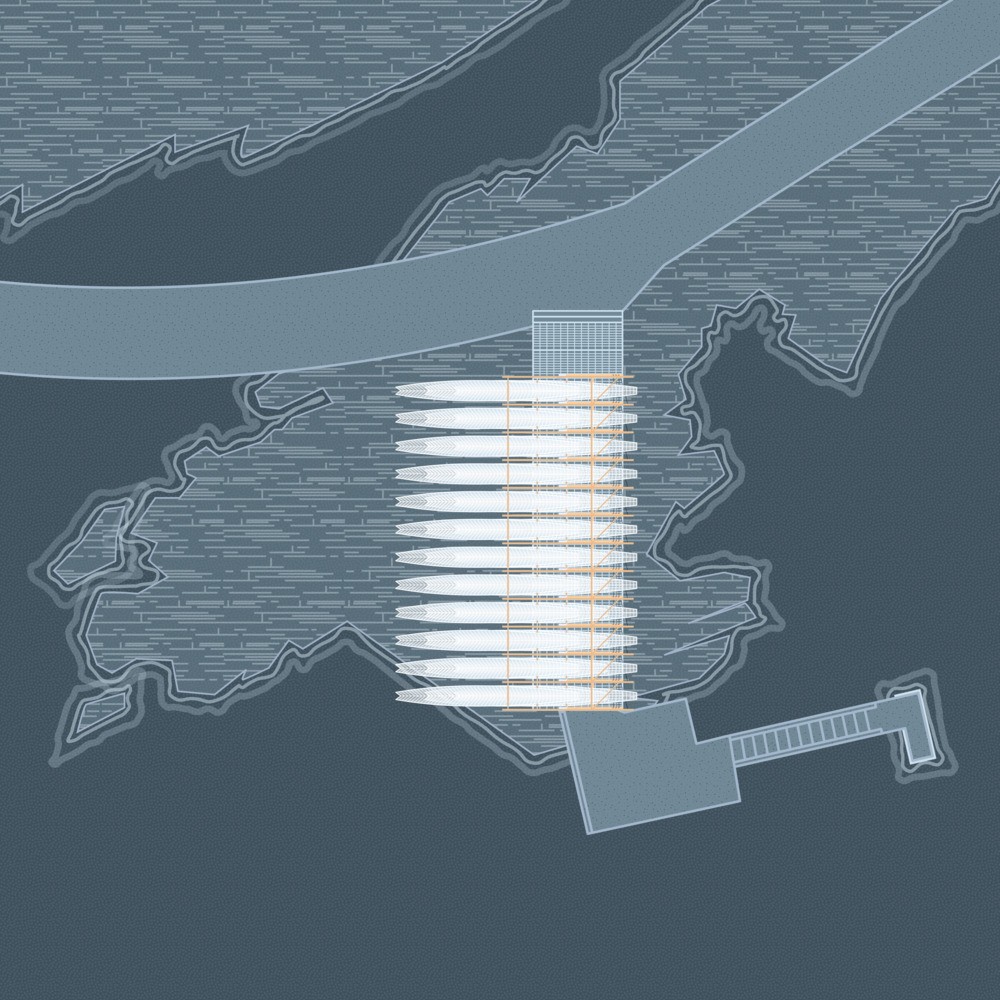
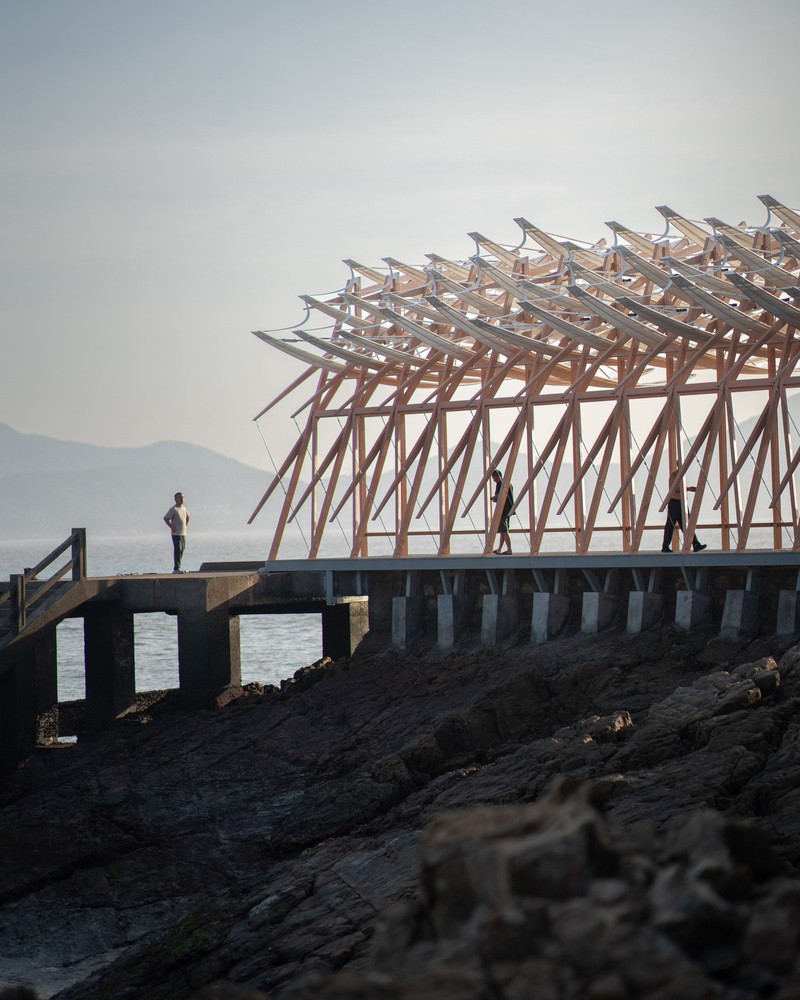
After multiple site surveys, the pavilion found its home on a disused cargo pier dating back to the 1960s. The location sits between the new passenger terminal and the village, a narrow hinge zone where most visitors pass through but rarely pause. Here, the scenery does much of the work: jagged shoreline rocks, an open horizon, and uninterrupted blue that makes even small movements feel amplified.
Rather than replacing the pier, the project treats it as infrastructure worth reactivating. Necessary repairs and new railings convert the old platform into a safe promenade, transforming a leftover industrial remnant into public space with a clear civic purpose.

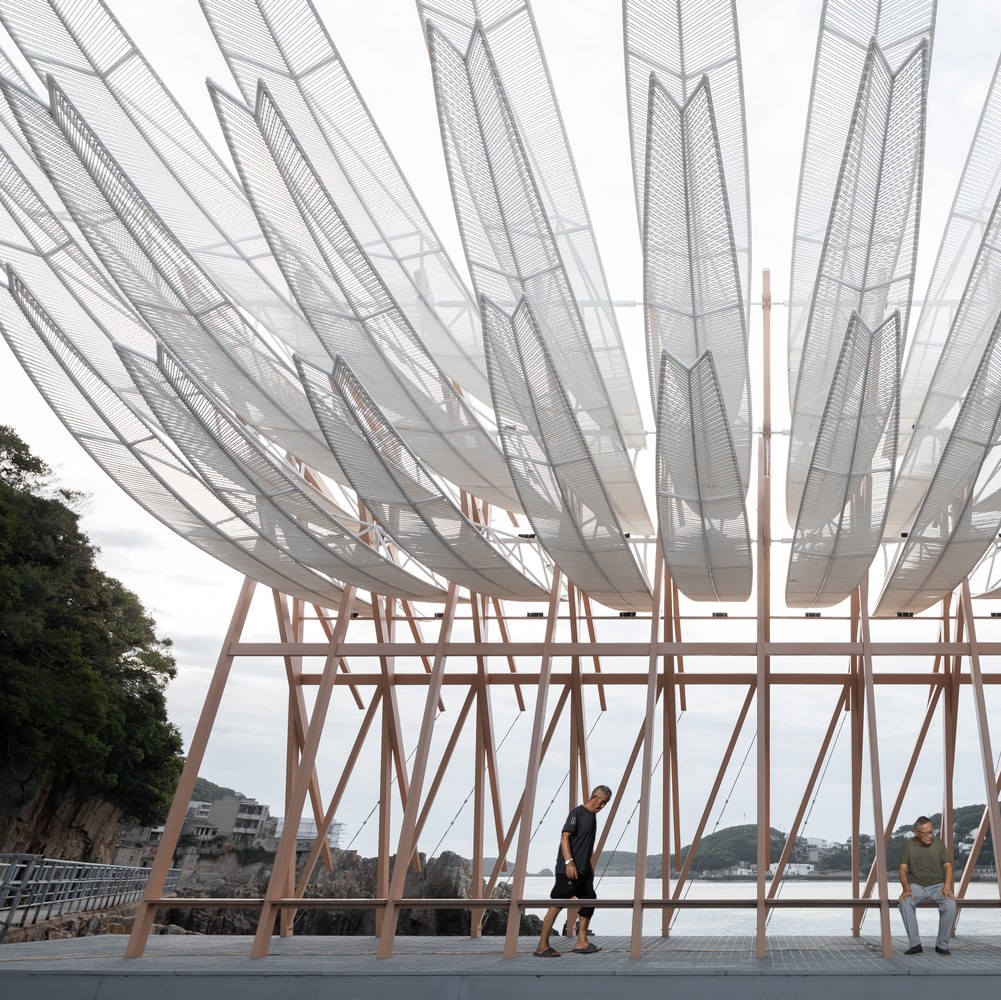
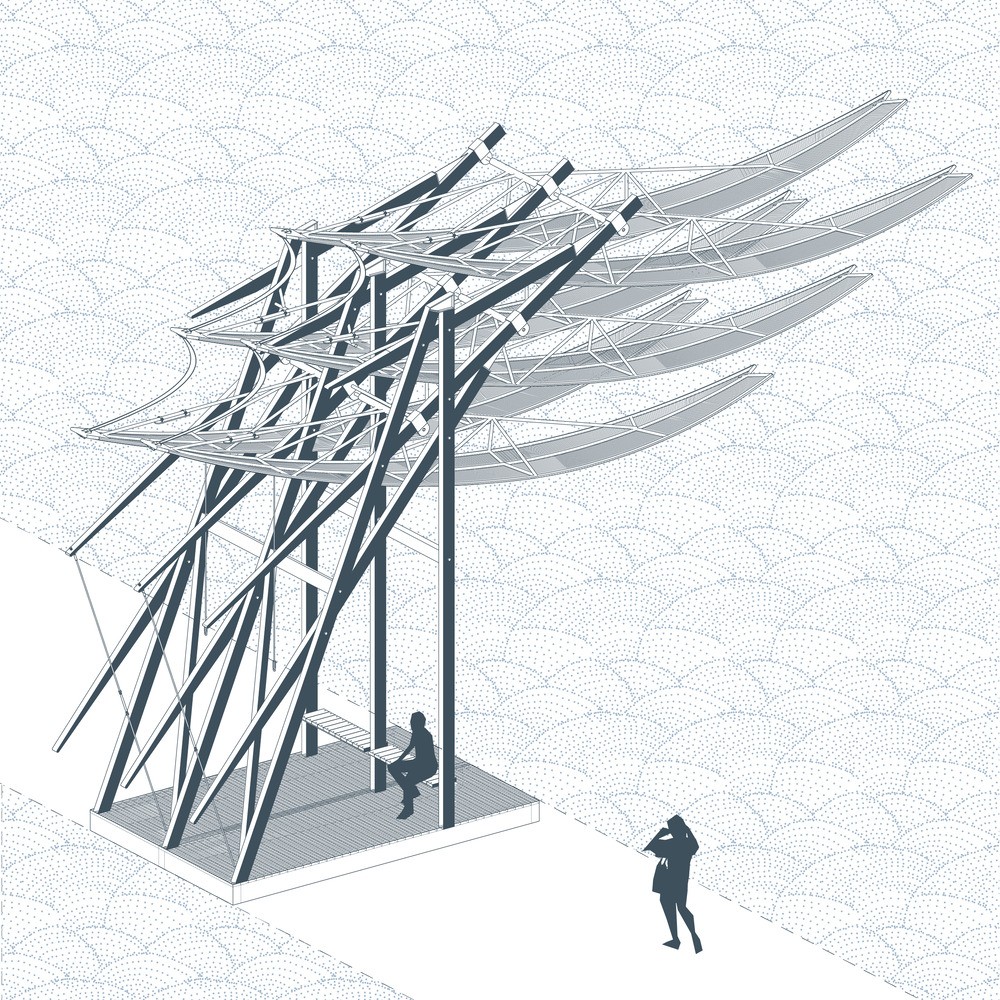
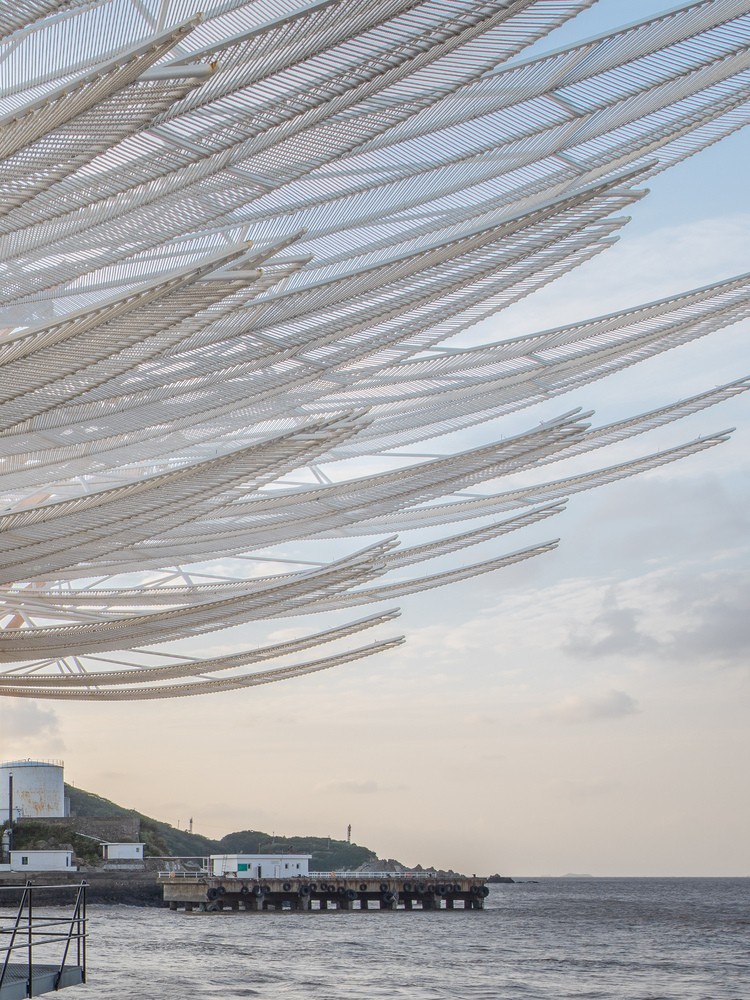
The pavilion’s architecture is defined by elongated blades suspended from a structural frame. As wind passes through, the blades sway in gentle arcs, echoing the motion of waves without attempting to mimic them literally. The result is both poetic and legible: a lightweight, kinetic silhouette that reads from afar, yet rewards proximity through the subtle choreography of movement.


This new gathering point quickly takes on a second life beyond tourism. The repaired pier becomes a place for the island’s elderly residents to sit and watch: ferries docking, faces arriving, short bursts of activity dissolving back into calm. The pavilion does not compete with the landscape. It gives the landscape a tempo.
Logistics were central to making the pavilion feel effortless once installed. The entire system was prefabricated in a factory, then transported over two days by three large trucks to Zhoushan. From there, it traveled by sea to Chaishan Island via a rented 300 ton cargo vessel and crane, ensuring both the pavilion and the assembly equipment arrived as a complete kit of parts.
The process underscores a practical truth of island construction: architecture often begins with transport. Here, that constraint becomes part of the project’s discipline, pushing precision in fabrication and assembly planning.

The pavilion comprises 36 blades, each seven meters long, grouped in sets of three. Their proportions and performance were refined through computer simulations to calibrate movement and balance. Each blade connects to a main support via a bearing, with a counterweight block at the tail to fine tune equilibrium during operation.
To avoid collisions, the design integrates linkages and limiters. After testing options including flexible springs and hydraulic buffers, rubber components were selected for their straightforward maintenance profile, UV resistance, and corrosion resistance, a pragmatic choice that suits the saline, high exposure coastal environment.
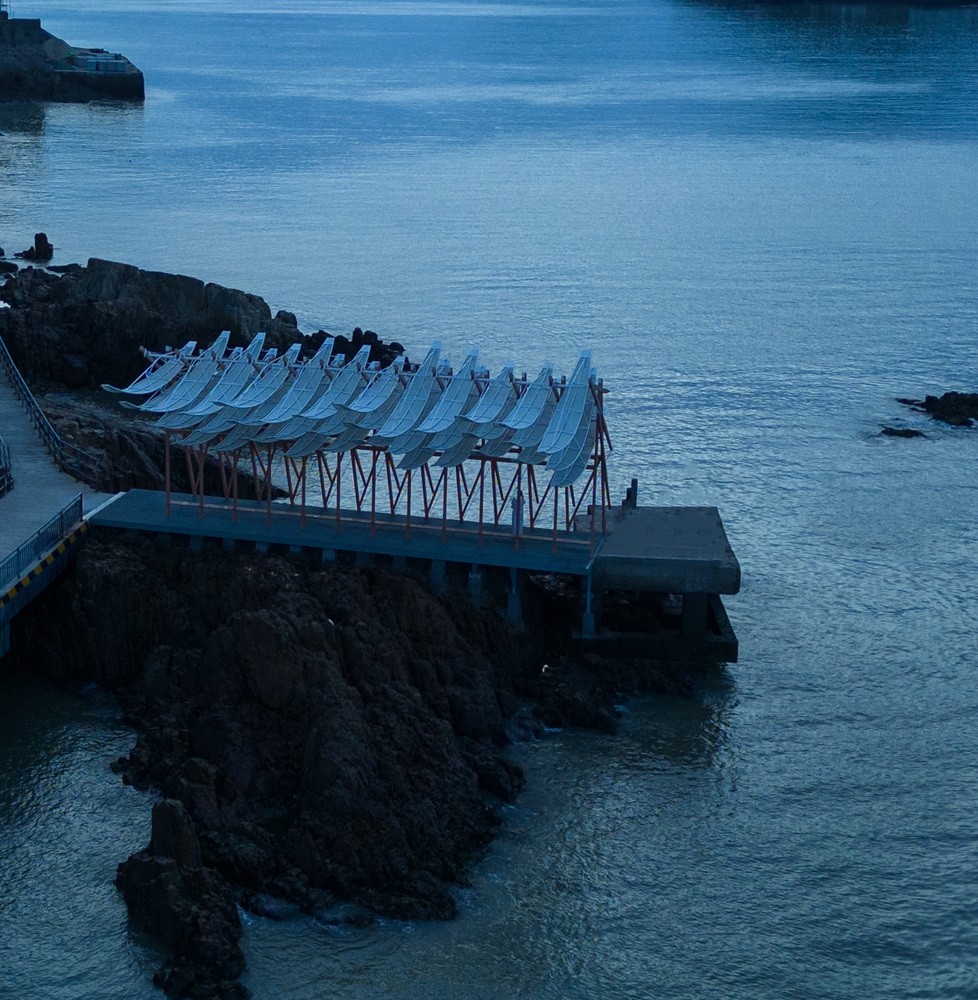
Material strategy follows the same coastal logic. Corrosion resistant steel is paired with anti rust coatings to withstand salt air. For the blade surfaces, fabric membranes were initially explored, but higher strength fishing ropes ultimately proved more durable and better able to handle wind stress. In a moderate breeze equivalent to Force 3, the blades sway softly. At Force 5, their motion becomes visibly animated, turning gusts into a readable performance.
And because islands are never far from extreme weather, the pavilion anticipates typhoon conditions. The blades can be tied securely to the frame, minimizing risk and preventing damage during severe storms.


What makes this pavilion compelling is not only its kinetic elegance, but its social accuracy. It is designed to be seen by visitors, yet it is claimed by residents. It modernizes a neglected pier without erasing its history, and it gives Chaishan Island a distinct gateway without turning the coastline into a theme park.
In the end, the project succeeds by doing two things at once: it stages a memorable arrival for tourists, and it returns a piece of the waterfront to the people who live beside it every day.
Project Credit
Name: The Seaside Pavilion
Location: China, Zhejiang
Design: GN Architects / @gnarchitects_official
Completed: 2024
Photo: Fangfang Tian