Now Reading: Weaving threads of memory: The sculptural language of Lin Fanglu
- 01
Weaving threads of memory: The sculptural language of Lin Fanglu

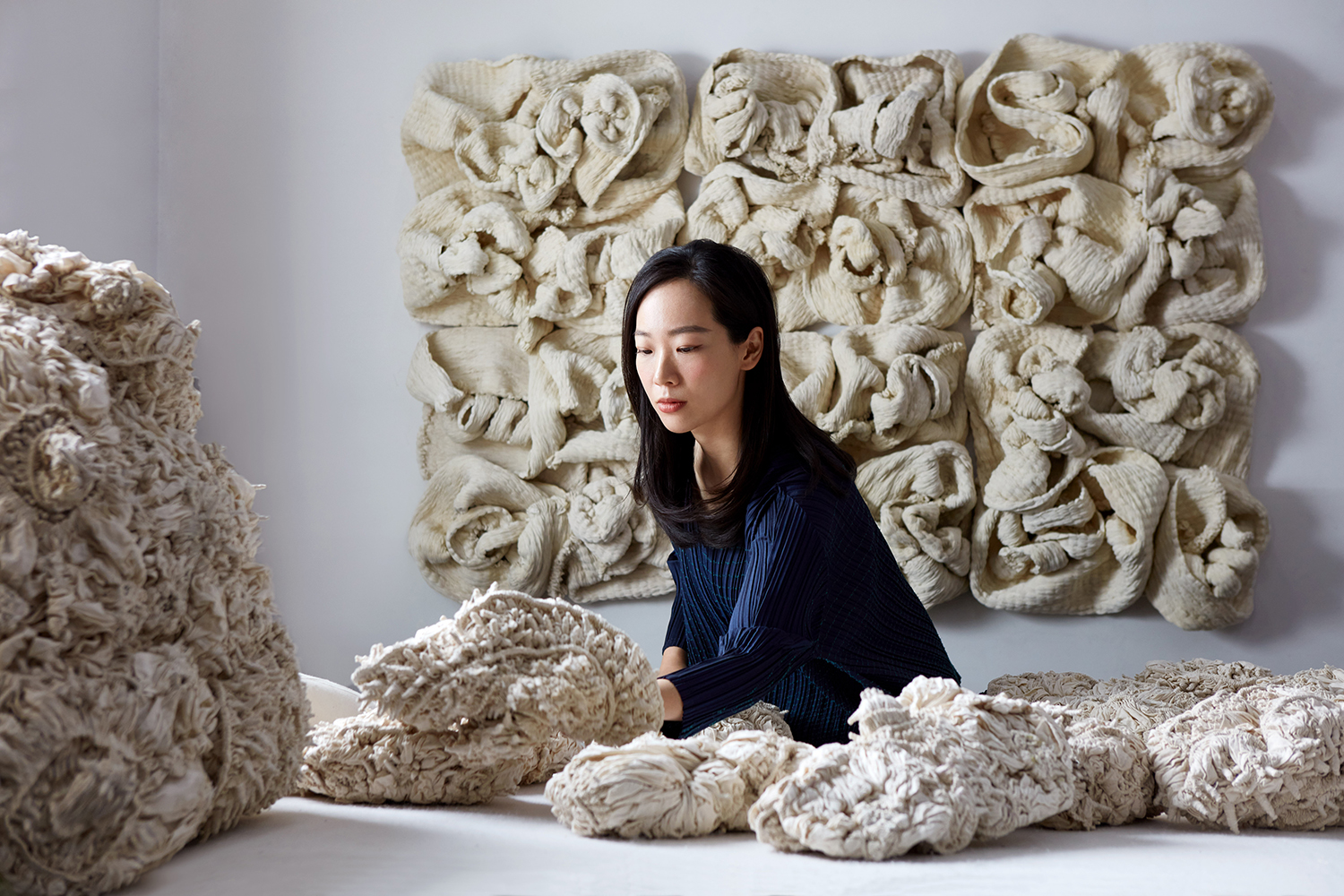

In contemporary art, textiles have steadily moved from the margins of craft toward the centre of sculptural practice. Few artists embody this shift with the clarity and conviction of Lin Fanglu. Working primarily with cotton cloth that is bound, stitched, knotted and dyed, Lin constructs large scale textile sculptures that appear at once geological, architectural and bodily. Her works draw from textile traditions in China, particularly the tie dye techniques practiced by Bai communities in Yunnan, yet they operate firmly within the language of contemporary sculpture.

Born in China in 1989 and trained at the Central Academy of Fine Arts in Beijing, Lin initially studied design before turning toward a slower and more materially grounded practice. During her postgraduate research she travelled to Zhoucheng village near Dali in Yunnan province, where Bai women have practiced tie dyeing for generations. Rather than simply referencing these traditions, Lin learned the techniques directly from artisans and incorporated their procedures into the foundation of her work.

Her international profile expanded significantly when she received the LOEWE Foundation Craft Prize in 2021 for her work She (2016). The monumental textile installation impressed the jury with its scale and technical complexity, demonstrating how traditional fibre techniques could operate as contemporary sculptural language. Since then Lin’s practice has appeared in institutional exhibitions and commissions across Asia, Europe and Australia.

What distinguishes Lin’s work is not merely the use of craft techniques, but the way those techniques generate form. Binding, compressing and dyeing cloth becomes a method of thinking through material, labour and memory. Textile in her work functions as a site where cultural knowledge, physical process and contemporary abstraction converge.
Lin Fanglu’s artistic formation began in Beijing at the Central Academy of Fine Arts, where she studied within a design oriented programme that emphasised material exploration and cultural context. Although trained in product design, Lin gradually moved away from utilitarian objects toward sculptural experimentation with fabric and dye.

A turning point occurred during her research in Yunnan province. In Zhoucheng village she encountered the tie dye practices maintained by Bai women, a tradition that relies on the repeated actions of folding, stitching and binding cloth before immersing it in natural indigo dye. When the bindings are removed, the fabric reveals patterns created through resistance to dye.

For Lin this encounter proved transformative. The process revealed a way of working in which form emerges through labour rather than through predetermined design. Each fold, knot and stitch records the pressure of the hand and the time invested in making. What initially appeared to be a decorative craft technique revealed itself as a complex system of knowledge transmitted through generations of women.
Rather than reproducing traditional motifs, Lin adopted the structural logic of these techniques. The cloth is manipulated repeatedly until it acquires density, volume and tension. The resulting forms expand beyond the flat plane of textile and enter the realm of sculpture.

Lin later extended her research toward other textile traditions in southern China, including weaving practices associated with Dong communities in Guizhou province. These encounters reinforced her interest in craft not as an archive of patterns but as embodied knowledge embedded in daily life.
This approach also carries ethical implications. Textile traditions are often reduced to visual references while the labour behind them remains invisible. Lin’s work foregrounds labour itself. The physical intensity of binding and dyeing becomes visible in the dense surfaces and compressed volumes of her sculptures. At the centre of Lin Fanglu’s practice lies a simple material. Cotton cloth. Yet through repeated manipulation the cloth is transformed into something structurally complex.

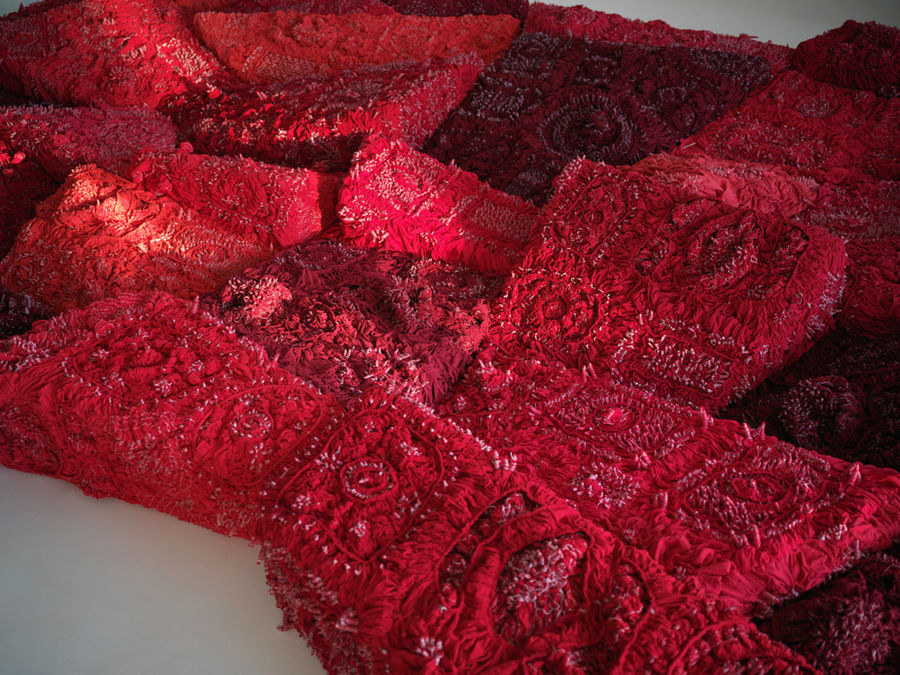
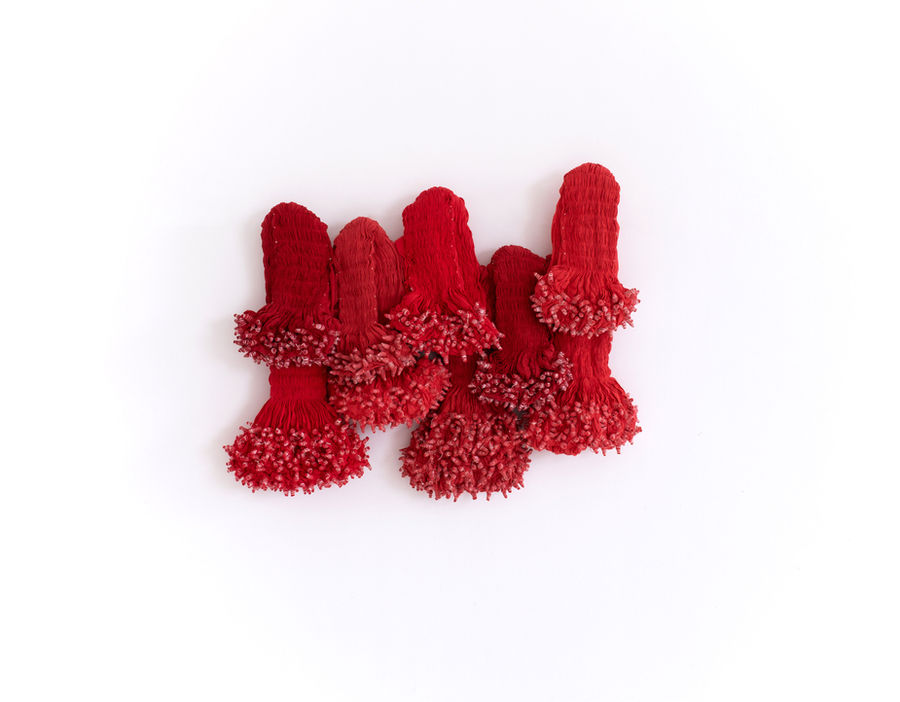
The process begins with folding, twisting and stitching sections of fabric into dense bundles. Threads are tightly bound around these forms to create areas that resist dye. When immersed in pigment the exposed surfaces absorb colour while the bound sections remain protected. Once the bindings are removed the cloth bears the imprint of these pressures and resistances.
From these altered surfaces Lin constructs sculptural volumes that swell, drape and accumulate within space. Textile becomes architecture through gravity and repetition rather than through rigid structure. The ambiguity of Lin’s forms plays an important role in their visual impact. Seen from a distance they resemble geological formations shaped by erosion. Viewed more closely they evoke bodily structures such as skin, muscle or organs. At another scale they suggest architectural elements including vaults, columns or ruins. This shifting perception prevents the work from settling into a single interpretation. Instead the sculptures operate through physical encounter. The viewer moves around them, adjusting scale and orientation.
Colour functions as a structural component of this language. Indigo dye has long been central to Lin’s work. Historically associated with Bai tie dyeing traditions, indigo also carries the temporal logic of repeated immersion. The depth of colour emerges slowly through multiple dye baths, mirroring the gradual accumulation of labour within the work.

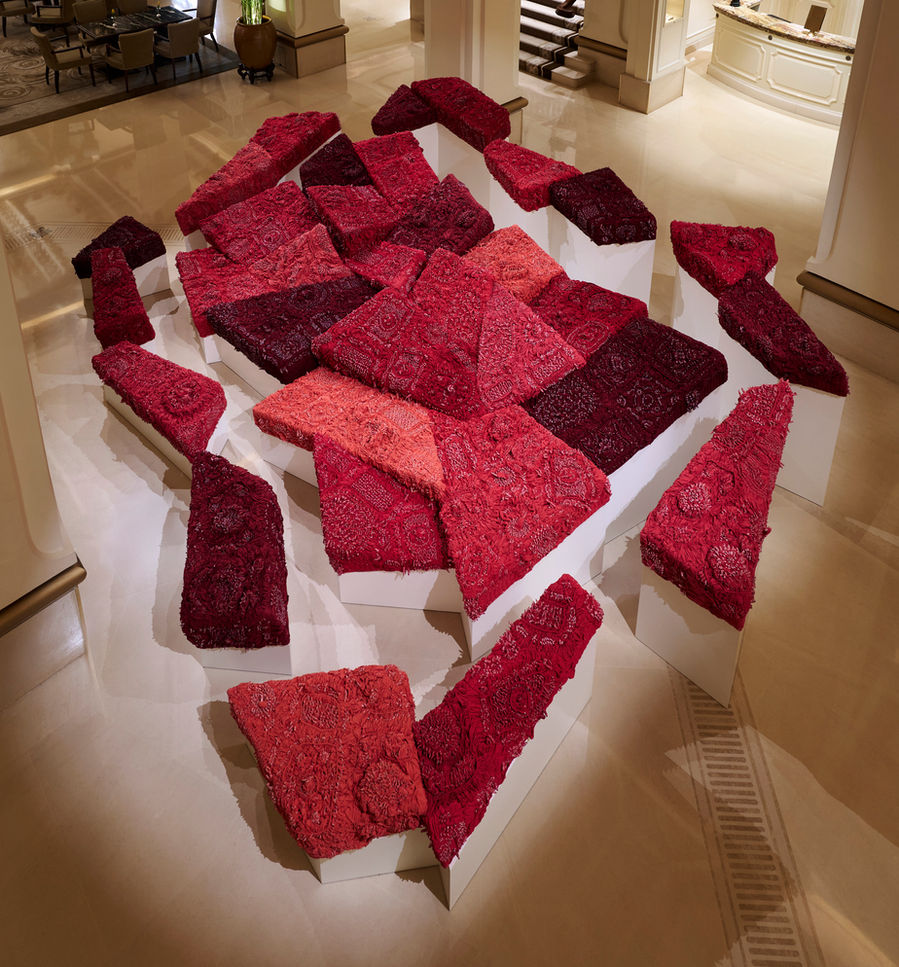
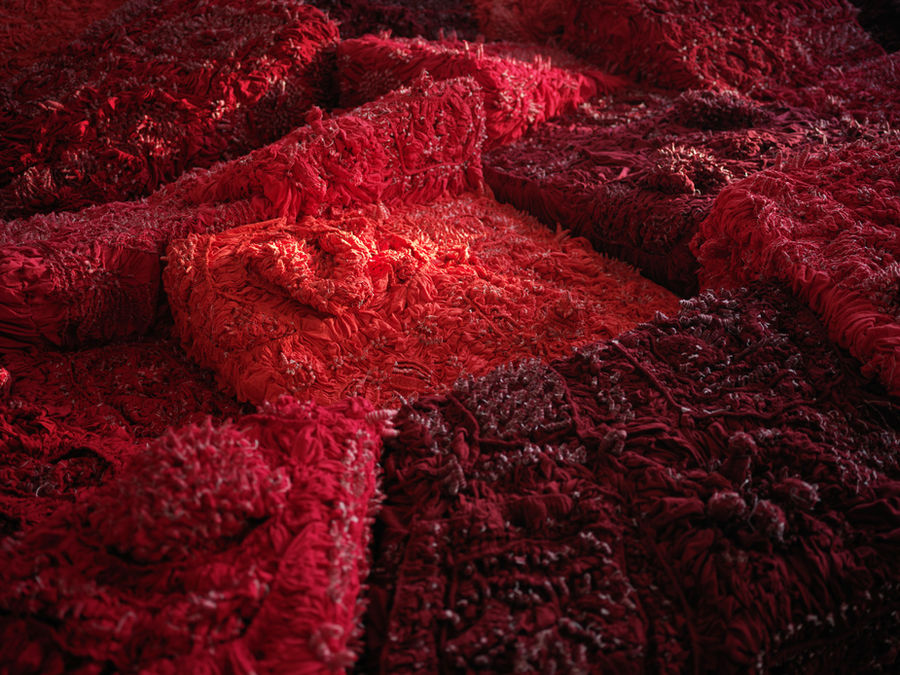
In more recent projects Lin has expanded her palette through the introduction of red dyed textiles. The shift alters the emotional register of the sculptures. Where indigo suggests distance and restraint, red introduces warmth and intensity. The colour recalls blood, vitality and cycles of life.
Although critics frequently describe Lin’s work through a feminist lens, its strength lies in its refusal to illustrate gender directly. Instead the work reflects the conditions in which knowledge and labour are transmitted through generations of women. Binding becomes both constraint and protection. Repetition becomes endurance.
In this way Lin participates in a broader revaluation of craft within contemporary art. Craft here is not the opposite of innovation. It is a framework through which innovation remains accountable to material knowledge and time.
The work that first brought Lin international recognition was She (2016). The large scale textile installation consists of densely knotted cotton forms cascading across the wall, producing a powerful physical presence within the exhibition space.
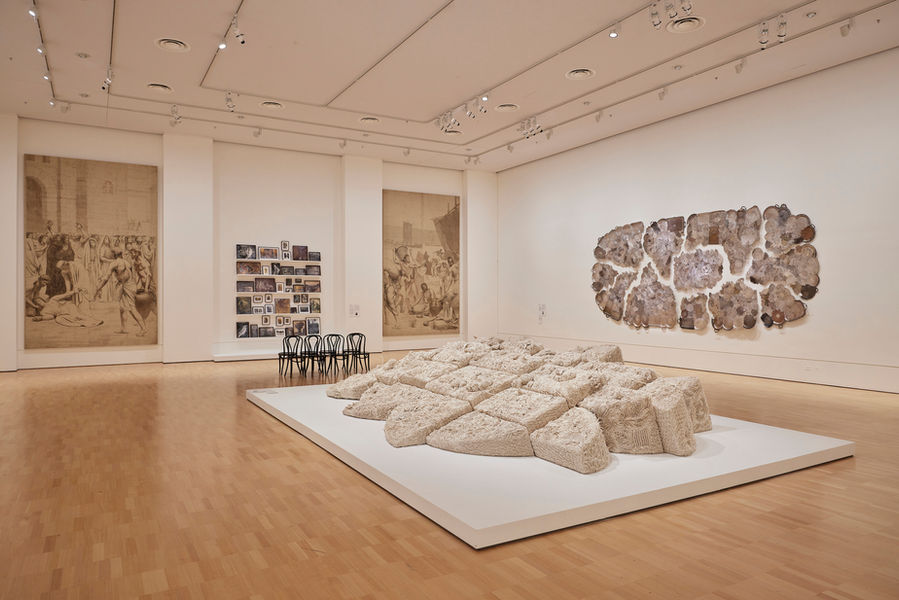
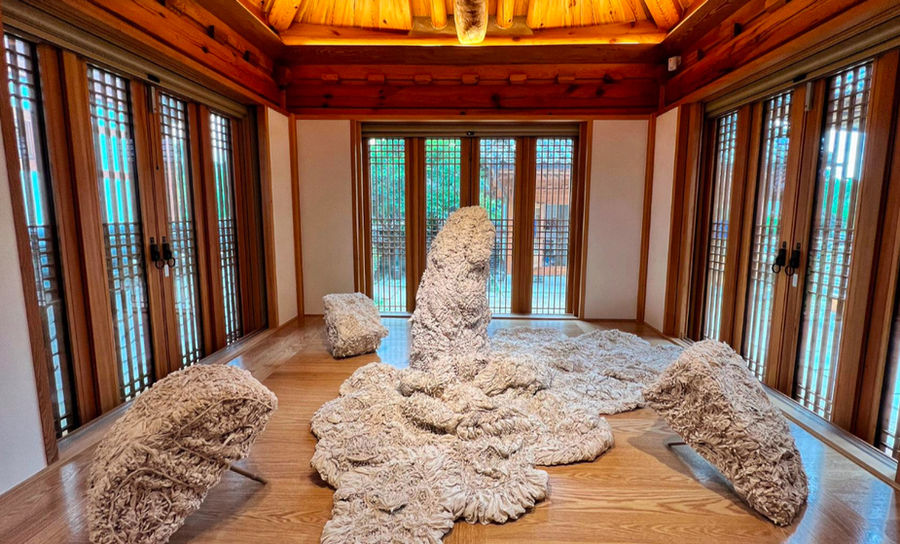
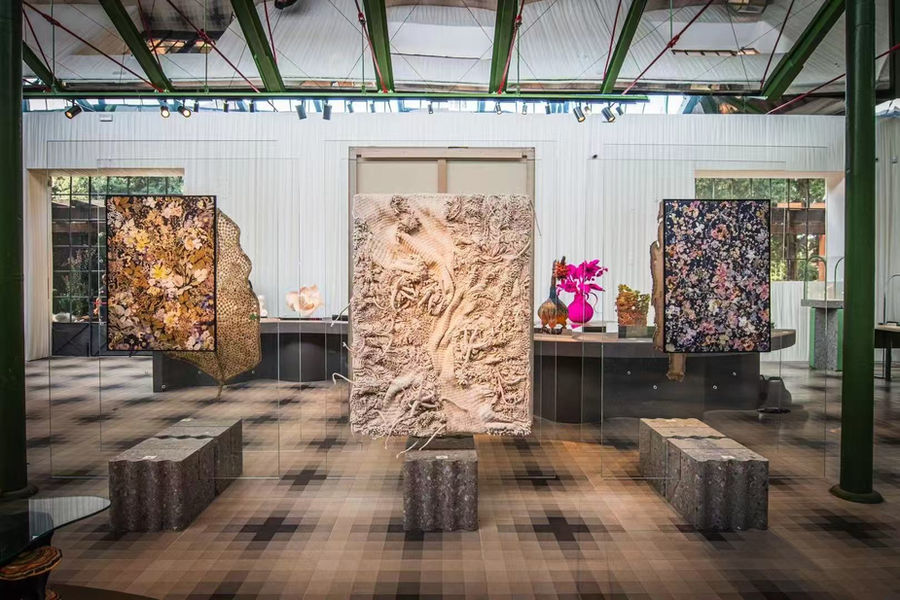
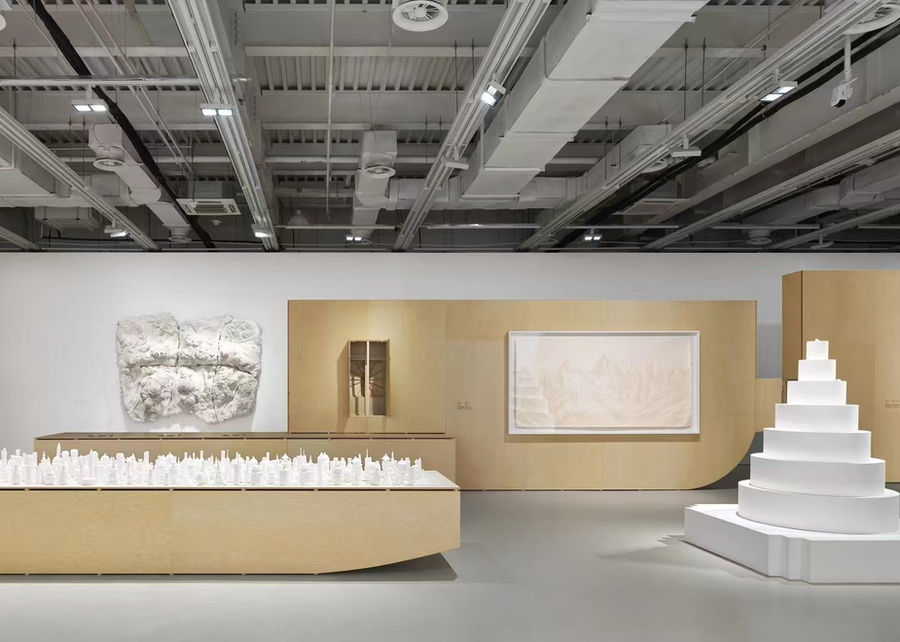
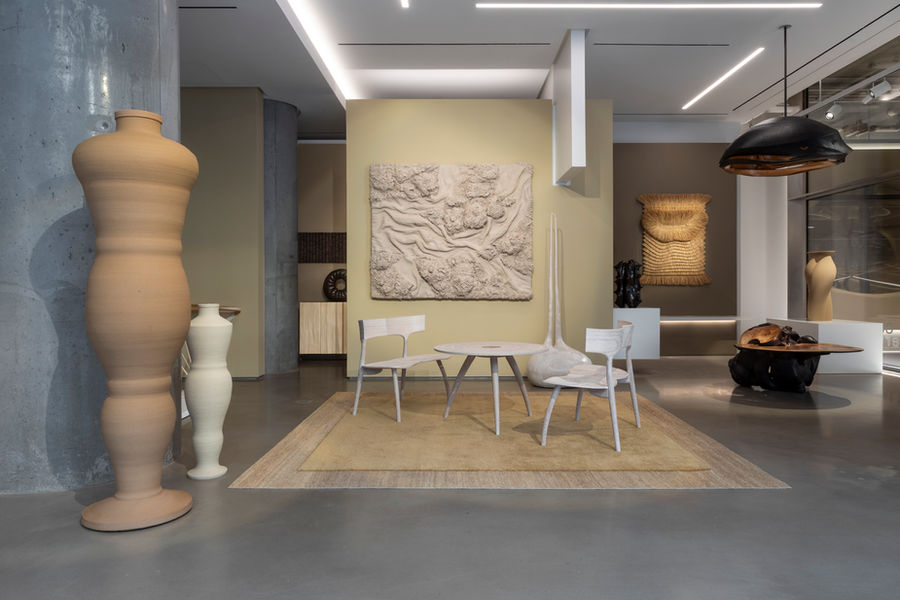

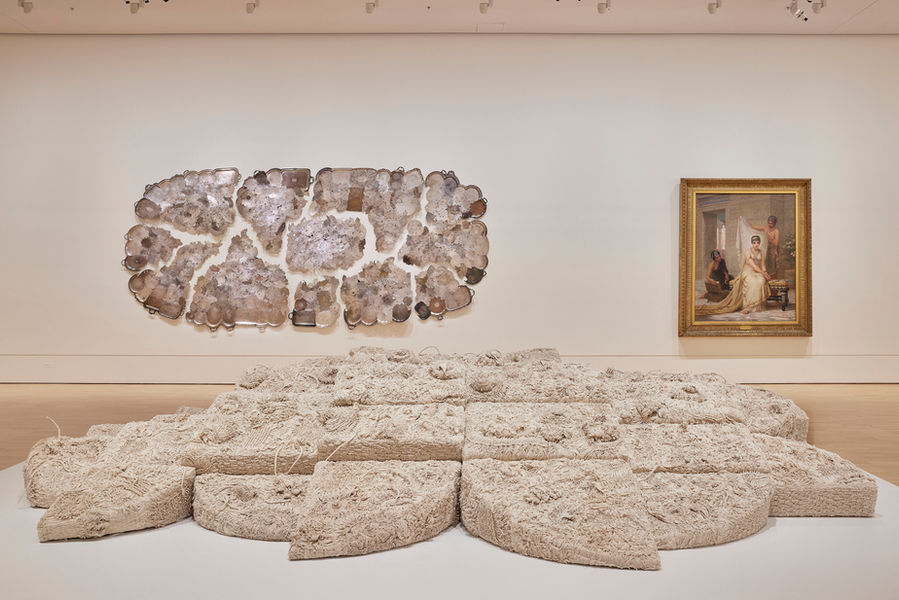

When She received the LOEWE Foundation Craft Prize in 2021 the jury highlighted the work’s monumental scale and extraordinary craftsmanship. The installation demonstrated how techniques historically associated with domestic labour could generate a sculptural environment capable of transforming architectural space.
The title She gestures toward gender without reducing the work to representation. The sculpture evokes a collective presence shaped by endurance and accumulated labour. Each knot marks time and effort while the overall form suggests both bodily and geological forces.
Lin expanded these ideas in later works. A major commission for the NGV Triennial in Melbourne resulted in She’s Four Seasons in 2023. The installation explores cycles of transformation through layered textile structures that echo seasonal rhythms. The work also emphasises the spatial dimension of Lin’s practice, allowing viewers to encounter textile as an environment rather than a surface.
Another significant project emerged through the Art in Resonance programme organised by The Peninsula in collaboration with curatorial advisors from the Victoria and Albert Museum. For this initiative Lin created She’s Bestowed Love, an installation composed of red dyed textile forms. The sculpture evokes organic growth and circulating energy while expanding the emotional vocabulary of her work.
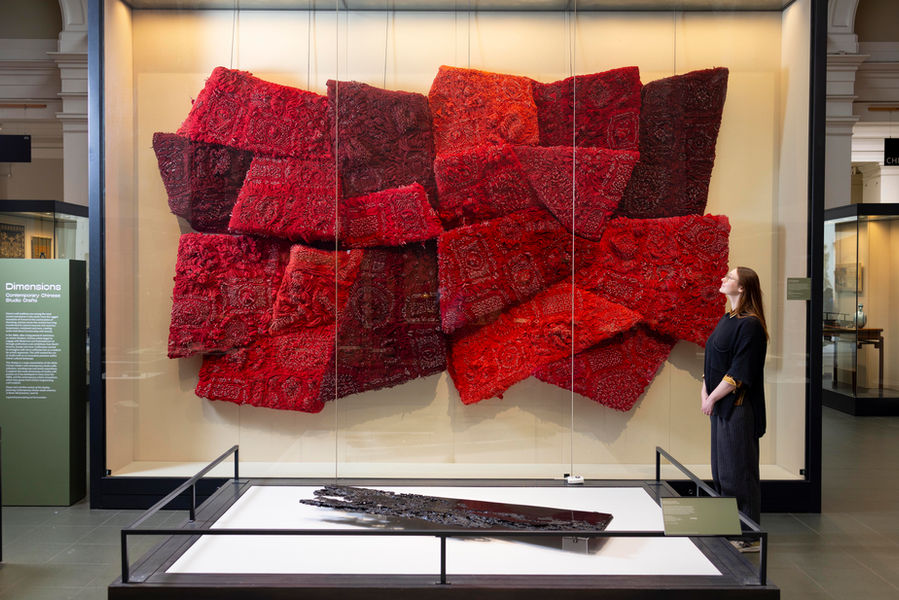
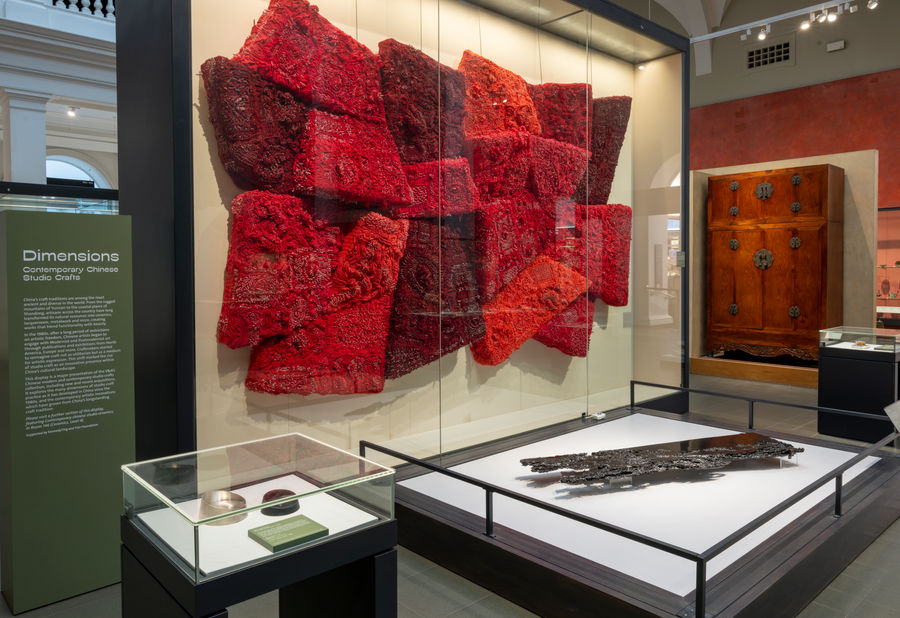
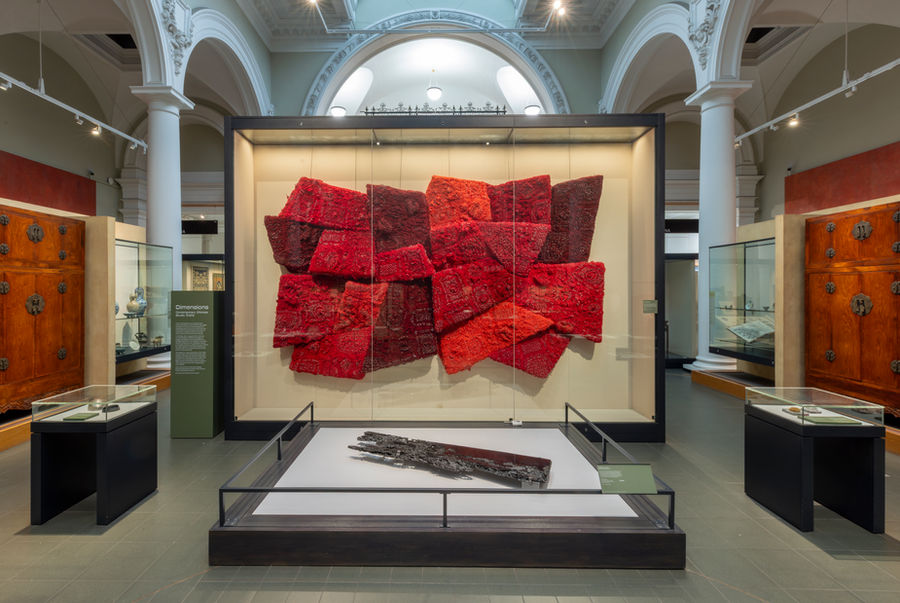
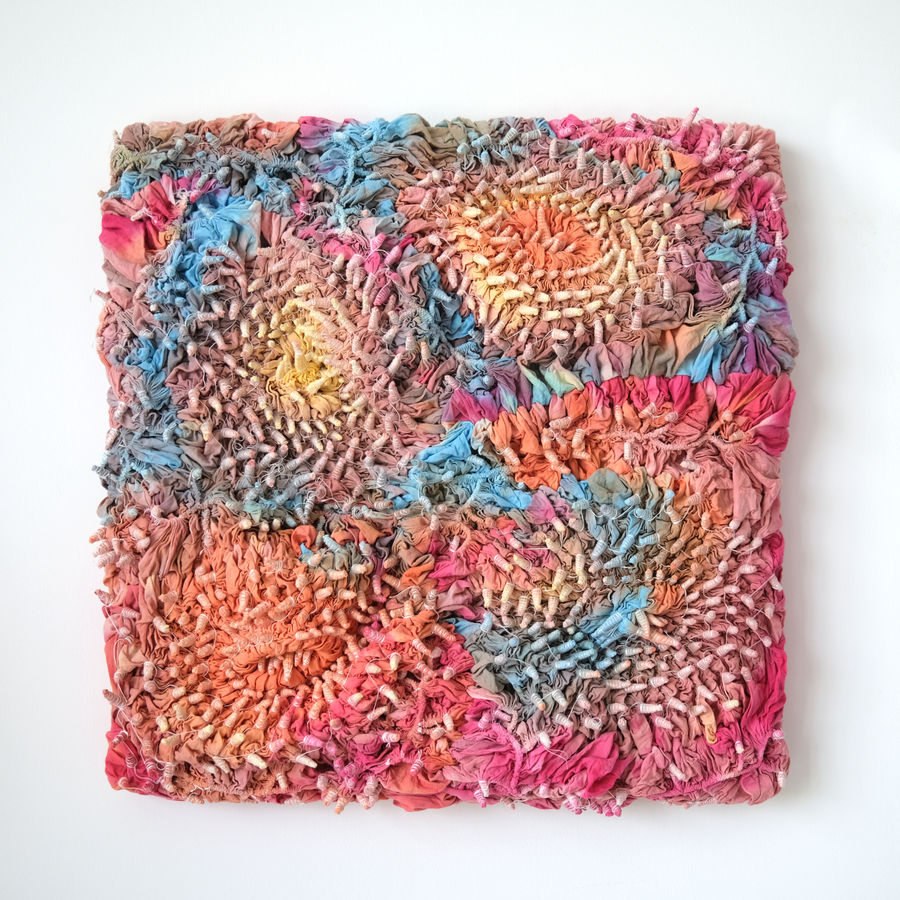
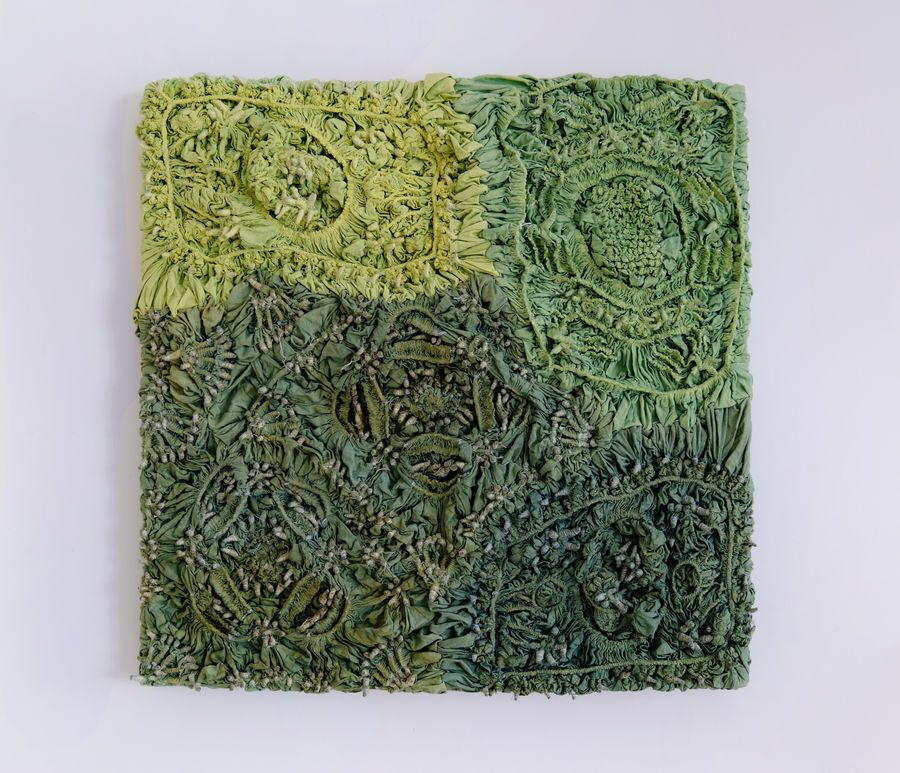
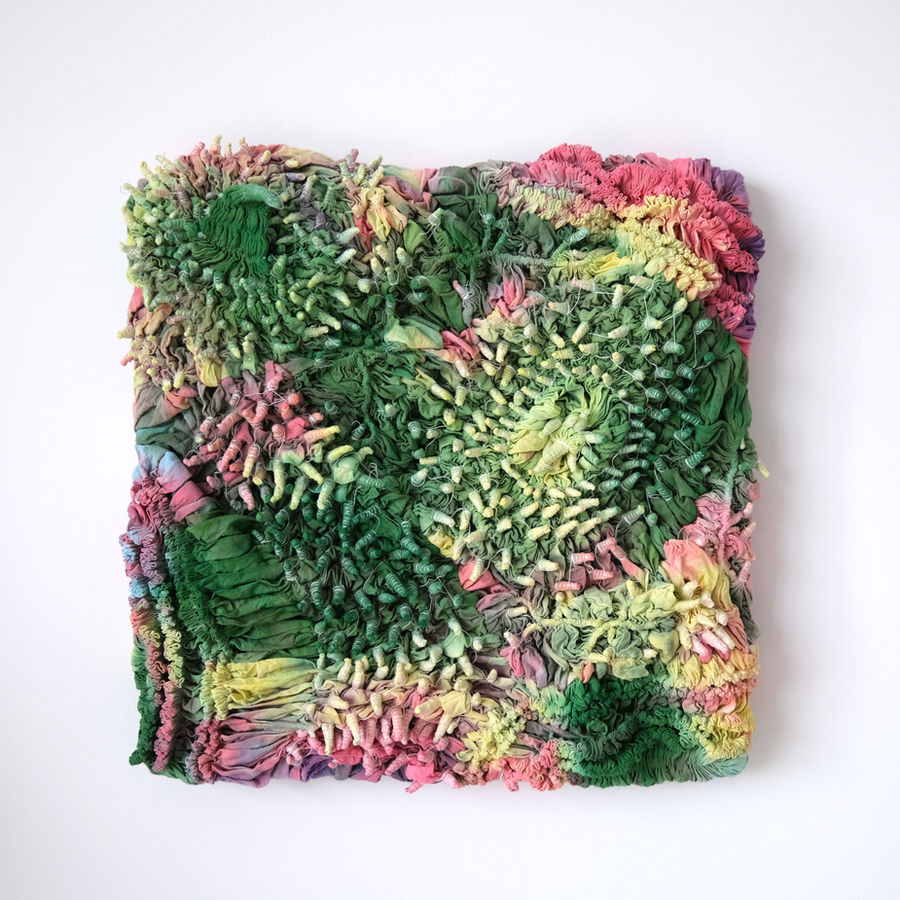


These projects demonstrate how Lin’s language continues to evolve. The early indigo dominated works emphasised tradition and process. Later pieces incorporate broader colour palettes and increasingly architectural structures.
Lin Fanglu’s practice reveals how textile can function as a sculptural language capable of carrying cultural memory and contemporary experimentation at the same time. Through the repeated gestures of binding, knotting and dyeing she transforms cloth into structures that operate simultaneously as landscape, body and architecture.

Rather than preserving craft traditions as static heritage, Lin activates them as living systems of knowledge. The techniques she learned in rural communities become tools for constructing new forms and new spatial experiences.
In a cultural moment dominated by rapid production and digital images, her work insists on a slower rhythm. Meaning emerges through repetition, pressure and accumulated labour. Thread by thread the sculptures build a physical record of time. In doing so they demonstrate how craft can remain a vital force within contemporary art.
Photo Cover
Lin Fanglu posing thoughtfully in her studio amid large white textile sculptures.
Credit: The Edge Magazine.