Now Reading: TV Team Begijnenborre designs kindergarten among existing trees
- 01
TV Team Begijnenborre designs kindergarten among existing trees

TV Team Begijnenborre designs kindergarten among existing trees
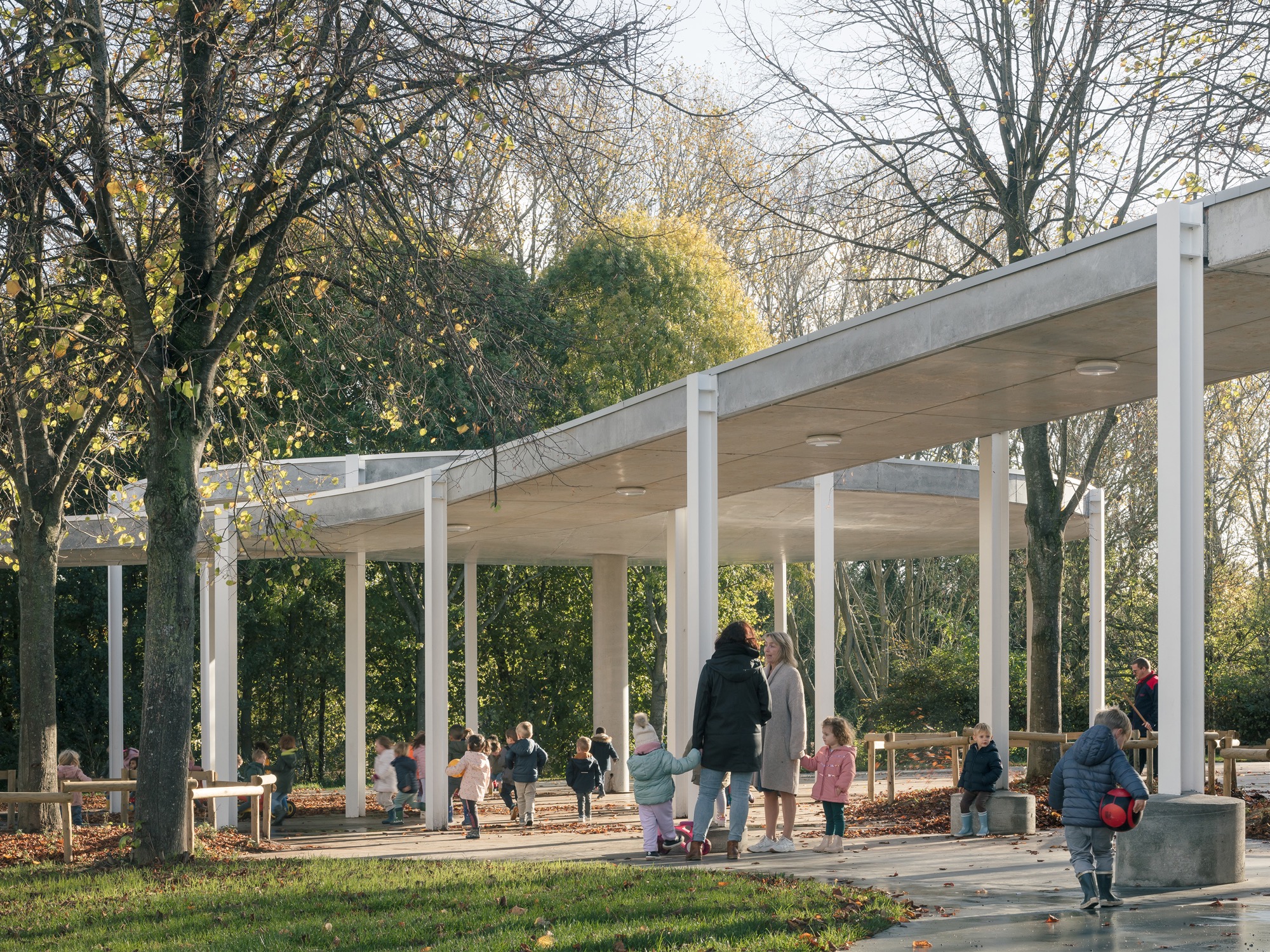
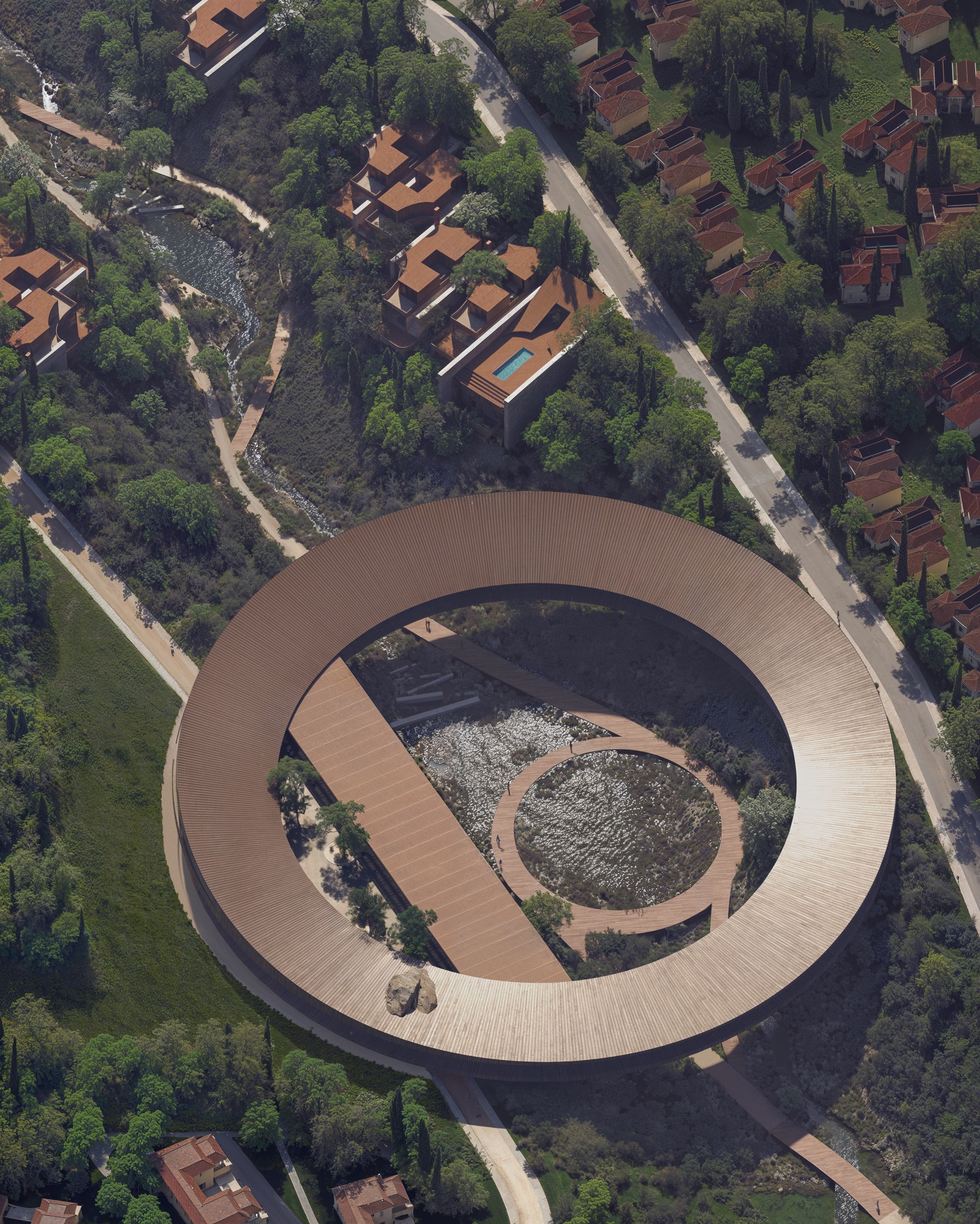
Located in Dilbeek, a small town on the outskirts of Brussels, the Infant Classes and Playgrounds project reconsiders how early-education architecture can inhabit a landscape without dominating it. The kindergarten Dilbeek Belgium project was designed collaboratively by Atelier Starzak Strebicki, Carton123 architecten and Natural Born Architects under the joint practice TV Team Begijnenborre, and establishes a careful dialogue between architecture and the existing natural environment.

From the outset, the project was guided by a clear premise: the building had to be constructed without cutting down any trees on the site. Rather than imposing a conventional footprint, the architects allowed the existing vegetation to shape the form and spatial organisation of the kindergarten and day-care centre. The resulting architecture emerges as an oval volume gently meandering between the trees, positioning itself as a quiet presence within the landscape rather than a dominant object.


At the centre of the building lies an internal patio, around which the entire programme is organised. Large windows throughout the kindergarten rooms, canteen, gymnasium and corridors open views toward the surrounding greenery, allowing children and teachers to experience the changing character of nature across the seasons. In this sense, the architecture becomes a backdrop to the landscape, framing the trees rather than competing with them.


The building traces a soft, winding path through the existing trees while maintaining a respectful distance from neighbouring plots. This positioning establishes the kindergarten as a calm, green retreat, sheltered by vegetation that filters sunlight and mediates the relationship between interior and exterior spaces.


The trees also play an important spatial role within the organisation of the programme. They create a natural separation between two main segments of the complex: the kindergarten itself and the day-care centre that remains open after class hours. Both parts are linked by a covered external canopy, ensuring continuity while allowing each programme to operate independently.


Internally, the building follows a simple and intuitive layout. A continuous corridor runs around the central patio, forming the main circulation spine and connecting all functional spaces. Directly adjacent to the covered entrance along the street are the sports hall and the canteen. Their location allows these facilities to operate independently of the kindergarten’s daily schedule, extending their potential use to the wider community.

More intimate spaces dedicated to learning and childcare are positioned deeper within the building, where the surrounding greenery provides a sense of calm and protection.

The circular corridor surrounding the patio performs more than a purely functional role. It becomes a flexible interior landscape where circulation, play and informal gathering intersect. Along its length, a custom-designed wall separates the corridor from the kindergarten rooms. Rather than functioning as a simple partition, this wall is conceived as a multifunctional piece of furniture incorporating seating niches, storage spaces, cloakrooms and integrated windows.


These additional openings allow daylight to penetrate deeper into the classrooms while offering children a second visual axis toward the central patio. The result is an environment where interior spaces remain visually connected to both the inner courtyard and the surrounding trees.


Each playroom is also equipped with large windows facing the landscape and direct access to the garden that surrounds the building. Outdoor playgrounds and covered areas encourage children to spend time outside even during rainy weather, reinforcing the project’s strong relationship with nature.
Custom-designed furniture along the windows further enhances this connection. Wide window sills provide places to sit, observe the changing light and experience the rhythms of the seasons from within the classrooms.


The open spatial organisation of the building allows the interior to remain adaptable over time. Classrooms, circulation spaces and shared areas can accommodate a range of activities, supporting the evolving needs of the preschool community.

Throughout the project, interior functions maintain a direct relationship with outdoor spaces. Gardens, patios and playgrounds extend the educational environment beyond the walls of the building, creating a continuous landscape for learning, play and exploration.
In Dilbeek, the architecture does not attempt to compete with its surroundings. Instead, it quietly aligns itself with the existing trees, allowing nature to shape the spatial experience of early childhood education. The result is a kindergarten where architecture acts as a mediator between children and the landscape that surrounds them.
Project Credit
Project name: Infant classes and playgrounds
Location: Dilbeek, Belgium
Designer: TV Team Begijnenborre (Atelier Starzak Strebicki / @atelier_starzak_strebicki, Carton123 architecten / @carton123_architecten, Natural Born Architects)
Photo: Stijn Bollaert / @stijn_bollaert
Year of realisation: 2023
Related Posts
Previous Post
Next Post

- The timeless elegance of domestic appliances: From the Iconic Braun KF 20 aromaster to the German design ethos

- Emilio Ferro on the light, sound and memory of a place
- At Maniwa, an architect’s family home opens to the neighbourhood
- What bronze remembers of the hand

- Caught in light: Moradavaga’s suspended shoal

- The making of Alex Chinneck’s impossible Dior windows