
Now Reading: House 720 degrees: A circular device for living and seeing
- 01
House 720 degrees: A circular device for living and seeing


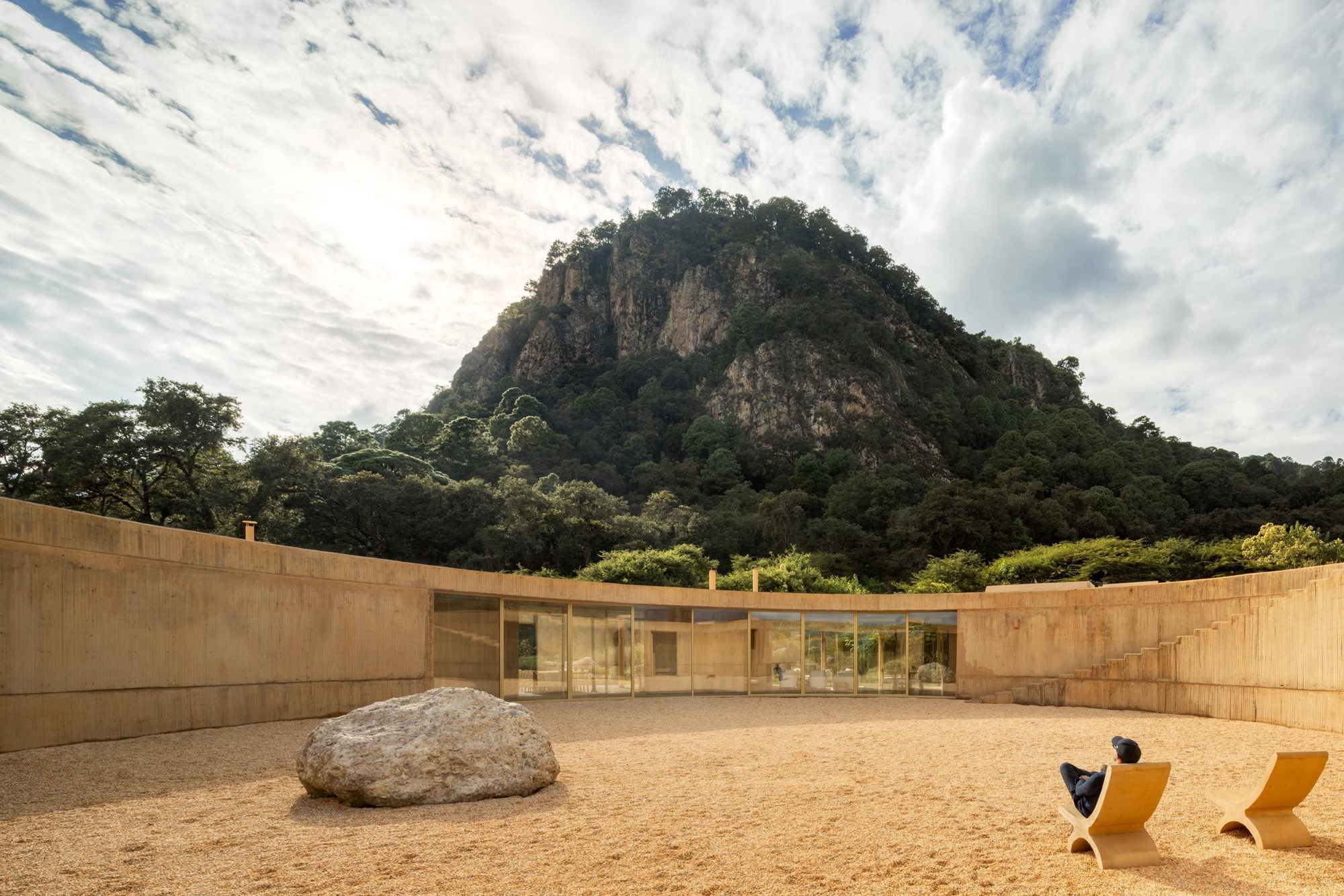
House 720 Degrees is conceived as an architectural instrument rather than a conventional dwelling. Its form doubles the full rotation of vision, transforming the house into a geometric and optical device that mediates between landscape, climate, and daily life. Organized around a central patio, the project explores how interior and exterior worlds can coexist through a continuous spatial dialogue.

During the day, the house opens outward, framing distant mountains and a volcano along the perimeter of its circular plan. At night, it reverses its focus, turning inward toward a protected courtyard. The architecture operates like a solar clock, registering the passage of time through light, shadow, and movement across its curved surfaces.

A HOUSE MADE OF MANY HOUSES
Rather than a single compact volume, the project unfolds as a constellation of three distinct structures adapted to the site’s steep topography and existing vegetation. The main circular house forms the heart of the project. A detached studio and guest room offers independence and retreat. A rectangular volume organized around its own patio accommodates additional bedrooms, services, and storage.
This fragmentation allows the house to sit lightly on the land while supporting life for two families, including extended relatives and guests. The result is a domestic landscape where proximity and distance are carefully balanced.

PLAN, MOVEMENT, AND ADAPTABILITY
The main house is arranged across two levels, with primary living spaces on the ground floor and an open roof terrace above. Within the circular plan, private rooms such as bedrooms, bathrooms, closets, and the kitchen are defined by rectilinear forms. The curved perimeter is reserved for circulation, which expands into terraces facing the courtyard and gardens opening toward the surrounding valley.


Flexible architectural elements shape daily life. Privacy screens, foldaway windows, and precisely framed views allow spaces to open, close, and transform according to weather, time, and use. Each interior connects to multiple orientations, reinforcing a constant awareness of place.


SECLUSION AND OPENNESS IN BALANCE
Set in a secluded valley three hours from Mexico City, the house negotiates two seemingly opposing conditions. It offers refuge from extreme climate, where temperatures can shift dramatically within a single day and rainfall dominates much of the year. At the same time, it opens generously to its surroundings.

The walls function as permeable membranes between forest and prairie, dry season and wet season, center and periphery, interior and exterior. Architecture becomes a climatic mediator rather than a barrier.


House 720 Degrees is literally rooted in its site. The structure nestles into the terrain, using local soil mixed with concrete to produce a finish that echoes the color and texture of the land. The low profile and single level expression allow the building to blend into the untouched landscape.


Furniture and lighting were largely produced on site using local materials and craftsmanship, extending the architectural concept into the smallest details. The house does not assert itself as an object but emerges as a continuation of its environment.


AN OFF GRID AND LIVING STRUCTURE
Sustainability is embedded in the project’s logic rather than added as a layer. The house harvests rainwater, generates electricity through solar panels, and uses the same solar system to heat water throughout. Hydronic radiant floors warm the bedrooms, while natural cross ventilation cools the entire house without mechanical dependency.
Materials were selected for durability and low maintenance, allowing the building to weather naturally without coatings or cosmetic finishes. Over time, the house subtly changes with the seasons, absorbing moisture, light, and color. It behaves as a living structure that adapts and breathes with its surroundings.


Project Credit
Architect: Fernanda Canales / @fernandacanales_arquitectura
Location: La Reserva Peñitas, State of Mexico, Mexico
Completed: 2024
Photo: Rafael Gamo, Camila Cossio
More photos


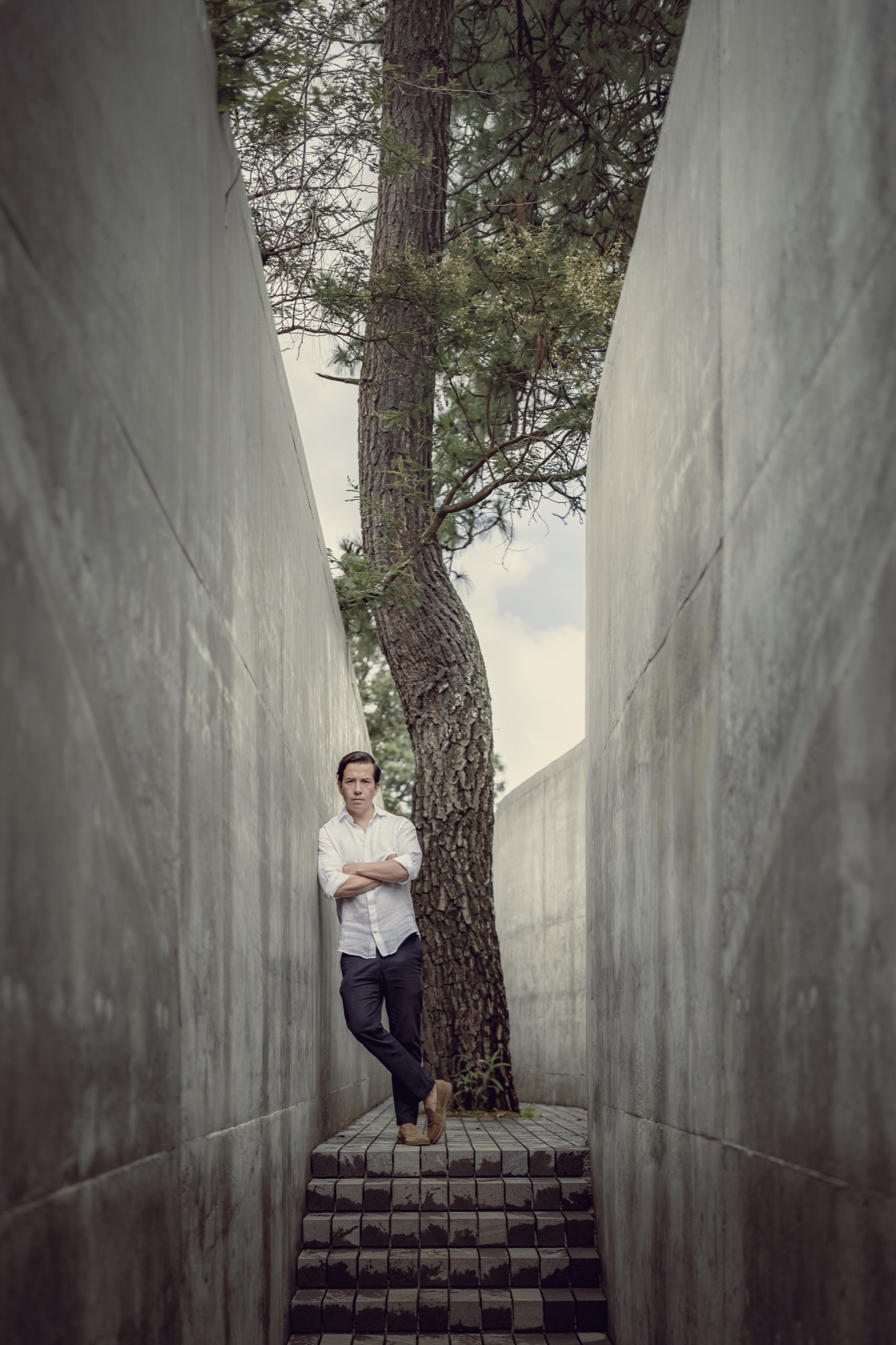
Fernanda Canales was born in Mexico City in nineteen seventy four. She studied architecture at the Ibero American University, completed a masters degree in theory and criticism in Barcelona, and earned a doctorate in Madrid. Her work has been exhibited internationally, including at the Royal Academy of Arts in London and the Venice Architecture Biennale. Alongside practice, she is an influential architectural theorist and educator, having taught at Yale, Princeton, Harvard, and Politecnico di Milano.