Now Reading: PPAA designs off-grid retreat house between avocado orchards in Mexico
- 01
PPAA designs off-grid retreat house between avocado orchards in Mexico

PPAA designs off-grid retreat house between avocado orchards in Mexico

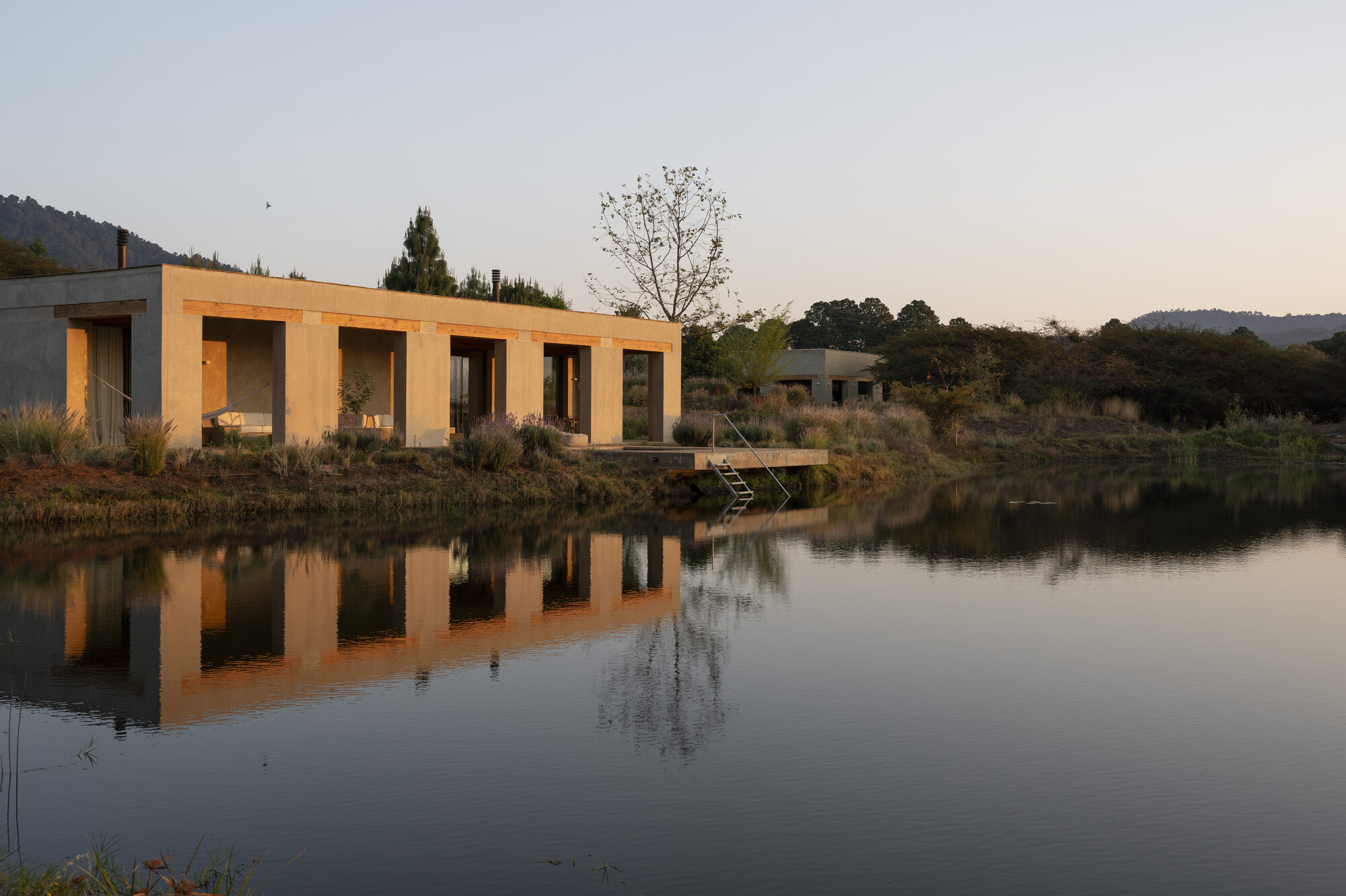
Set between two avocado orchards, Toronjos is conceived as a retreat that responds directly to the rhythms and limitations of its natural surroundings. Designed without access to public electricity, sewage, or potable water, the project embraces a fully self sufficient approach in which sustainability becomes inseparable from the architecture itself.

Rather than imposing a strong architectural presence onto the site, the house seeks near disappearance. Low horizontal volumes, exposed earth materials, and carefully framed openings allow the building to merge with the surrounding vegetation, water, and soil. The project becomes less an isolated object than an extension of the landscape it inhabits.


From the beginning, the architects pursued a minimal footprint that would preserve the terrain while creating a calm environment dedicated to rest, contemplation, and slow living.


Toronjos unfolds across a single level organized into three longitudinal sections. The central zone contains the private rooms, including the bedroom, dressing area, and bathroom, while the lateral wings accommodate open social spaces designed for gathering and contemplation.


A sequence of staggered walls and generous openings defines the architecture. These openings allow air, light, and landscape to move continuously through the interiors, dissolving the boundary between inside and outside. Throughout the day, shifting shadows and filtered sunlight transform the atmosphere of the house, reinforcing its intimate relationship with nature.


Large living areas open directly toward the landscape, while hammocks suspended within shaded zones encourage moments of stillness. Every space is carefully oriented to frame views of the surrounding vegetation and the artificial lake that anchors the site visually and environmentally.


The material palette is deliberately restrained and deeply rooted in local construction traditions. Toronjos was built entirely from adobe and wood using regional labor and resources gathered directly from the site itself.

Adobe bricks were handmade using earth and straw before being dried naturally under the sun. The same material continues across the floors and wall finishes, creating interiors defined by warmth, texture, and tonal continuity with the surrounding terrain. Exposed wooden beams introduce rhythm and structural clarity, their dimensions shaped by the availability of local timber.


This direct use of natural materials gives the architecture a tactile and timeless quality. Rather than concealing construction, the project allows craftsmanship and material imperfection to remain visible as part of the spatial experience.


Environmental performance is integrated into every aspect of the project. Rainwater is collected through an artificial lake that functions both as a reservoir for domestic use and irrigation and as a central landscape feature that regenerates the ecosystem of the site.


The house is powered entirely by solar energy, allowing it to operate autonomously within its remote setting. Cross ventilation, passive cooling, and natural illumination reduce the need for mechanical systems while reinforcing the project’s connection to climate and place.

Toronjos ultimately proposes a quieter understanding of sustainable architecture. It is not defined by technological spectacle, but by restraint, local knowledge, and an architecture that allows the landscape to remain the true protagonist.
Project Credit
Project name: TORONJOS
Location: State of Mexico, Mexico
Built area: 312 m2
Year: 2024
Design Firm: PPAA / @perez_palacios_aa
Photo: Fabian Martínez