
Now Reading: Brise-Vent: Adaptive reuse as civic infrastructure
- 01
Brise-Vent: Adaptive reuse as civic infrastructure

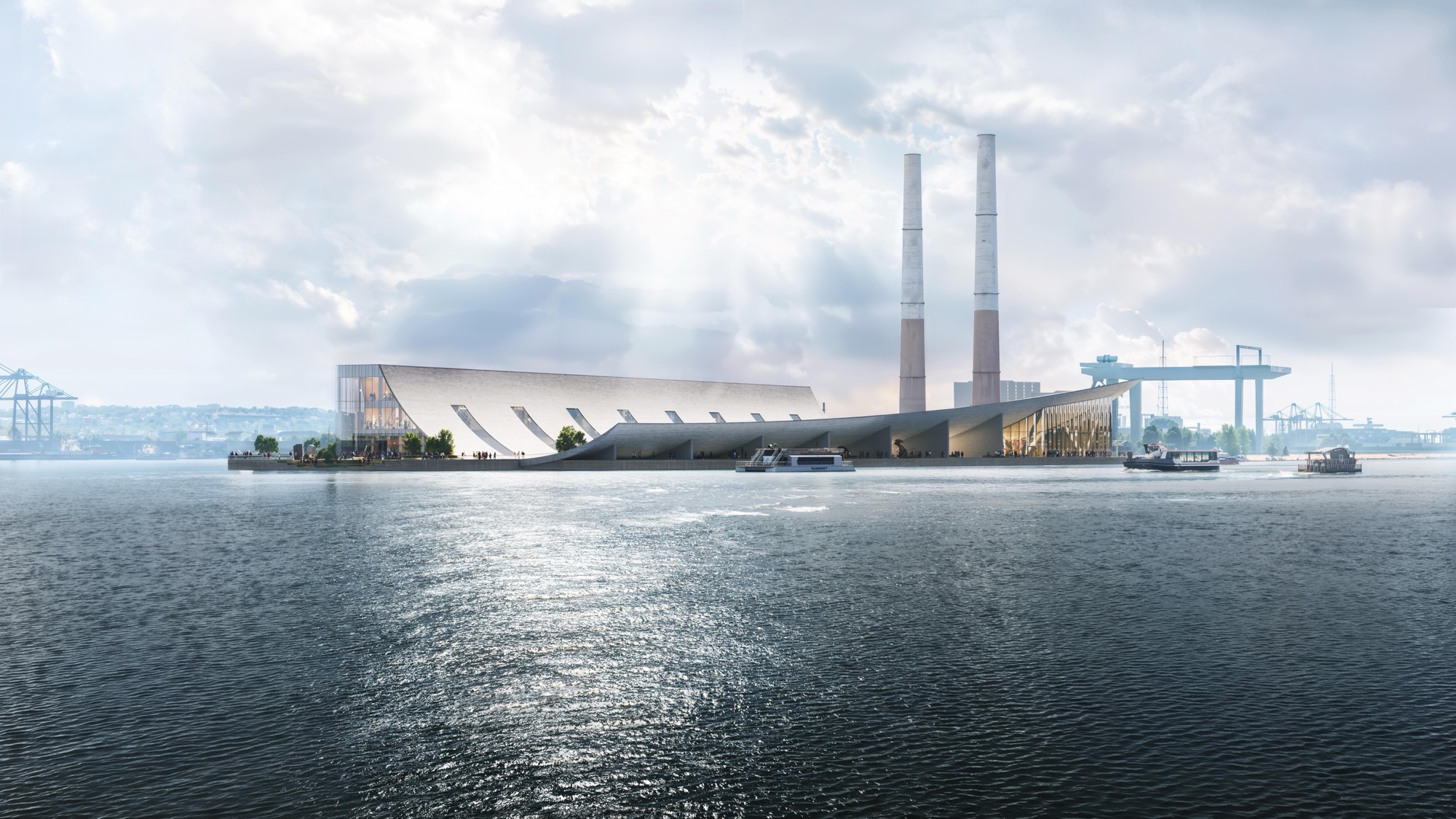

Set within the industrial waterfront of Le Havre (France), the Brise-Vent project does not attempt to overwrite the site’s history, nor does it treat heritage as a static backdrop. Instead, it approaches the existing structure as civic infrastructure in waiting. Through adaptive reuse, Brise-Vent repositions an industrial framework as a connective public environment, linking city, promenade, and harbor while responding to climate, daily use, and contemporary cultural needs.
In this conversation, Dingdong Tang of LYT-X Studio, lead designer of the project, reflects on how Brise-Vent emerged from a close reading of the site itself, how adaptive reuse operates as a form of urban repair, and why museums today must function not as isolated objects but as porous civic spaces embedded in everyday urban life.

What were the primary sources of inspiration for the Brise-Vent project, particularly in terms of blending the site’s industrial heritage with contemporary civic needs in Le Havre?
For the Brise-Vent project, the main inspiration came directly from the site itself. Its industrial structure, its working rhythm, and the everyday life of the harbor were already there. Le Havre has a very strong port identity, yet many waterfront industrial zones remain disconnected from daily public use. From the beginning, we wanted the project to bridge that gap.
The intention was quite simple. We aimed to retain the clarity and strength of the industrial environment, while transforming the site into a civic place that people could use on a daily basis. Whether someone enters the museum, passes through the site, meets friends, or simply spends time by the waterfront, the project needed to support all of those uses without hierarchy.

How does your design philosophy emphasize adaptive reuse as a form of “urban repair,” and what key principles guided the decision to retain the existing industrial framework?
I see adaptive reuse as a form of urban repair because it reconnects existing structures to public life rather than replacing them. In many cities, older buildings are not ruins. They are resources. Repair, in this sense, means giving these structures a new role that responds to contemporary urban needs.
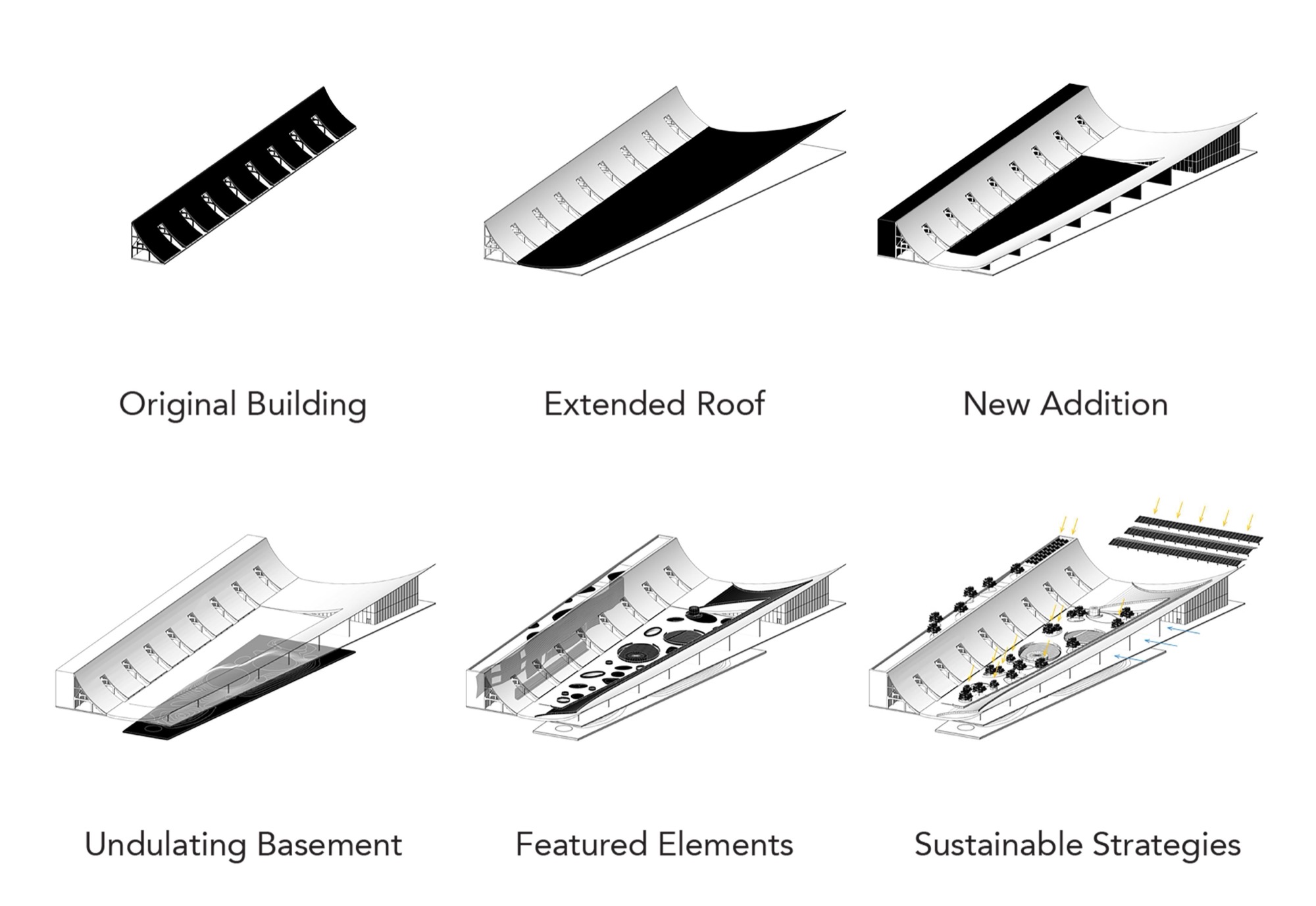
We decided to keep the existing framework for three main reasons. First, it is structurally robust and provides a clear spatial order. Second, it carries the scale and memory of the harbor without requiring any form of imitation. Third, reuse is a direct sustainability decision. It reduces demolition and waste, and allows us to focus resources on improving comfort and performance.
This approach is not specific to one project. It is a repeatable method we apply across heritage sites: preserve the structural armature, insert reversible layers, and prioritize public life and climate comfort.
LYT-X Studio positions itself as a research-driven practice. How does research inform your design decisions in projects like Brise-Vent, and how do you translate abstract research into concrete spatial strategies?
At LYT-X Studio, research is very pragmatic. We look closely at how the waterfront is actually used. We observe movement patterns, places where people naturally pause, how wind and sunlight affect comfort, and which types of public spaces remain active over time.
That research then translates directly into architectural decisions. For example, we designed a clear public route that does not rely on heavy signage, a courtyard that acts as a microclimate buffer, and a roof canopy that improves comfort while organizing spatial thresholds. Research helps us stay specific to the site and avoid generic or iconic gestures that do not serve daily use.

Can you elaborate on the architectural perspective that views the museum not as an isolated object but as a connective public environment. How does this manifest in the spatial organization?
The museum was never conceived as an isolated object. It is designed as a connected public environment, where the public realm is not leftover space but a central architectural idea.
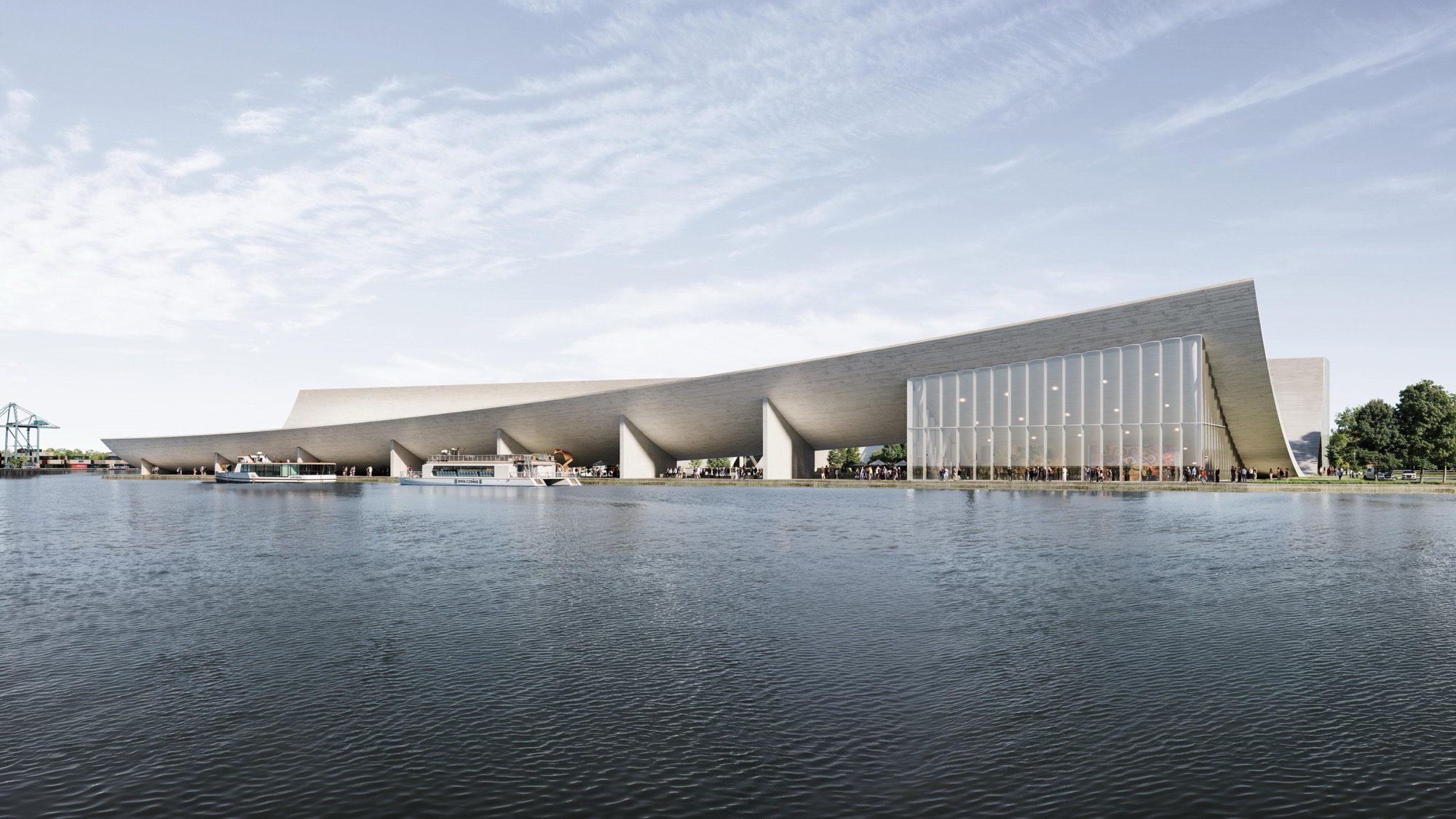
Spatially, the project is organized as a sequence: from the city to the promenade, then through a sheltered threshold, into a courtyard, continuing into the exhibition spaces, and finally opening toward the harbor. The museum functions both as a destination and as a passage. People can engage with exhibitions, but they can also experience the architecture as part of everyday waterfront life.
As the lead designer of the Brise-Vent project, how did you guide the key architectural decisions, from overall concept to spatial sequencing and environmental performance?
As lead designer, my role was to maintain a consistent idea throughout the project. That idea was adaptive reuse as urban repair, and the museum as civic infrastructure. It guided decisions about what to preserve, what to transform, and how the public sequence should connect the city edge to the waterfront.
Environmental performance was integrated from the very beginning rather than added later. The canopy, courtyard, and semi-open spaces were developed as a single system that supports comfort, orientation, and daily use.
What role does the extended curved roof canopy play in the overall design, and how did you envision it functioning as both an infrastructural threshold and a climate-responsive element?
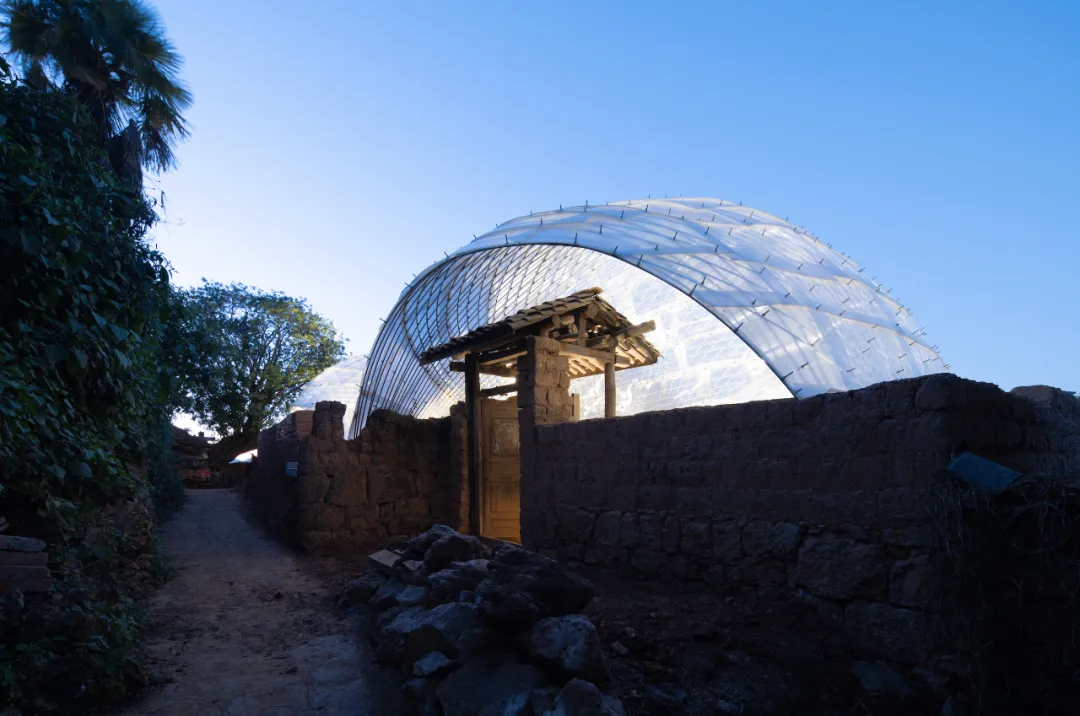
The extended curved roof canopy is the main organizer of the project, but it is not conceived as an added gesture. It grows naturally out of the existing structural logic, continuing its rhythm and scale. Because of this, it integrates seamlessly with the inherited industrial building and feels as though it has always belonged there.
At the same time, the canopy acts as a civic threshold. It frames arrival, supports movement, and defines a public edge without relying on a closed facade. In a coastal environment where wind and exposure affect comfort, it also functions as a climate-responsive element. It provides shading, moderates weather conditions, and creates sheltered zones where people can pause, gather, and remain longer.
In terms of climate responsiveness, how do the passive shading, natural ventilation, and material choices contribute to the project’s sustainability goals, especially in a coastal setting?
In coastal climates, sustainability is closely tied to durability and long-term performance. We begin with passive strategies because they operate continuously without heavy technical systems.
The canopy provides passive shading along circulation paths and public edges. The courtyard supports natural ventilation by creating protected airflow zones. Material choices prioritize durability, ease of maintenance, and resilience to coastal conditions, with careful detailing to address corrosion and weathering over time.
How did you approach the integration of maritime views and harbor activities into the exhibition spaces to reinforce the site’s historical context?
We treated the harbor as part of the museum’s content. Rather than isolating exhibitions from their surroundings, we introduced moments where visitors can see the working waterfront and sense the relationship between past and present.
This is achieved through framed views, aligned sightlines, and transitional spaces that allow visitors to pause and orient themselves. The museum tells a story, but the harbor continues that story in real time.
Could you describe the challenges in creating a continuous spatial sequence that links the city, promenade, and harbor, and how this enhances everyday public interactions?
The main challenge was achieving continuity without losing clarity. If everything is too open, the museum loses legibility. If everything is too controlled, the civic connection is weakened.
We addressed this by establishing a clear hierarchy of thresholds: open public circulation, semi-open sheltered zones, and controlled exhibition spaces. The sequence feels intuitive. People can move through the site without confusion, and the project does not feel exclusive to ticket holders.
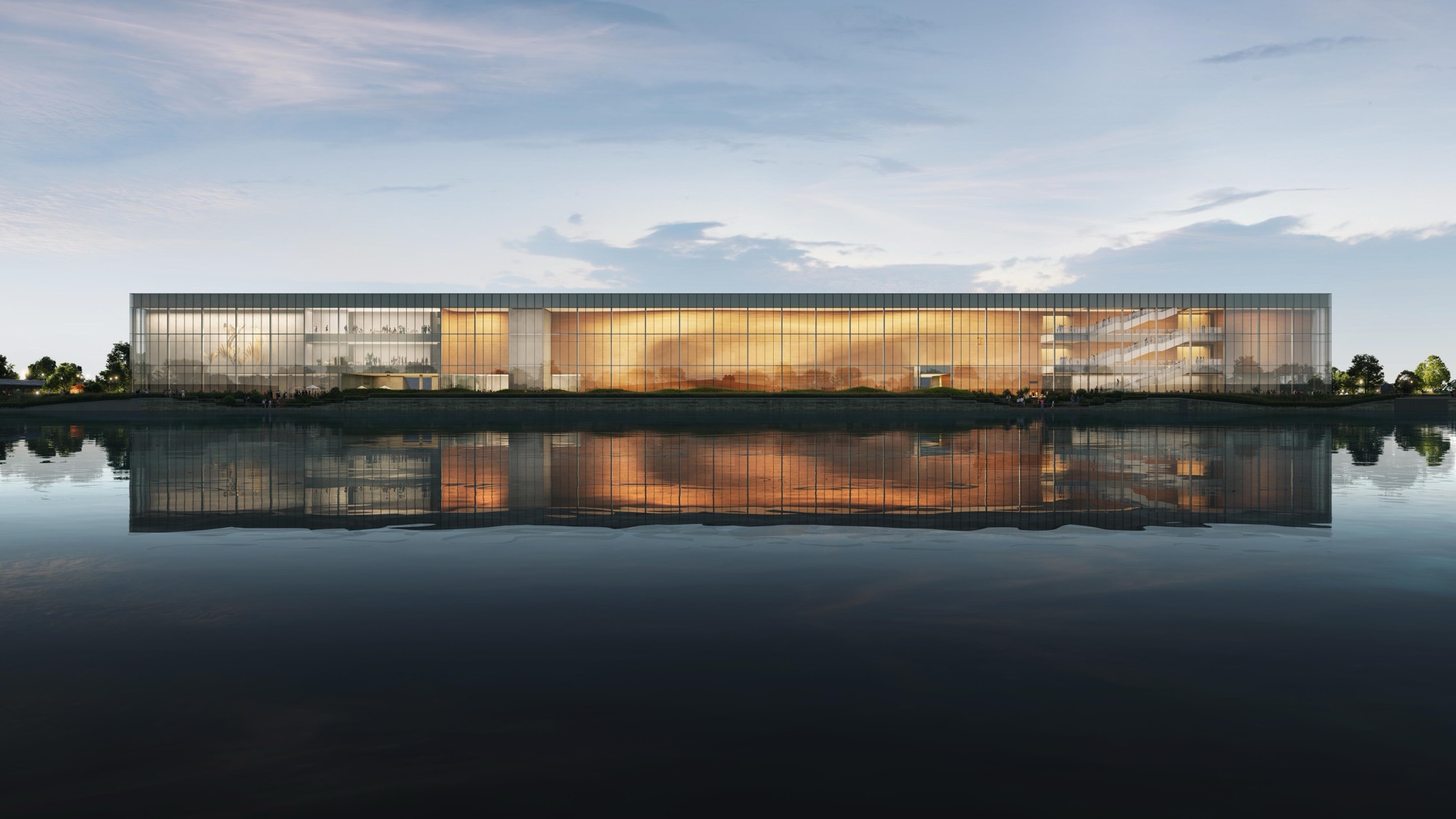
What innovative features in the semi-open public spaces and sheltered courtyard make the museum accessible and porous beyond standard operating hours?
Extending civic value beyond operating hours was a key objective. The public spaces are designed to function independently from the exhibition galleries.
Semi-open edges and the courtyard can remain accessible as sheltered public environments, while the galleries are secured separately. This allows the project to stay active and porous, supporting walking, meeting, resting, and informal gathering even when the museum is closed.
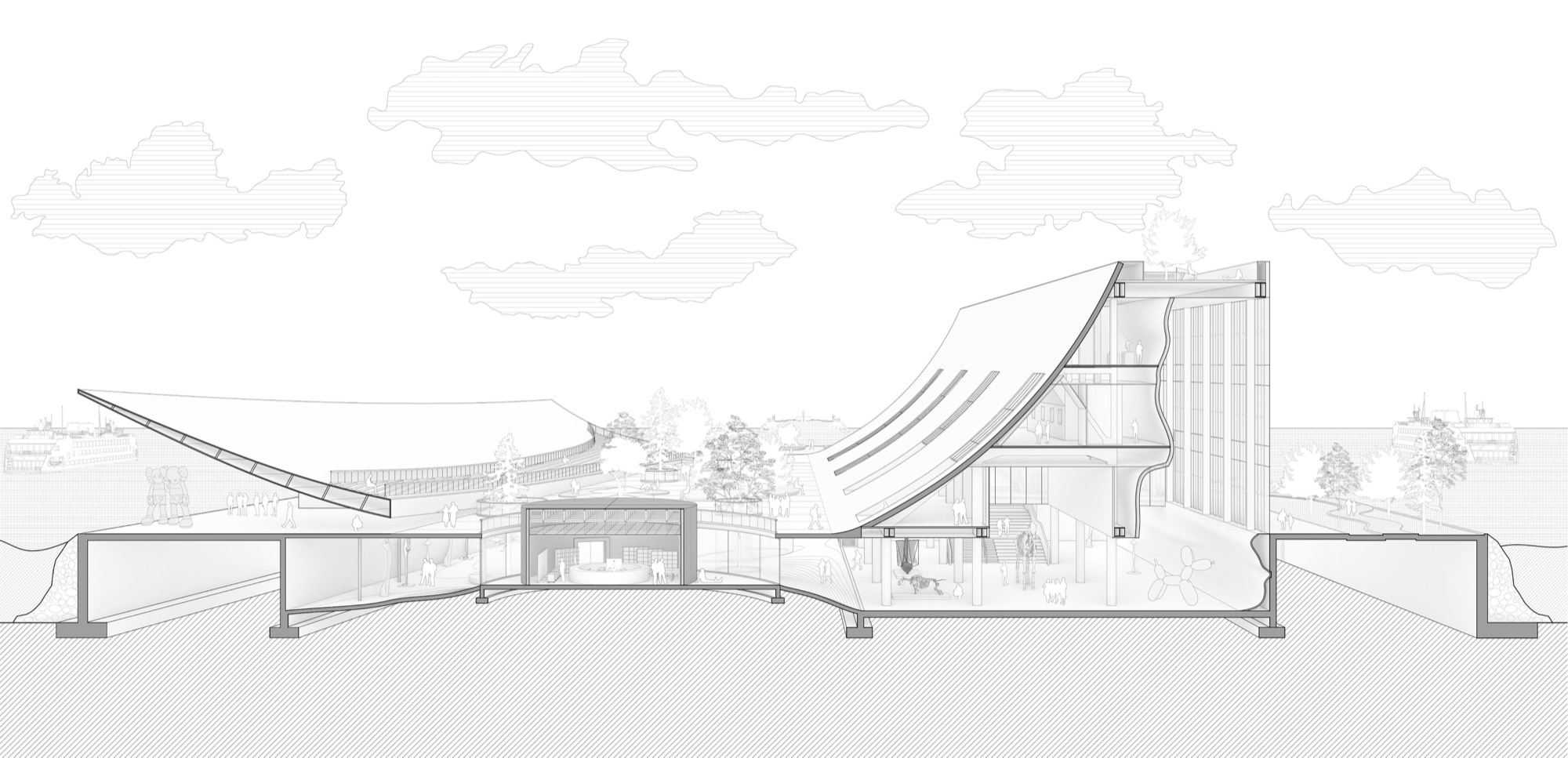
How do you see the Brise-Vent project influencing the broader waterfront redevelopment in Le Havre, particularly as civic infrastructure for community gatherings and events?
I see Brise-Vent as a piece of civic infrastructure rather than simply a cultural building. Successful waterfront redevelopment requires spaces that support everyday life, not only occasional events.
The project contributes a public framework through sheltered edges, a gathering courtyard, and a clear connection between the city and the water. It can host events, but more importantly, it supports daily use, which is what makes a waterfront socially resilient.
What kind of professional, public, or institutional response has the Brise-Vent project received, and how do you see this feedback contributing to ongoing discussions around adaptive reuse and civic architecture?
The project has received a range of professional and public responses through awards, media coverage, and exhibition contexts. What is most meaningful is how this feedback reinforces a broader disciplinary shift. Adaptive reuse is increasingly understood not only as preservation, but as civic infrastructure, evaluated through public access, everyday usability, and climate comfort. The project is read less as a museum object and more as an argument for repairing heritage sites into active public environments.
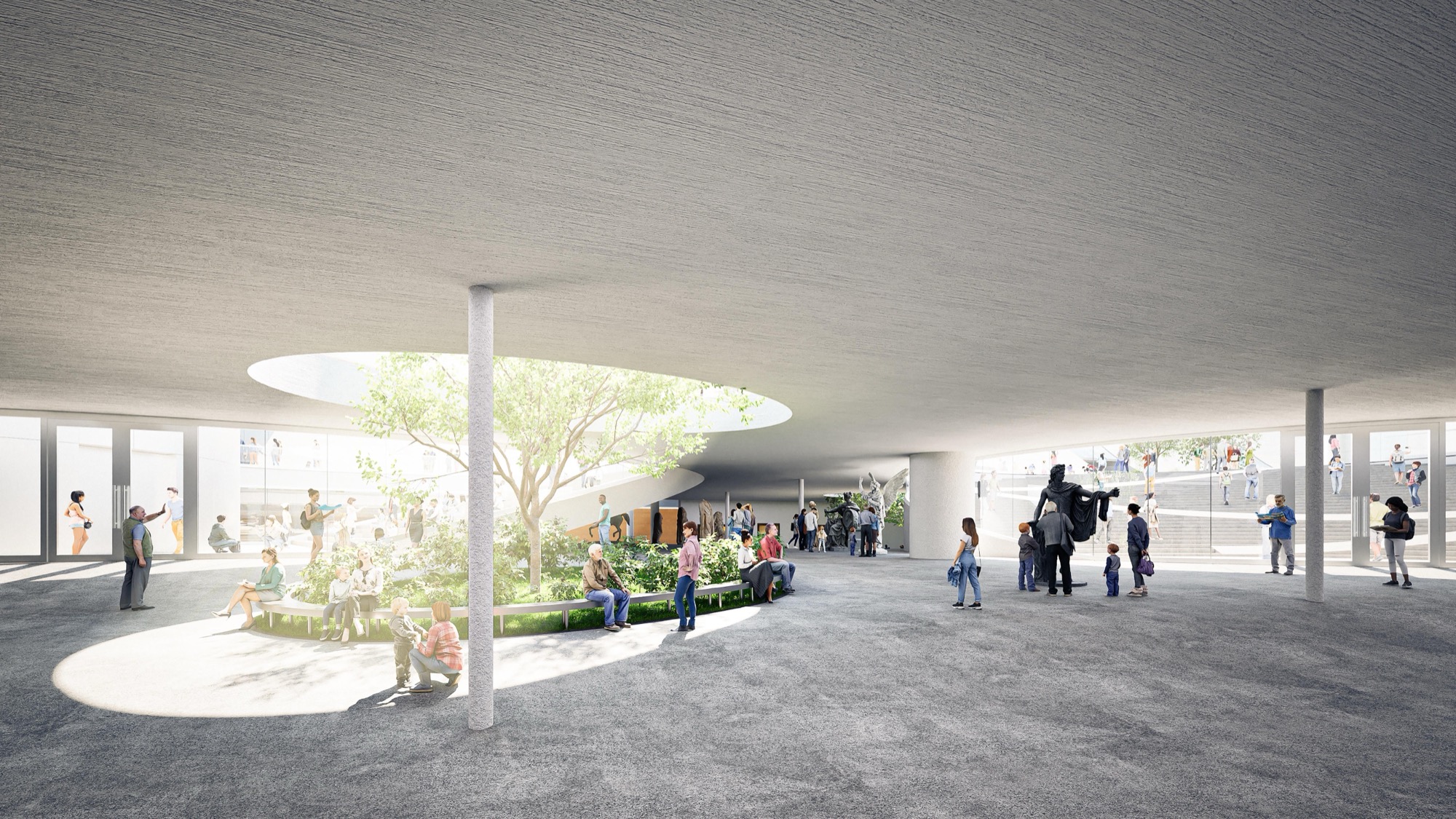
Looking ahead, what potential adaptations or expansions do you foresee for the museum to ensure its long-term resilience in the face of climate change and urban evolution?
Long-term resilience requires the ability to adapt both programmatically and environmentally. The exhibition system is designed to remain flexible so that future curatorial needs can evolve without structural change.
Environmentally, future upgrades could include enhanced coastal protection strategies, expanded passive comfort zones, and modular energy improvements. The project is conceived as a framework that can evolve while preserving the integrity of the existing industrial structure.
How do the design strategies developed in the Brise-Vent project inform or influence other adaptive reuse or waterfront regeneration projects beyond Le Havre?
The strategies developed in Brise-Vent are transferable because they are based on method rather than form. The process begins with the public realm, establishing a legible sequence of movement, comfortable thresholds, and a civic framework that supports daily life.
At the same time, the method clearly distinguishes what should remain from what can change. The essential structural armature is preserved, while reversible performance layers are added where they have the greatest impact.
We have applied this same logic in our UNESCO Ancient Theatre Revitalization Project, where constraints are even stricter. The context differs, but the principles remain consistent: continuity, reversibility, and a public sequence that makes heritage usable today.


Looking across your broader body of work, how does Brise-Vent represent a continuation or evolution of your long-term exploration into heritage revitalization and civic public space?
Brise-Vent fits within a long-term direction in my work that treats heritage as civic infrastructure rather than a static object. Across projects, I focus on minimal and precise intervention, clear spatial order, and intuitive public sequences.
What evolved in Brise-Vent is the way architecture operates as a system. The canopy, courtyard, and semi-open zones work together to structure movement, public life, and microclimate. This approach continues in the UNESCO Ancient Theatre Revitalization Project, where interventions are even lighter and reversibility becomes central.
In that sense, Brise-Vent is not a singular statement, but one step in an evolving method.


Is there any particular adaptive reuse project (outside of your own work) that you find especially impressive and that has inspired you?
I am particularly impressed by the work of Lacaton & Vassal. Their approach demonstrates that transformation can be generous and socially meaningful without spectacle. They often enhance comfort and public value through addition rather than demolition.
I also admire projects that respect existing structures as systems with real capacity, and then unlock new public life through simple interventions involving light, circulation, and thresholds.
Why do you believe adaptive reuse and the transformation of old structures should become a major trend in future architecture?
Adaptive reuse addresses multiple urgencies simultaneously. From a climate perspective, demolition carries significant carbon and waste costs. Reuse allows us to retain embodied value and focus resources on targeted improvements that genuinely enhance performance and comfort.
It also supports cultural continuity. Existing structures carry memory and civic meaning, particularly in industrial and infrastructural contexts. The goal is not to freeze the past, but to transform it in ways that support contemporary life.
Finally, it shifts how architecture is evaluated. The future is less about isolated objects and more about adaptable systems that are publicly useful and resilient over time. This shift is increasingly visible within the profession. As a jury member for CORE77, I see how public value, sustainability, and responsible transformation are becoming central criteria in evaluating work.
What responsibility do you believe architects hold today when working with existing structures, particularly in the context of climate urgency and cultural continuity?
Architects have a responsibility to treat existing structures as shared environmental and cultural resources. Old buildings should not be seen as obstacles, but as assets that can be upgraded.
This responsibility includes performance, durability, and public value. The objective is not only preservation, but transformation, allowing cities to retain memory while improving comfort, access, and long-term resilience.
Article Credit
Interview: Rafael Cunha
Time: Jan 2026
Photo: LYT-X Studio