Now Reading: Brise Vent Havre Harbor Museum: Adaptive reuse as civic Infrastructure for a more public, climate-responsive waterfront
- 01
Brise Vent Havre Harbor Museum: Adaptive reuse as civic Infrastructure for a more public, climate-responsive waterfront

Brise Vent Havre Harbor Museum: Adaptive reuse as civic Infrastructure for a more public, climate-responsive waterfront

FROM INDUSTRIAL HARBOR TO CIVIC CULTURAL INFRASTRUCTURE
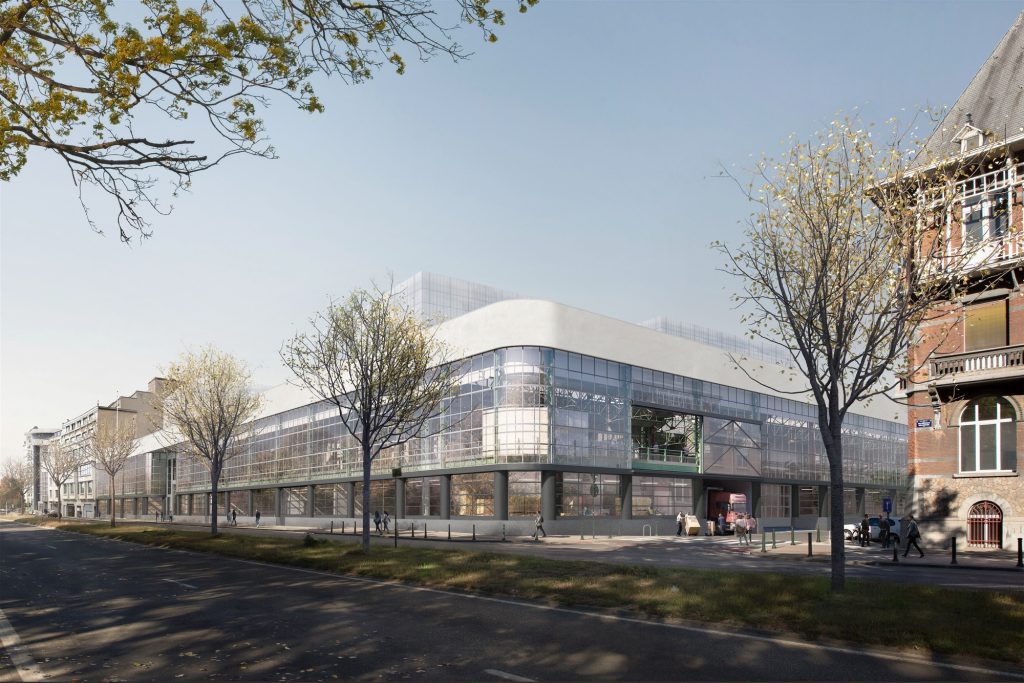
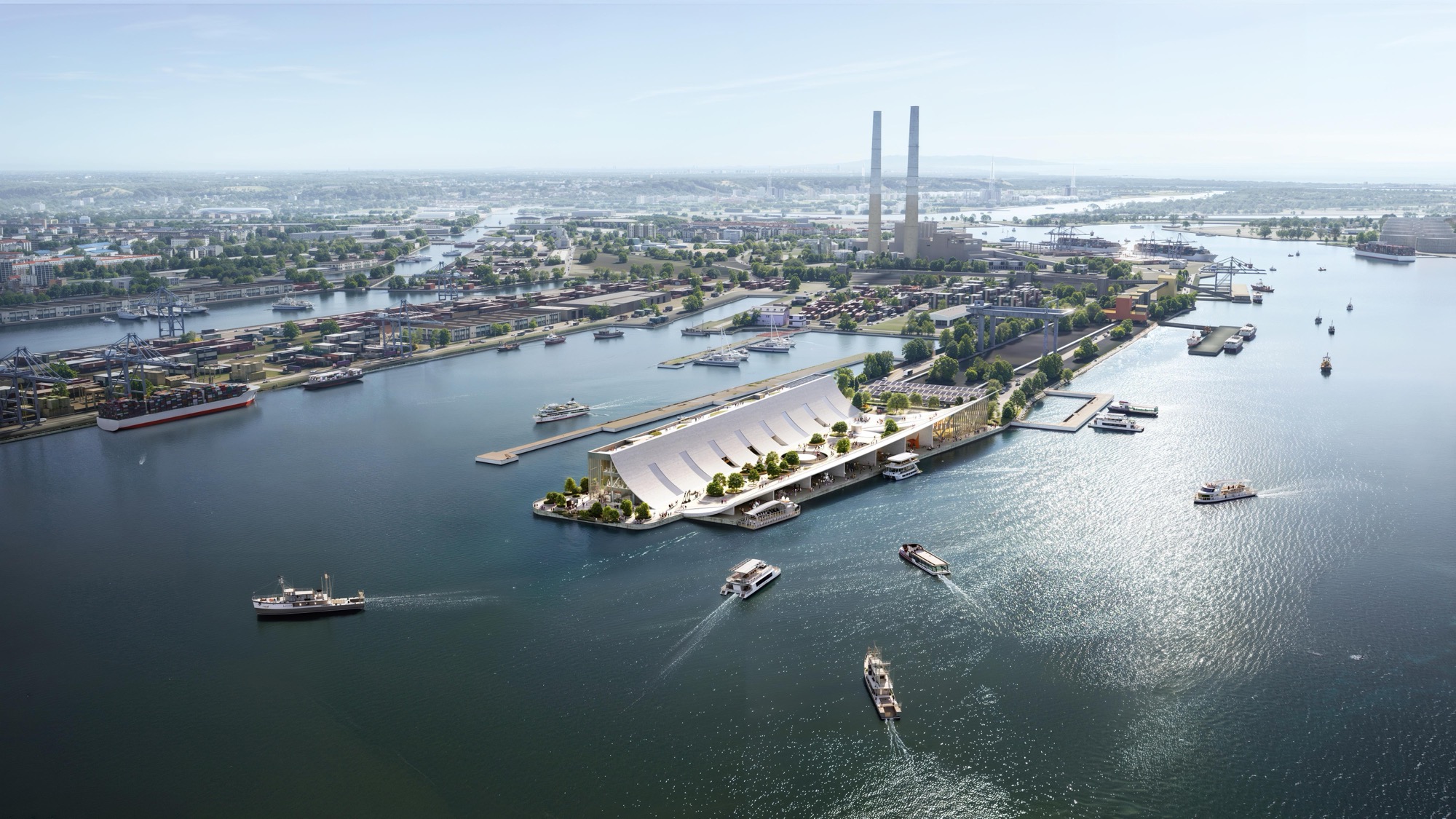
Set along the historic waterfront of Le Havre, Brise Vent Havre Harbor Museum proposes adaptive reuse not as a gesture of preservation, but as a form of urban repair. The project takes an existing industrial harbor structure that has outlived its original role and treats it as a durable civic asset, capable of hosting contemporary cultural life while restoring public continuity along the water’s edge.
As port operations evolved, the site gradually slipped out of daily urban experience. What remains is a powerful framework: industrial capacity, maritime memory, and a strategic position between city routes and harbor activity. LYT X Studio’s approach keeps the existing building as the primary historical layer and introduces new architectural elements that expand its public and programmatic potential. The intention is to maintain clarity between inherited fabric and contemporary intervention, allowing both to remain legible while operating together as one architectural system.

A MUSEUM SHAPED BY MOVEMENT, CANOPY, AND AN ALWAYS ACCESSIBLE PUBLIC ROOM
Rather than centering the project on a single enclosed volume, the museum is organized as a continuous spatial sequence that connects city, promenade, and harbor. Circulation is treated as a civic condition. Routes are designed to pass across and through the site, so the museum becomes part of the waterfront network and not an object set apart from it. In this configuration, cultural life is allowed to overlap with everyday use, from informal passing movement to lingering, gathering, and seasonal events.

The defining architectural move is the extension of the existing curved roof into a continuous canopy along the waterfront edge. This canopy acts as an infrastructural threshold: it structures circulation, establishes shaded outdoor zones, and mediates the transition between urban pathways and the working atmosphere of the harbor. Beneath it, semi open public spaces and a sheltered courtyard are introduced, designed to be approached from both the city promenade and the water.


Public accessibility is treated as a central design parameter, and the courtyard is conceived to remain open beyond museum operating hours. The project’s thresholds rely on continuity rather than spectacle. Interior and exterior are linked through a sequence of covered passage, courtyard space, and aligned routes, so that entry feels less like passing a boundary and more like joining the waterfront’s existing rhythms. The museum is framed as connective public environment: a place that supports programmed cultural activity while also functioning as a civic room embedded in everyday urban life.


PROGRAM AND SUSTAINABILITY DESIGNED FOR LONG TERM CHANGE
The program combines permanent and temporary exhibition halls with a performance hall, flexible cultural and event spaces, and outdoor public areas connected to the waterfront dock. This mix is intended to support multiple formats without fixing the institution to a single mode of use. Interior organization prioritizes clear orientation and circulation, with views toward the harbor reinforcing the project’s maritime context and keeping the water present as more than a backdrop.
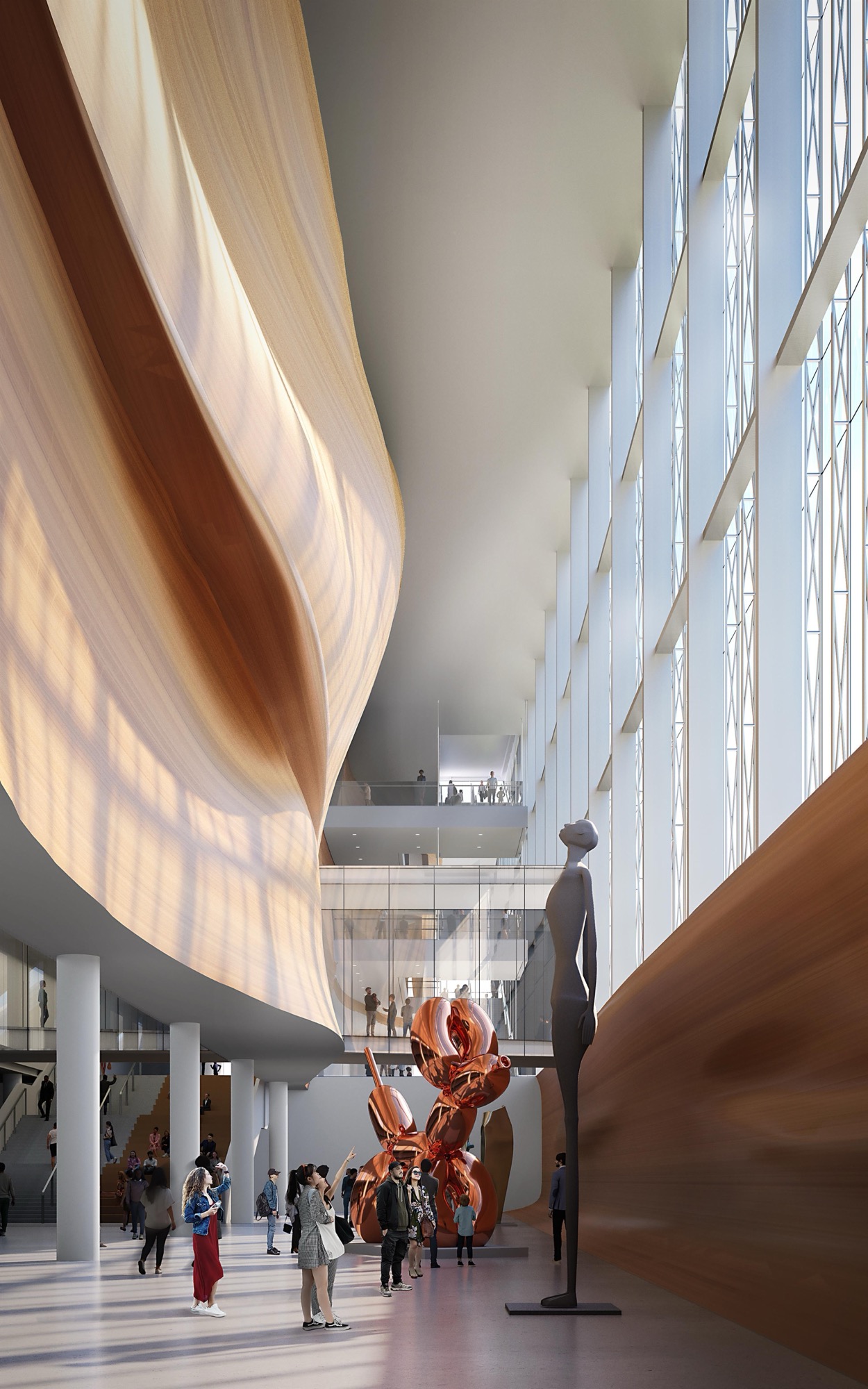
Environmental strategy is integrated through the project’s first principle, reuse. By retaining the existing structure and limiting new construction, the proposal reduces material demand while preserving embodied value. The extended canopy contributes passive shading and helps moderate microclimatic conditions along the waterfront. Courtyards and roof openings introduce natural light deeper into the interior, while ventilation strategies take advantage of coastal air movement to support comfort and operational efficiency.


Through these moves, Brise Vent Havre Harbor Museum positions adaptive reuse as an urban strategy rather than a stylistic choice. Heritage and contemporary intervention are held in deliberate tension, but the objective is pragmatic: to create a cultural destination that remains porous, publicly meaningful, and resilient as the waterfront continues to evolve.
Project info
Concept stage, design development 2024 to 2025
Location: Le Havre, France
Gross floor area: 31,000 square meters across four levels including one underground level
Structure: steel and reinforced concrete
Envelope: glass curtain wall system with extended curved roof canopy
Building Height: 24 meters
Design firm: LYT-X Studio / @lytx_studio
Design team: Dingdong Tang, Zehui Li, Haisheng Xu
More Photos