Now Reading: Gusan-dong House: Compact living, remade for the city
- 01
Gusan-dong House: Compact living, remade for the city


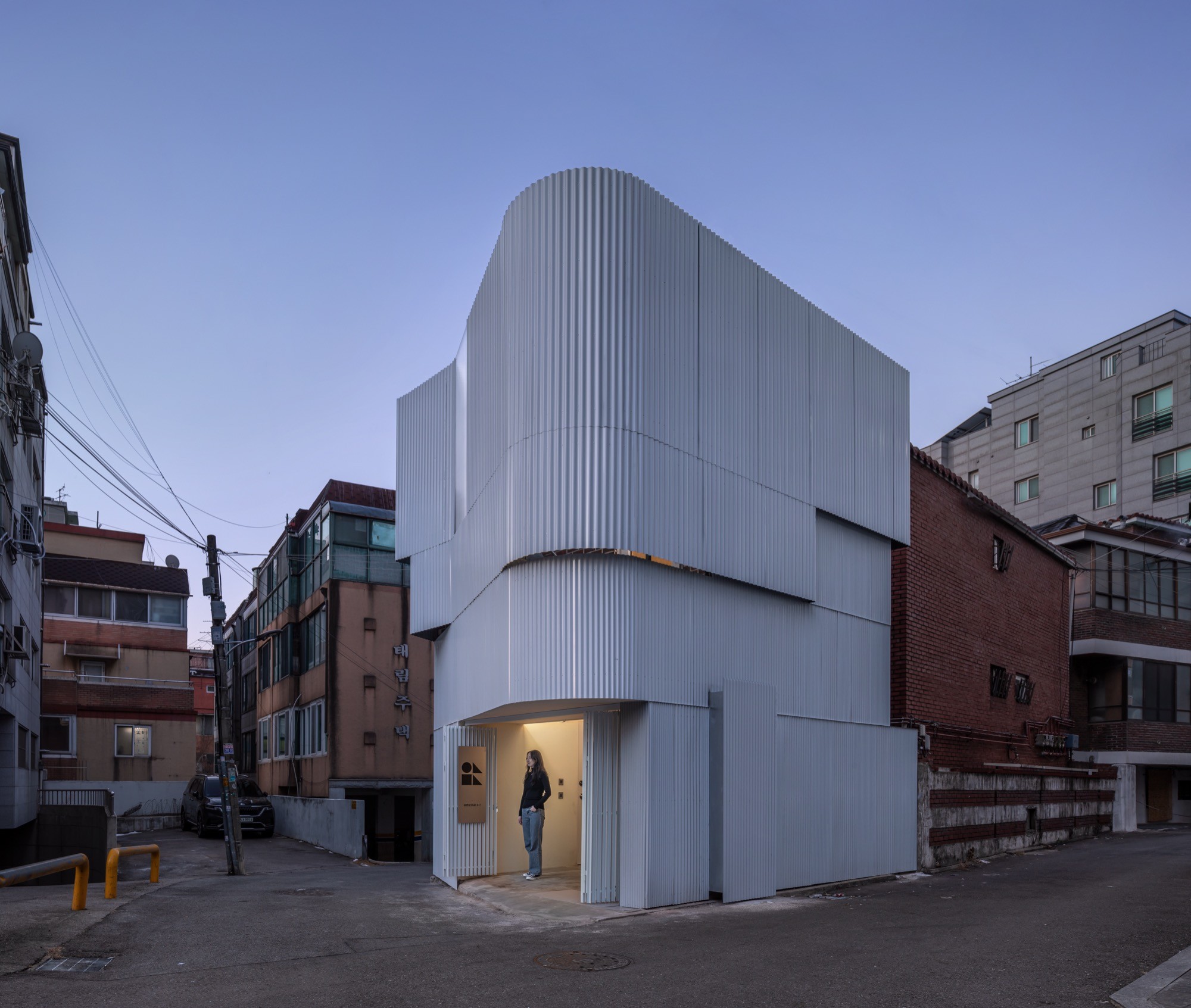
In Seoul’s tightly woven residential streets, the Gusan-dong single-family house proposes a calm, precise answer to a familiar urban question: how much life can a small footprint hold? Designed for a single resident, the project reframes compact living not as reduction, but as refinement, shaping a highly workable home within a constrained volume while sharpening the building’s relationship to its neighbourhood.

The remodel builds on the practice’s earlier experience with a mountainside dwelling in Yeongdong, translating lessons from a more open landscape into the dense, negotiated conditions of the city. Rather than replacing the existing structure, the project treats it as an urban resource, demonstrating how careful reconfiguration can extend the relevance of what is already there.

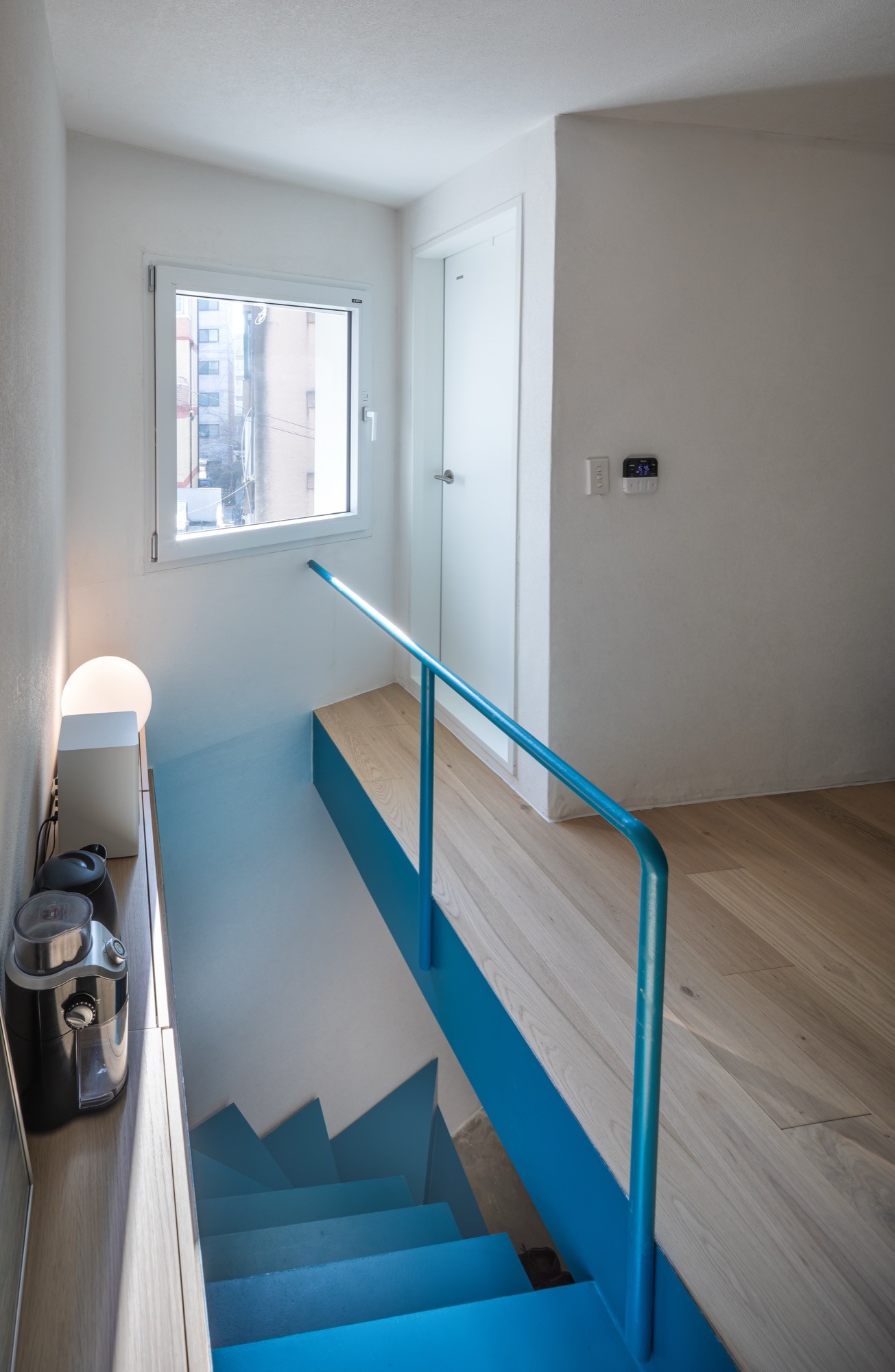
Each floor measures roughly 21 square metres, and the plan leans into clarity. Movement is organised along a direct circulation line that links parking, entry, kitchen, and the upper levels, allowing the compact section to operate with the ease of a larger home. The sequence feels matter-of-fact, yet it is precisely this legibility that frees the interior from the typical sense of compression.


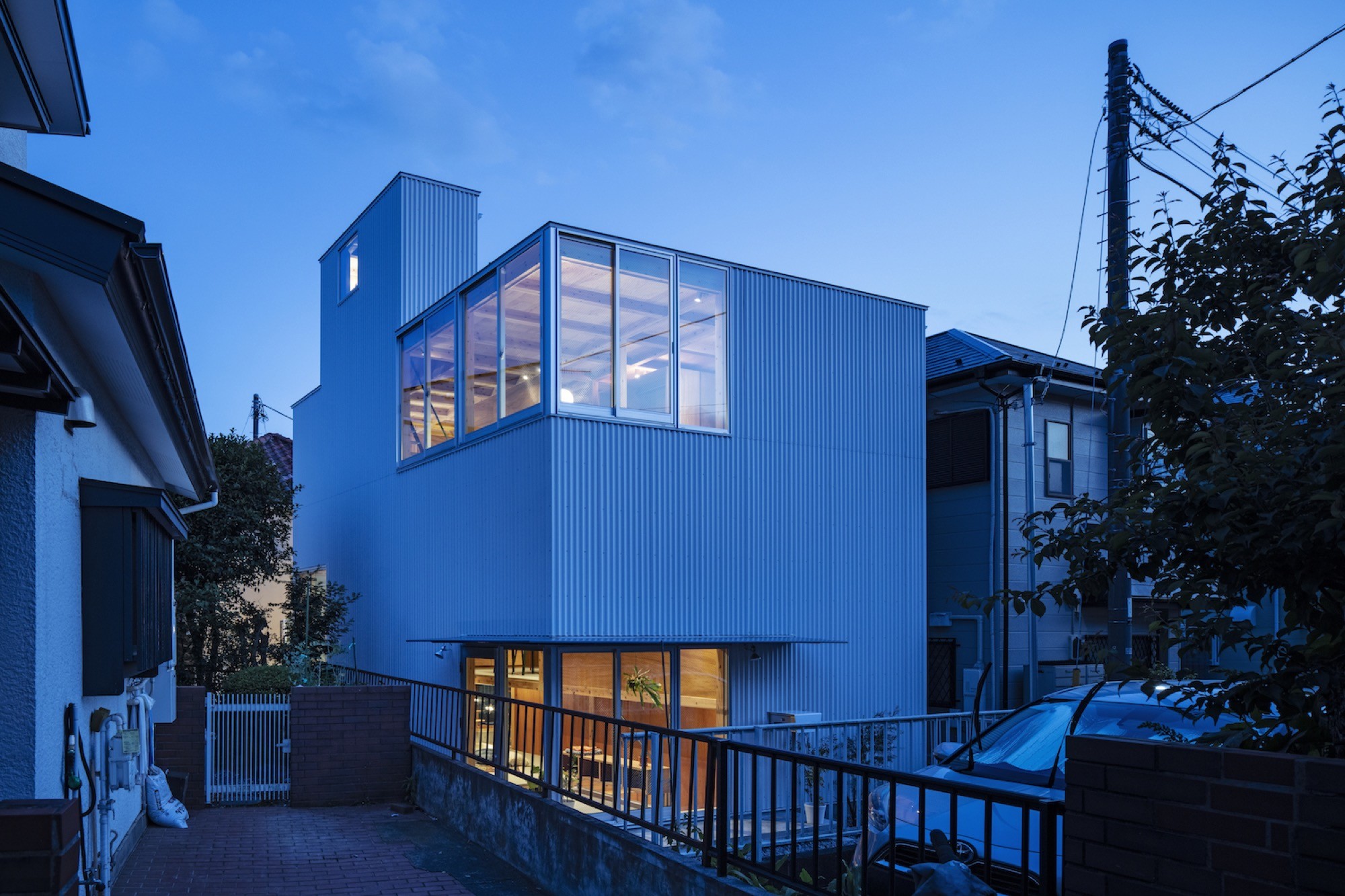
On the outside, the building’s corner condition at a three-way intersection becomes a key driver. By removing the external staircase and reshaping the façade, the renovation consolidates the house into a more coherent urban presence. The building reads as one piece again, not an accumulation of add-ons, and its edges meet the street with greater composure.
The exterior avoids ornament and instead relies on material intelligence and subtle variation. Corrugated steel panels wrap the building in three distinct pattern arrangements, creating a shifting rhythm across the façades. The choice is pragmatic, offering durability and economy, but it is also visual, catching light differently throughout the day and giving the small structure a measured intensity against the background noise of the street.


This is not about making a compact house loud. It is about giving it texture and scale, allowing the envelope to register as architecture without overwhelming its surroundings.
The interior is planned to support multiple modes of living, moving from an intimate room to a terrace that acts as an everyday pause, then up to a rooftop that opens the house to air and distance. These outdoor thresholds expand the perceived footprint, turning vertical movement into a change of atmosphere rather than a necessity.


Large south-facing openings draw daylight deep into the small floors, while more restrained north-facing windows support energy performance and privacy. The result is a home that feels bright and breathable, attentive to comfort without slipping into spectacle.

Gusan-dong’s house is a reminder that scale does not determine significance. Through a limited set of interventions, the project demonstrates how a modest renovation can heighten spatial quality, clarify circulation, and strengthen a building’s civic presence at street level. It challenges the idea that compact living must feel restrictive, instead proposing a flexible model for contemporary urban housing where constraint becomes a tool for precision.

In a city shaped by density, this is architecture as calibration: a small structure remade with enough tactility, light, and restraint to hold its own, and to quietly add to the vitality of the block.
Project Credit
Project name: One House 2
Location: Seoul, Korea
Design: DRAWING WORKS / @drawingworks_architects
Completed: 2024
Photo: Yoon Joonhwan