Now Reading: MIDW completes House in Tamba shaped by slope and triangular garden
- 01
MIDW completes House in Tamba shaped by slope and triangular garden

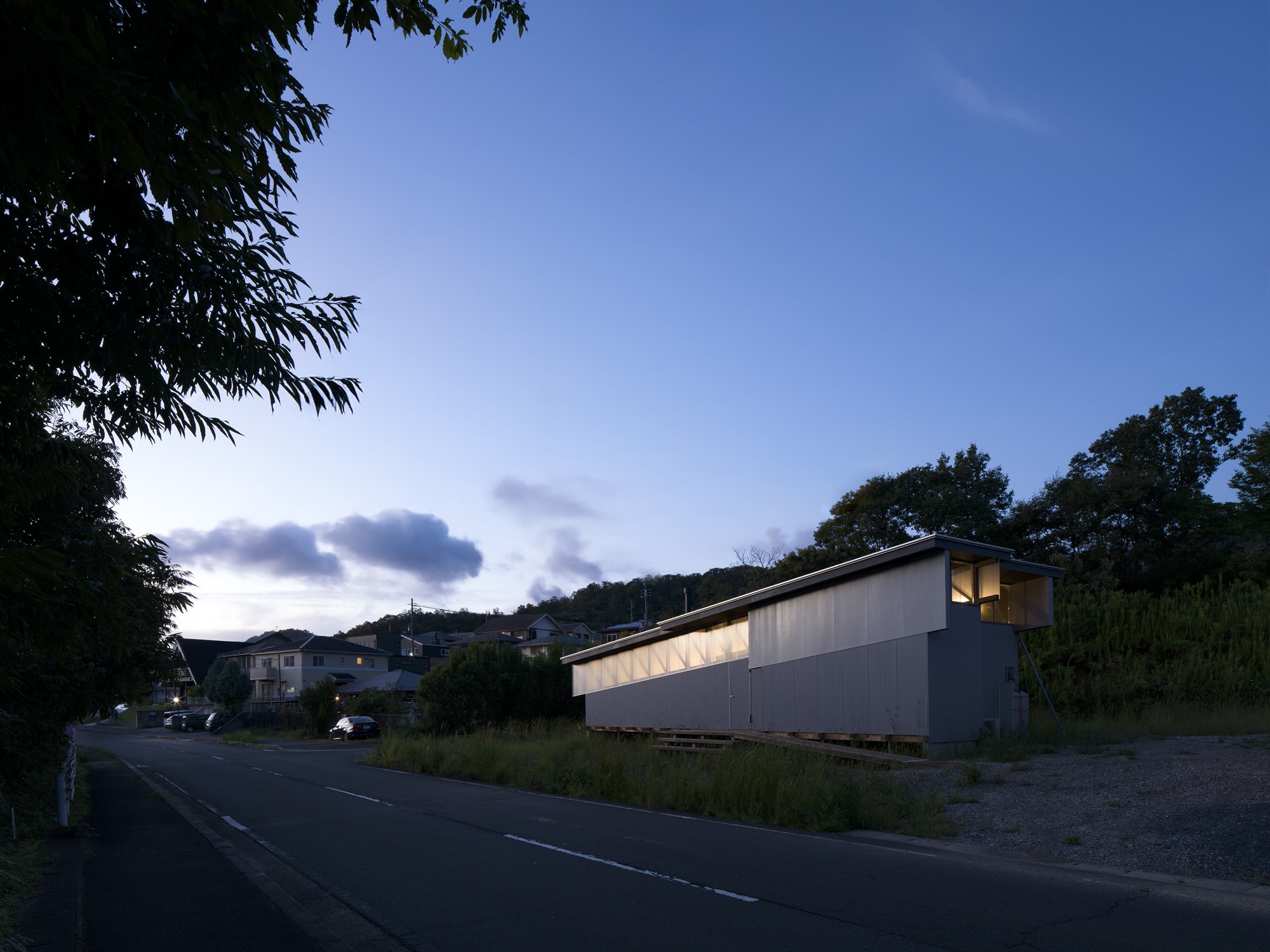

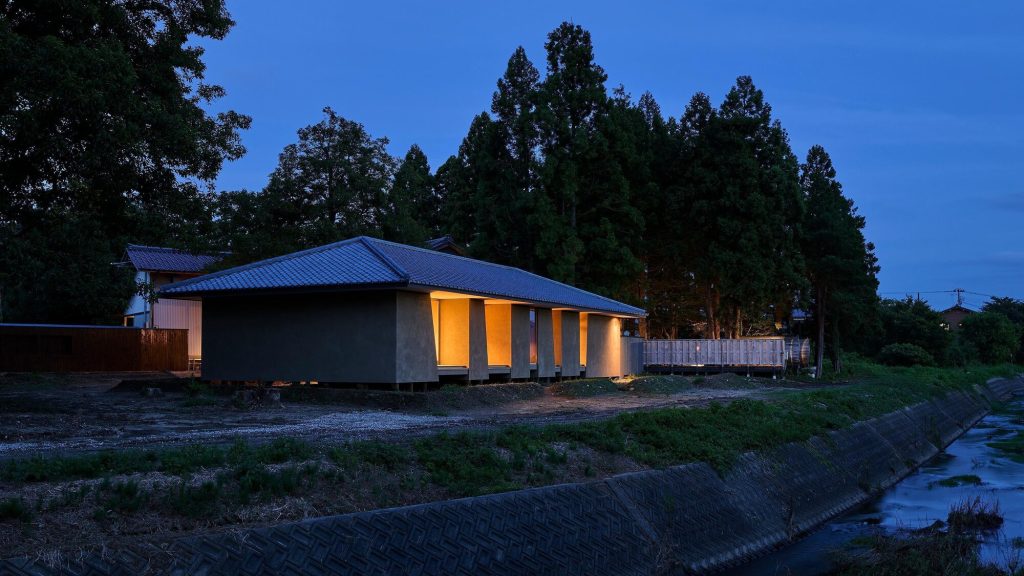
Set within a small mountain town in Kyoto, House in Tamba by MIDW approaches domestic space as a direct negotiation with terrain and climate. Rather than imposing form onto the site, the project draws from the existing slope, vegetation, and subtle topographic continuity with the surrounding village landscape, allowing architecture to emerge as a calibrated extension of the ground.

Along the northern edge of the plot, a residual slope left from earlier land development remains exposed. Now colonised by wild vegetation, it sustains a small ecosystem that informs the spatial logic of the house. The building volume is positioned to embrace a triangular garden that sits against this slope, establishing a continuous relationship between interior space and the evolving landscape.

The house is constructed through four primary elements that operate both independently and collectively. A raised floor lifts the building lightly above the ground, allowing plants and small animals to pass beneath. Walls divide the interior into zones without fully enclosing them, maintaining visual and spatial continuity. Above, four oversized beams rest directly on the walls, extending the sense of openness across the full length of the house. A single pitched roof follows the inclination of the adjacent terrain, reinforcing the dialogue between built form and topography.


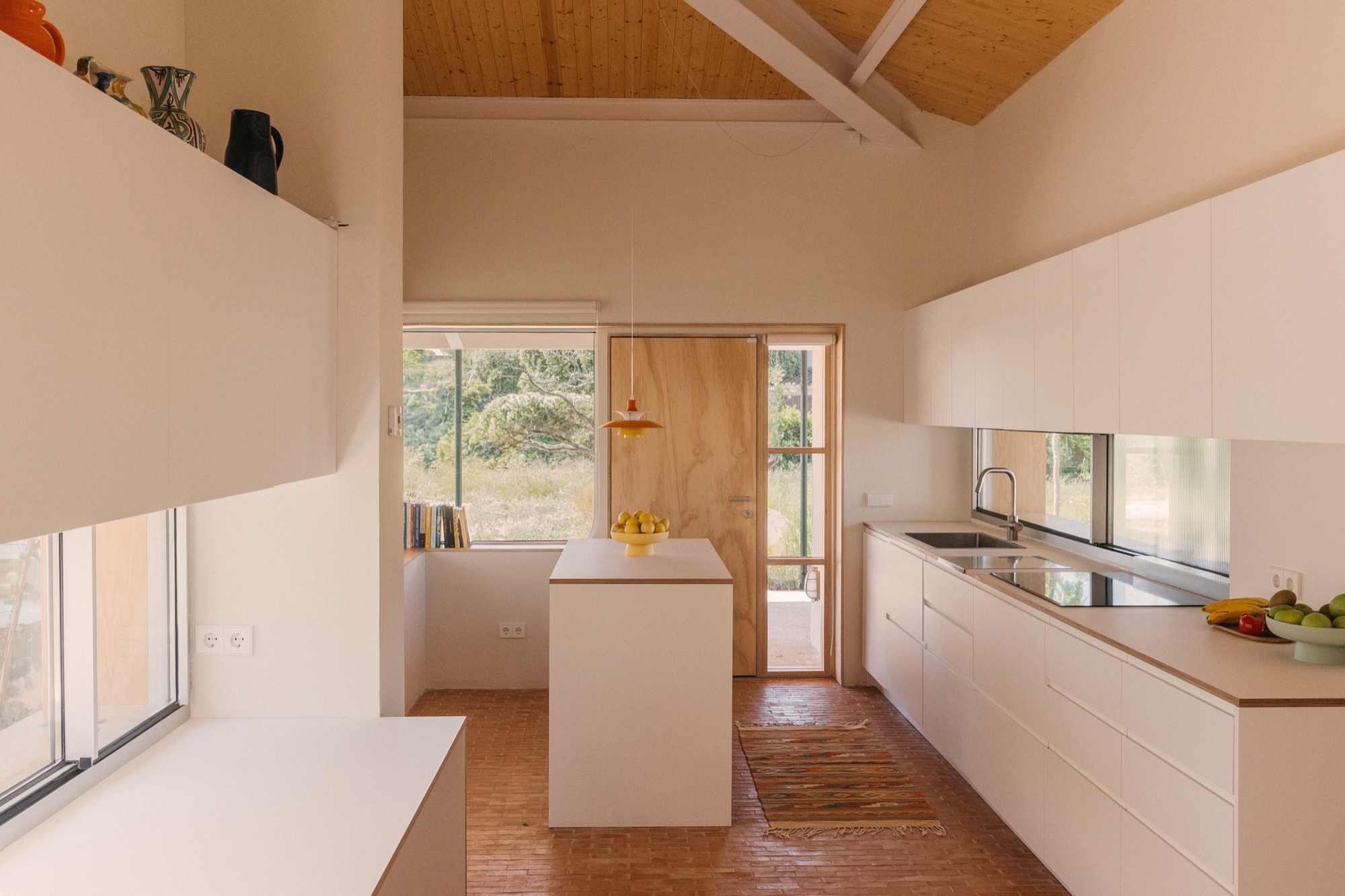
Across a length of 13,650 millimetres, the ceiling height shifts from 2,300 to 3,570 millimetres. This gradual change corresponds to the deepening triangular garden, allowing interior volume and exterior space to expand in tandem. The result is a spatial field where differences in height, light, and proportion are experienced as a continuous gradient rather than discrete transitions.


Each element retains its structural autonomy, yet their direct assembly produces a unified architectural condition. The gaps that occur between floor, walls, beams, and roof are not residual but intentional openings, enabling air, light, and views to circulate freely. These apertures dissolve the boundary between inside and outside, allowing the house to resonate with its environment on all sides.

Where structural stability requires reinforcement, steel diagonal members are introduced with precision. Steel pipe braces of 60.5 millimetres anchor the building to the ground, ensuring equilibrium without disrupting the clarity of the overall system. The architecture remains legible in its construction, balancing openness with structural necessity.


House in Tamba reframes domestic architecture as a field condition shaped by terrain, structure, and atmosphere. Through a restrained assembly of elements, the project establishes a spatial continuity that extends beyond the building itself, embedding daily life within the rhythms of the landscape.

Project Credit
Project name: House in Tamba
Design firm: MIDW / @midw_architects
Location: Tamba, Kyoto, Japan
Photography: Kei Sugino, Takuro Ogawa