Now Reading: Wrapping the Ephemeral: Christo and Jeanne-Claude’s Art of Transience and Revelation
- 01
Wrapping the Ephemeral: Christo and Jeanne-Claude’s Art of Transience and Revelation

Wrapping the Ephemeral: Christo and Jeanne-Claude’s Art of Transience and Revelation
In August 1972, a vivid expanse of orange fabric briefly altered the landscape of western Colorado. Stretched across a rocky canyon near Rifle Gap, a curtain of nylon extended roughly 1,250 feet and hovered more than 300 feet above the ground. Suspended between steel cables anchored into the cliffs, it crossed the open sky and momentarily interrupted the passage of a mountain highway below. The project, titled Valley Curtain, existed for just 28 hours before powerful winds tore it apart. Its disappearance was abrupt, yet the image of that blazing veil against stone and sky has remained one of the most resonant gestures of late twentieth century art.

Conceived and realized by Christo and Jeanne-Claude, Valley Curtain was not an isolated experiment but an early articulation of a practice grounded in impermanence. The project required more than two years of preparation, extensive engineering studies, and the labor of over a hundred collaborators. Entirely self funded, it demanded a degree of logistical and financial commitment that far exceeded its fleeting physical presence. The 1973 documentary by the Maysles brothers records this process without embellishment, capturing moments of strain, uncertainty, and persistence, as well as the artists’ acceptance of risk as an essential part of the work.

The significance of Valley Curtain lies not in its short lifespan but in the clarity with which it established the artists’ position. At a moment when sculpture often pursued endurance and monumentality, Christo and Jeanne-Claude proposed a different relationship between art and space. Their intervention borrowed the landscape temporarily, altered perception, and then withdrew without residue. The canyon was not transformed into a permanent site of memory but offered briefly as an experience, defined as much by its disappearance as by its presence.
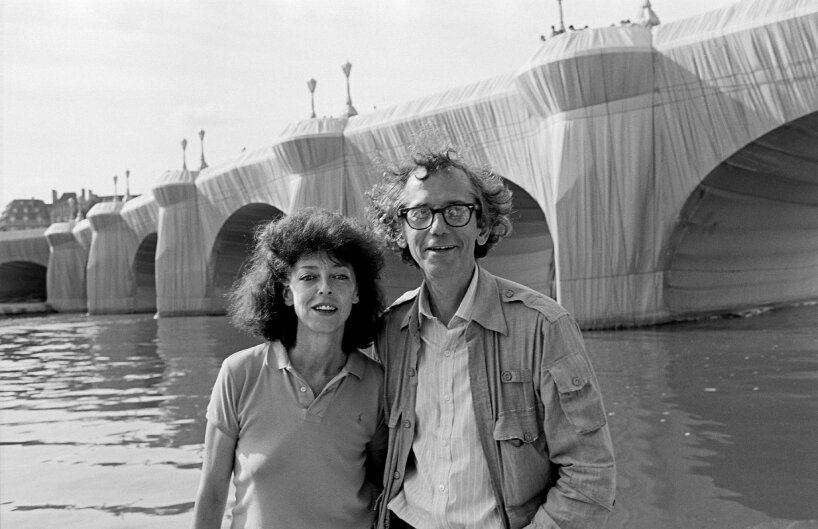
Born on the same day in 1935, Christo in Bulgaria and Jeanne-Claude in Morocco, the two met in Paris in 1958 and formed a partnership that merged artistic vision with organizational precision. Christo’s early life under a totalitarian regime, followed by his escape to the West, fostered a deep mistrust of control, ownership, and imposed meaning. Jeanne-Claude, trained in administration and negotiation, translated ambition into practical reality. Their collaboration dissolved conventional distinctions between artist and producer, idea and execution. From the outset, their work was inseparable from the conditions required to realize it.
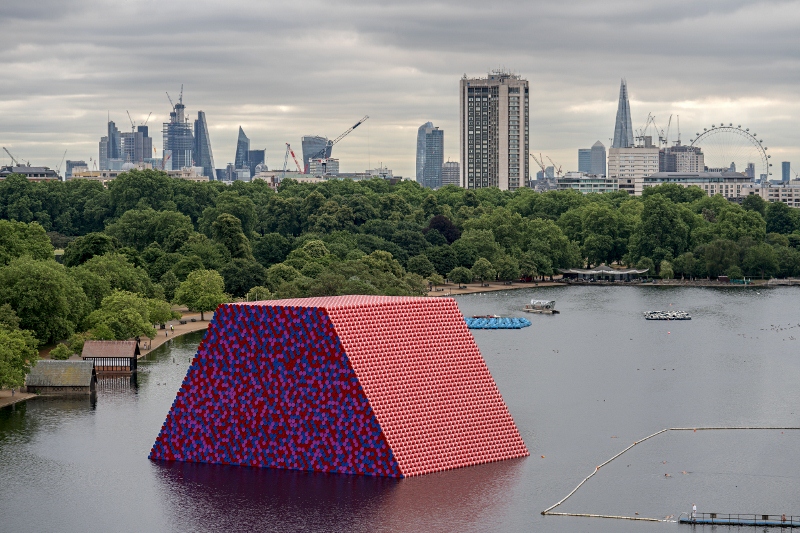
Valley Curtain marked a decisive shift from smaller wrapped objects and architectural interventions of the 1960s toward projects that engaged the environment at full scale. It introduced a paradox that would remain central to their practice: extraordinary effort devoted to something destined to vanish. This imbalance was deliberate. For Christo and Jeanne-Claude, ephemerality was not a limitation but a safeguard. The disappearance of the work protected it from commodification and from interpretive closure. What remained were photographs, films, preparatory drawings, and the memory of having encountered something unrepeatable.
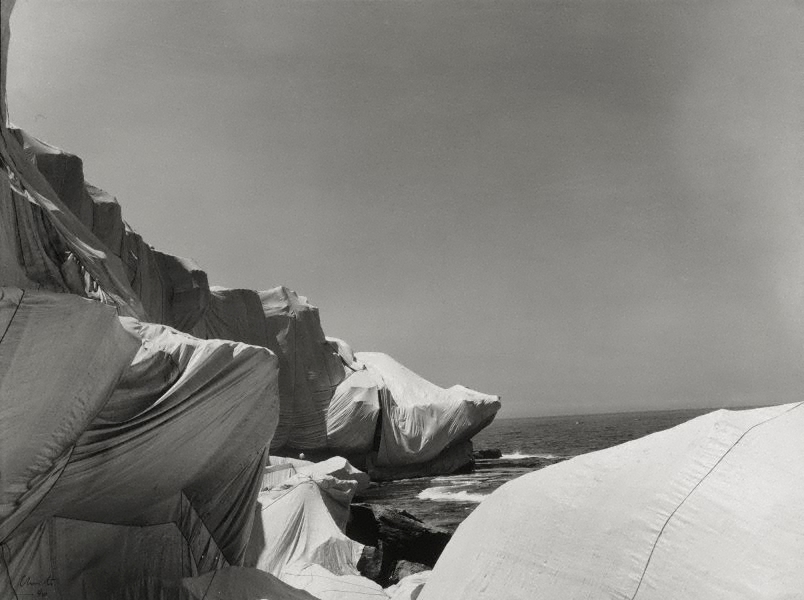
Their frequently cited insistence that their art was “useless” was not an expression of detachment but a statement of autonomy. By rejecting function, instruction, and permanence, they removed their work from systems of utility and exchange. Each project existed solely to be experienced. Jeanne-Claude often emphasized that their works were created to offer joy and beauty without justification, and that this absence of purpose was precisely what made them free. Christo described his projects as a scream for freedom, not in a narrowly political sense, but as an assertion of personal and artistic independence within public space.
This position found formal expression through a visual language centered on fabric, color, and scale. Industrial textiles were chosen for their flexibility and responsiveness, allowing the works to move with wind and light. In Valley Curtain, the orange nylon did not conceal the canyon so much as reframe it. Its folds and shadows animated the terrain, drawing attention to contours that had long gone unnoticed. By partially obstructing the view, the curtain heightened awareness of what lay beyond it. Concealment became a way of sharpening perception.
Color functioned as an atmospheric catalyst rather than a symbolic device. The saturated orange of Valley Curtain intensified the surrounding landscape, standing in sharp contrast to blue sky and dark stone. In later projects, color continued to shape experience through intuition and site responsiveness. The pink fabric of Surrounded Islands traced the contours of Biscayne Bay, the saffron gates of The Gates warmed the winter paths of Central Park, and the silvery folds of Wrapped Reichstag transformed a political landmark into a temporary apparition. These choices were not intended to convey narrative or allegory but to alter the emotional register of a place.


As the scale of their projects expanded, so did their engagement with the public. Works such as The Gates invited movement and participation, encouraging visitors to pass through the installation rather than observe it from a distance. Familiar spaces were temporarily reconfigured, prompting renewed attention to paths, vistas, and rhythms of daily life. While their work anticipated later developments in participatory art, Christo and Jeanne-Claude resisted framing interaction as critique or instruction. The experience itself was sufficient.
Behind each realized project lay years of negotiation. Permits, environmental studies, public hearings, and legal challenges were not secondary hurdles but integral components of the work. Jeanne-Claude was explicit about this, insisting that the process of gaining approval and public consent was inseparable from the final installation. Of dozens of proposed projects, fewer than half were completed. Wrapped Reichstag, for example, required more than two decades of debate before being approved. These prolonged processes underscored the artists’ commitment to independence and persistence.
Their method of self financing reinforced this autonomy. By selling preparatory drawings, collages, and scale models, Christo and Jeanne-Claude retained full control over their projects and avoided external sponsorship. The temporary occupation of public space became a negotiated gesture rather than an imposition. After each installation, materials were removed, sites restored, and landscapes returned to their previous condition. What lingered was not a physical trace but a shift in perception.
From the canyon in Colorado to the waterways of Miami, the parks of New York, and the monuments of Paris and Berlin, their projects followed a consistent trajectory. Each reiterated the same proposition: that beauty could be intense, generous, and brief. The posthumous realization of L’Arc de Triomphe, Wrapped in 2021 affirmed this continuity, completing a vision conceived decades earlier and reinforcing the artists’ belief that impermanence is a condition of vitality rather than loss.
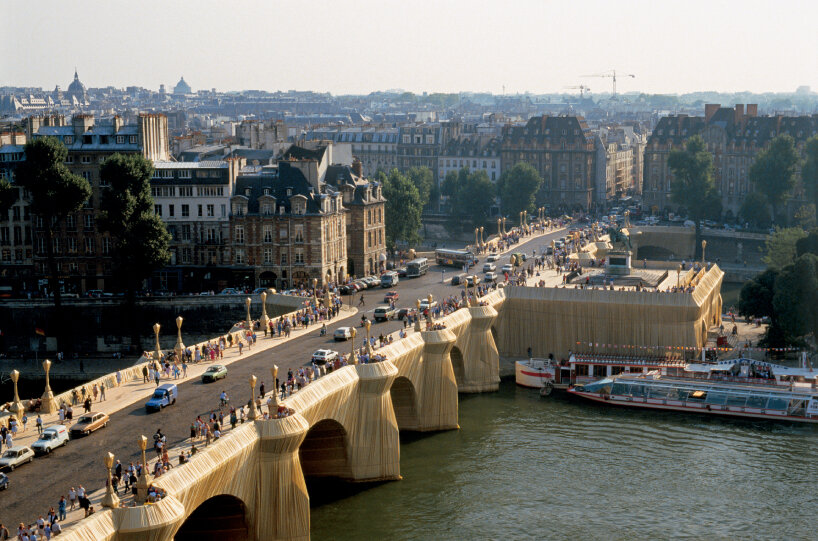
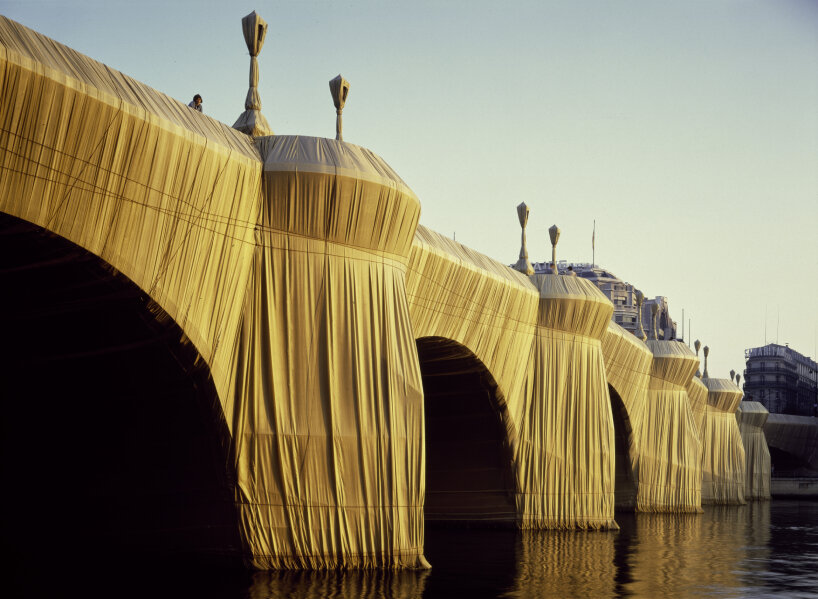

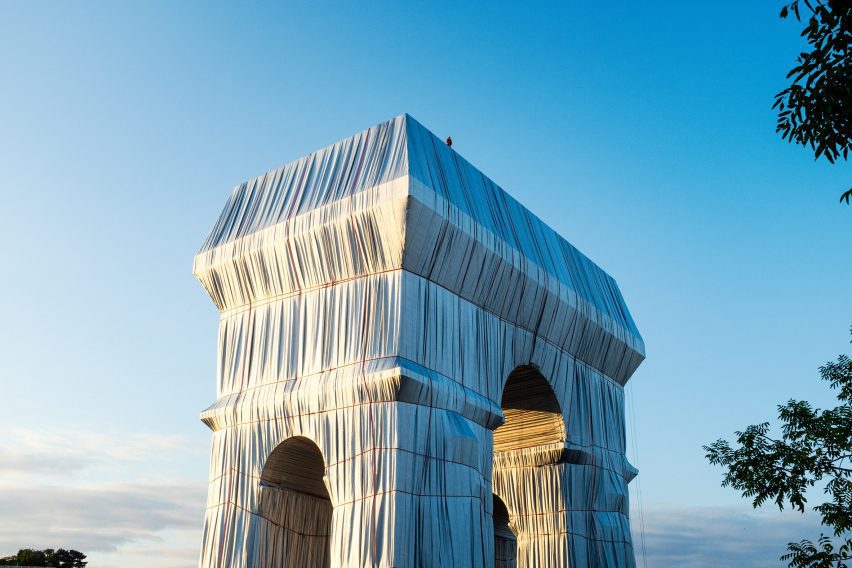
Seen in retrospect, Valley Curtain stands as both a beginning and a distillation. Its short life did not diminish its impact but sharpened it. In a cultural landscape increasingly preoccupied with preservation, documentation, and legacy, Christo and Jeanne-Claude proposed another way of thinking about art. Art, they suggested, does not need to endure to matter. It needs only to appear, transform perception, and disappear, leaving behind a heightened awareness of the world as it is.
Photo Cover
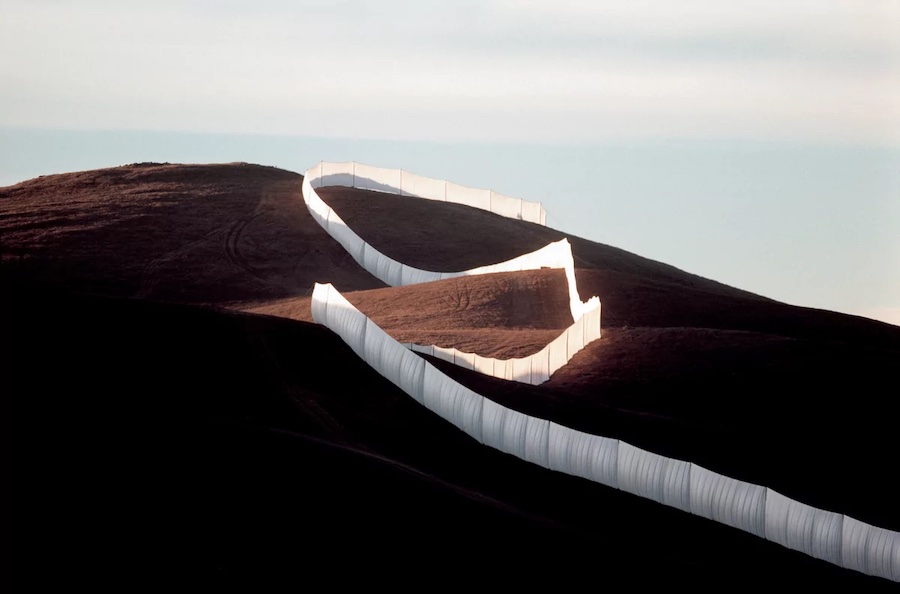
Archival aerial view of Christo and Jeanne-Claude’s Running Fence (1976), a historical precursor to Valley Curtain, showcasing fabric across California hills. (Credit: Alejandra de Argos)
Related Posts
Previous Post
Next Post
- The timeless elegance of domestic appliances: From the Iconic Braun KF 20 aromaster to the German design ethos

- Emilio Ferro on the light, sound and memory of a place
- At Maniwa, an architect’s family home opens to the neighbourhood
- What bronze remembers of the hand

- Caught in light: Moradavaga’s suspended shoal

- The making of Alex Chinneck’s impossible Dior windows