Now Reading: Marinus Boezem: The architect of immaterial spaces
- 01
Marinus Boezem: The architect of immaterial spaces

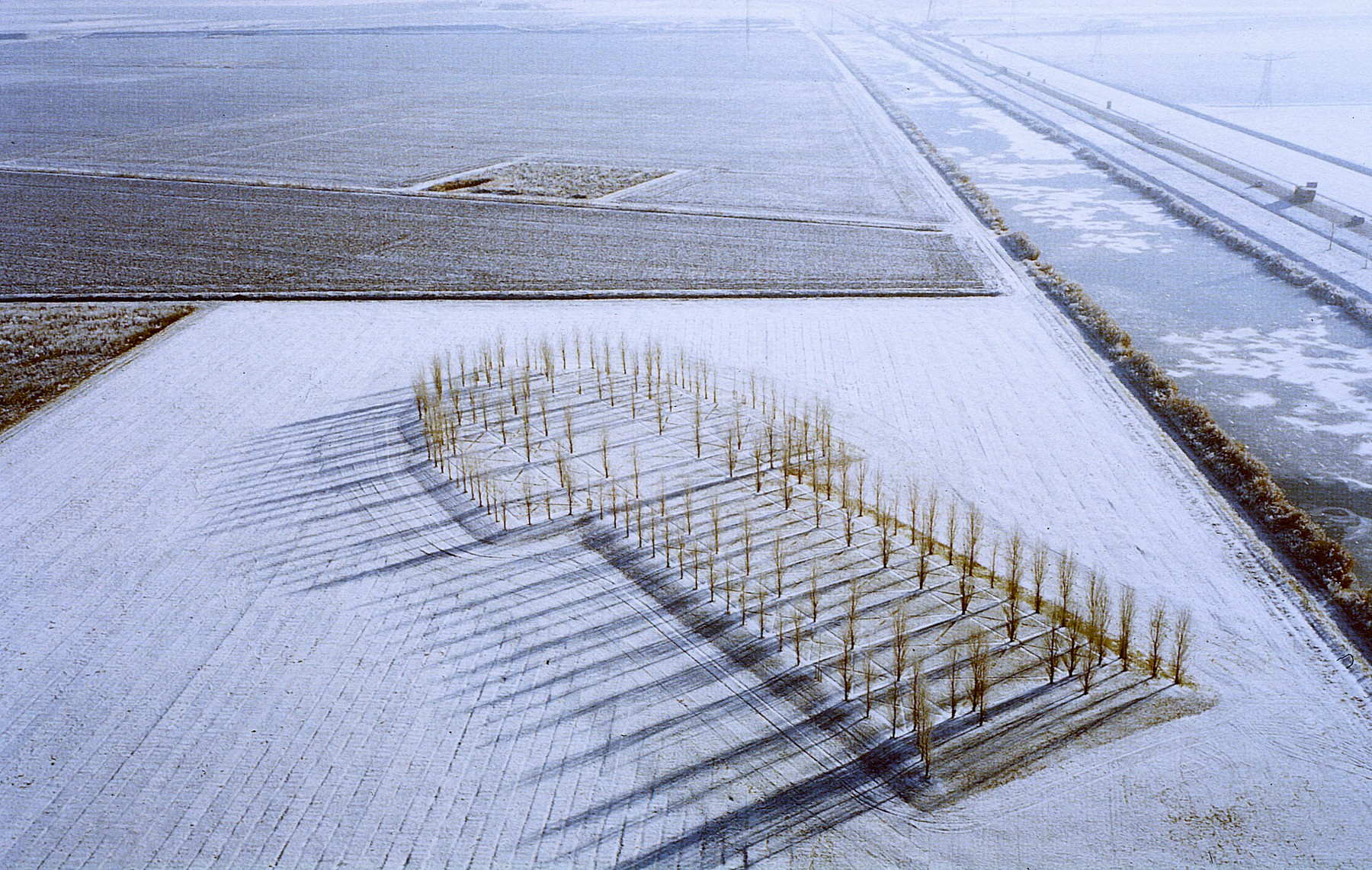

In the flat expanse of the Dutch polder near Almere, where land itself is an engineered idea, a cathedral appears without stone, roof, or wall. Marinus Boezem’s The Green Cathedral began as a proposal in 1978 and was planted in 1987, formed by 178 Italian poplars set out to mirror the ground plan of Notre-Dame de Reims. As the trees mature, they rise toward architectural height through biological time, turning a Gothic outline into a living, changing volume. The work measures roughly 150 metres by 75 metres, and the poplars can reach around 30 metres when grown, yet its true scale is temporal rather than monumental. It is constructed from seasons, decay, replacement, and return.

This is not a pastoral replica of a historic building. It is a proposition about authorship and impermanence. In Boezem’s practice, the most decisive gestures occur where form refuses to stabilise, in air, weather, light, and the shifting threshold between perception and proof. The Green Cathedral condenses that pursuit into a single figure that reads as architecture while behaving like climate, absorbing wind, drought, and the slow pressure of time.

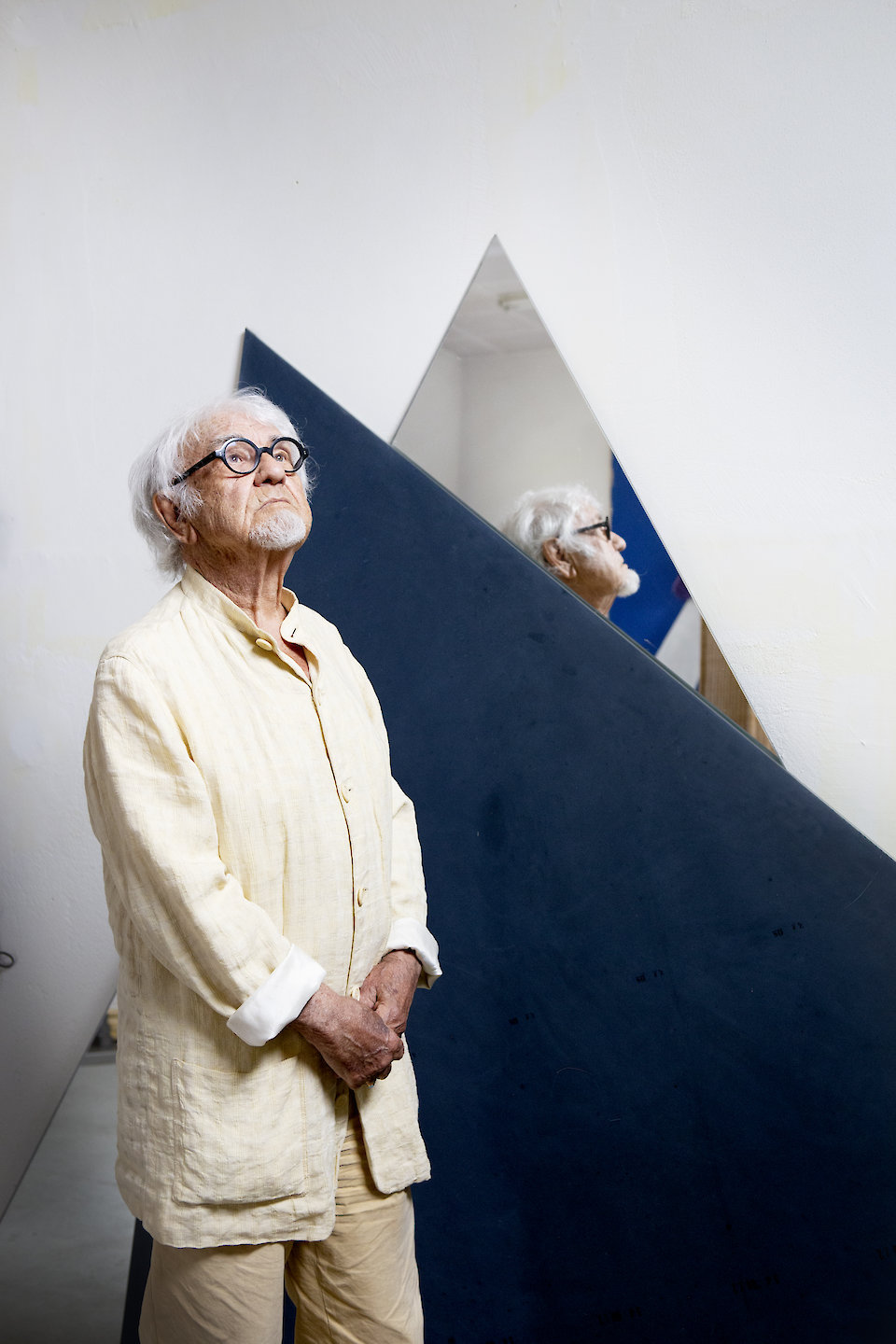
Born in 1934 in Leerdam, Boezem belongs to the first generation of Dutch conceptual artists, associated with figures such as Jan Dibbets and Ger van Elk. Across more than six decades, he has consistently tested what an artwork can be when it resists commodity form and instead inhabits experience, instruction, and site. His work resonates strongly today, not because it illustrates environmental themes, but because it grants agency to elemental forces. To trace Boezem’s trajectory is to follow a sustained inquiry into how space becomes legible, and how the immaterial can operate not as absence, but as method.
Boezem’s artistic emergence in the 1960s unfolded within a Netherlands defined by reconstruction, infrastructural ambition, and a long-standing struggle with water. The polder, a landscape maintained through constant intervention, is more than a setting in this story. It offers a model for thinking about space as something provisional, managed, and perpetually at risk. Against this backdrop, Boezem gradually abandoned craft-based sculpture, redirecting his practice toward situations, processes, and conditions rather than objects.
His early work developed in parallel with broader international shifts that questioned the status of the art object. In 1969, Boezem participated in Harald Szeemann’s When Attitudes Become Form, an exhibition that foregrounded action, process, and concept over finished form. Around the same period, he was closely aligned with the experimental climate of Dutch institutions that were rethinking the exhibition as a spatial and experiential proposition rather than a container for objects.
Rather than pursuing dematerialisation as an end in itself, Boezem treated it as a means of repositioning art within lived experience. Air, wind, and light became operative materials, not metaphors. This approach shares affinities with conceptual practices elsewhere, yet it remains distinctly grounded in the Dutch context. Where industrial modernity promised control and permanence, Boezem worked with forces that resisted both.
Despite the ephemeral character of much of his practice, Boezem’s work has been widely collected and exhibited by major institutions. This institutional presence does not contradict his project. Instead, it exposes a productive tension between disappearance and documentation, between events that unfold in time and the traces that allow them to circulate within art history. His career is marked less by stylistic evolution than by a consistent insistence on rethinking where and how art takes place.
THE IMMATERIAL AS METHOD
In Boezem’s work, the immaterial functions not as atmosphere, but as a working method. Wind, light, and weather are treated as active components of form, capable of structuring space and shaping perception. This approach reframes the artwork as a temporal situation rather than a stable object.
The Green Cathedral offers a clear articulation of this position. Its Gothic reference invokes a typology traditionally associated with endurance, authority, and stone. Boezem’s intervention dismantles those expectations. The plan is architectural, but its realisation depends on growth, maintenance, and inevitable decline. Columns are replaced by trunks, vaults by open sky. The work exists only through continual change.

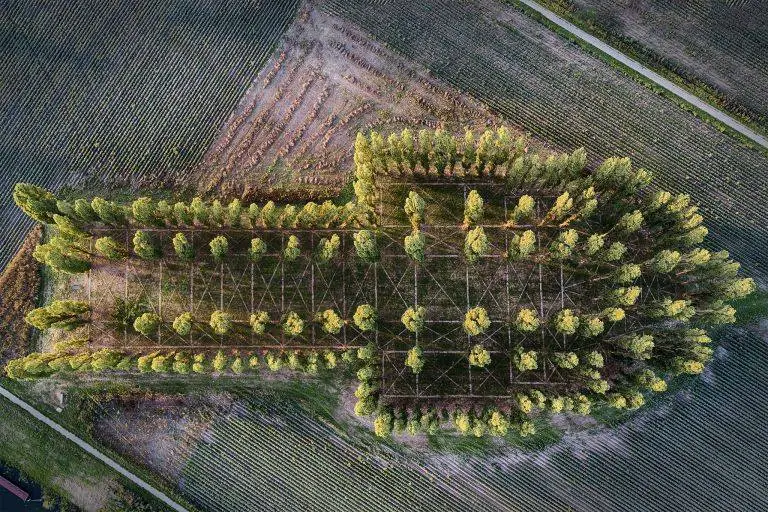
Here, time and weather are not backdrops. They actively shape the work, altering its form and meaning year after year. The artist’s role becomes partial, limited to establishing a framework within which other forces operate. Authorship is distributed across seasons, climate, and care.

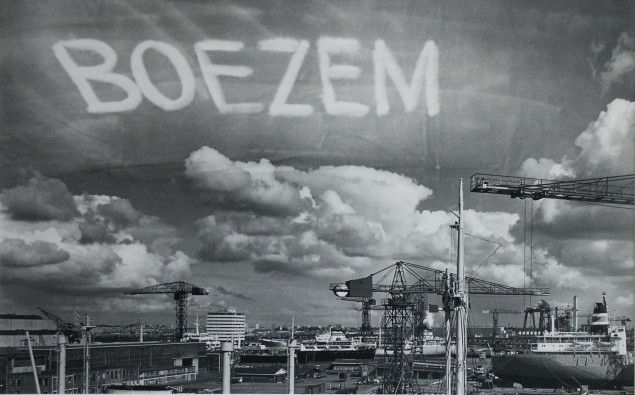
This logic also underpins Boezem’s earlier actions. In 1969, he realised Signing the Sky Above the Port of Amsterdam with an Aeroplane, in which an aircraft traced his name in condensation trails above the city. The gesture was simultaneously declarative and self-erasing. The signature appeared briefly, then dissolved, leaving no lasting mark on the sky. What remained was an experience, perhaps a photograph, and the memory of something that could not be possessed.

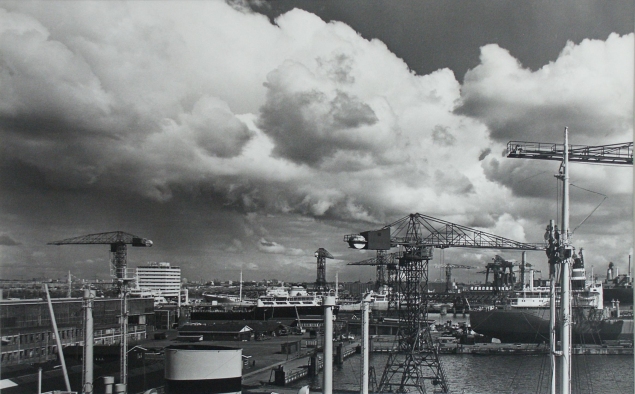
Such works do not argue against intervention, but against mastery. Nature is treated as a system with its own agency, resistant to full control and open only to negotiation. In this sense, Boezem’s practice anticipates contemporary concerns without illustrating them directly. His works propose a form of engagement grounded in attentiveness rather than domination.
FROM AIR TO EARTH
Boezem’s artistic language is marked by conceptual clarity and physical immediacy. He constructs his work directly from physical phenomena, translating invisible forces into spatial experience.
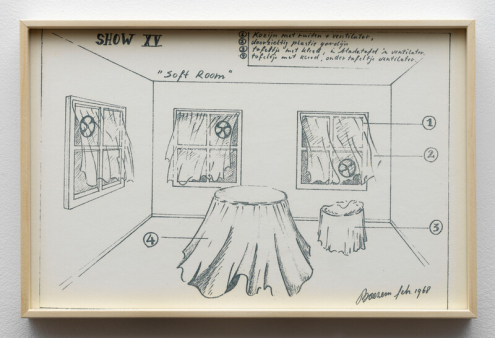
This approach is most clearly articulated in The Shows, a series of fifteen proposals developed between 1964 and 1969. These works employ air currents, temperature differences, and movement as structuring elements. In Immateriële ruimte (1965), visitors move through zones defined by warm and cold air. In Soft Room (1968), fans animate suspended textiles, transforming the exhibition space into a responsive environment. Participation is not symbolic but necessary. Without bodies moving through space, the work remains incomplete.
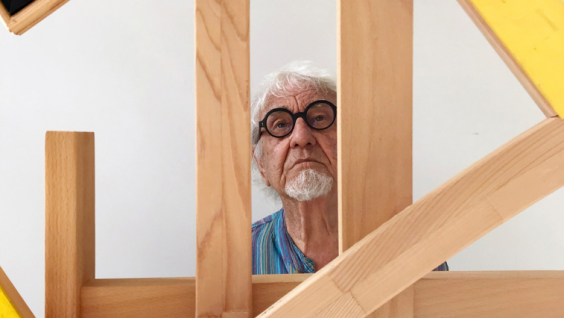
In later projects, this language expands into the landscape. The Green Cathedral translates the same principles to an architectural scale. The plan provides orientation, but the experience remains atmospheric. Light filters through foliage, sound shifts with wind, and the perception of space changes with growth and loss. The cathedral is recognisable, yet never fixed.
This resistance to fixity is also a resistance to commodification. Rather than producing objects for ownership, Boezem produces systems, instructions, and sites. Even when works are preserved through drawings, photographs, or editions, their core remains experiential. Conceptual rigour and sensory engagement are not opposed here. They operate together.
A CONSTELLATION OF IDEAS
While The Green Cathedral stands as one of Boezem’s most widely known works, it is best understood as part of a broader constellation of projects that explore ephemerality, space, and authorship.
Signing the Sky Above the Port of Amsterdam (1969) remains a key reference, condensing many of his concerns into a single action. The work transforms the sky into a temporary surface, only to demonstrate its refusal to hold form. The artist’s name appears, blurs, and disappears.
The Shows form another essential axis. Conceived in the 1960s and later realised together, they reveal how Boezem treated exhibitions as spatial situations rather than displays. Air becomes material, architecture becomes provisional, and the viewer becomes an active participant.
Across different scales and contexts, Boezem’s projects share a consistent logic. Whether working in the sky, the museum, or the polder, he constructs conditions in which form remains unstable and meaning emerges through time.
Boezem’s work insists that spatial thinking does not require permanence to achieve clarity. The Green Cathedral translates architectural monumentality into a living process, proposing a model of attention grounded in duration, change, and restraint. In contrast to a culture driven by permanence and visibility, Boezem offers a different way of thinking about value. Art, in his practice, remains precise without being fixed, and architecture can be invoked without being built.
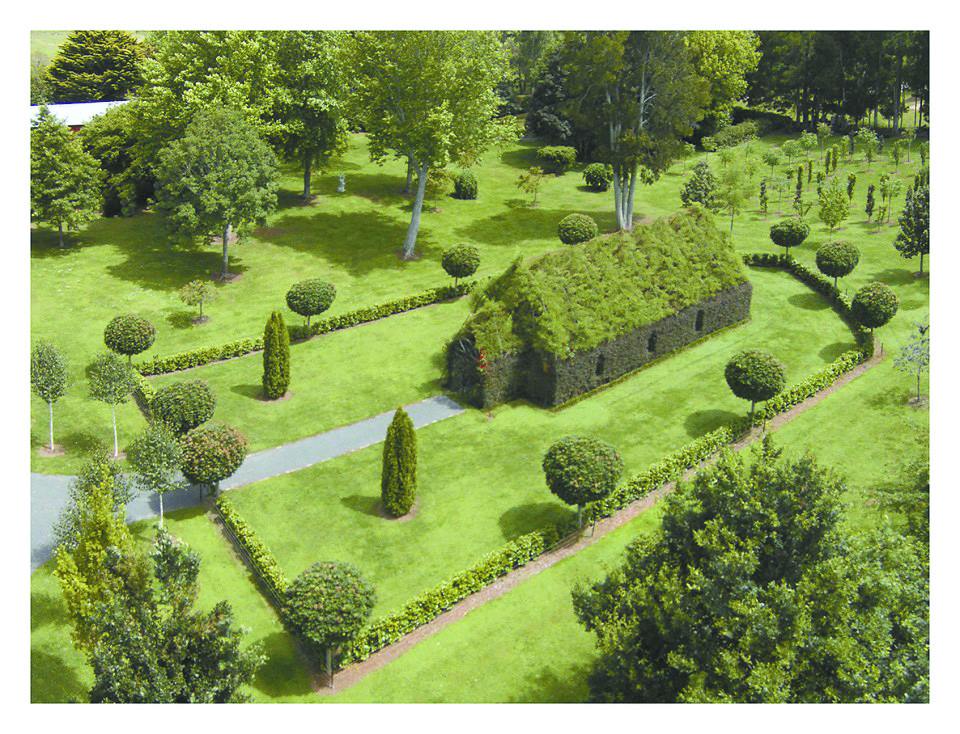
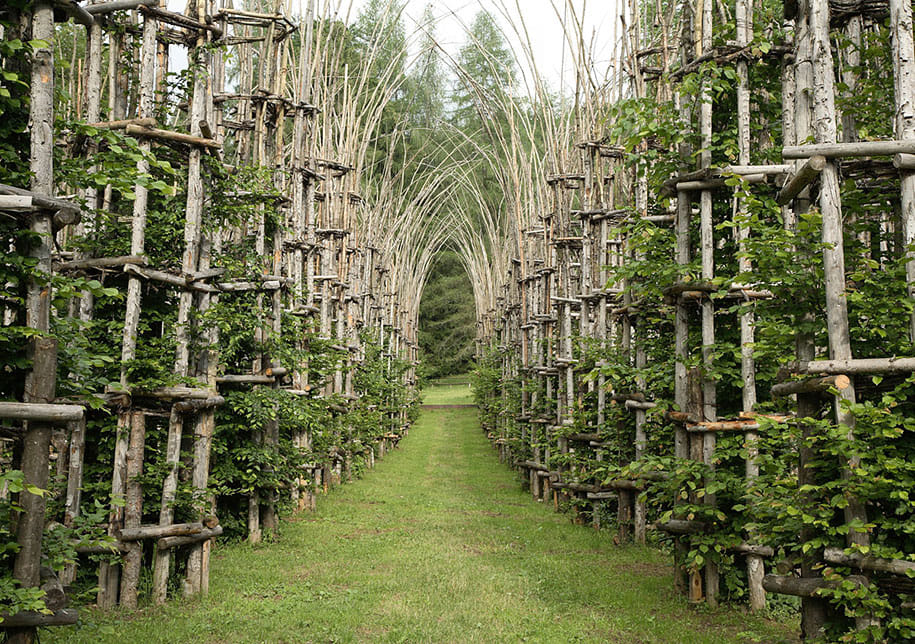
Photo Cover
The Green Cathedral in winter snow, demonstrating seasonal transformation and impermanence of the living structure. Credit: Land Art Flevoland / Bert Boekhoeven.