Now Reading: Illuminating the Urban Imaginary: The ethereal architectures of Daxing Jizi design
- 01
Illuminating the Urban Imaginary: The ethereal architectures of Daxing Jizi design

Illuminating the Urban Imaginary: The ethereal architectures of Daxing Jizi design

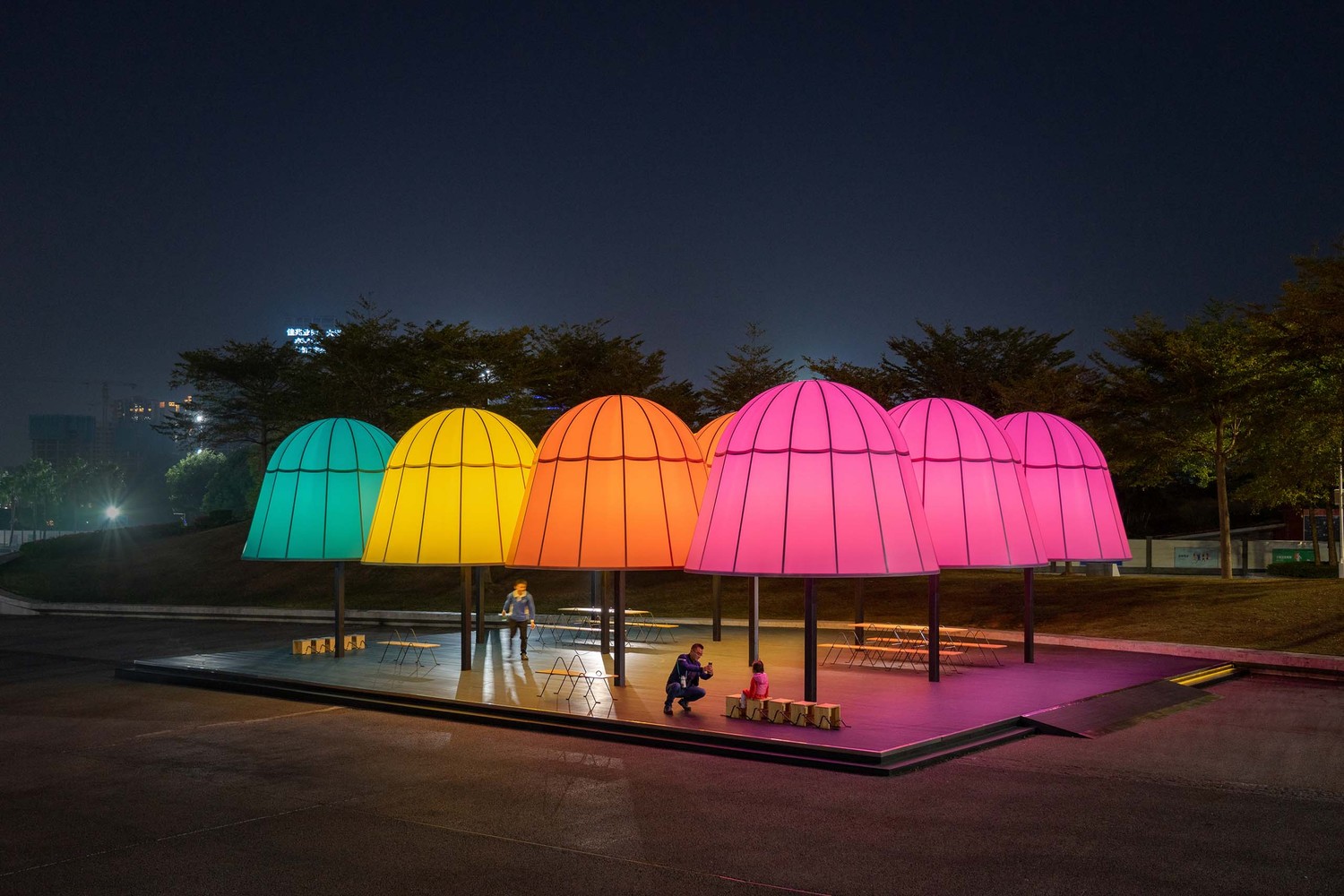
In the twilight haze of Shenzhen’s Universiade Center, amid the open lawns of Longgang district, a cluster of luminous domes rises quietly from the ground. They resemble a loose constellation, somewhere between architecture and apparition. This is the Dream Glow Pavilion, unveiled in 2021 as part of the Glow Shenzhen festival.
Constructed from translucent membranes and softly lit from within, the pavilions emit a subdued, almost domestic glow. Their palette draws from five traditional Chinese colors: turquoise, soft yellow, violet red, mandarin red, and black. Rather than asserting symbolism overtly, these hues work atmospherically, tinting the night air with familiarity and warmth. Children run in and out of the arched openings. Evening walkers slow their pace. The structures offer no spectacle in the conventional sense, only a gentle invitation to linger.

The designers describe the pavilion as inspired by the construction logic of traditional Chinese lanterns. Bamboo frameworks are abstracted into lightweight structural ribs, while color becomes a carrier of cultural memory rather than decoration. The result is neither nostalgic nor futuristic. It sits somewhere in between, quietly anchoring itself within the contemporary city.
Dream Glow is not an object to be admired from a distance. It operates through proximity. Its scale encourages touch, rest, play. In this sense, the installation reads less as a sculptural statement and more as a proposition: that small, luminous interventions can recalibrate how public space is felt, especially after dark.

This project offers a key to understanding the broader practice of Daxing Jizi Design.
Based in Shenzhen, the studio has emerged in recent years as one of the more distinctive voices in China’s expanding field of temporary architecture and public art. Led by chief designer Zhenwei Zeng, and working closely with collaborators across structural and material disciplines, the studio has consistently resisted the temptation of monumentality. Instead, its work concentrates on light, movement, and bodily engagement.
While much contemporary urban design in China gravitates toward scale and visibility, Daxing Jizi operates at the level of encounter. Their installations frequently appear in festival contexts where temporality is not a limitation but a condition of freedom. These projects do not aim to endure physically. They aim to register emotionally.
Dream Glow Pavilion exemplifies this approach. Positioned within the vast openness of Universiade Center, an area largely defined by athletic infrastructure and event driven use, the installation responds to an absence rather than a demand. At night, the site offers little in the way of intimate, human scaled spaces. The pavilion addresses this gap directly, introducing zones for resting, informal gathering, small performances, and workshops.

Its mushroom like forms suggest organic growth, yet they remain unmistakably artificial. This tension between the natural and the fabricated recurs throughout the studio’s work. Rather than disguising technology, Daxing Jizi allows material lightness and translucency to coexist openly with structural logic.
At the core of the studio’s practice lies a consistent concern with sensory urbanism. Their projects acknowledge the psychological fatigue produced by contemporary cities, the speed, the density, the dominance of screens. In response, they offer spaces that ask very little of the user. No instruction is required. One enters, pauses, moves, leaves.
This approach becomes clearer when Dream Glow is read alongside later projects.

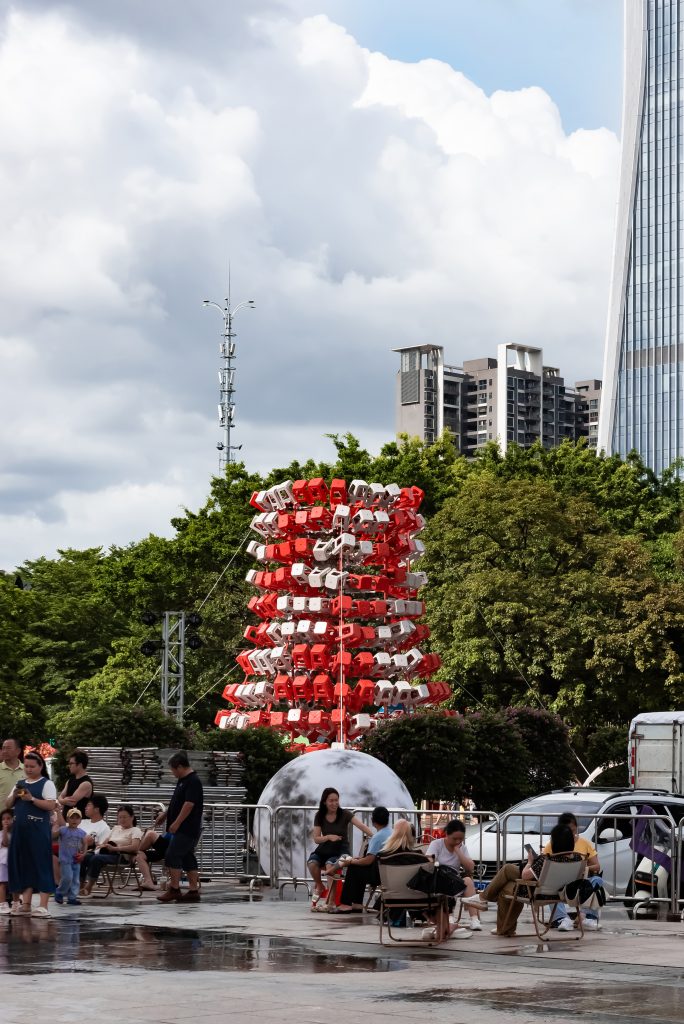
Floating Pavilion, installed during the third Shenzhen Public Urban Festival in 2023, consists of a field of jellyfish like forms suspended above a commercial plaza. Their internal lighting pulses slowly, following a programmed rhythm of expansion and contraction. The effect is subtle. People passing beneath the installation often notice it only after a moment, when their own pace begins to adjust to the breathing light overhead.


Similarly, JUMP Urban Generator, installed in Shanghai’s Taipingqiao Park, translates bodily movement into urban metaphor. A series of stacked circular structures invites visitors to jump, climb, and move through space. The act itself becomes symbolic. Energy is generated not through spectacle, but through participation.


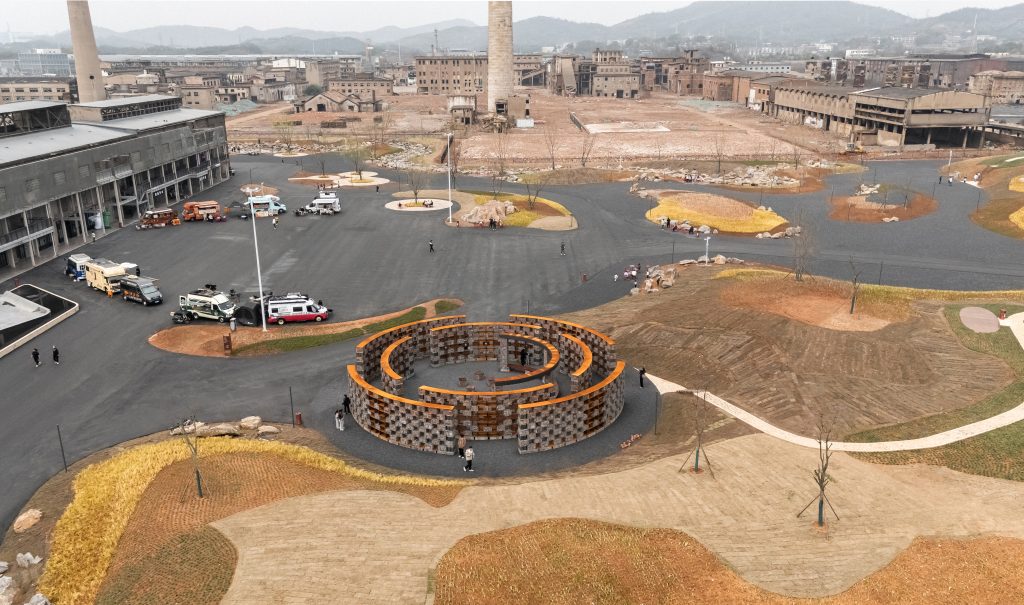
In Beijing’s Shougang Park, OctaPlay introduces a different register. Suspended colored discs and faceted geometric elements respond to wind and gravity, shifting gently against the backdrop of heavy industrial structures. The installation does not erase the site’s material history. It reframes it, allowing movement and color to soften the presence of steel and concrete.
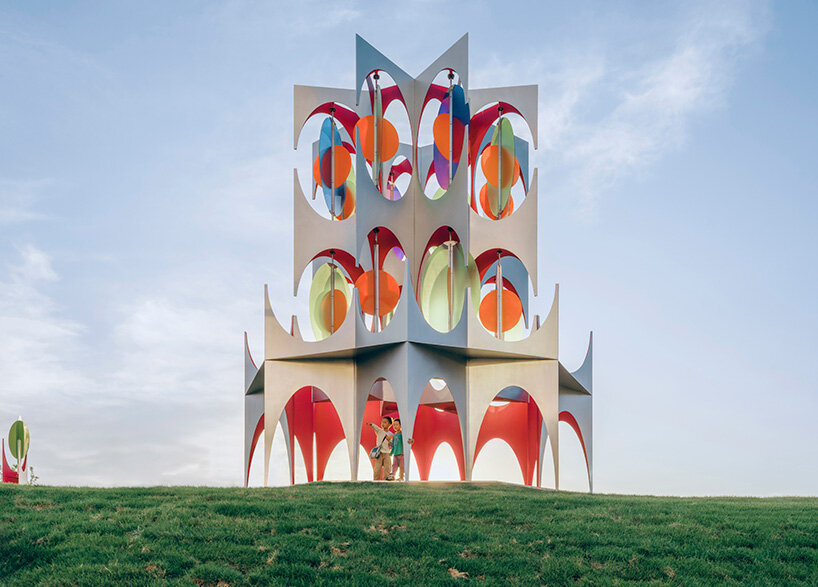
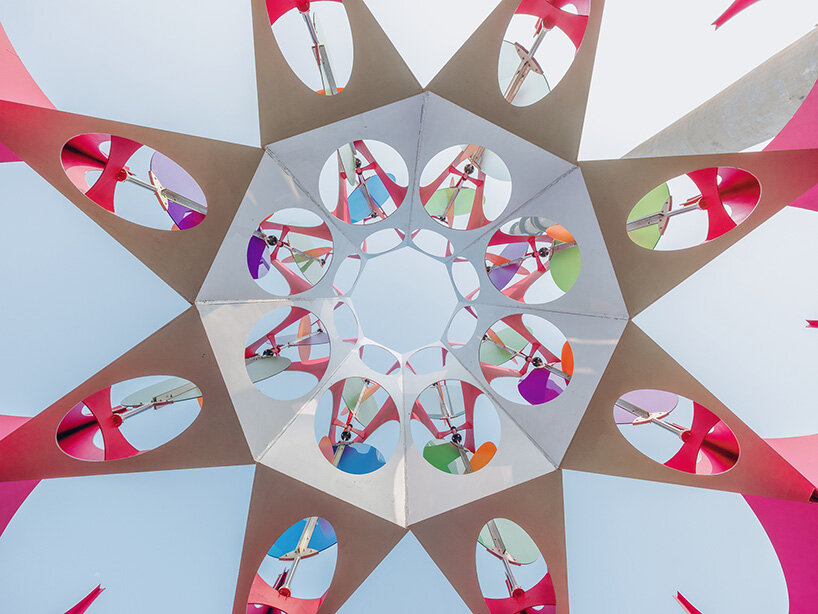


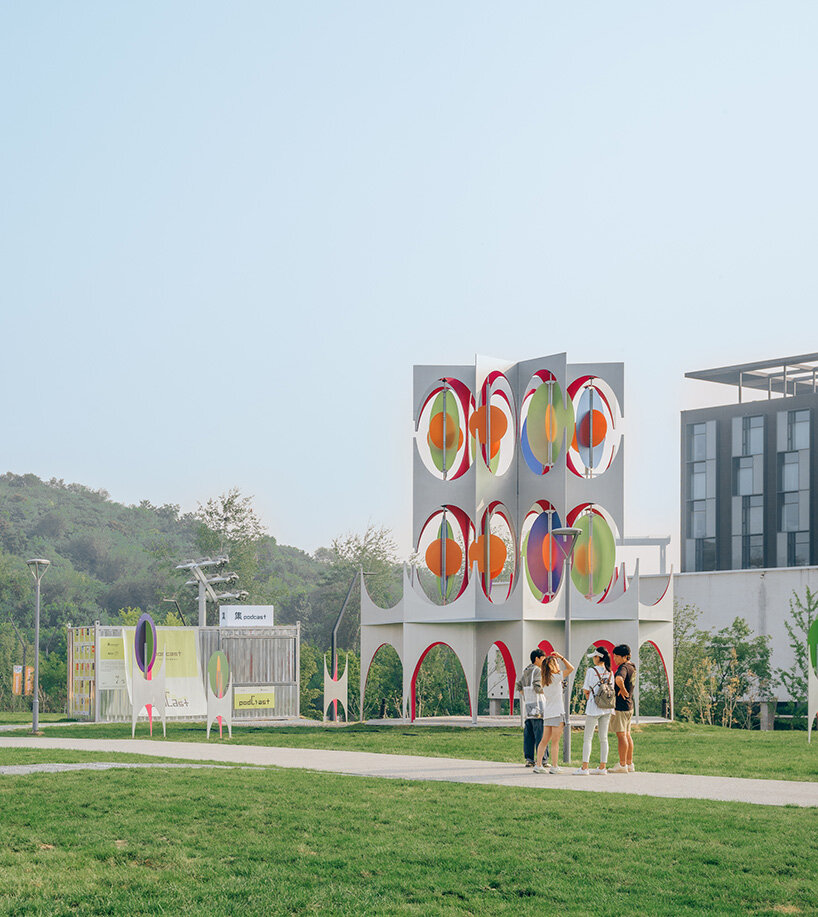

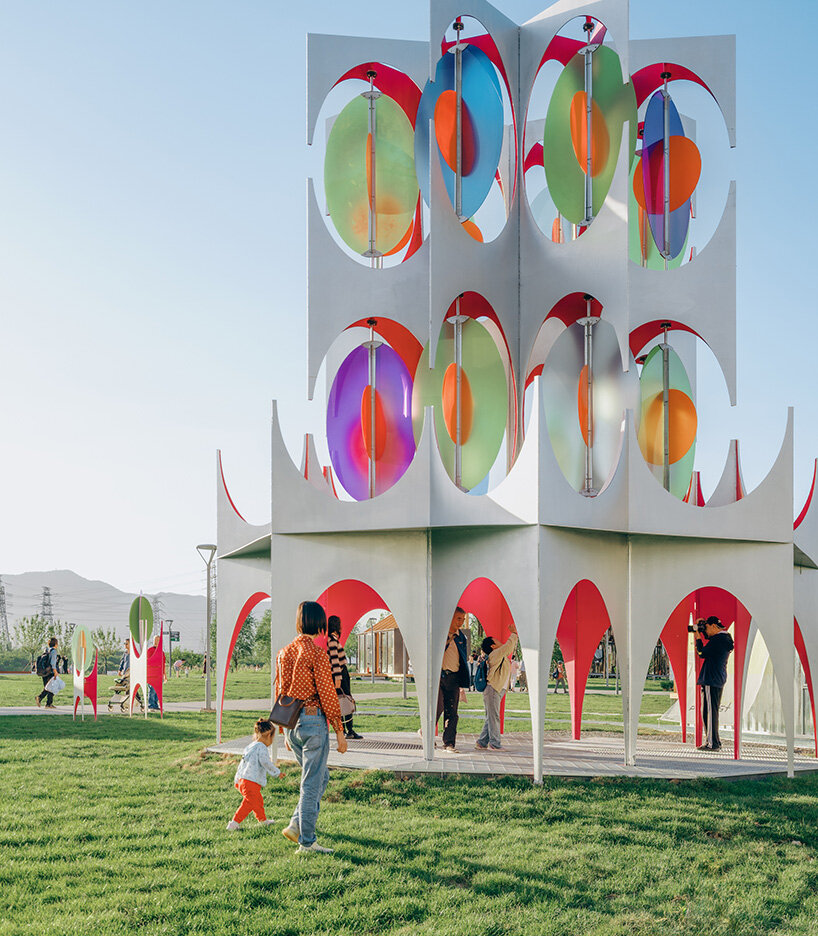


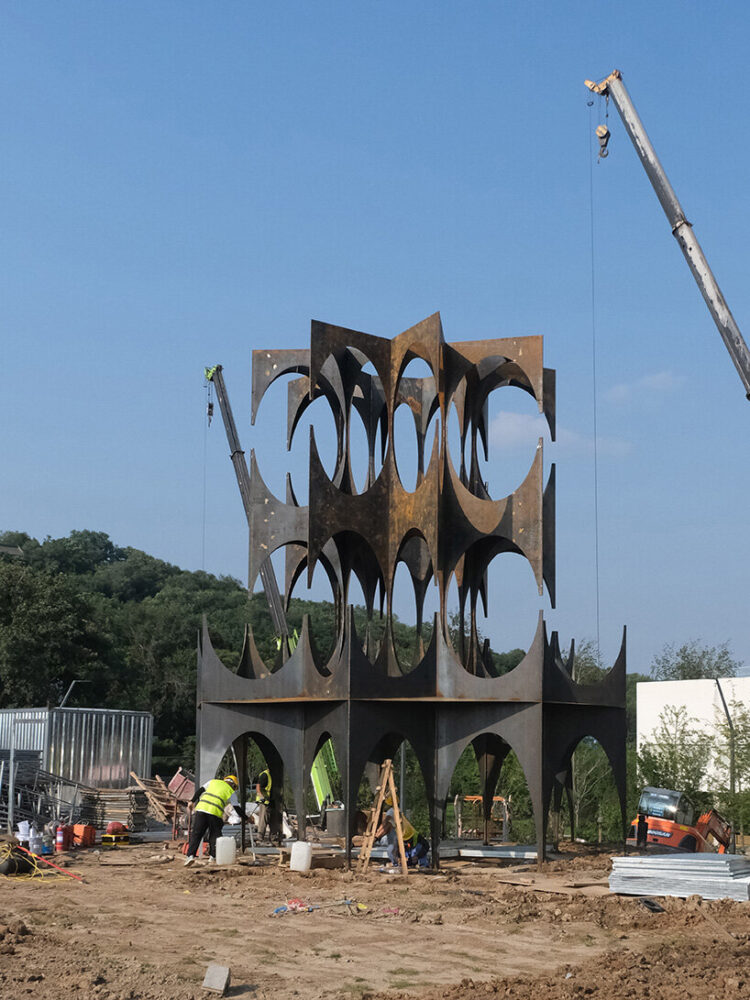
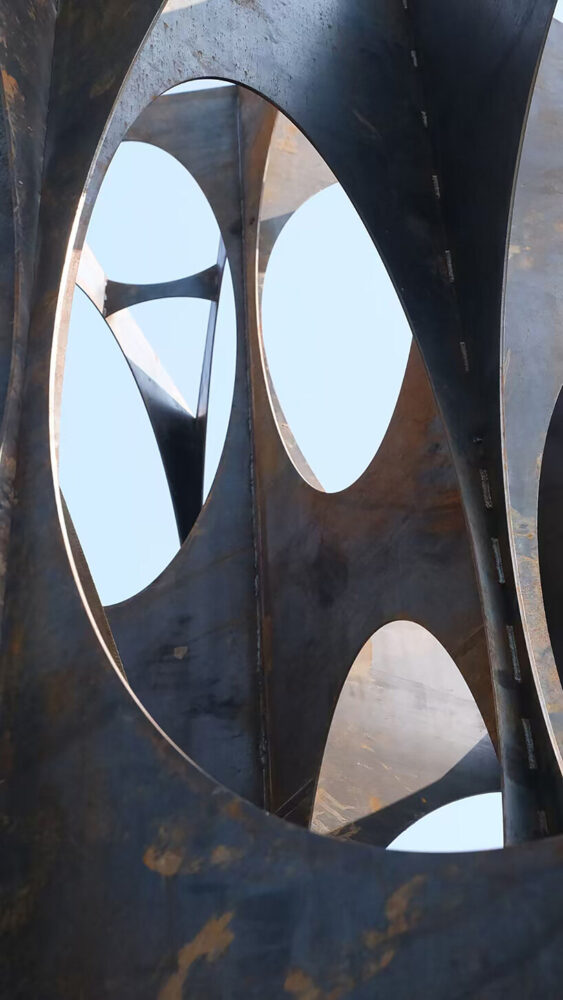
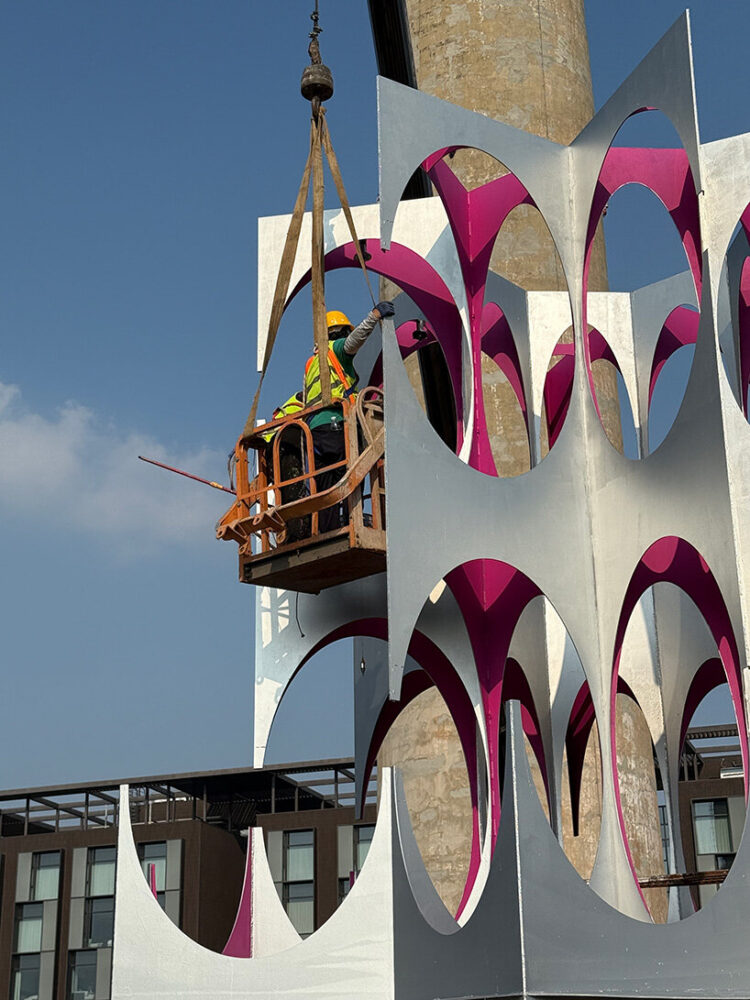
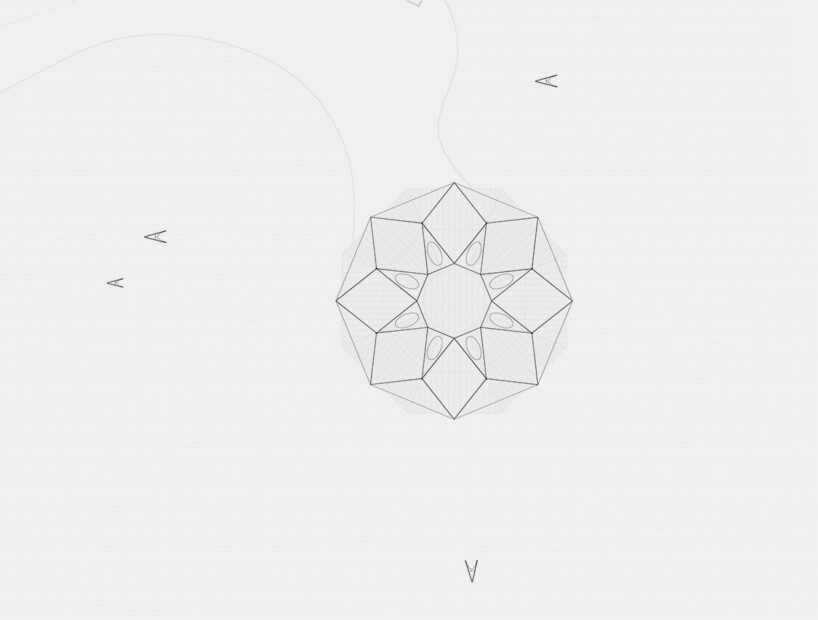
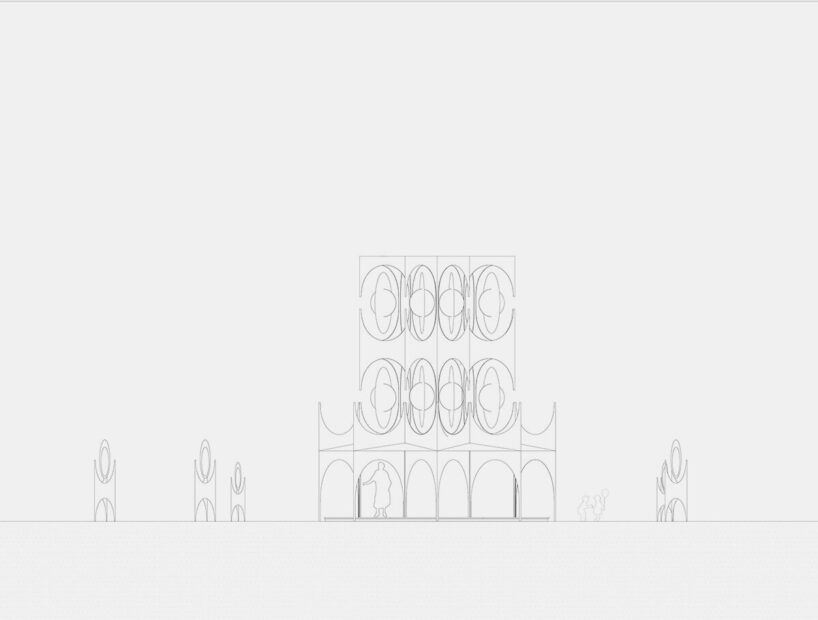
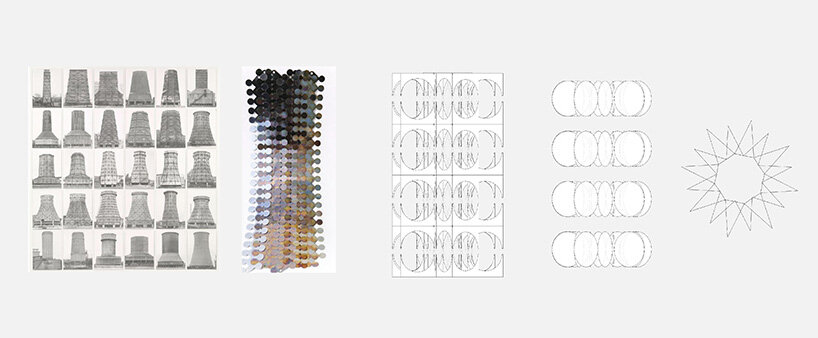


Across these projects, a shared design language emerges. Color is never applied flatly. It is filtered, layered, diffused. Movement is slow rather than kinetic. Materials are chosen for their ability to transmit light and atmosphere rather than assert mass. Forms remain open ended, often circular, encouraging movement without prescribing it.

What distinguishes Daxing Jizi’s work is not novelty, but restraint. Their installations intervene lightly, often occupying overlooked or transitional urban zones. Rather than dominating space, they temporarily recalibrate it. In a global context increasingly saturated with large scale public art and immersive environments engineered for visual impact, this restraint feels deliberate. The studio’s work does not demand attention. It waits for it.

The ephemerality of these installations raises an inevitable question. When the festival ends, when the structures are dismantled, what remains. There is no physical trace, no permanent marker. What persists instead is memory, the recollection of a space briefly transformed, of a city momentarily softened. In this sense, Daxing Jizi’s architecture operates as a form of quiet rehearsal. It rehearses alternative ways of inhabiting the city. It rehearses slowness, proximity, shared presence. Compared with artists such as Olafur Eliasson, whose work often engages perception through monumental spatial gestures, Daxing Jizi operates at a smaller, more intimate scale. Their installations do not position the viewer as an observer. They invite the body in. They allow touch, movement, distraction.

Returning to Dream Glow Pavilion, one is struck by its modesty. A cluster of softly lit domes, temporary, lightweight, almost fragile. Yet within this fragility lies its strength. The pavilion does not attempt to redefine Shenzhen. It simply proposes a pause within it. For a brief moment, the city becomes something else. Less instrumental, less hurried. A place where light is not a signal or a screen, but a shared condition. Daxing Jizi does not promise a better city. It offers something quieter. A small adjustment of perception. A reminder that architecture, even when temporary, can still shape how we feel together in space.
Sometimes, that is enough.
Dream Glow Pavilion rises like luminous fungi in Shenzhen’s Universiade Center, blending traditional lantern forms with contemporary glow. Credit: Photograph by Chao Zhang / Courtesy of Daxing Jizi Design.