
Now Reading: Ballistic Architecture Machine merges geodesic dome and basalt ring in Shanghai landscape
- 01
Ballistic Architecture Machine merges geodesic dome and basalt ring in Shanghai landscape

Ballistic Architecture Machine merges geodesic dome and basalt ring in Shanghai landscape

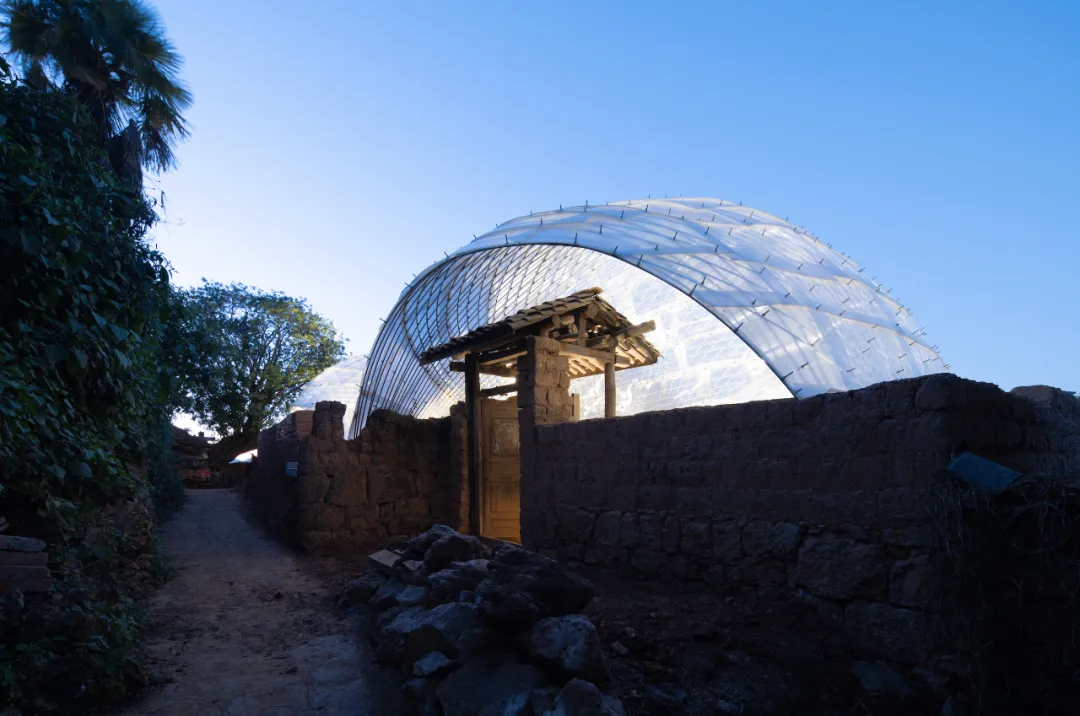
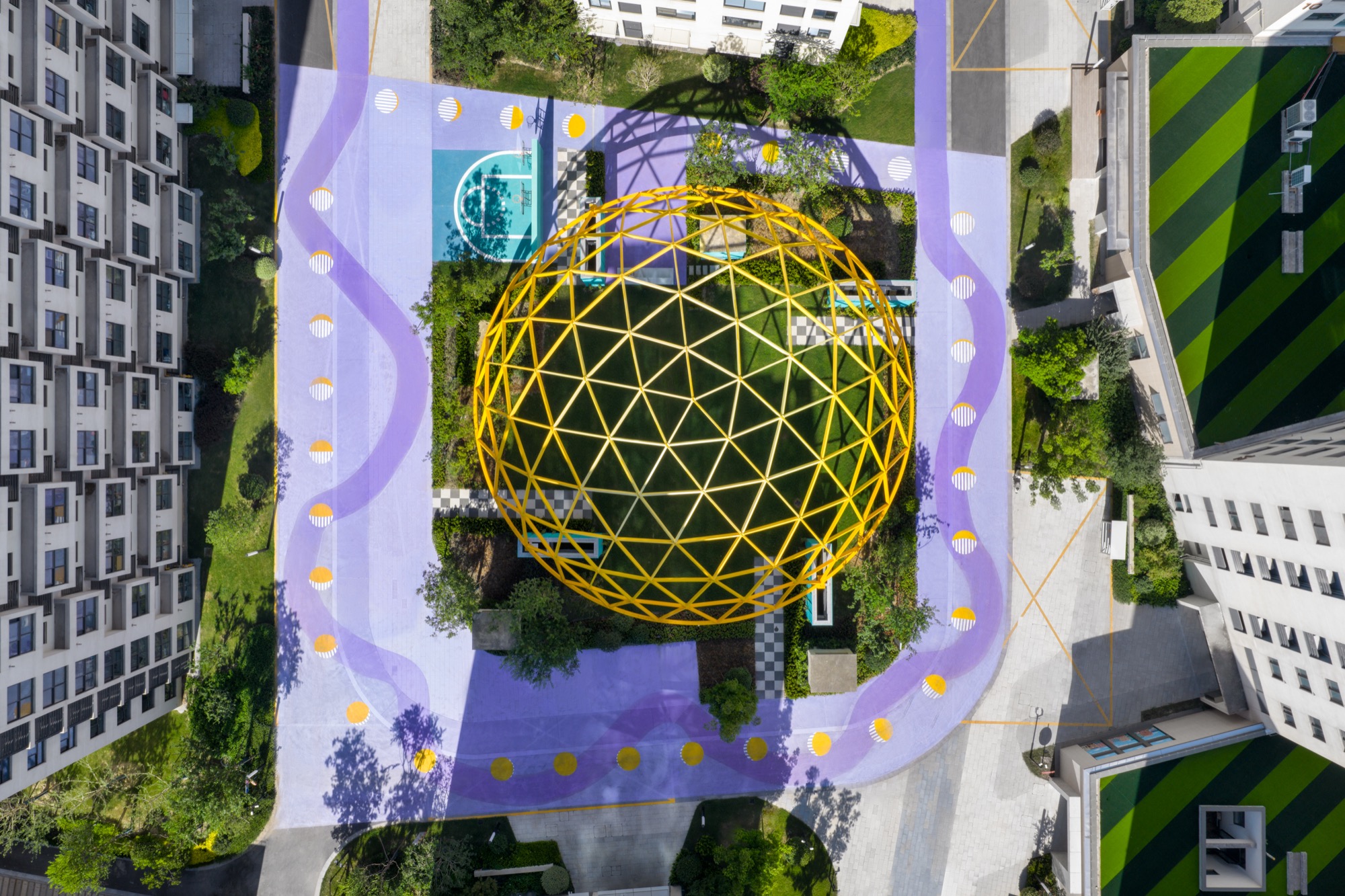
Located within a faculty housing complex for Shanghai’s science universities, Supermoon and Earth Core Oasis establishes a quiet yet precise dialogue between scientific imagination and everyday life. The project is composed of two interconnected landscape interventions, a geodesic dome and a continuous basalt ring, each defined by geometric clarity but activated through occupation, time, and social use.
Rather than functioning as isolated sculptural gestures, the two elements are embedded within daily circulation. They operate as infrastructural landscapes where gathering, movement, and informal rituals unfold naturally, dissolving the boundary between architectural object and lived environment.

The project draws on spatial systems that are both globally recognizable and locally resonant. While the geometry of the dome and ring references scientific and engineering logics, it simultaneously echoes cultural frameworks that persist within contemporary China. Instead of presenting science as abstraction or symbolism, the design constructs a field where scientific culture, inherited traditions, and everyday practices coexist without hierarchy. Meaning is not predetermined. It emerges gradually through use, repetition, and the passage of time.

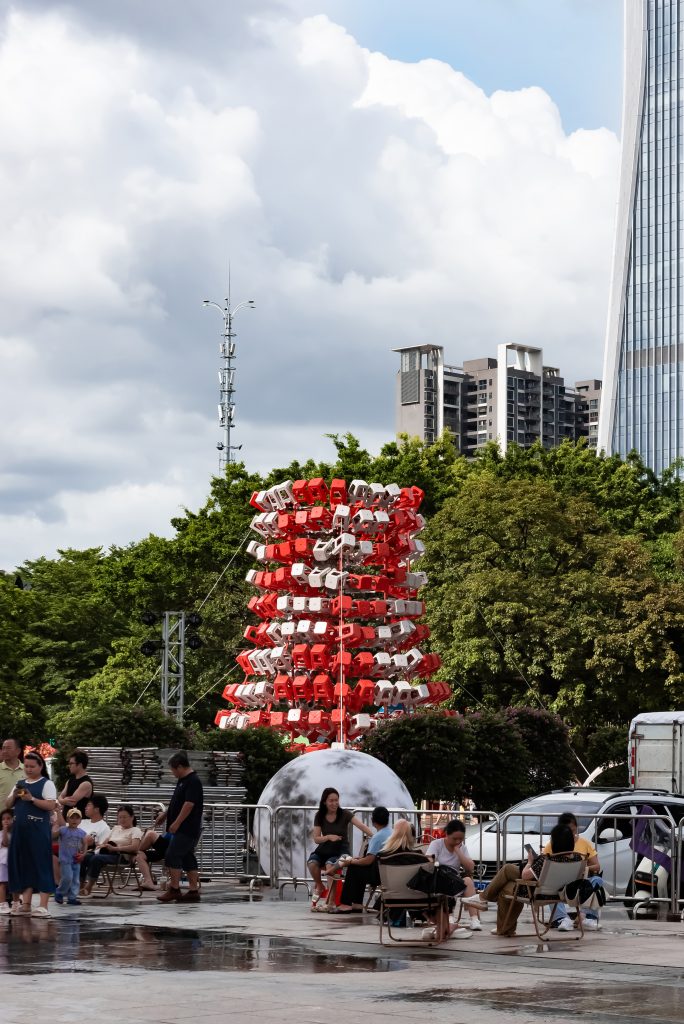
The Supermoon is a 26-meter self-supporting geodesic dome, elevated on four ventilation structures. Its form references lunar cycles, historically central to Chinese systems of timekeeping. Inside, each structural node emits light, forming a suspended celestial field that transforms the interior into an atmospheric night landscape.

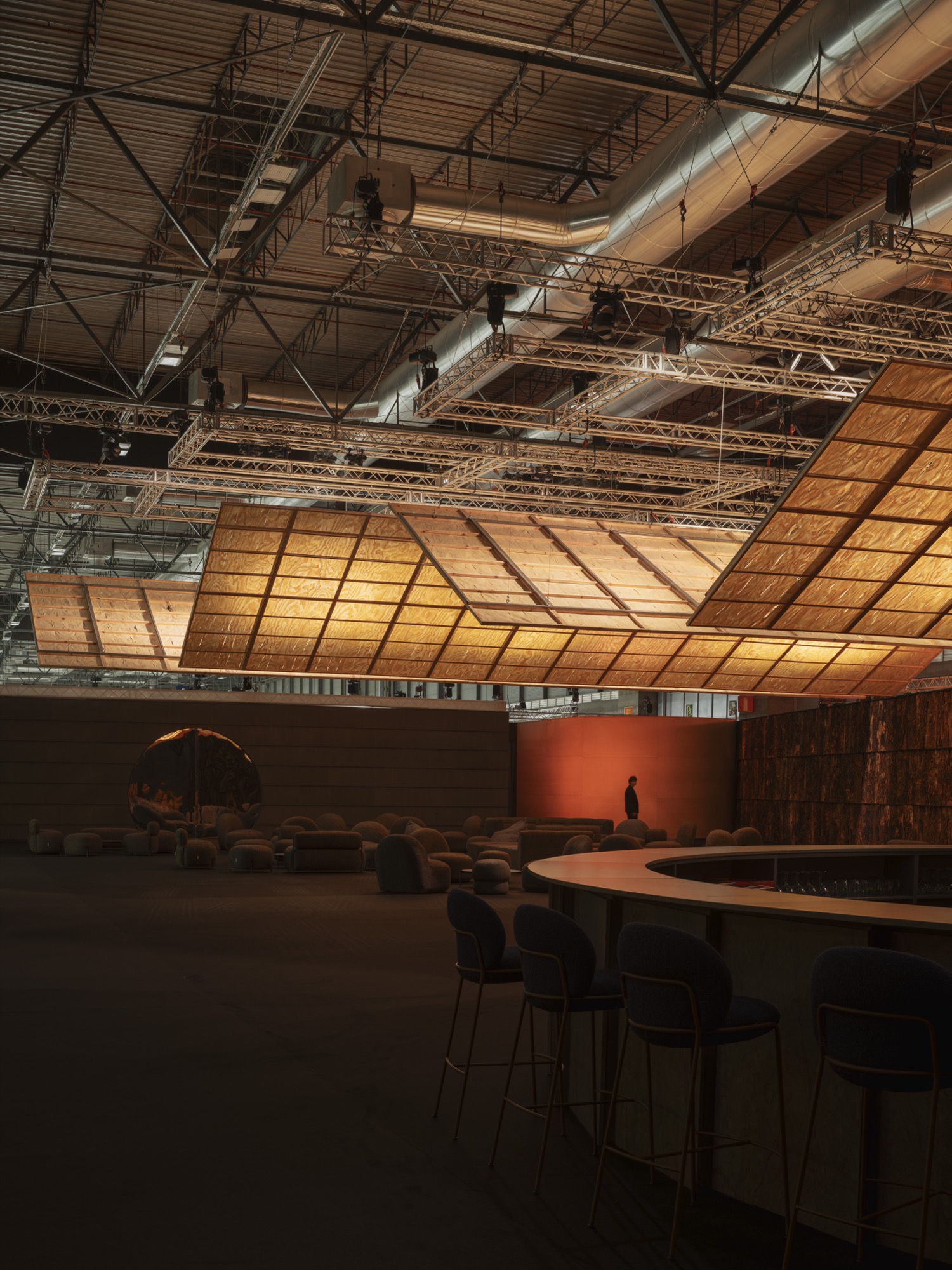
As daylight fades, the dome extends the life of the site into the evening. Residents gather beneath its illuminated structure, turning routine space into a shared nocturnal environment. The design subtly reinforces the tradition of moongazing as a social act, often associated with communal drinking and conversation in garden settings. An outdoor bar supports this continuity, allowing contemporary use to evolve from cultural memory.


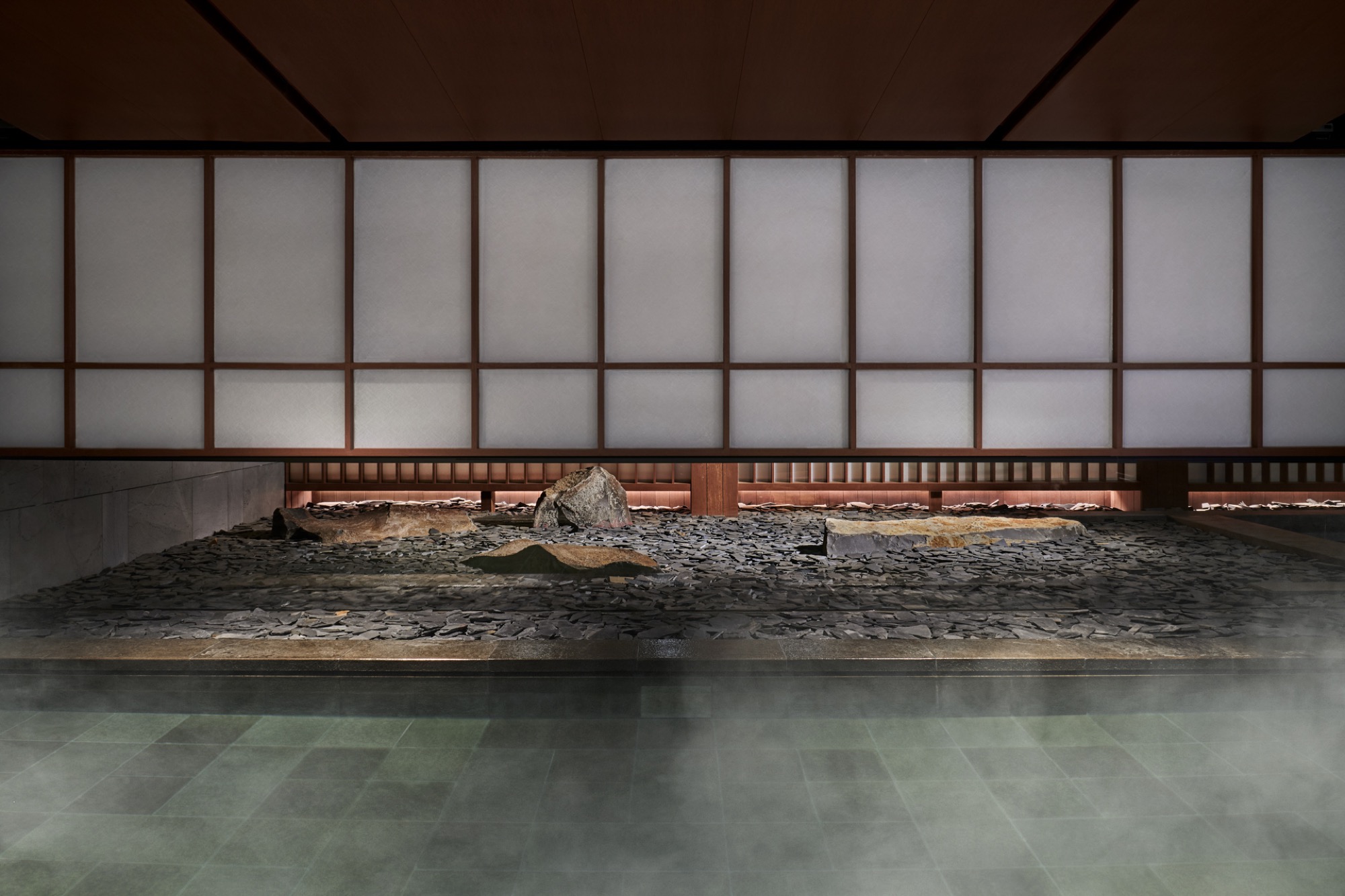
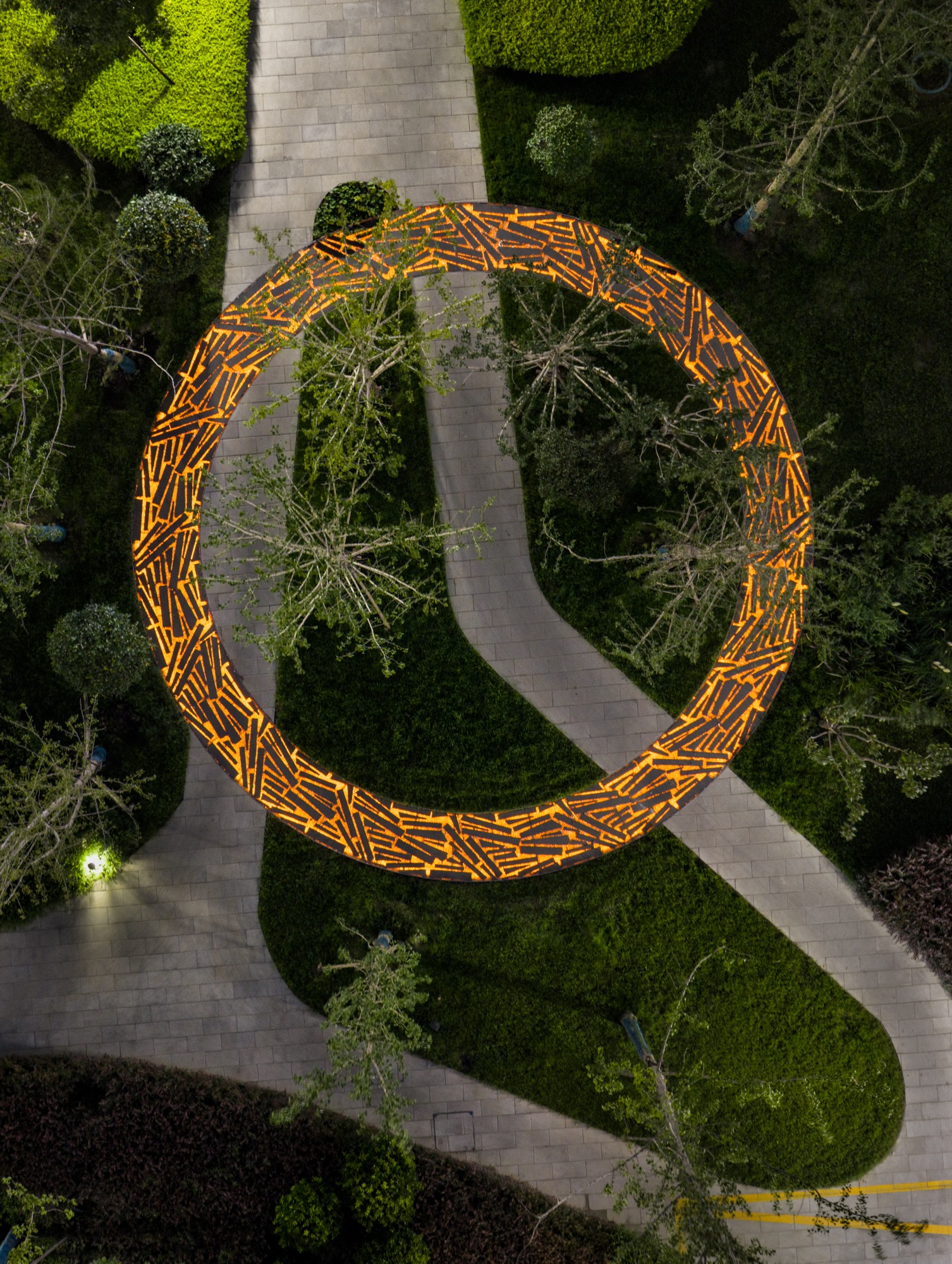
In contrast, the Earth Core Oasis unfolds horizontally as a continuous ring embedded within an existing grove of ginkgo trees and pedestrian paths. Composed of basalt slabs and glass gravel, the intervention shifts between two perceptual states.
By day, it reads as a compressed geological formation, evoking a sense of hardened earth and slow natural processes. By night, light emerges through the joints of the material system, producing a restrained, lava-like glow that redefines the ground plane as active and luminous.


The ring suggests the earth as a dynamic system rather than a static surface. It also resonates with the concept of Qi and the meridian structures of traditional Chinese medicine, framing landscape as a field of circulation where energy, body, and movement are interconnected.

Together, the dome and ring form a continuous landscape system where science, culture, and everyday life intersect. The project does not impose fixed meaning but creates conditions for interpretation through lived experience.
Light, material, and geometry operate as instruments of perception, shaping an environment that evolves with its users over time. In this sense, Supermoon and Earth Core Oasis functions less as a formal composition and more as an open framework for ongoing social and spatial negotiation.
Project Credit
Project name: Supermoon and Earth Core Oasis
Design firm: Ballistic Architecture Machine
Year: 2025
Location: Shanghai, China
Photo: Wu Qingshan / @wuqingshan.archphotographer
More Photos