Now Reading: China’s first 3D-Printed concrete architecture in Tengger desert
- 01
China’s first 3D-Printed concrete architecture in Tengger desert


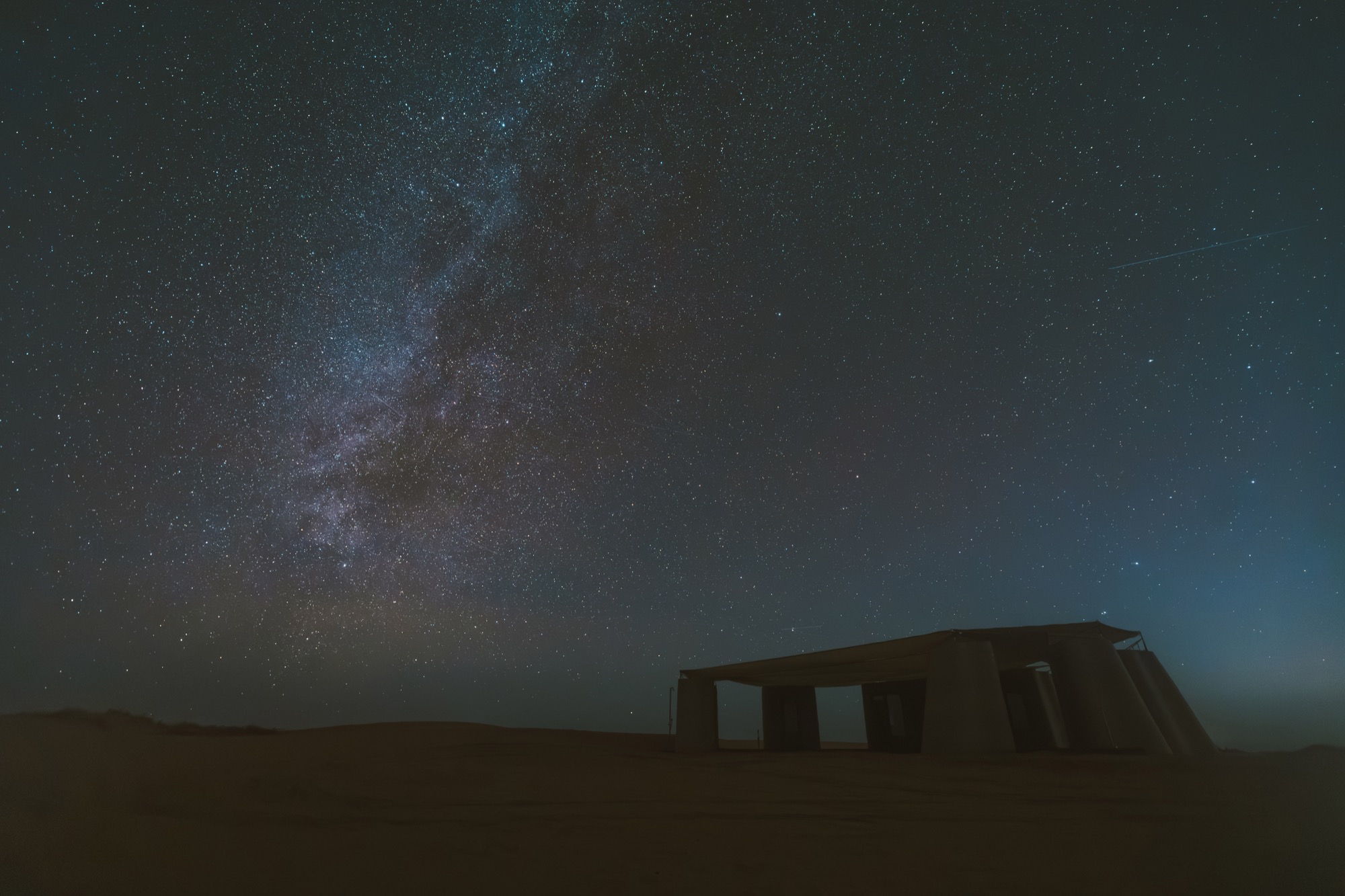
Desert Ark, designed by designRESERVE, is the first 3D-printed concrete structure in China’s desert environment and a pioneering example of sustainable architecture, modular construction, and off-grid desert design. Located on the edge of the Tengger Desert in Inner Mongolia, the project serves both as a field camp for ecological restoration and as a prototype for future extraterrestrial habitats.

INNOVATIVE USE OF 3D CONCRETE PRINTING
The architecture is composed of nine modular units fabricated using an advanced Robotic 3D Concrete Printing (R3DCP) system. Prefabrication in a controlled factory environment ensures high precision, rapid production, and reduced on-site labor. All units were transported by truck and installed within just two days, demonstrating the efficiency of additive manufacturing in remote environments.


DESIGN STRATEGY FOR EXTREME DESERT CLIMATE
The Tengger Desert is known for strong winds, extreme temperature fluctuations, and limited infrastructure. Desert Ark responds to these challenges with aerodynamic forms that reduce wind load and a layered concrete texture that echoes the surrounding dunes. The thick, cavity-rich printed walls provide excellent insulation, maintaining indoor comfort from 45°C summers to -30°C winters.


The project operates entirely off-grid using high-efficiency solar panels, Low-E glass openings, and a retractable canopy that controls heat gain. A biodegradable septic system allows the camp to recycle 100% of its wastewater for irrigation, supporting the ongoing afforestation program. The raised deck sits on reusable cargo pallets, ensuring minimal disturbance to the desert floor and enabling future relocation.


ECOLOGICAL AND ARCHITECTURAL SIGNIFICANCE,
A MODEL FOR FUTURE HABITATS
Desert Ark supports a major reforestation initiative in Inner Mongolia, led by a non-profit organization committed to long-term environmental restoration. By combining advanced construction technology, reversible foundations, and high-performance passive strategies, the project establishes a new benchmark for desert architecture, sustainable field camps, and 3D-printed building prototypes.
Beyond its immediate context, Desert Ark demonstrates how 3D concrete printing can enable resilient shelters in extreme environments. Its modularity, material efficiency, and off-grid capability offer valuable insights for future extraterrestrial architecture, remote research stations, and climate-adaptive settlements.

Desert Ark stands as a powerful example of how design, technology, and environmental responsibility can converge to shape the next generation of architectural solutions for the world’s most challenging landscapes.
designRESERVE is an architecture and urban design studio founded by Fangzhou Lydia Song and Feng Yue, operating between Beijing and California’s Silicon Valley. The practice brings together a multidisciplinary team working across architecture, landscape, visual art, and cultural programming, with a commitment to shaping resilient and human-centered environments.
Across its first decade, the studio established a distinctive approach to urban renewal, supporting independent cultural and retail initiatives while revitalizing historic neighborhoods through context-driven, community-oriented projects. Entering its second decade, designRESERVE expands its scope to more complex ecological and cultural landscapes, exploring adaptable modes of construction and sustainable spatial strategies.
Project Credit
Location: Alxa Left Banner, Inner Mongolia, China
Gross Area: 150 sqm
Completed Year: 2025.05
Project Architect: designRESERVE / @design_reserve
Design Team: Fangzhou Lydia Song, Feng Yue, Jingning Huang, Yanbo Xu
Photo: ATDEF team, Huaer Lin, Ziwen Hu, Yong Hu
Materials: 3D-printed concrete, Wood-plastic composite floor, Cargo pallets, High-strength fiber shading net, Solar panels, Battery system
More photos about this project: