Now Reading: Courtyard pavilion creates village threshold in Tingtangxu
- 01
Courtyard pavilion creates village threshold in Tingtangxu

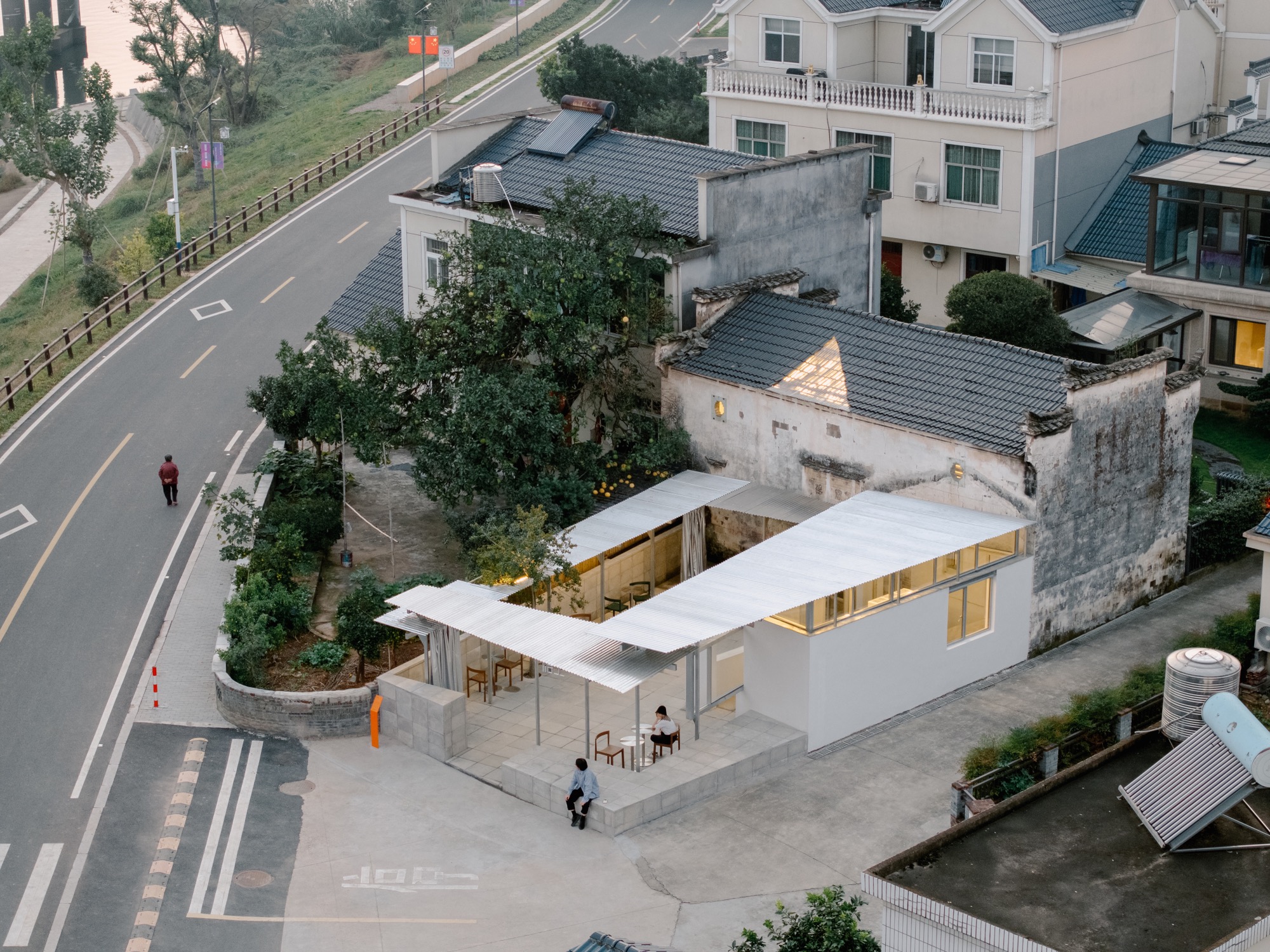

Crossing the bridge over the Qu River leads to Tingtangxu Village, a riverside settlement characterised by vernacular houses and irregular front yards shaped by intersecting village paths. These residual spaces reflect long standing social negotiations between neighbours and form a loose spatial framework for daily rural life.

At the village entrance stands a compound comprising a late Qing dynasty house, a small courtyard with an existing tree, and a kitchen annex added in the 1990s. This site marks the starting point of the Hushiguang Art Eco Site, a rural art initiative extending along the Qu River with temporary installations distributed across fields and village paths.


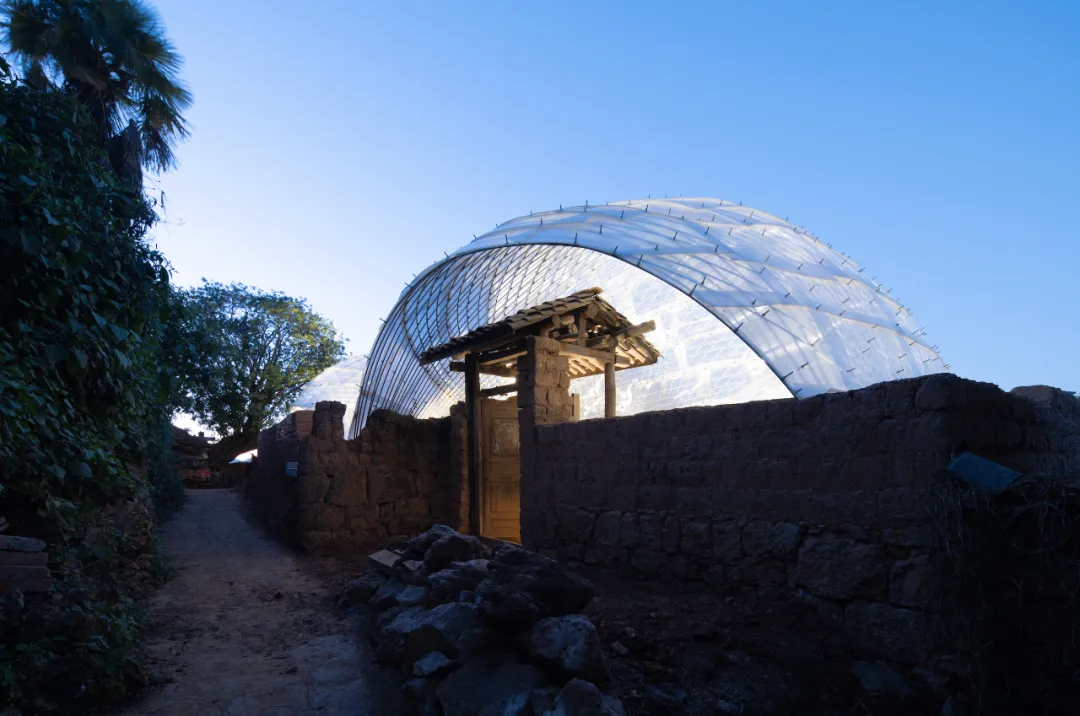
Shanghai based studio atelier tao plus c was commissioned to add a lightweight pavilion that functions as a resting point for visitors and an informal meeting place for villagers. Positioned along the edge of the courtyard, the structure operates as a transitional space between the riverside road and the historic dwelling, encouraging encounters between residents and tourists.


The intervention follows the irregular outline of the courtyard defined by the road, village paths, and a shared boundary wall. A single column passage wraps around the perimeter and establishes a rectangular courtyard set parallel to the shared wall and slightly angled relative to the main house. This configuration clarifies the site boundary while forming a buffer that filters road noise and allows airflow from the river.

The roof of the passage varies in height in response to its surroundings. Along the village road, the passage cuts diagonally through the former kitchen annex, forming a café window. The roof then lowers to define the entrance before descending further along the neighbouring wall, where it accommodates an existing tree. As the passage turns toward the historic house, it maintains a narrow gap from the facade to preserve the original frontage.


Inside the historic house, later infill elements were removed to expose the original timber structure. A lightweight galvanized steel framework is inserted through the existing rafters without altering them, supporting seating, display surfaces, and lighting. The floor is finished with black epoxy resin, clearly distinguishing the new insertions from the aged timber surfaces.


The pavilion and interior additions are constructed using industrial standard galvanized steel tubes and stainless steel corrugated plates sourced locally and assembled on site. The project adopts a passive preservation strategy, prioritising use without permanent occupation. Conceived as temporary and reversible, the intervention allows the historic building and courtyard to remain adaptable to future change.


Project Credit
Architect studio: atelier tao+c / @atelier_taoc
Location: Longyou,China
Completed date 2023.10
Floor area 178 sqm
Photo: Wen Studio / @wen_studio2020
More Photos