
Now Reading: A Contemporary Teahouse Immersed in Landscape and Atmosphere
- 01
A Contemporary Teahouse Immersed in Landscape and Atmosphere


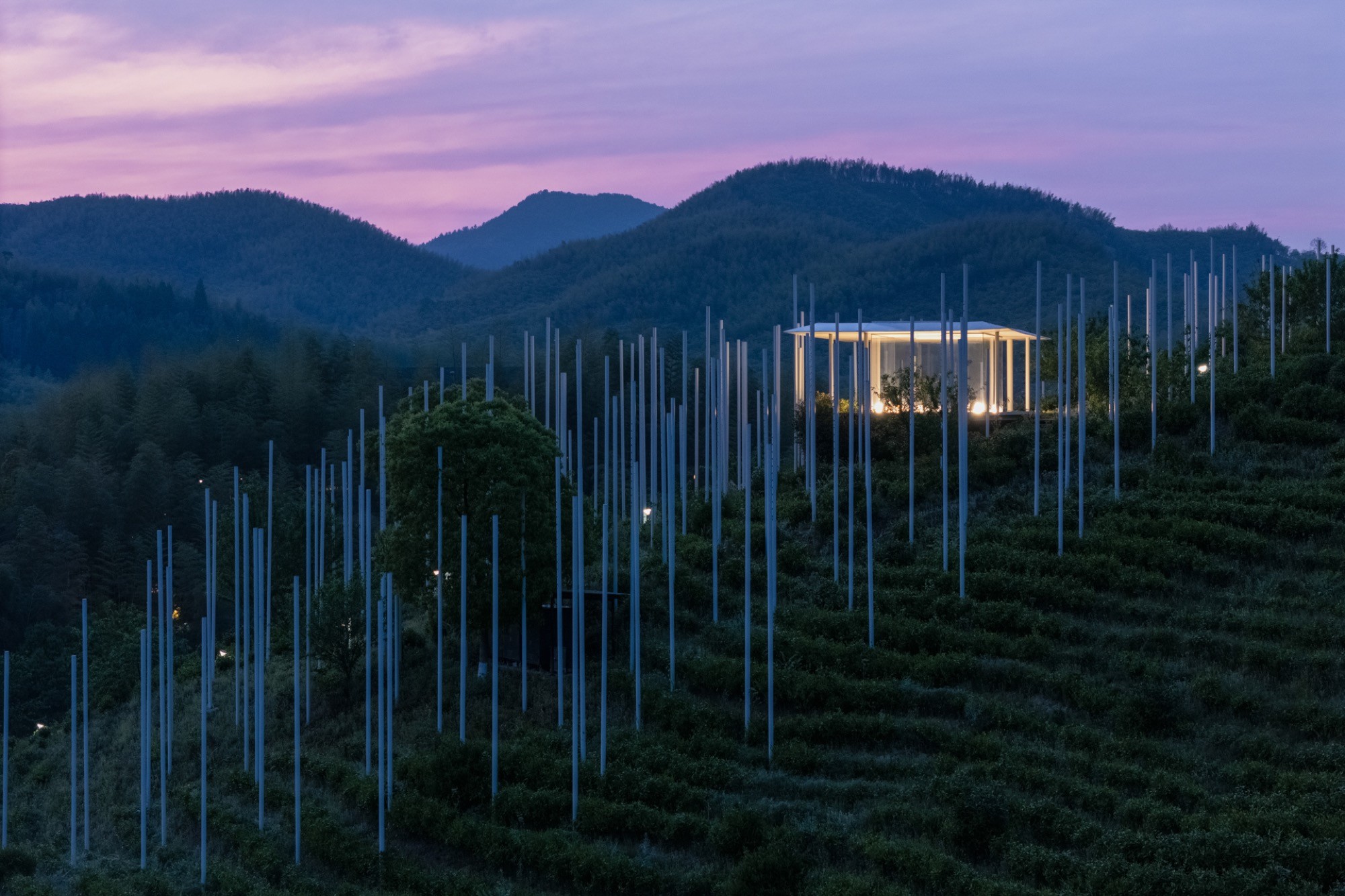
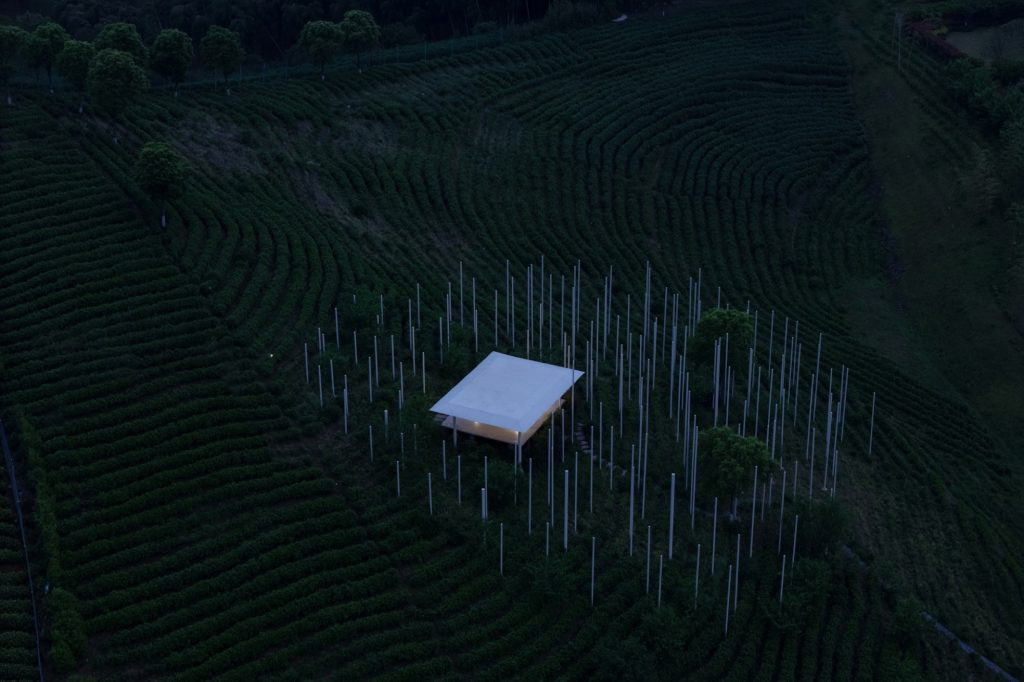
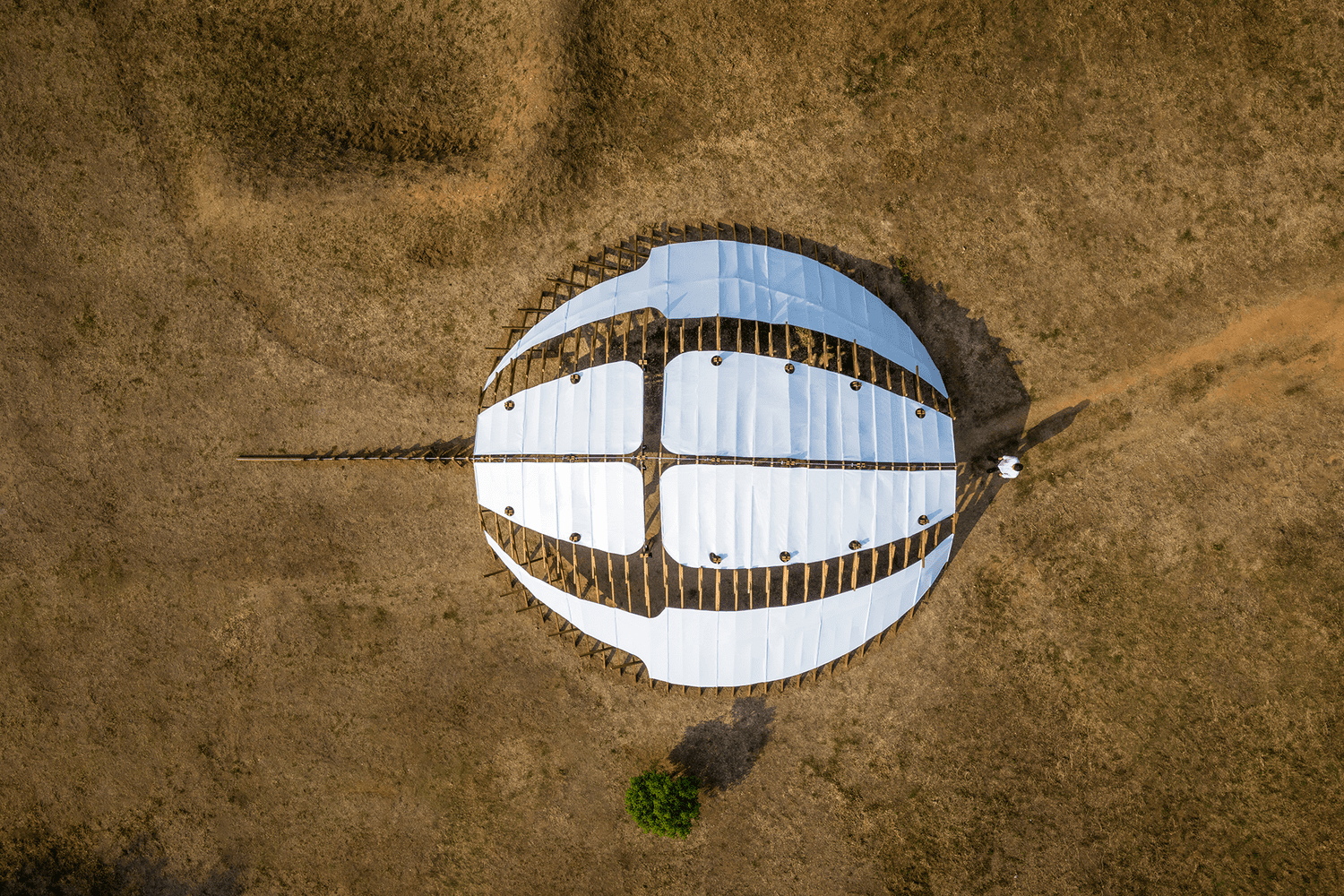
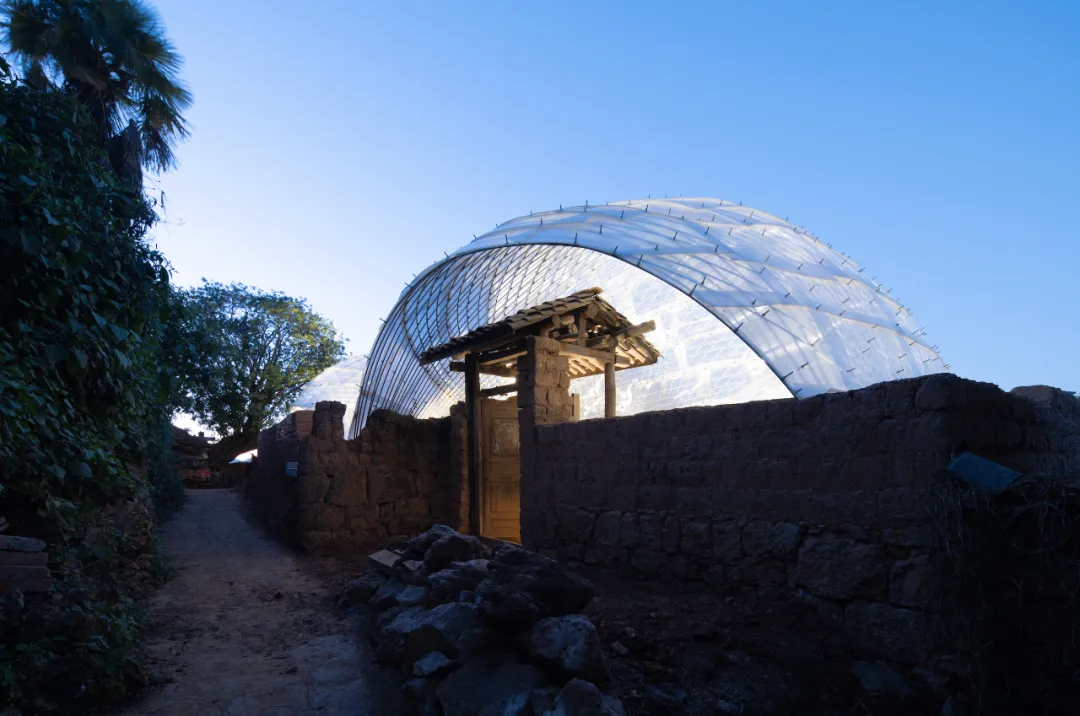
Set atop the highest hill of the Lu Yu Tea Cultural Campus in Huzhou, China, The Cloud reimagines the traditional teahouse as an ethereal architectural experience. Designed by Jung Donghyun, the project dissolves the boundary between built form and environment, merging contemporary spatial ideas with the ancient cultural act of drinking tea. The result is a levitating pavilion that engages with nature not as backdrop but as active participant.


A LANDSCAPE-ORIENTED ARCHITECTURAL STRATEGY
The design begins with a deliberate desire to minimize the physical footprint of the building. Rather than asserting itself against the topography, the teahouse appears as a fleeting presence suspended above the hillside. Slender steel columns lift the structure lightly off the ground, giving the impression that it hovers within the landscape. Transparent glass walls heighten this sensation by visually erasing enclosure, allowing the surrounding tea fields, sky and shifting atmosphere to form the true boundaries of the space.


The teahouse is complemented by The Present World, a fog installation composed of 170 steel poles distributed across the slope. These poles act as a three-dimensional drawing, outlining the form of a cloud while supporting a spray and mist system that drifts, gathers and disperses with the wind. The installation becomes a choreography of appearance and disappearance, a poetic expression of time, movement and the cycles of nature.
ATMOSPHERE AS ARCHITECTURAL MATERIAL
The Cloud uses atmosphere not as metaphor but as structural logic. Mist softens the hard edges of the landscape and alters the visitor’s perception of distance, scale and orientation. The interplay of fog and light creates an environment where geology, ecology and spirituality converge. In this dreamlike condition, the ritual of tea becomes a heightened sensory experience.


Inside the teahouse, the transparency of the enclosure continues to dissolve spatial limits. Visitors enter not a room but a suspended horizon, where the landscape flows uninterrupted beneath and around them. The duality between traditional cultural practices and contemporary architectural expression becomes an invitation to contemplation, connecting mind, body and environment.


TOWARD AN ARCHITECTURE OF EPHEMERAL PRESENCE
The Cloud Tea Room suggests a new approach to cultural architecture, one that privileges atmosphere, temporality and phenomenology over conventional monumentality. By employing minimal material intervention and focusing on experiential qualities, Jung Donghyun constructs a pavilion that amplifies nature’s presence rather than competing with it.

The project proposes that architecture can be simultaneously minimal and profound, grounded yet weightless. In doing so, it redefines the teahouse as a sensorial landscape where tradition and innovation coexist within the shifting textures of wind, mist and light.
Project Credit
Designer: PLAT ASIA / @platasia
Design team: Liu Guowei, JUNG Donghyun, Chen Yiyi, Li Manying
Year: 2023
Location: Huzhou, China
Photography: Arch-Exist
More photos