Now Reading: Dragon Palace III reinterprets the horseshoe crab through timber architecture
- 01
Dragon Palace III reinterprets the horseshoe crab through timber architecture

Dragon Palace III reinterprets the horseshoe crab through timber architecture
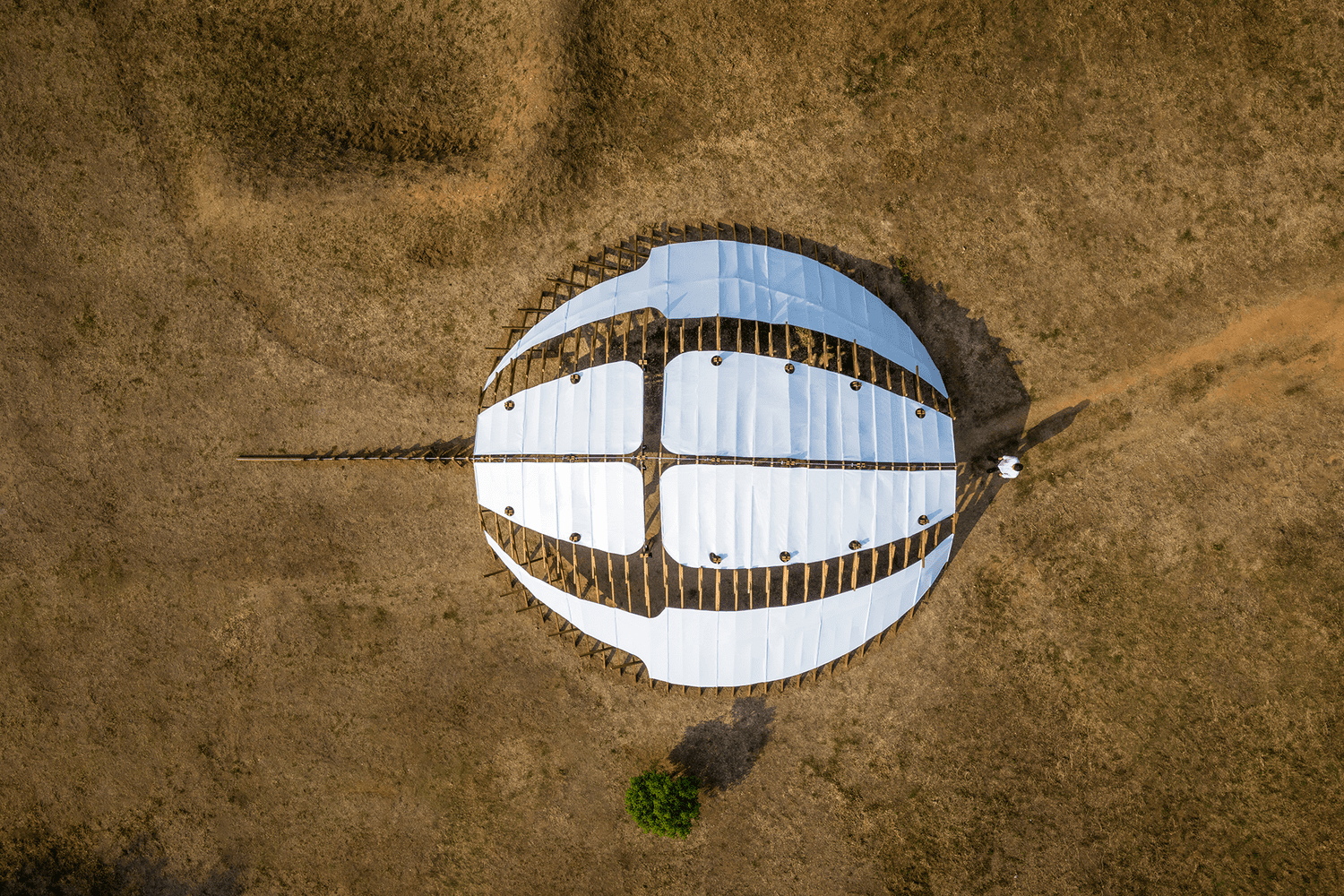
Cheng Tsung Feng’s Dragon Palace III rises on the shores of Kinmen, Taiwan, as a meditation on ecological memory, craft traditions and the mythic aura of the horseshoe crab. The outdoor installation translates the distinct anatomy of this ancient species into an immersive timber and canvas structure that functions simultaneously as a shelter, a sculptural landmark and a contemporary expression of vernacular techniques.

ANCESTRAL SPECIES AS ARCHITECTURAL ORIGIN
Kinmen Island has long been shaped by the presence of horseshoe crabs, a creature embedded in both the local environment and regional folklore. Often described as a living fossil, the species predates human civilization by more than four hundred million years. Feng draws upon its layered shell, its defensive geometry and its symbolic resilience to shape the architectural vocabulary of the piece.

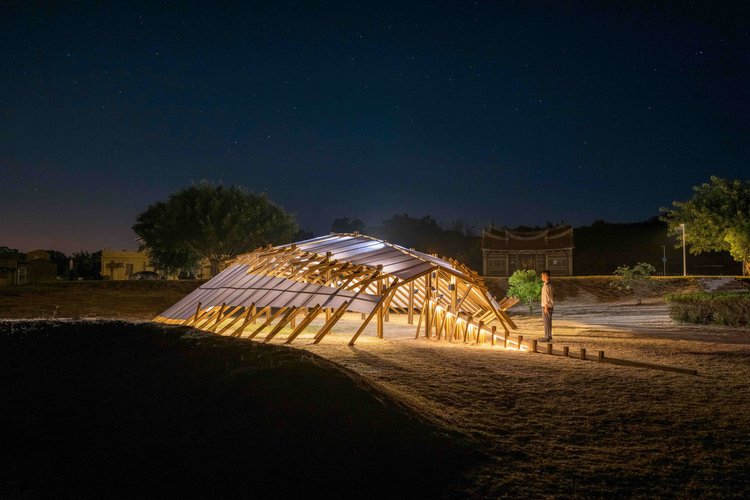
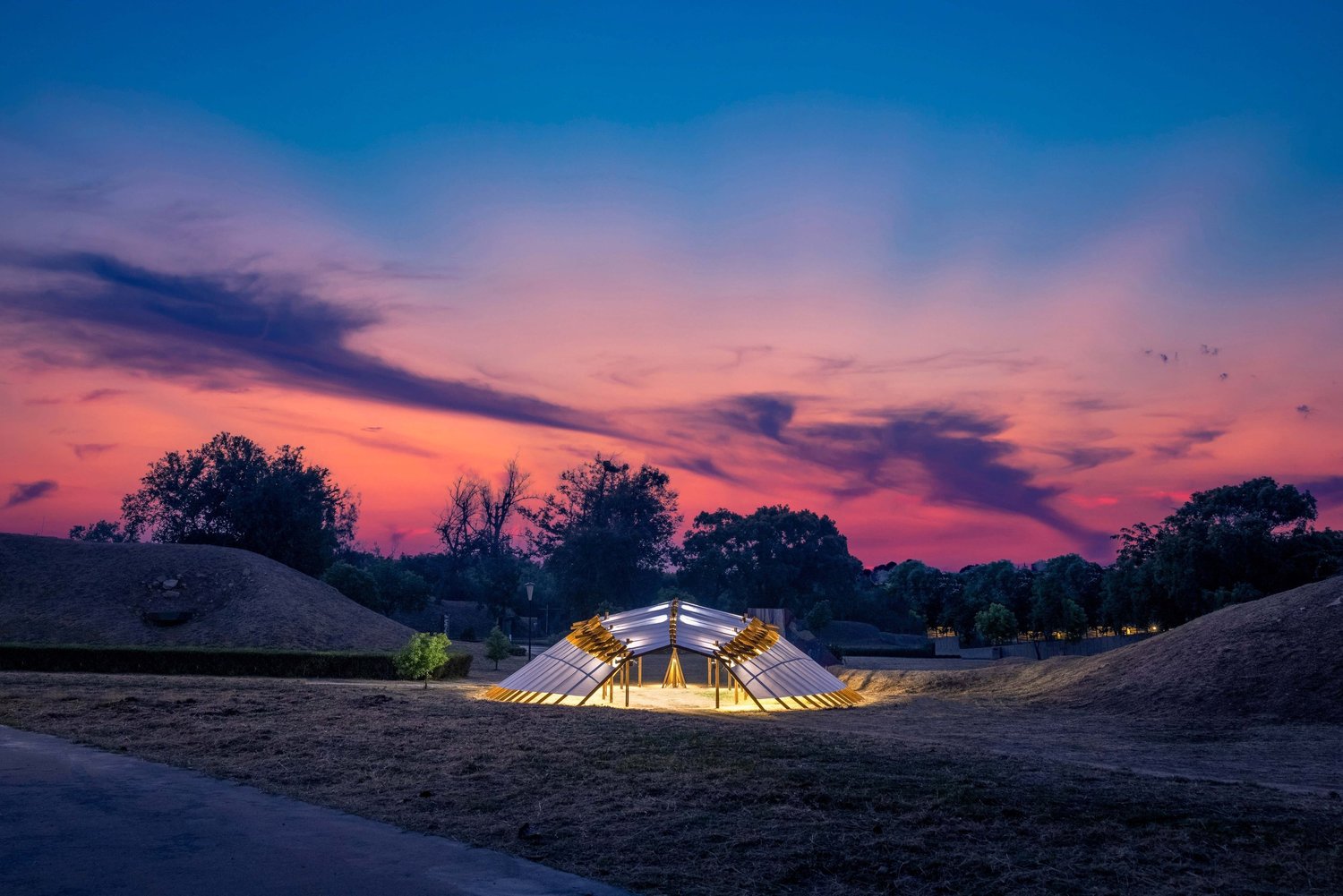
A curving timber framework forms the core of the structure, echoing the arcing contour of the crab’s carapace. Over this wooden skeleton, white canvas is draped in overlapping sections that create a continuous yet subtly permeable enclosure. Intentional openings allow beams to pierce the surface, generating contrasts between the taut fabric and the raw timber beneath. The resulting duality mirrors the creature’s physical condition, simultaneously armored and delicate.
CRAFT, STRUCTURE AND CEREMONY
Dragon Palace III extends Feng’s deep engagement with the traditional crafts of his native Taiwan. The construction relies on methods such as bending, tying and binding, techniques rooted in centuries-old practices of making objects that serve fishing, farming and domestic life across island communities. Within the installation, these gestures become part of an architectural language that is tactile, expressive and grounded in human labor.


The space that emerges is both chamber and refuge. Filtered daylight slips between the ribs of the timber frame, creating a calm interior atmosphere that encourages visitors to pause, gather and reflect. The spatial sequencing recalls the ceremonial qualities of indigenous shelters, while the use of natural materials reinforces the sense of intimacy and elemental presence.


A NOCTURNAL METAMORPHOSIS
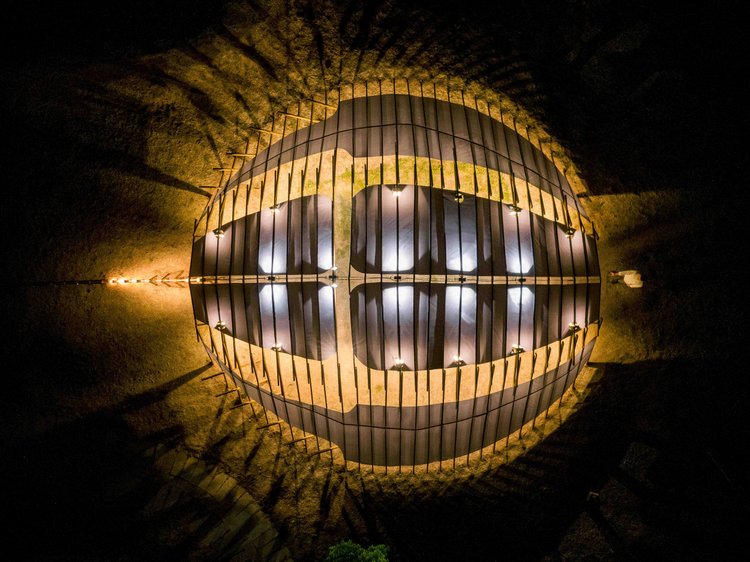
As evening settles, the installation acquires a different character. Light washes across the canvas shell, softening its edges and animating the elongated, tail-like extension at its rear. The structure appears to breathe, shifting from biological metaphor to mythic apparition. Kinmen’s legends of hidden palaces rising from the sea are quietly invoked, blurring distinctions between natural history and imagination.

Dragon Palace III positions itself at the intersection of art, architecture and ecological storytelling. It reinterprets a primordial creature through the lens of contemporary design, while preserving strong ties to local craft and collective memory. In doing so, Feng creates a landmark that belongs simultaneously to the past and the present, offering Kinmen a new spatial ritual anchored in light, material and form.
Project Credit
Title: Dragon Palace III Kinmen
Artist: Cheng Tsung FENG / @chengtsungfeng
Location: Jinning, Kinmen, Taiwan
Photography: Fixer Photography Studio
Cheng Tsung Feng is a Taiwanese artist and spatial designer known for large-scale bamboo installations, timber pavilions, and craft-based architectural structures. His work merges traditional Taiwanese craftsmanship with contemporary design, creating immersive environments that blend natural materials, ecological storytelling, and cultural memory. Feng specializes in reinterpreting vernacular building techniques, bending bamboo, tying rope, weaving and framing into modern architectural forms that function as public installations, temporary pavilions, and site-specific artworks. His well-known Dragon Palace series exemplifies how he transforms the anatomy of marine species and local mythology into lightweight timber-and-canvas structures that invite public interaction. Using materials such as bamboo, wood and fabric, Feng emphasizes sustainability and cultural preservation. His installations connect deeply with their surroundings, responding to landscape, folklore, and community heritage, while offering visitors a space for reflection and sensory experience.
Related Posts
Previous Post
Next Post
- The timeless elegance of domestic appliances: From the Iconic Braun KF 20 aromaster to the German design ethos

- Emilio Ferro on the light, sound and memory of a place
- At Maniwa, an architect’s family home opens to the neighbourhood
- What bronze remembers of the hand

- Caught in light: Moradavaga’s suspended shoal

- The making of Alex Chinneck’s impossible Dior windows