Now Reading: Woven pavilions create shifting circular formations for public gathering
- 01
Woven pavilions create shifting circular formations for public gathering

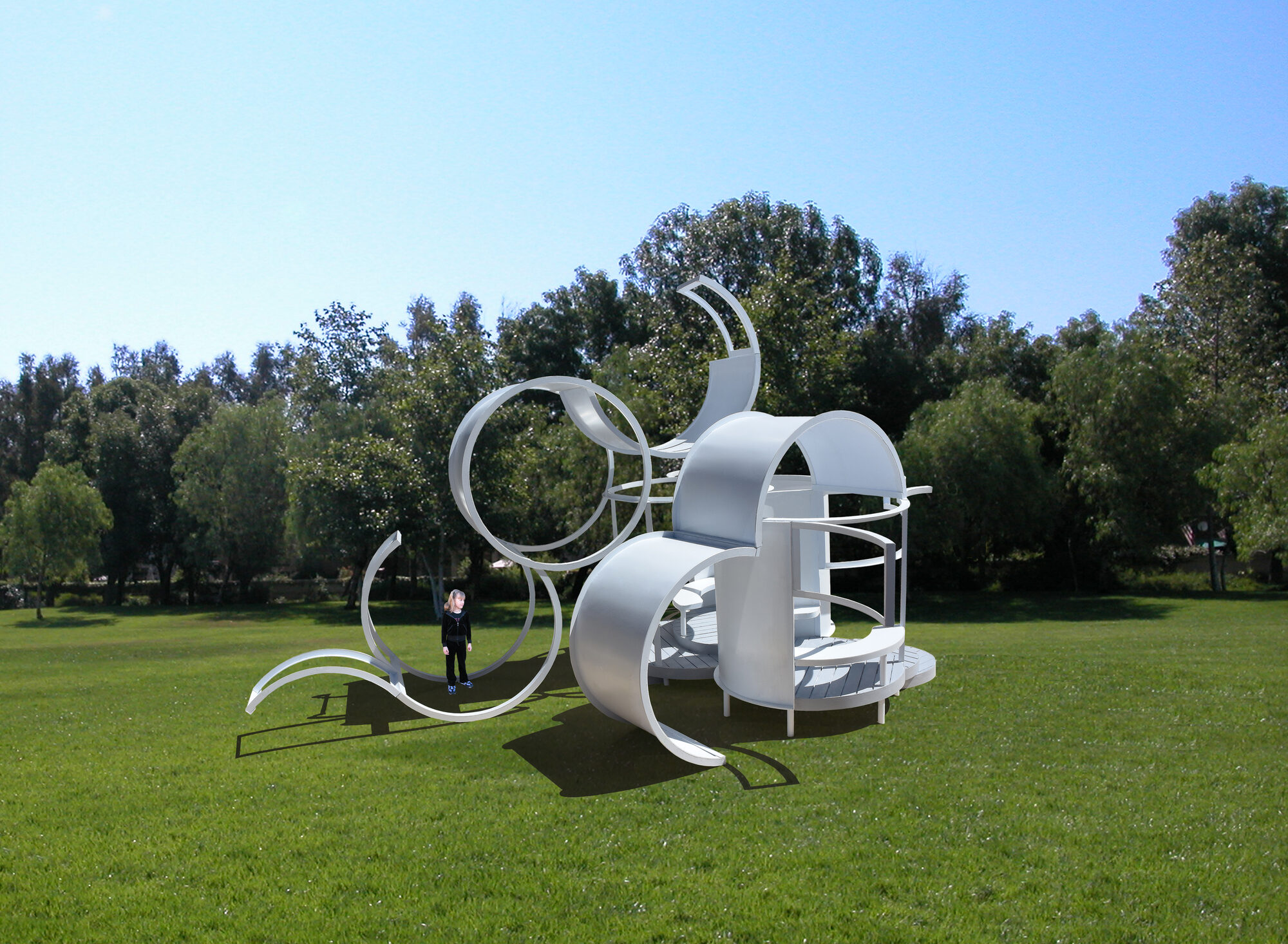
Woven pavilions create shifting circular formations for public gathering


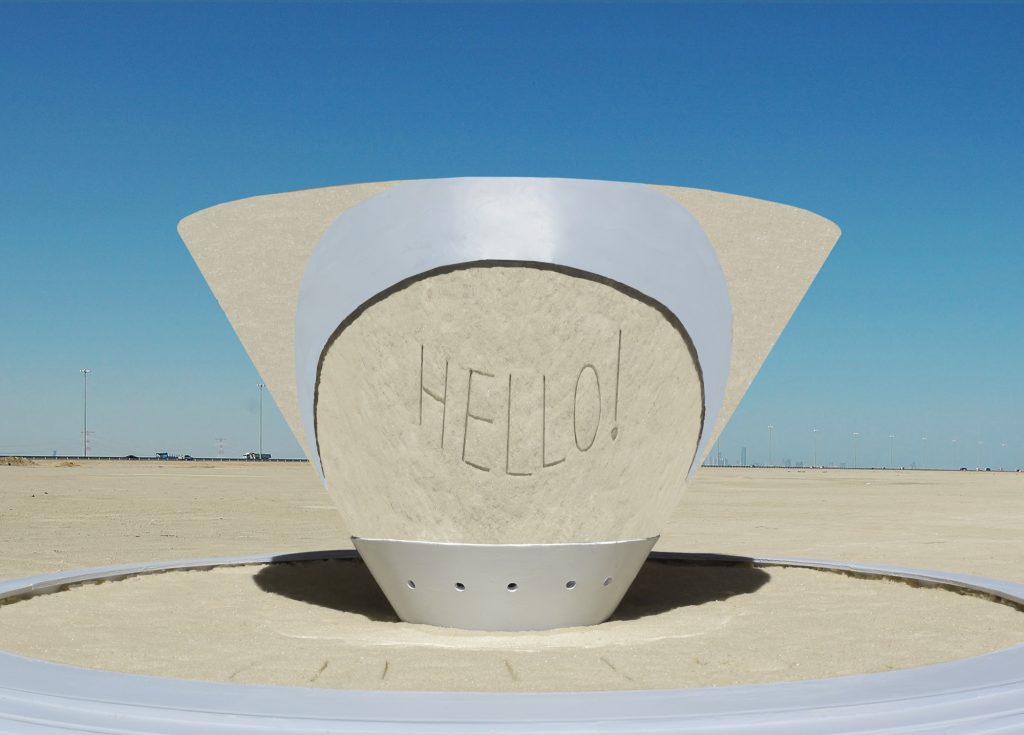
The Circular Formations Pavilions are conceived as a series of interactive structures operating between functional art, sculpture, and architecture. Built from painted steel and wood, the projects are designed for both public and private environments, where they function simultaneously as spatial installations and inhabitable gathering spaces.
Defined by large circular steel rings measuring eight feet in diameter, the pavilions are assembled through a composition of full circles, fragmented arcs, and curved metal panels. Rather than following a rigid architectural system, each structure emerges through an intuitive process of accumulation and balance, creating compositions that feel open ended and continuously evolving.

The result is a family of sculptural environments that resist fixed interpretation, encouraging visitors to occupy, explore, and move through them freely.
Rather than beginning with predetermined plans or finalized forms, the pavilions developed through the making of physical models. These early studies operated as three dimensional sketches, allowing the structures to evolve organically through experimentation with proportion, curvature, and spatial relationships.

This process produces forms that appear unfinished in the most deliberate sense. The compositions avoid monumentality or closure, instead suggesting movement, improvisation, and the possibility of future transformation. Circular rings intersect, separate, and overlap in ways that create constantly shifting perspectives depending on where the visitor stands.

The architecture therefore becomes less about object making and more about spatial discovery, where voids, openings, and partial enclosures define the experience as much as the structures themselves.


Embedded within the sculptural compositions are functional spaces designed for occupation and social interaction. Semi circular benches are integrated directly into the structures, allowing visitors to sit, recline, or gather inside partially enclosed environments framed by steel arcs and curved surfaces.

Overhead metal panels extend selectively across parts of the pavilions, creating moments of shade and shelter while reinforcing the rhythmic geometry of the installations. These elements soften the boundary between sculpture and pavilion, transforming the works into spaces that respond directly to weather, light, and human presence.

Throughout the day, sunlight moves across the curved steel surfaces and interior voids, producing changing shadows that continuously reshape the spatial atmosphere.

What distinguishes the Circular Formations Pavilions is their resistance to fixed completion. The structures are intentionally conceived as open systems rather than resolved architectural objects. Each circular fragment suggests the continuation of another form beyond itself, creating an architecture that feels provisional, adaptable, and in dialogue with its surroundings.

Their sculptural language ultimately proposes an alternative understanding of public space, one based less on enclosure and function alone than on participation, movement, and curiosity. Visitors are invited not simply to observe the structures, but to inhabit their unexpected geometries and discover new spatial relationships through use.

The Circular Formations Pavilions transform abstract formal experimentation into lived experience, occupying the territory where sculpture becomes architecture and architecture becomes an instrument for interaction.
Project Credit
Project Name: The Circular Formations Pavilions
Designer: Michael Jantzen
Photo: Michael Jantzen