Now Reading: Neiheiser Argyros extends cabinet into garden for London pavilion
- 01
Neiheiser Argyros extends cabinet into garden for London pavilion


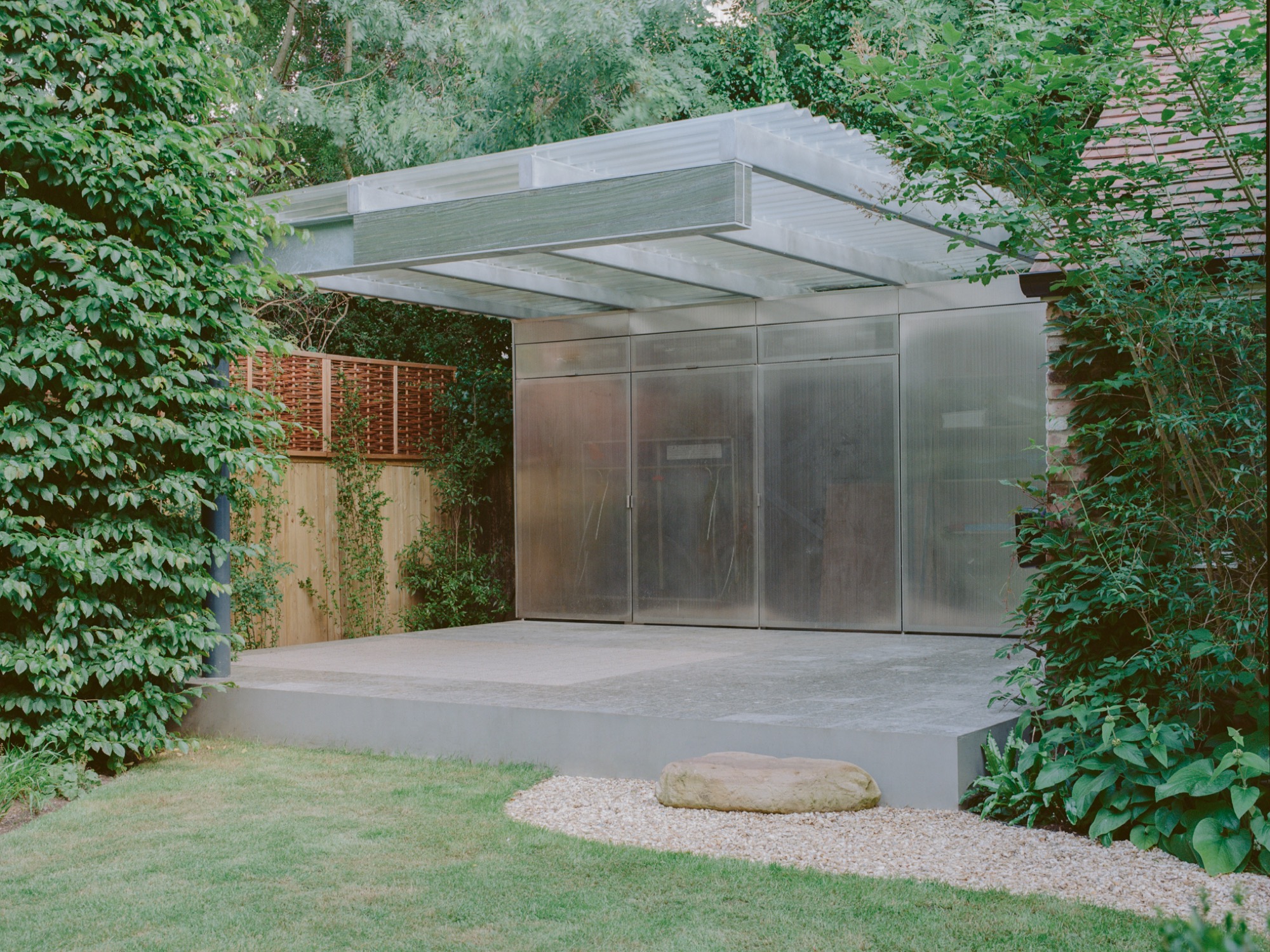
Set within a modest Victorian outbuilding in northwest London, the Exeter Road Pavilion by Neiheiser Argyros rethinks the relationship between storage, structure, and landscape through a single continuous architectural gesture. Conceived for an art collector and amateur DJ, the project transforms a small garden structure into a hybrid environment that accommodates archiving, display, leisure, and social gathering within a unified spatial system.


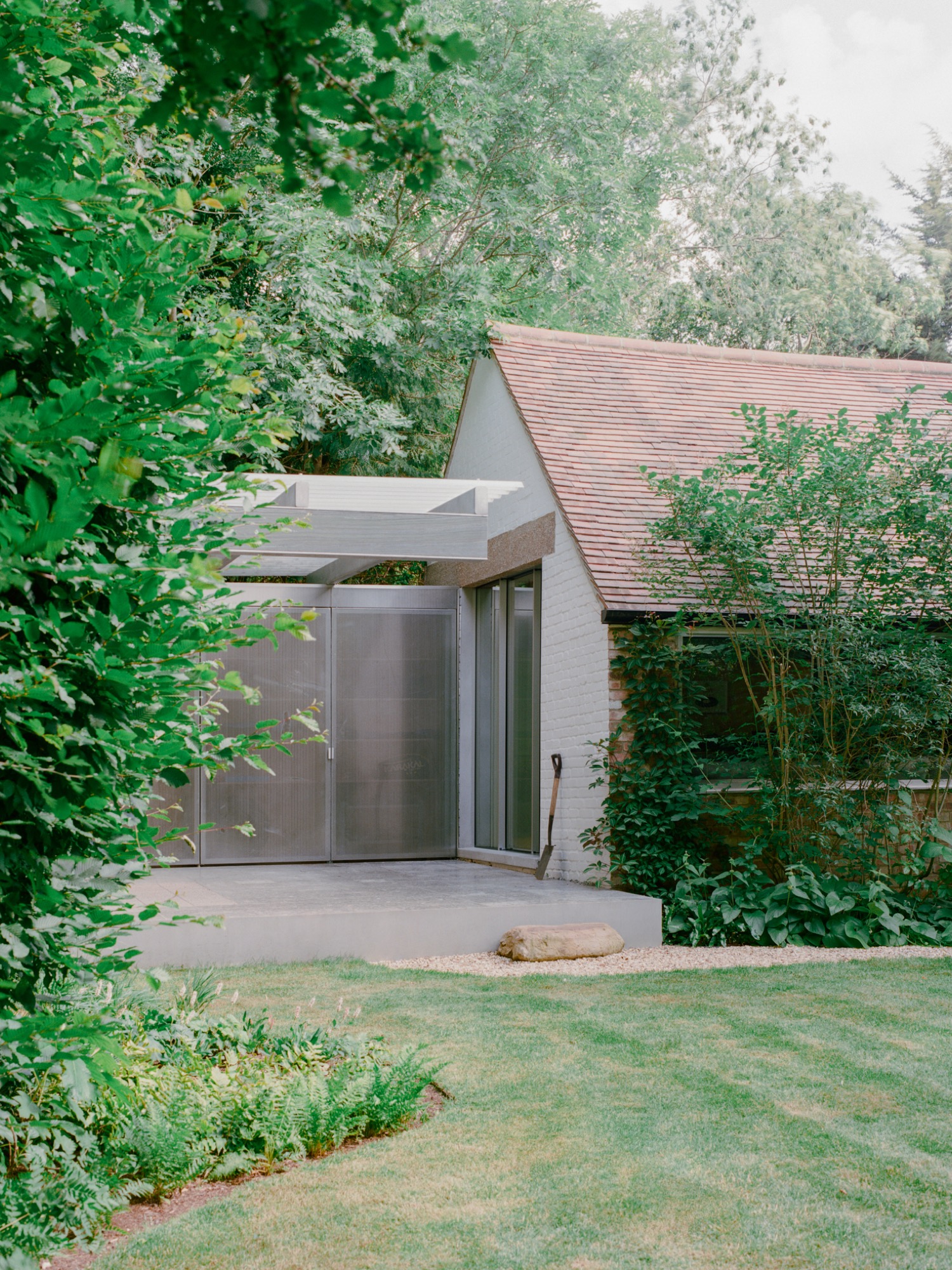
At the core of the intervention is a long cabinet that begins inside the restored outbuilding and extends outward into the garden. Rather than treating interior storage and exterior shelter as separate elements, the design merges them into one continuous object. This cabinet operates simultaneously as archive, display surface, and inhabitable framework, accommodating books, vinyl records, artworks, and domestic artifacts alongside a DJ booth and media equipment. As it reaches the garden, it absorbs more informal uses, including exercise equipment and a ping pong table, maintaining coherence across shifting functions.


A perforated stainless steel screen runs along the cabinet, producing a constantly changing visual condition. Depending on light and movement, it alternates between reflection and transparency, revealing and concealing the contents behind. This shifting surface allows the pavilion to oscillate between object and atmosphere, extending interior conditions outward while drawing the surrounding garden into the architectural experience.
The pavilion’s canopy emerges from the cabinet yet resists conventional structural logic. Inspired by the precarious compositions of Fischli and Weiss, the architects introduce a deliberate imbalance into the system. A column that would normally provide support is removed, creating a sense of structural uncertainty that is resolved through counterweight and tension.


This equilibrium is achieved through a carefully orchestrated assembly of materials. A precisely milled marble block is inserted into a galvanized steel beam, acting as a counterweight, while a tension rod anchors the structure to a concrete mass concealed below ground. The result is a canopy that appears to hover lightly, despite the visible complexity of forces at play.


Material layering reinforces this reading. Marble, steel, and polycarbonate are stacked in a clear and legible sequence, allowing the structure to express both weight and lightness. The cabinet, clad in reflective steel, further dissolves the boundary between architecture and landscape, mirroring vegetation and seasonal change.

Rather than functioning as a static garden structure, the pavilion operates as a dynamic interface between objects, users, and environment. Its surfaces register shifts in light, weather, and growth, while its spatial organization accommodates both solitary use and collective activity. The project transforms a simple outbuilding into an instrument that reveals relationships between storage and display, balance and instability, interior and exterior.


In doing so, Exeter Road Pavilion reframes the domestic annex not as a secondary space, but as an active architectural device where everyday activities are heightened through structure, material, and perception.
Project Credit
Architecture: Neiheiser Argyros / @neiheiser_argyros
Location: London, United Kingdom
Completion: Summer 2025
Area: 90 sqm
Photography: Lorenzo Zandri / @lorenzozandri