Now Reading: Life Behind the Walls transforms testimony on North Korea into an immersive spatial experience
- 01
Life Behind the Walls transforms testimony on North Korea into an immersive spatial experience

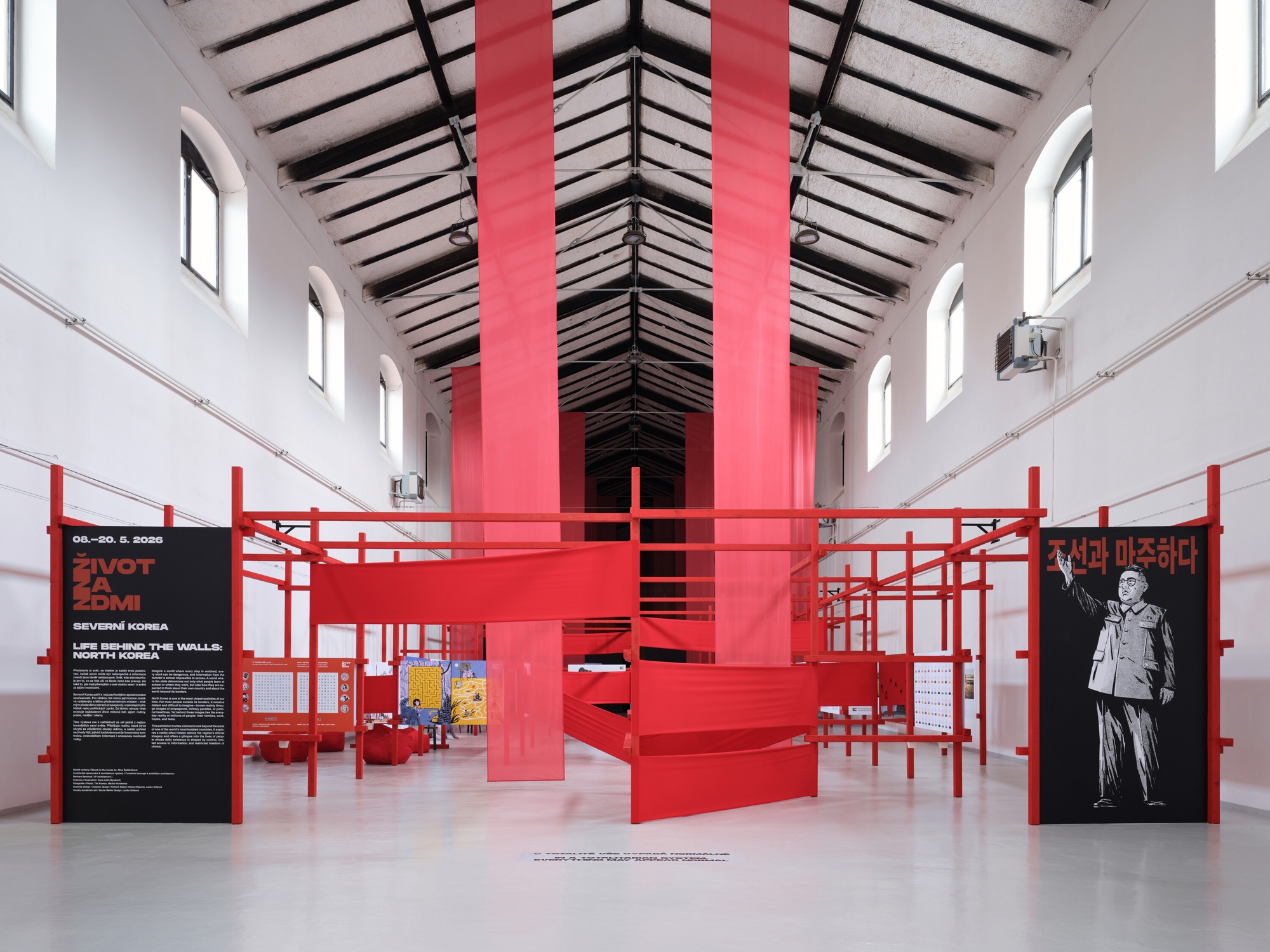
Life Behind the Walls transforms testimony on North Korea into an immersive spatial experience

Life Behind the Walls is an immersive spatial installation that examines North Korea, the mechanisms of totalitarian power and the fragile boundary between image and reality. Conceived through the long term work of Korean studies scholar and writer Nina Špitálníková, the project brings together architecture, testimony and education to create an exhibition environment where perception becomes a form of inquiry.

Špitálníková’s research and literary practice have focused extensively on North Korea. She is the author of four books on the subject, alongside her recent children’s book Tota lítá, written originally for her son Malcolm. The book explains the principles of totalitarianism in a language accessible to children, without softening the gravity of its subject. Her direct experience of living in North Korea gives the project an unusual proximity to a reality that remains largely closed to the outside world.


The exhibition was first conceived as a short accompanying programme for the launch of Tota lítá and Testimonies from Life in the DPRK 2. After visiting the site, however, the spatial potential of the setting became clear. Together with Nina Špitálníková, the project expanded into a larger exhibition and educational environment.
The principles behind Tota lítá became one of the exhibition’s key curatorial foundations. Children are rarely treated as central participants within exhibition formats. Life Behind the Walls consciously challenges that convention. It addresses children not as secondary visitors, but as fully fledged members of society who deserve the same intellectual and emotional attention as adults.
The exhibition was therefore conceived with children at its centre. It is accessible, playful and imaginative, while retaining the depth and seriousness required by its subject.


In North Korea, nothing is quite as it appears. The country presents itself to the outside world through carefully staged images of wide boulevards, smiling families and disciplined everyday life. This photogenic and meticulously composed aesthetic suggests an ideal state in operation, while concealing the realities of life under a totalitarian regime.
Because direct evidence of the regime’s crimes remains extremely limited, personal testimony becomes essential. The exhibition is grounded in the stories of defectors, in individual human experiences and in Špitálníková’s sustained engagement with the subject. Testimony becomes a way of entering a reality that official images are designed to suppress.
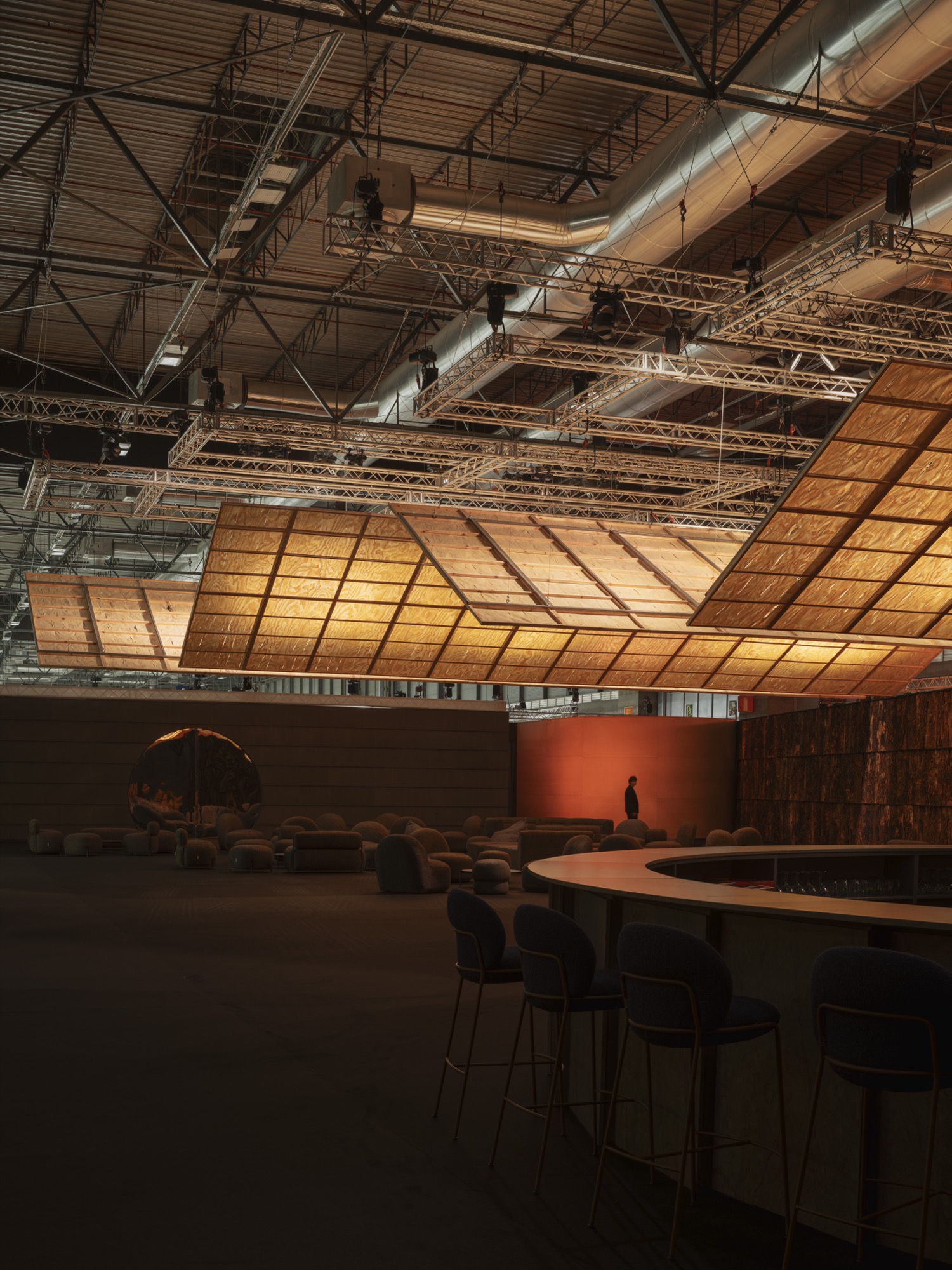
The exhibition architecture translates this tension into a spatial narrative. Visitors move from light into darkness, from visible image into hidden reality. Rather than offering a linear explanation, the installation unfolds as a gradual process of uncovering layers. Movement, perception and choice become tools for understanding.


The first part of the exhibition takes the form of a maze, developed as part of the Behind the Walls festival. It symbolically and physically opens hidden, inaccessible or overlooked layers of reality. Visitors, especially children, are invited to explore, discover and slowly reveal what lies beyond the surface.

The structure is made from a simple modular system of timber beams and stretched textiles, forming light and semi transparent walls. Children can perceive traces of what is happening behind the wall, but they navigate the installation primarily through their own movement and experience. The maze is not only a spatial game, but an environment for sensory perception, curiosity and imagination.

Throughout the maze, interactive panels create moments of play, pause and reflection. The tasks, games and visual elements encourage creativity, logic, cooperation and the ability to ask questions. Children are not directed along a single correct path. They choose their own route, rhythm and level of engagement. The games and graphics draw directly from Tota lítá, allowing the exhibition to extend the world of the book into space.
Photographs by Michal Huniewicz are integrated into this part of the exhibition, showing North Korea as it presents itself to the outside world. These images form the first layer of the installation: ordered, aesthetic and apparently legible.

The transition into the second part of the exhibition is marked by a passage between two walls displaying photographs of the real border between North Korea and China by Tim Franco. At this moment, visitors enter behind the wall. The atmosphere changes. The space darkens, slows down and loses its playful character.
In this darker part of the exhibition, visitors encounter the reality behind the image. They are confronted with the stories of North Koreans who did not survive the regime, as well as those who managed to escape. The abstract idea of totalitarianism is transformed into concrete human destinies.


Life Behind the Walls uses exhibition architecture as a medium for emotional mediation. It begins with an open, playful and semi transparent environment, then leads visitors into silence, darkness and a direct encounter with testimony. The project demonstrates that architecture does not merely display content. It can create the conditions for understanding through movement, light, uncertainty, fear, empathy and the moment of decision.
The final question remains simple and unsettling.
Will you bow, or look away?

Project Credit
Studio: B² Architecture / @b2architecture.eu
Location: Hall 13, Holešovice Market, Bubenské nábřeží 306, Prague, Czech Republic
Completion year: 2026
Photo: Radek Šrettr Úlehla