Now Reading: Michael Wolf and the Life of Chairs
-
01
Michael Wolf and the Life of Chairs


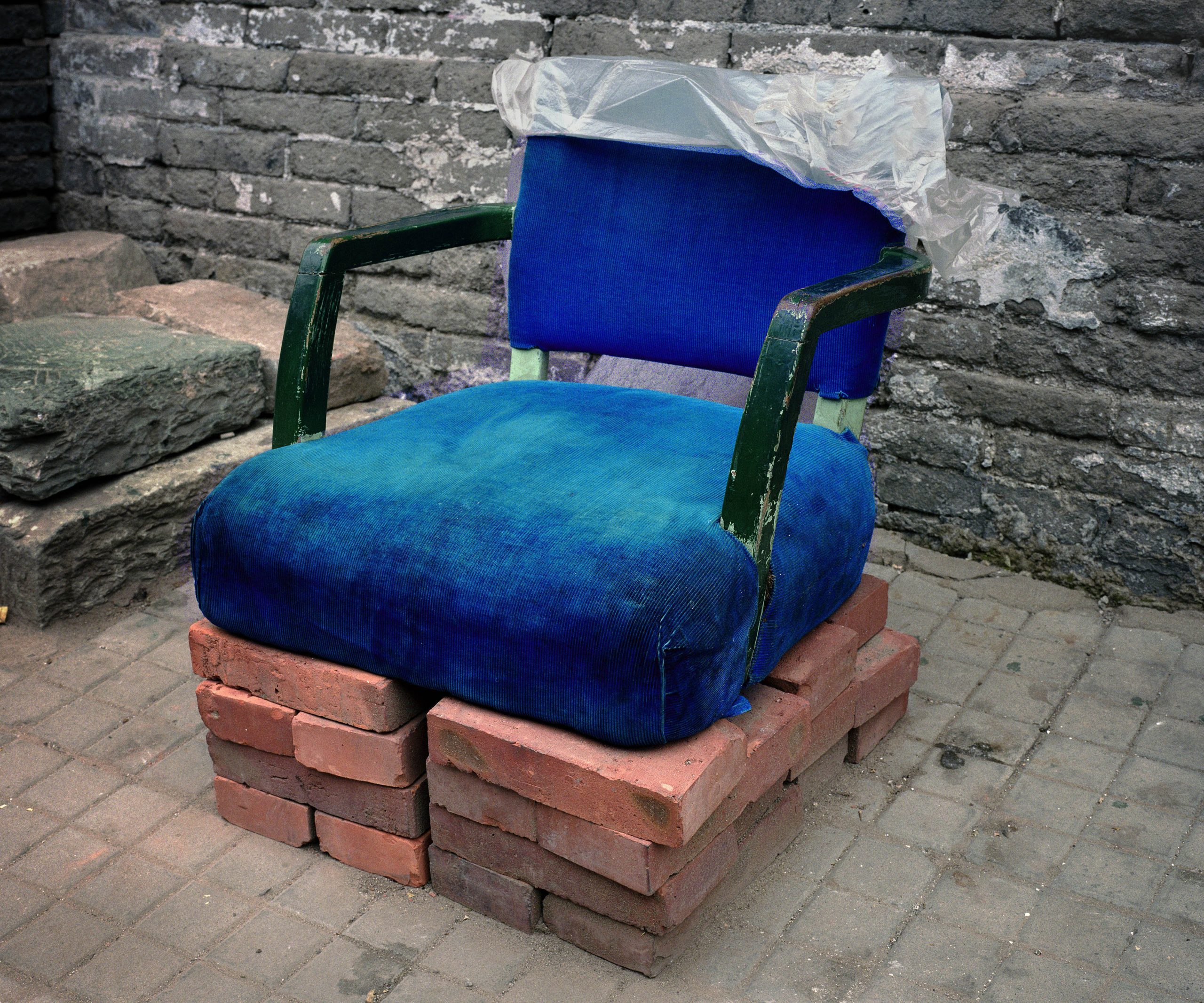
In Michael Wolf’s “Bastard Chairs”, improvised seats become a study of design in use. Their passage from street furniture to photographs and museum objects raises questions about repair, authorship and the distance between those who use an object and those who find meaning in it.
In the collection of M+ in Hong Kong, a small chair made of wood, steel and rubber carries the accession number 2017.405. The museum dates it to the 1990s–2000s and records it as a gift from Michael Wolf in 2017. Its maker is unknown. Measuring just over 26 centimetres in height, it belongs to the collection of objects the photographer assembled for his Bastard Chairs project.
The record establishes materials, dimensions, an approximate period of manufacture and the person who brought the chair into the museum. It leaves much else unresolved. We do not learn who first assembled it, who repaired it or why it was eventually relinquished. The object survives with a documented institutional identity and an incomplete personal history.
That imbalance provides a useful starting point for looking at Wolf’s chairs. A makeshift joint suggests an intervention; mismatched components indicate that parts have been brought together from different sources. Yet a repair does not disclose whether it was prompted by necessity, convenience, attachment or the availability of a suitable piece of material.
Wolf’s attention gave these objects an audience beyond their immediate surroundings. It also introduced a change of status: a chair made or modified for someone to sit on becomes an image to contemplate, a thing to collect and, eventually, an object to preserve. Following that movement reveals as much about photography and cultural value as it does about furniture.
The collector’s eye
Wolf was born in Munich in 1954 and grew up in the United States, Europe and Canada. He studied at the University of California, Berkeley, and at the Folkwang School in Essen under Otto Steinert. In 1994, he moved to Hong Kong, where he worked for Stern. During the early 2000s, independent projects increasingly became the centre of his practice.
His move towards personal work gave sustained attention a different role. A subject could be revisited, accumulated and reconsidered without needing to resolve itself into a single assignment. In an interview with Francesca Esposito for Klat in 2013, Wolf described how noticing a detail led to recognising another, until individual pictures developed into a series. He also recalled his childhood fascination with flea markets and spoke of collecting as an enduring habit.
This account locates the work in curiosity before classification. The chairs did not need to illustrate a theory established in advance. Their differences could generate the terms of the investigation. Repetition gave an initially minor attraction enough substance to become a project.
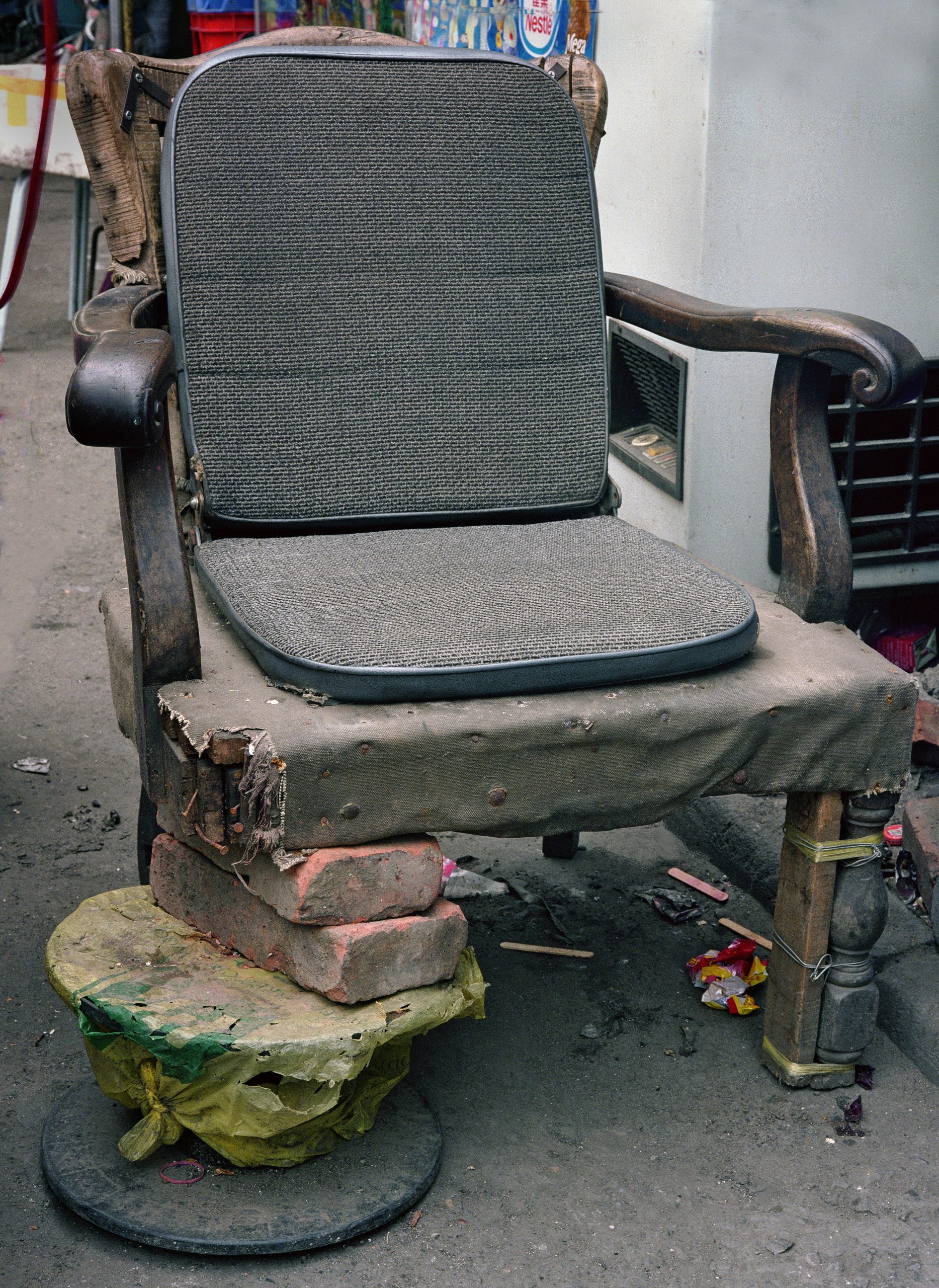
Works That Work describes Bastard Chairs as photographs of improvised seats found mainly in mainland China and Hong Kong, explaining the title as an affectionate reference to their uncertain origins. The name acknowledges objects assembled outside a recognisable design lineage, whose components and alterations resist easy attribution.
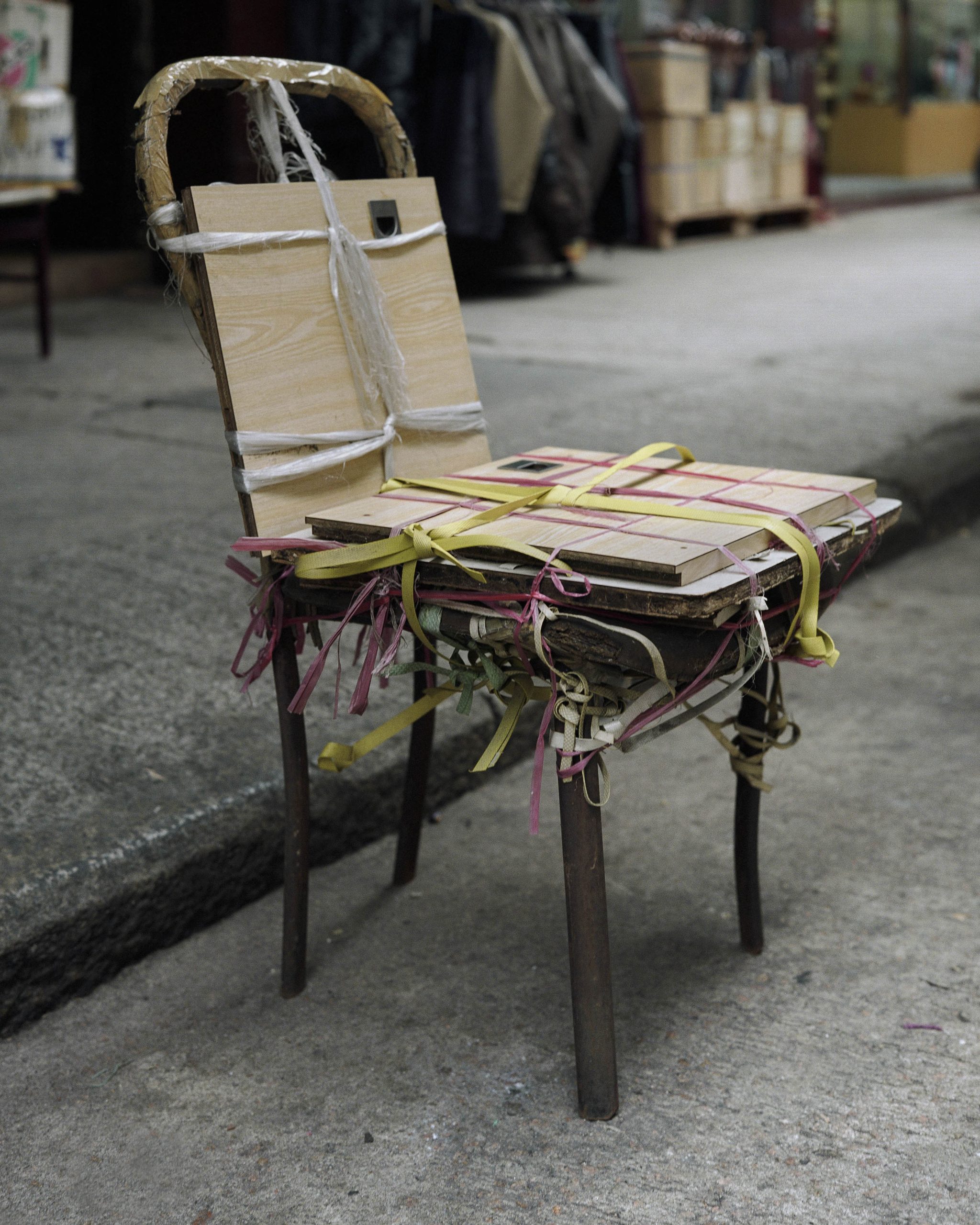
Credit: Photograph © Michael Wolf. Source: Works That Work, No. 1 (Winter 2013).
Wolf’s interest in seating appears across several related bodies of work and publications. His website lists Bastard Chairs and Informal Seating Arrangements separately. The book Sitting in China, published by Steidl in 2002, provides an early record of his engagement with chairs and stools. These titles belong to a continuing field of inquiry, but should not be treated as interchangeable labels for one fixed series.
Seating offered Wolf a subject ordinary enough to pass unnoticed, but specific enough to register decisions about height, support, materials and location. Every chair establishes a point of contact between a body and its surroundings. Recognising the decisions embedded in that contact gave him a way to approach a much larger subject through a modest object.
Design in use
A chair in a design catalogue is generally presented as a resolved proposition. Its parts belong together, its finish is coherent and its identity can be attached to a designer or manufacturer. The object appears at the moment when its intended form is clearest.
Repair introduces another kind of authorship. Someone using the chair encounters a weakness, a missing component or a changed requirement, and responds. The resulting object may retain most of its original construction or only a fragment of it. In a seat assembled from salvaged materials, there may never have been an original commercial product at all.
Describing Wolf’s chairs as the aftermath of failed design is therefore too simple. Damage can result from prolonged use rather than a defective idea. Modification may answer a need that the original maker could not anticipate. An improvised seat can also begin as a construction in its own right. What these objects share is a visible negotiation between available materials and an immediate purpose.
Wolf expressed his interest succinctly in the Klat interview: “it is designing, but without design.” The apparent contradiction distinguishes professional design culture from decisions made through use. A person can judge a support, join two components or alter a surface without identifying the action as a design practice.
There is practical knowledge here, although a photograph cannot test its effectiveness. A fastening may look ingenious without being durable. A seat may remain in service while being uncomfortable. The attraction of an improvised structure should not tempt the viewer to certify its performance.
Its construction nevertheless offers something that a finished product often conceals: evidence of adjustment. Visible additions allow the eye to distinguish materials and consider how the parts have been connected. The chair can be read as a sequence of interventions, even when their dates and makers are unknown.
Form, in this account, continues to develop through contact with people. Wear, replacement and adaptation become part of the object’s history. Its appearance records an ongoing relationship, with no guarantee that the latest alteration will be the last.
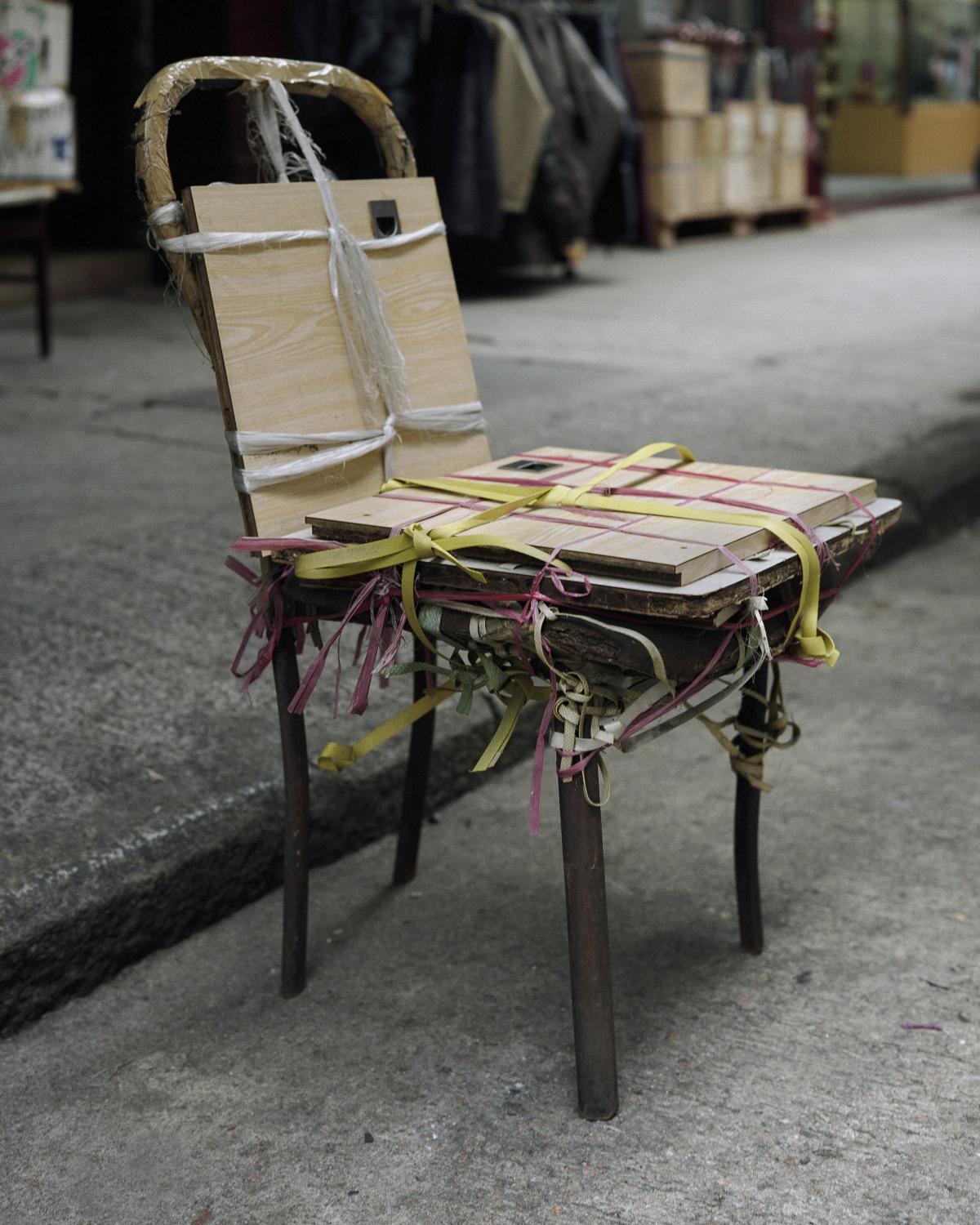
Credit: Photograph © Michael Wolf. Source: Works That Work, No. 1 (Winter 2013).
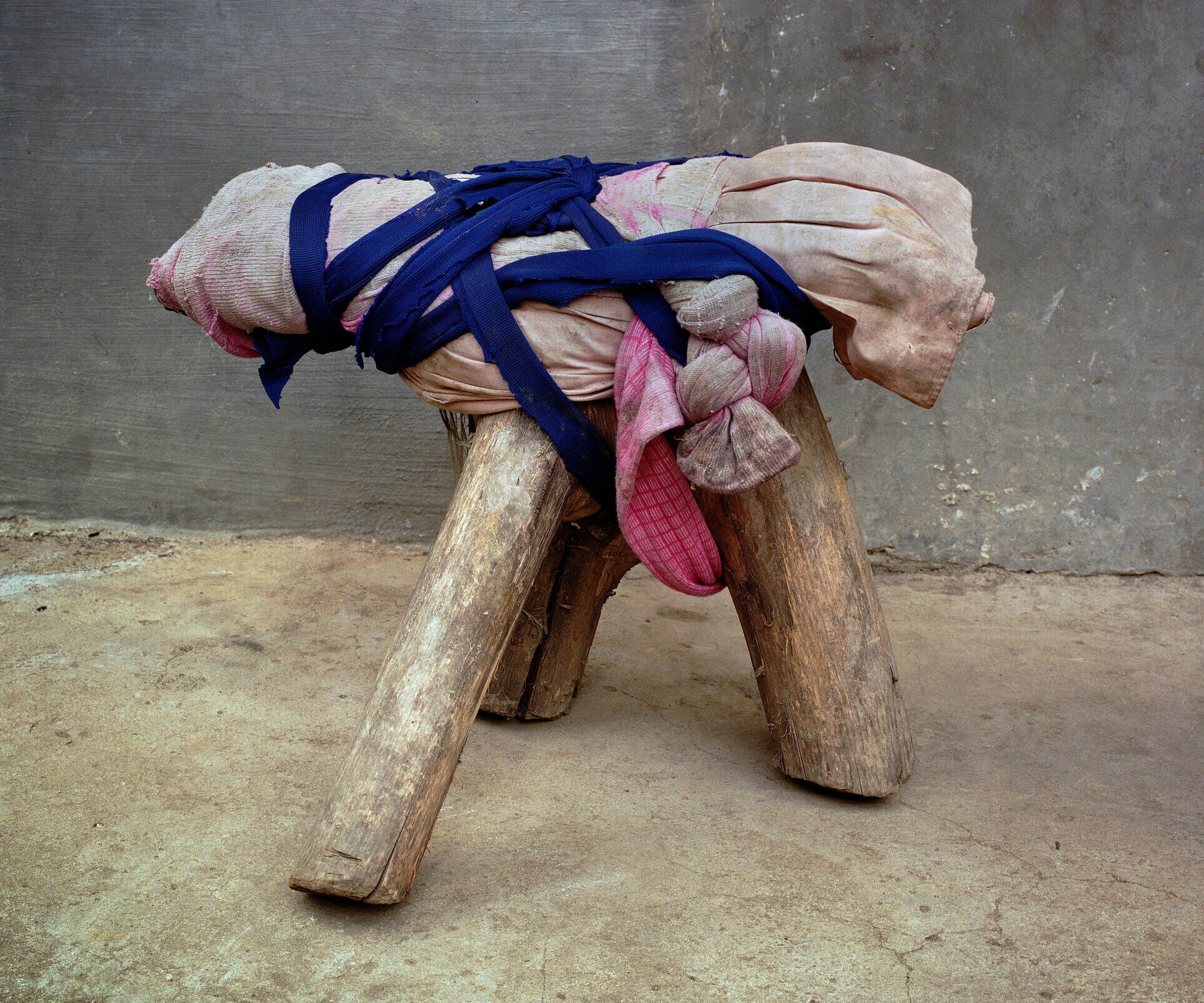
Credit: Photograph © Michael Wolf. Source: Works That Work, No. 1 (Winter 2013).
For designers, this extends the discussion beyond the completed product. What happens when a component breaks, what can be replaced and what materials can be joined to it are also design questions. Wolf’s chairs make those later stages difficult to ignore.
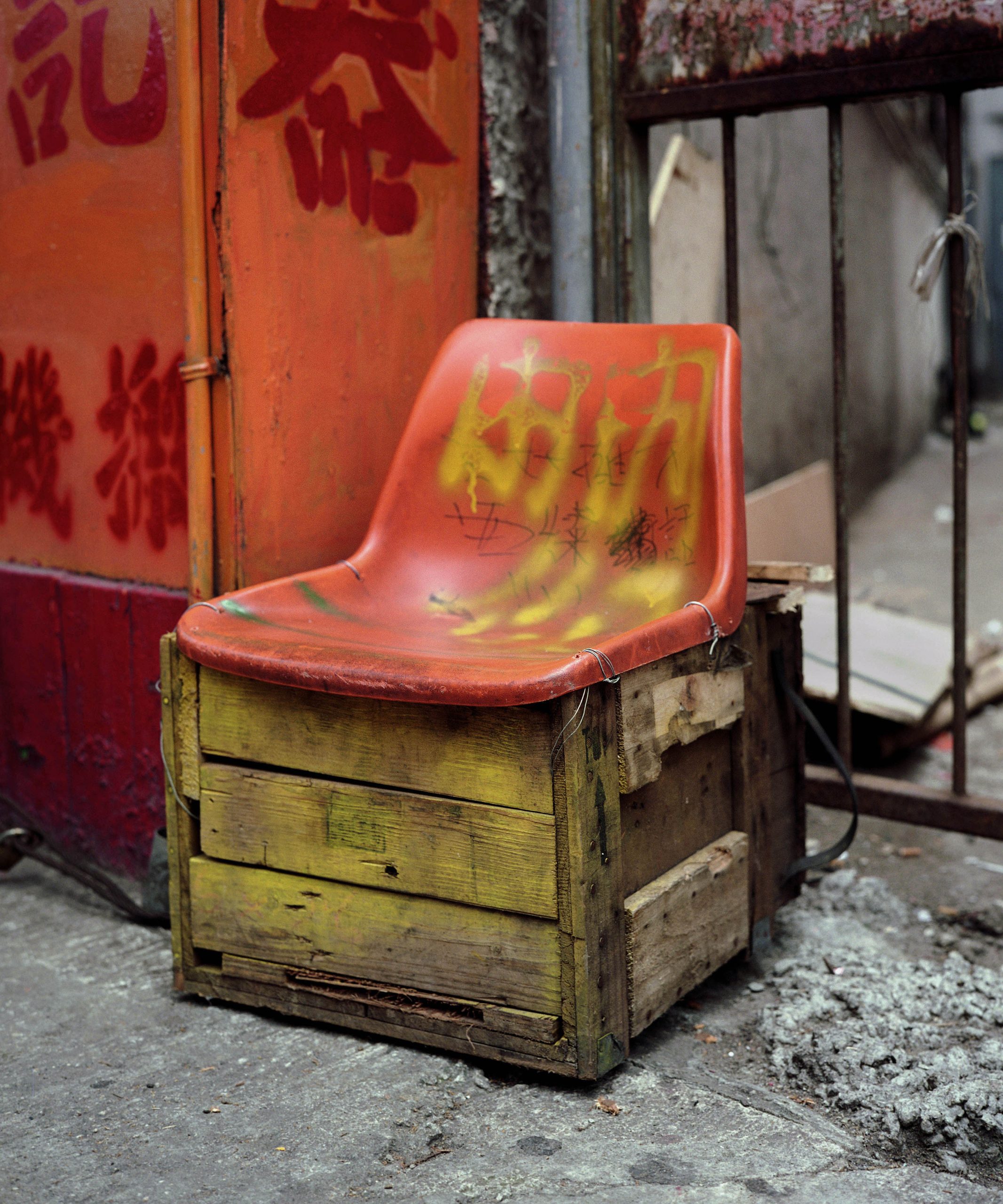
Credit: Photograph © Michael Wolf. Source: Works That Work, No. 1 (Winter 2013).
What the photograph makes visible
The photographic project introduces a second sequence of decisions. Before the viewer encounters a chair, Wolf has selected it, framed it and placed its image in relation to others. The object’s practical existence becomes material for a visual argument.
A single photograph can prompt curiosity about an unusual construction. A series encourages comparison. Attention moves between the shared function of sitting and the different means by which that function is achieved. Similarities establish a category; variations preserve the individuality of its members.

Credit: Installation view; photographer not identified by Flowers Gallery. Source: Flowers Gallery.
The viewer brings expectations about how a chair’s parts should correspond and which materials belong together. An improvised object interrupts those expectations. Its apparent awkwardness may reflect the limits of the viewer’s categories as much as the decisions of its maker.
Wolf’s work also invites the reading of an object as a portrait. Furniture carries traces of contact with bodies, and alterations imply someone’s involvement. His website’s introduction describes the chairs as objects in which the presence of their owners can be felt despite their absence from the photographs.
That is a persuasive account of their effect, provided presence is distinguished from knowledge. We can recognise that someone has acted upon a chair without knowing who that person was. A surface may be worn, but the duration and circumstances of its use remain uncertain. To describe every repair as thrift or every improvised seat as evidence of poverty would close down the range of circumstances the photographs leave open.
A more revealing tension appears in the presentation of Sitting in China on Wolf’s website. The accompanying text recounts occasions when owners removed their chairs from view after they had been singled out for photography. What attracted the photographer could embarrass the person to whom it belonged.
The incident interrupts an easy celebration of resourcefulness. Appreciation is not necessarily shared. The owner may see an ordinary possession suddenly subjected to scrutiny, while the photographer sees a compelling object. Neither response is adequately explained by declaring the chair beautiful.
Wolf’s interest could preserve evidence that would otherwise disappear while also changing the situation around the object. The camera made something noteworthy, and being noticed could be unwelcome. That friction gives the project a human complexity which a celebration of ingenious furniture alone would miss.
Credit: Photograph © Michael Wolf. Source: Works That Work, No. 1 (Winter 2013).
The city at different distances
Hong Kong gave Wolf a setting in which the relationship between large structures and small adjustments could be examined over many years. His photographs repeatedly move between the scale of buildings and the scale of things handled, arranged or left by individuals.
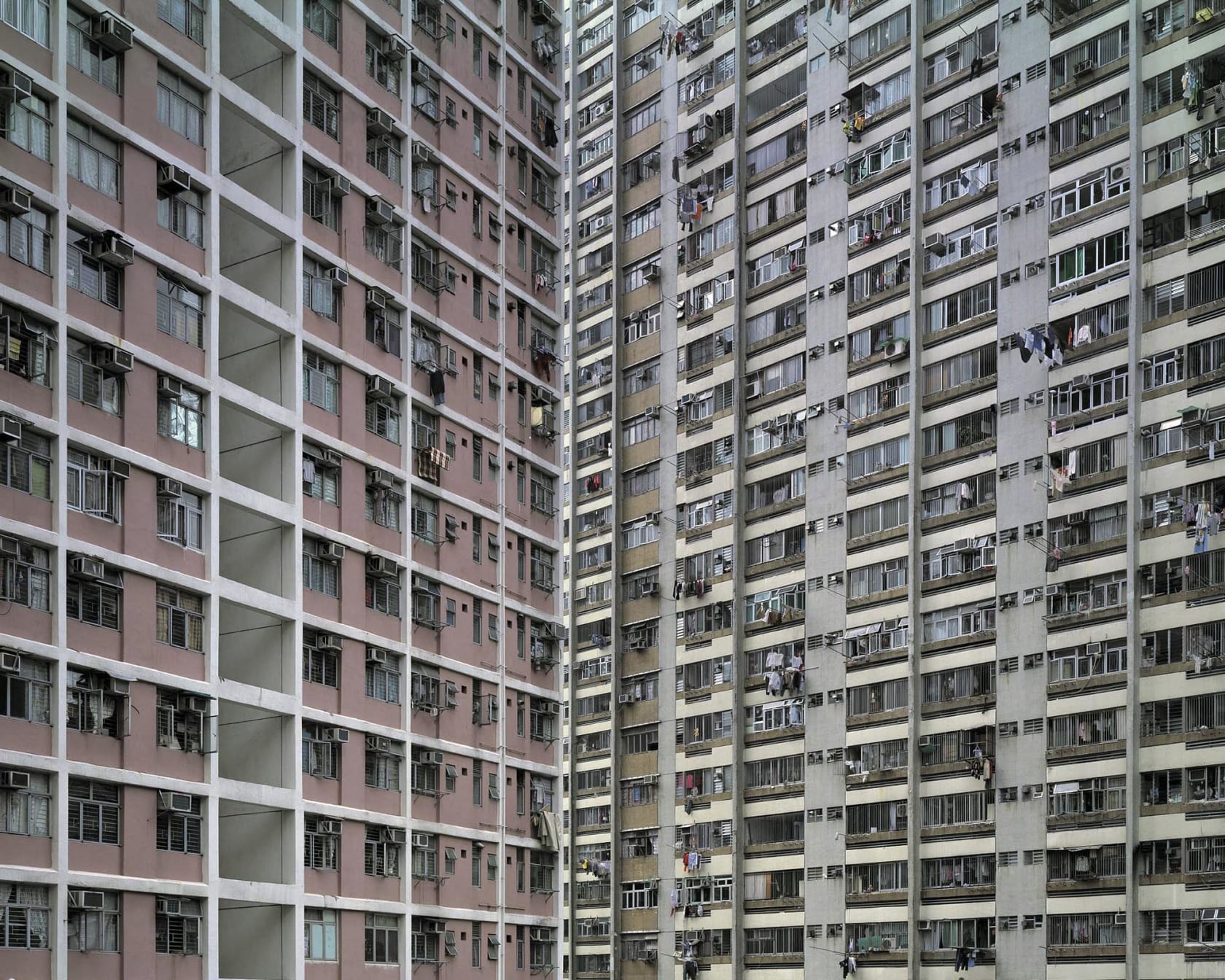
In Architecture of Density, the exclusion of sky and horizon turns building facades into apparently continuous fields. The framing makes it difficult to establish their limits. In his essay for M+, critic Blues Wong distinguishes this architectural scale from Wolf’s attention to street life, locating both within the photographer’s sustained engagement with the city.
Credit: Photograph © Michael Wolf. Source: Flowers Gallery.
Reading the chairs alongside the architectural photographs makes that shift in scale tangible. A housing block presents a structure within which many lives must be accommodated. A modified seat presents a local decision about how one small part of an environment can be used. The relationship is suggestive without requiring every chair to stand for the whole city.
Wolf’s photographs of back alleys extend this inquiry into arrangements of everyday things. In the critical introduction on his website, such spaces are discussed as places where residents adapt their surroundings to needs that the available private space cannot fully accommodate.

Credit: Installation view; photographer not identified by Flowers Gallery. Source: Flowers Gallery.
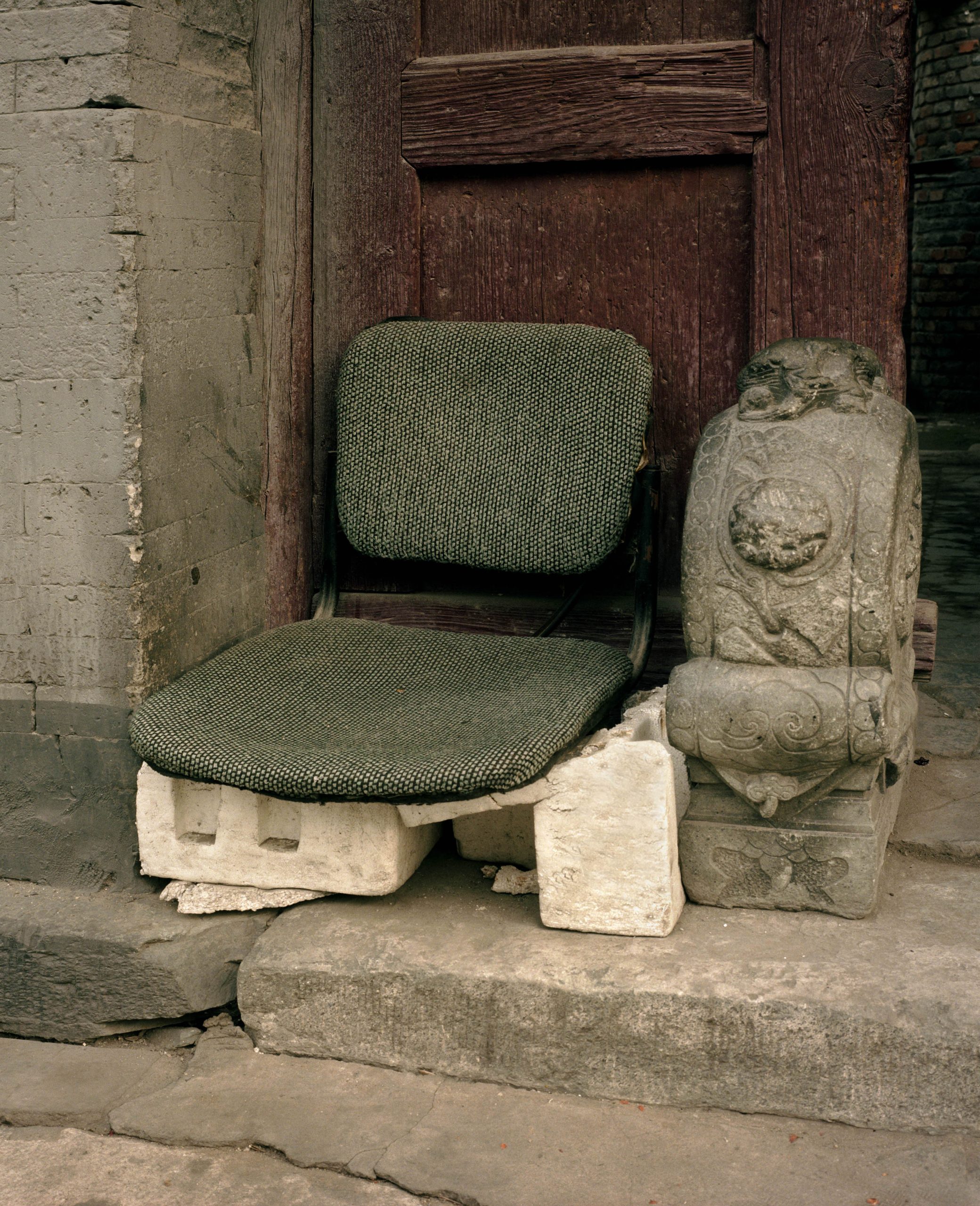
A chair matters within this setting because sitting temporarily establishes a position. It allows someone to remain in a place, whether to work, wait, rest or converse. Its significance may lie as much in where it is placed as in the way it is made. Photography can register that relationship, although the particular activity may remain unresolved.
Credit: Photograph © Michael Wolf. Source: Works That Work, No. 1 (Winter 2013).
Hong Kong’s spatial conditions should not become a universal explanation for Bastard Chairs. Wolf also photographed seats in mainland China. The larger project crosses locations whose working habits, available spaces and material circumstances cannot be reduced to one account of urban density.
What connects his chairs and buildings is the decision to return to a limited subject and examine its variations. A frame full of windows encourages us to look for differences within repetition. A sequence of chairs makes a familiar object newly open to comparison. Both preserve information about existing environments through the photographer’s selection of what deserves attention.
From use to collection
The change of setting was already explicit in Informal Arrangements, held at Flowers Gallery in London from 27 November 2015 to 9 January 2016. Collected chairs appeared alongside photographic typologies and architectural images. Raised on plinths, the chairs could now be compared as exhibited objects.

Credit: Installation view © Michael Wolf, courtesy of Flowers Gallery. Source: Flowers Gallery.
At M+, the chair with accession number 2017.405 is examined through the categories of a collection: material, date, dimensions, provenance and maker. The listing attributes its manufacture to an unknown maker and records Wolf as the donor. That separation distinguishes making an object from recognising its significance.
The distinction can become less clear when photographs circulate. An image is reproduced under the photographer’s name, while the person responsible for the chair’s construction remains unrecorded. When the subject is discussed as design, that absence matters: some of the ingenuity being admired belongs to someone whose identity the archive cannot supply.
Wolf’s role remains substantial. Through selection and sustained attention, he brought these objects into a conversation from which they might otherwise have been absent. The museum’s acquisition preserves one for future examination. Recognition by a photographer or institution, however, should leave room for the creative activity that preceded it.
The conditions of looking have also changed. A chair encountered in daily life is understood partly through what it enables. Within a collection, questions of construction and historical significance move forward. Its materials can be studied and conserved, while the routines that once surrounded it are harder to recover.

Credit: Installation view; photographer not identified by Flowers Gallery. Source: Flowers Gallery.
This is the difficulty of preserving ordinary things. Their survival gives later viewers material evidence, but an inventory cannot reconstruct all that mattered to their users. Wolf’s project makes that gap visible alongside the resourcefulness of repair. The camera draws us closer to the object without granting complete access to the person behind it.
For design, the chairs extend an object’s history beyond its initial manufacture to include the interventions of users. For photography, they show how much can be drawn from a restricted subject when attention is sustained. The small chair at M+ brings both concerns into focus: its materials have been identified, its dimensions measured and its arrival recorded. Wolf’s attention helped secure its future. The person who gave those materials the form of a seat remains unnamed.
Sources and further reading
1. M+, “Found chair collected for Michael Wolf’s ‘Bastard Chair’ photography series”, collection record 2017.405. 2. Michael Wolf Photography, biography. 3. Francesca Esposito, “Michael Wolf. Life in Cities”, Klat, 22 May 2013. 4. “Bastard Chairs”, Works That Work, No. 1, Winter 2013. 5. Michael Wolf, Bastard Chairs, official project page. 6. Michael Wolf, Informal Seating Arrangements, official project page. 7. Michael Wolf, Sitting in China, Steidl, 2002. 8. Michael Wolf Photography, critical introduction. 9. Blues Wong, “From High-Rises to the Street: A Look Back at Michael Wolf’s Photographs”, M+, 11 October 2019. 10. Flowers Gallery, Informal Arrangements, London, 27 November 2015–9 January 2016.