Now Reading: HID Landscape Architecture revives Xiaoxita Forest Park as a light touch urban forest in Yichang
- 01
HID Landscape Architecture revives Xiaoxita Forest Park as a light touch urban forest in Yichang

HID Landscape Architecture revives Xiaoxita Forest Park as a light touch urban forest in Yichang

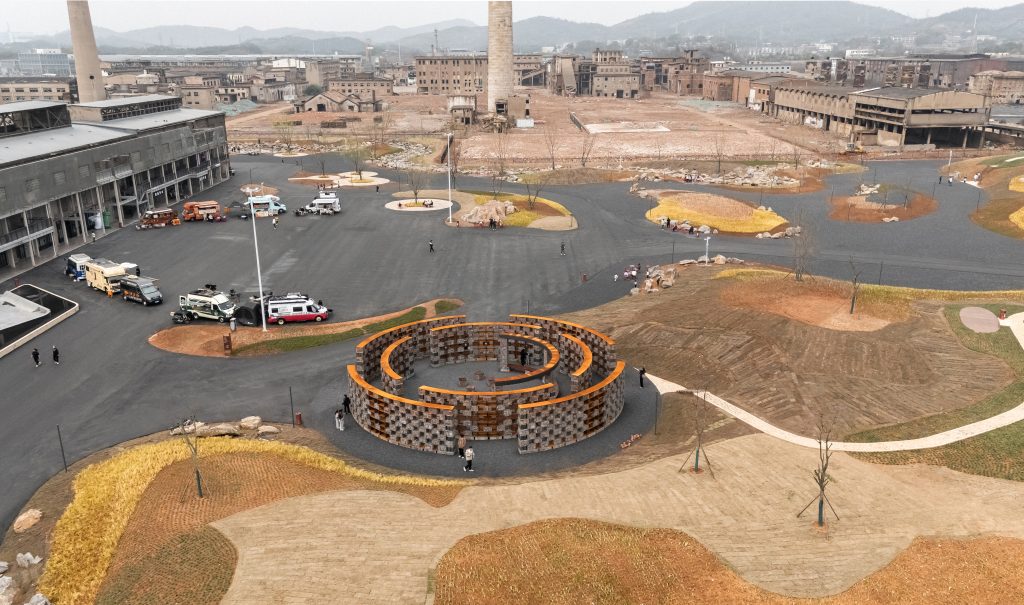
In downtown Yiling, Yichang, Xiaoxita Forest Park occupies 89 hectares along the Huangbai River. Long valued as one of the city’s major green lungs, the forest had gradually become burdened by disjointed circulation, ageing facilities and fragmented public spaces. HID Landscape Architecture approached the site not as a blank canvas, but as an existing ecological structure whose value lay in its maturity, density and continuity.
The renovation is guided by a simple principle: to touch the earth lightly. Rather than imposing a new formal language on the park, the design works through careful insertion, selective removal and ecological repair. Existing clearings are used for paths and gathering areas, while all native trees on site have been preserved. The result is a landscape that feels renewed without appearing overdesigned, allowing the forest to remain the primary spatial experience.

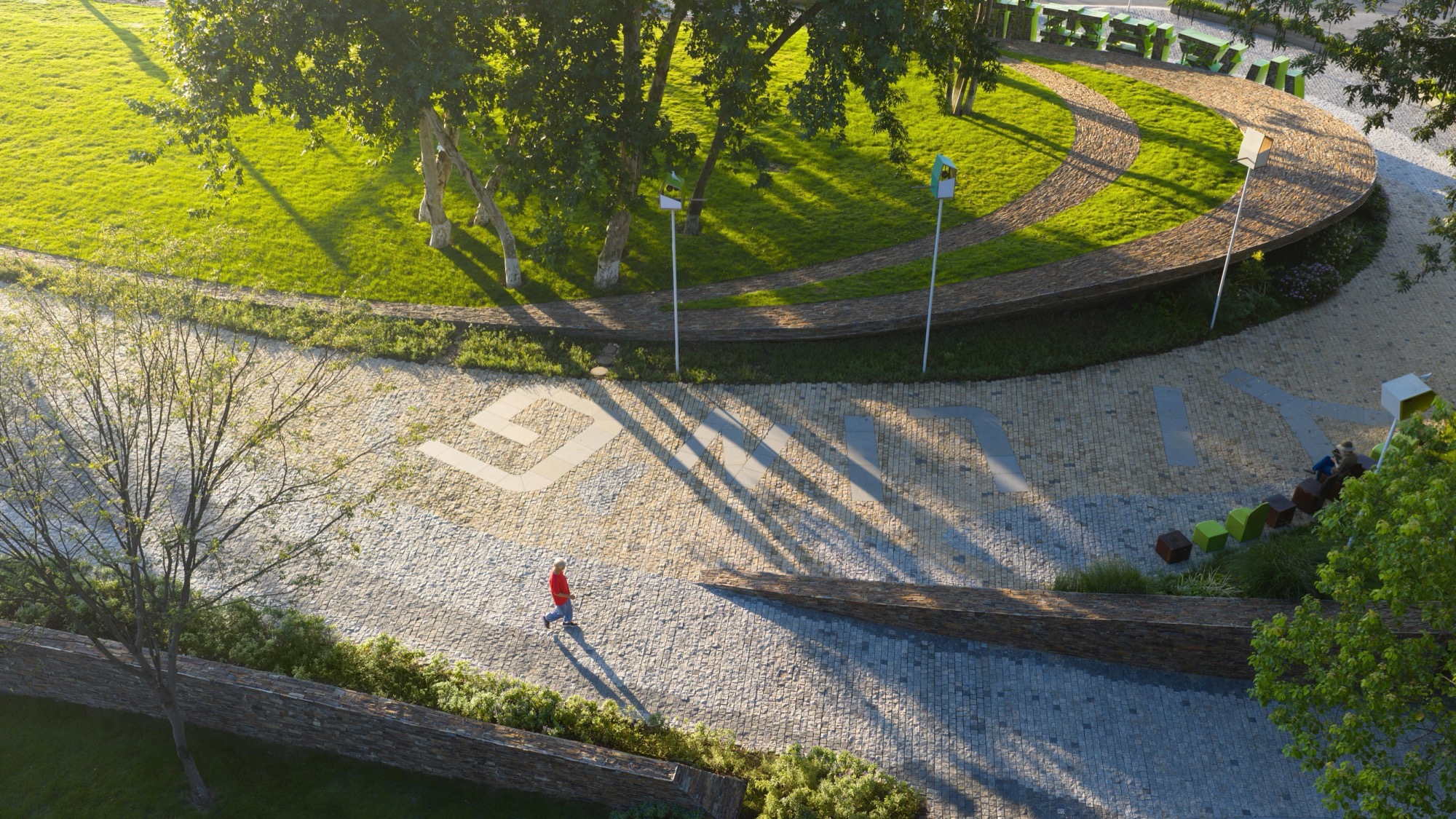
Xiaoxita Forest Park is organised as a layered sequence of riverfront promenades, forest clearings and hillside platforms. Movement through the park is now clearer and more generous, yet the new routes remain closely tied to the terrain. Permeable paving made from locally quarried stone and grass inlaid slabs allows rainwater to infiltrate naturally, reducing surface runoff while retaining the tactile character of the ground.
The project’s restraint is most visible in the way it treats existing ecological conditions. Instead of clearing vegetation for large recreational zones, HID Landscape Architecture threads activity into available spaces. Native plant coverage now exceeds 95 per cent, reinforcing the park’s biodiversity while creating a softer interface between public life and the forest floor.

One of the most significant moves in the project was the removal of obsolete infrastructure. A derelict pump house and underused parking areas were taken out through a process of stakeholder coordination, returning more than 1,200 square metres of land to permeable grassland. This act reconnects the forest visually with the city and creates a new habitat corridor within the park.
The transformation is modest in physical scale but important in civic meaning. It shows how urban regeneration can begin not with the addition of new objects, but with the release of land back to ecological function. In Xiaoxita Forest Park, the repair of damaged ground becomes a form of public architecture.


Among the park’s key interventions is the Mid Hill Rest Stop, a light structure raised on pinpoint pillars to avoid soil compaction and protect tree roots. From this elevated position, visitors are offered a bird’s eye view over the canyon landscape, while the structure itself remains visually recessive within the forest.
Small details extend the project’s ecological logic. Lighting fixtures are designed to double as bird house habitats for local species, while crushed local stone is used for paving and low walls. These choices give the park a strong regional character without relying on symbolic gestures. Materials, construction and habitat making are brought into the same design system.


Since its reopening, Xiaoxita Forest Park has become a daily destination for more than 2,000 visitors. Its redesigned spaces support walking, resting, social gathering and environmental learning, while avoiding the visual clutter often associated with urban park upgrades. Educational signs are embedded into native stone walls, allowing the park to function as an open air classroom without interrupting the scenery.


The project demonstrates how public use and ecological protection can be made mutually reinforcing. By prioritising the health of the forest before the image of the park, HID Landscape Architecture has created a resilient urban landscape that supports biodiversity, community wellbeing and environmental awareness.
Xiaoxita Forest Park offers a replicable model for sensitive landscape regeneration in fast changing cities. Its value lies not in spectacle, but in precision: the careful preservation of trees, the return of impermeable ground to vegetation, the light handling of structures and the belief that a public park can nurture natural systems rather than simply occupy them.

Project Credit
Project name: Xiaoxita Forest Park
Location: Yichang, Hubei Province, China
Landscape design: HID Landscape Architecture
Design area: 220,000 square metres
Completion: July 2025
Photography: IAM
More Photos