
Now Reading: Voorlinden revisits the art icon for its tenth anniversary
- 01
Voorlinden revisits the art icon for its tenth anniversary


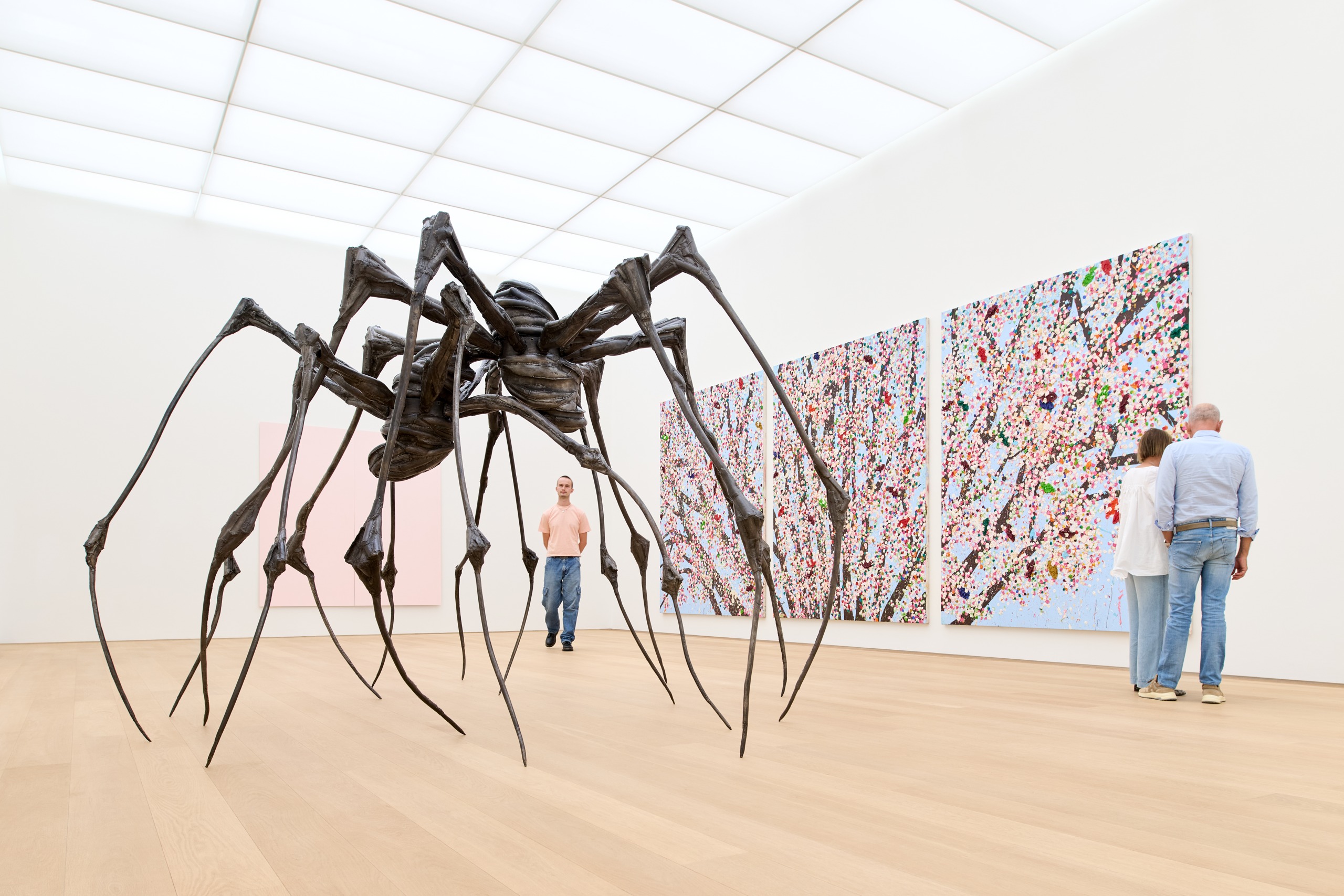
At Museum Voorlinden, Celebrating the Icons of Art brings familiar works into new company, asking how reputation, institutional memory and the act of looking shape an artwork’s afterlife.
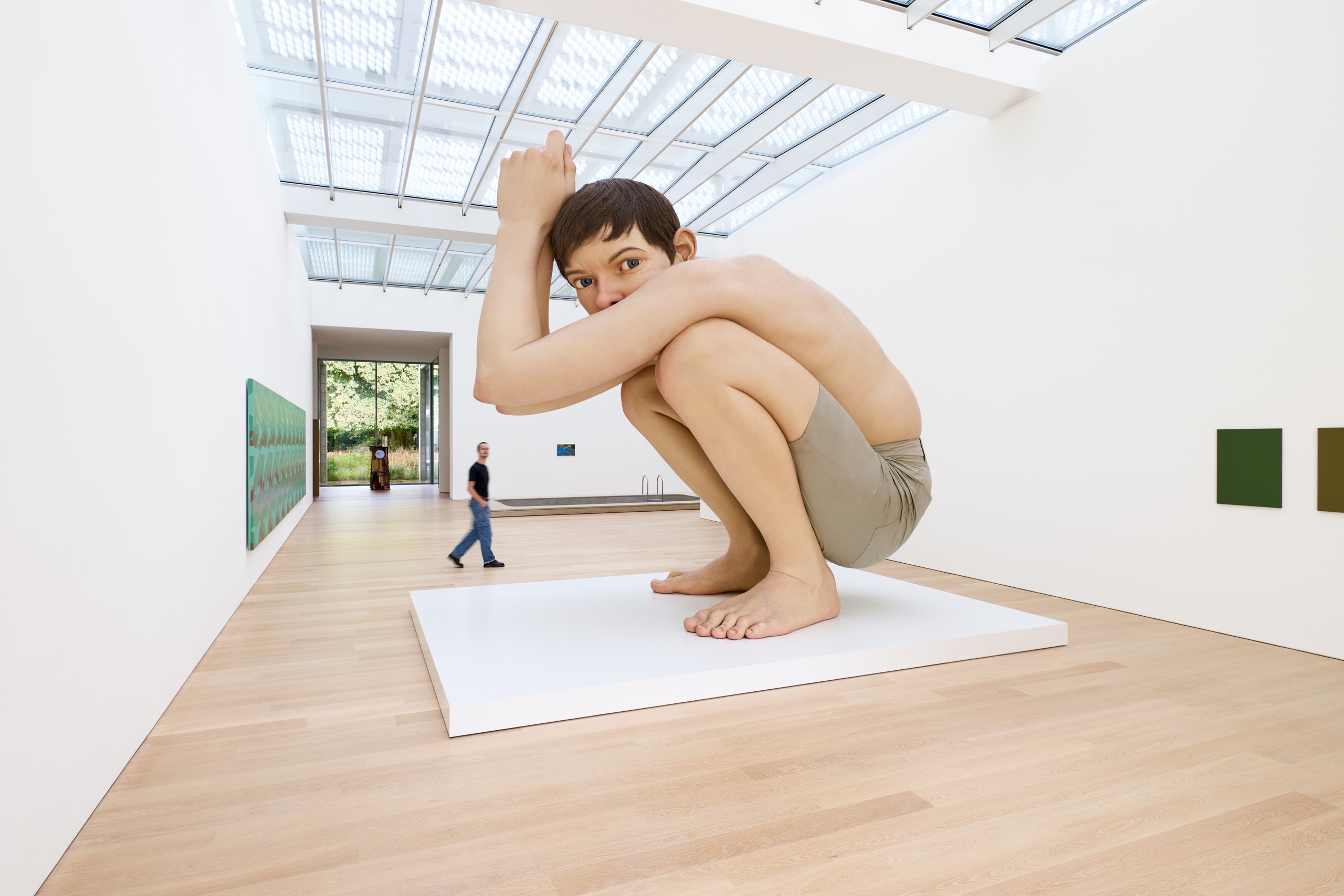
Ron Mueck’s Boy (1999) is difficult to overlook. The crouching figure combines monumental scale with a withdrawn posture. Its hyperreal surface invites scrutiny, yet its altered proportions make the body seem at once recognisable and strange. The contradiction is already apparent in the exhibition’s installation photographs: a figure large enough to dominate its surroundings folds inward, as though seeking protection from them.
At Museum Voorlinden, Boy is one of the works through which Celebrating the Icons of Art makes its case. The exhibition marks the museum’s tenth anniversary, bringing contemporary works from its collection into contact with twentieth-century masterpieces on loan from partner institutions. On view from 12 September 2026 to 7 March 2027, it extends across a museum reorganised for the occasion. The anniversary gives the project its immediate purpose. Its more consequential question concerns the word in its title: what makes an artwork an icon, and who gets to decide?
Voorlinden’s answer is staged through juxtaposition. Familiar works acquire different neighbours; connections emerge through colour, scale, subject and material. The museum presents these encounters as exchanges between past and present. That premise invites scrutiny. A pairing can prompt a fresh reading, while a persuasive visual rhyme can also make different histories appear more continuous than they are. The exhibition’s interest lies in the tension between the pleasure of recognition and the work of understanding.
“Icon” can describe several kinds of recognition. A work may become widely reproduced, change the terms of artistic practice, or acquire a durable place in a particular museum’s public identity. These achievements overlap without being equivalent. A familiar image does not necessarily carry the same significance for every audience. The exhibition creates an opportunity to examine how reputation is sustained through institutions and display, as well as through the qualities of the objects themselves.
A collection in the making
A museum anniversary invites an account of acquisitions, exhibitions and milestones. Voorlinden instead sets its collection beside works carrying established histories elsewhere. The gesture introduces a question of institutional memory: which artworks have become associated with this place, and what happens when they enter a broader conversation?
Voorlinden describes certain works in its collection as having acquired iconic status within a relatively short period. This is the museum’s assessment of their public significance, rather than an independently measurable fact. Still, it identifies a meaningful category of attachment. An artwork can become a reason to visit a museum, an image through which the institution is recognised, or the particular object a visitor remembers afterwards.
Such attachment develops through decisions about visibility. Museums acquire, conserve, lend and display; they choose which works appear in publicity and which are returned to view. These actions help establish the familiarity that can later seem self-evident. Calling a work iconic therefore describes a history of attention, including the institutional choices that have made sustained attention possible.
The anniversary exhibition participates in that process. Presenting a work from the collection beside a canonical loan can confer additional authority on the former. The comparison also creates an obligation: each object must offer more than the prestige of its neighbour. A convincing juxtaposition makes both works more legible, while allowing their differences to remain apparent.
There is no need to assume that these exchanges are calculated acts of self-promotion. Equally, a critical account should recognise the museum’s double role. Voorlinden is both the setting of the exhibition and one of its subjects. The show celebrates art while making a proposition about the collection’s place within art history. Its title joins these ambitions under a term that sounds more settled than either of them really is.
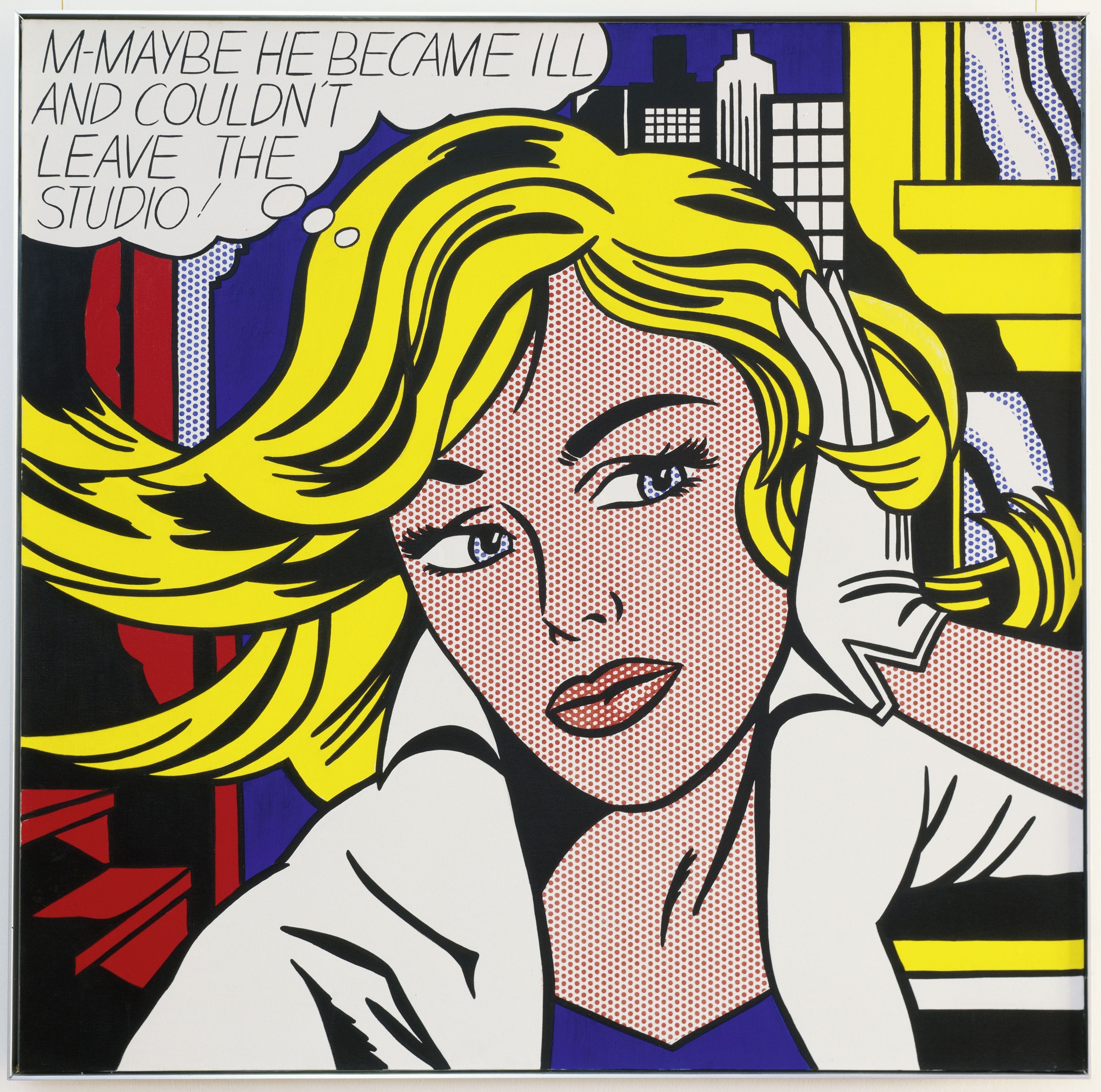
Roy Lichtenstein’s M-Maybe (A Girl’s Picture) (1965), lent by Museum Ludwig in Cologne, offers a useful point of entry into this problem. Its comic-derived image makes the relationship between familiarity and artistic transformation unusually direct. The woman’s face, lettering and emphatic graphic treatment invite recognition of a visual language already designed for circulation. Within a museum, that language becomes an object of concentrated attention.
The painting complicates any easy distinction between a memorable image and a consequential artwork. Reproduction belongs to the visual vocabulary it employs. Its presence in an exhibition about icons asks how a picture can be instantly legible while remaining open to questions about authorship, scale and the conversion of popular imagery into cultural authority.
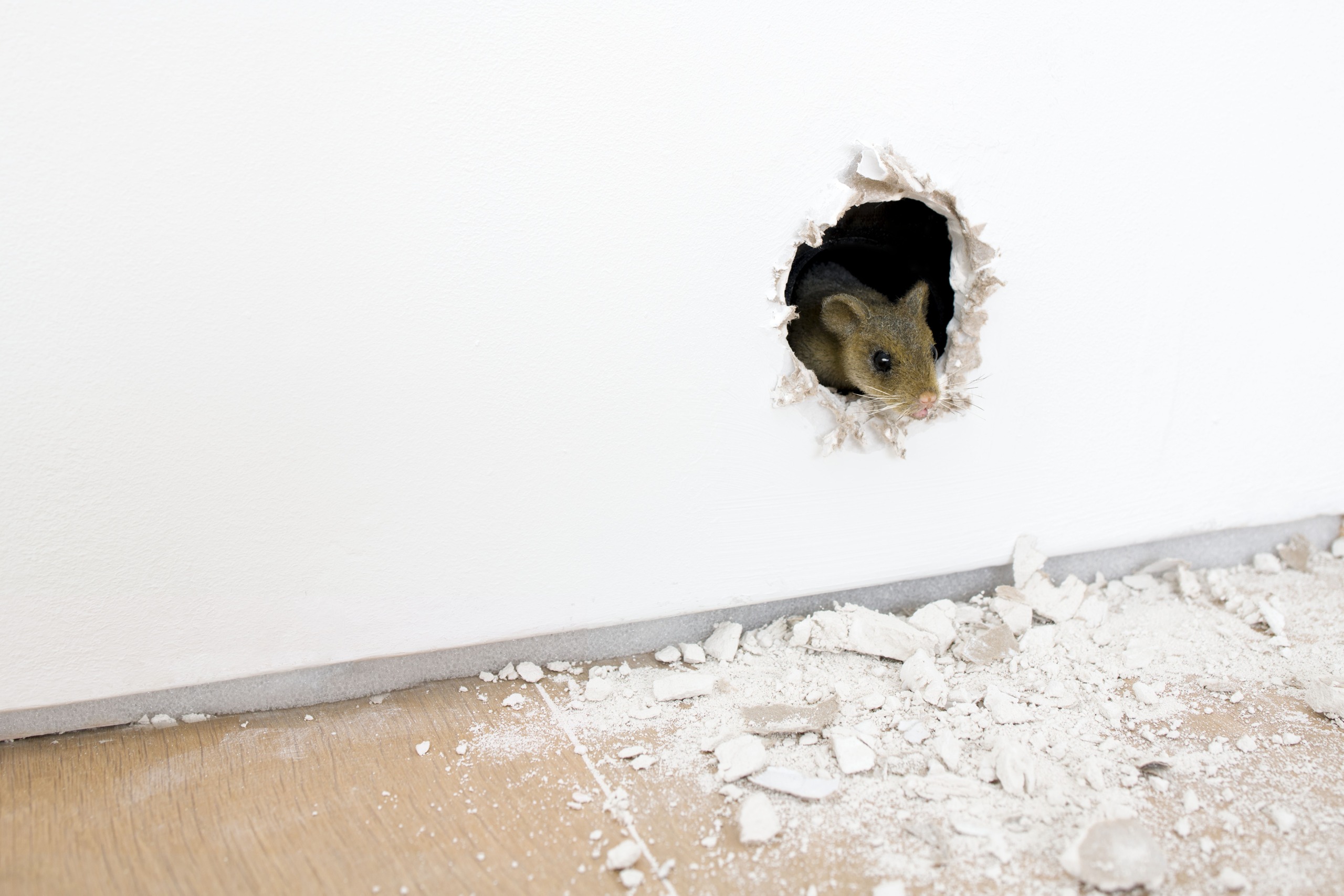
The collection’s more recent works suggest other routes to recognition. Ryan Gander’s 2000 years collaboration (The Prophet) (2018) uses an animatronic mouse, synthetic fur and speakers. The apparatus gives a small figure the means to address an audience. Beside the monumental presence of Mueck, it offers a useful counterpoint in scale. Authority can emerge from an unexpected voice and a minor interruption, as well as from physical dominance.
These works make the category of the icon less uniform. A recognisable picture, a human figure enlarged beyond ordinary proportions and a tiny speaking animal ask for different kinds of attention. Their shared inclusion should not obscure those differences. The exhibition becomes more interesting when its title functions as a question applied to the objects, rather than a distinction automatically awarded to them.
When recognition becomes strange
The meeting of Claude Monet’s Blauweregen, or Wisteria (1917–20), with a cylindrical glass sculpture by Roni Horn (2012–13) provides one of the exhibition’s clearest opportunities for close comparison. This arrangement is documented in the official press material and in Museumtijdschrift’s account of the exhibition. Monet’s painting belongs to Kunstmuseum Den Haag; Horn’s work comes from Voorlinden’s collection.
The material difference gives the pairing its substance. Paint records gestures on an opaque surface. Glass transmits and reflects light, offering a form whose appearance depends on the position from which it is viewed. One work presents marks made in another time; the other makes the immediate conditions of looking part of its visibility. Together they raise a precise question about how colour can appear to occupy space.
Monet’s subject remains available through the title, but the painting also rewards attention to the activity of its surface. The eye must negotiate between recognising vegetation and following the marks through which it has been rendered. Horn’s cylinder introduces another kind of uncertainty: its solidity and its optical appearance need not deliver the same message. The glass can hold the eye at its surface while suggesting a depth within it.
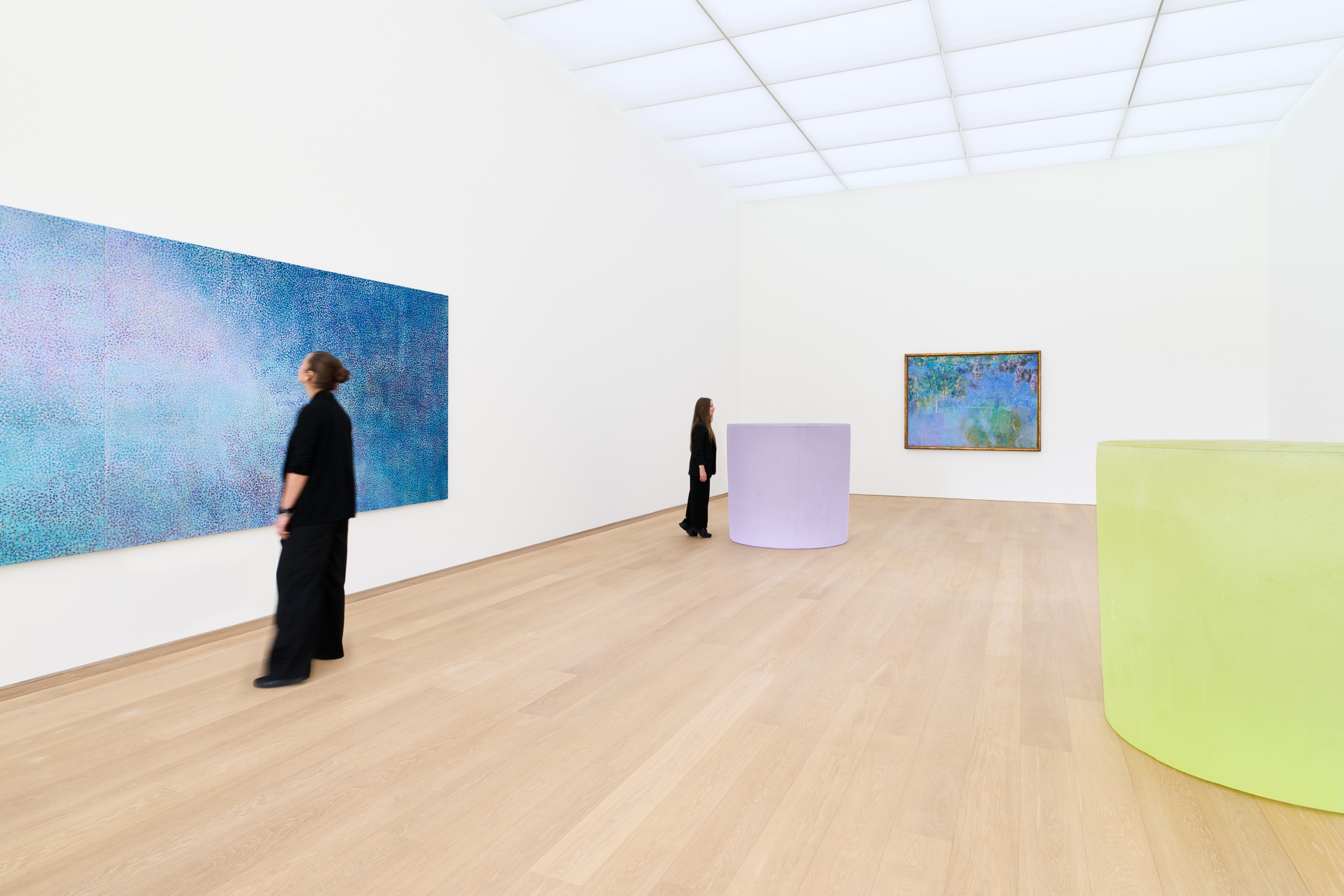
This is a comparison of perceptual problems, rather than evidence of a direct artistic lineage. Chronology alone cannot establish influence. What the juxtaposition offers is a way to reconsider the older painting through the material presence of a later sculpture. It also asks the sculpture to sustain attention beside a work whose name and historical position may initially command more recognition.
The distinction matters because exhibitions organised around affinities can make history appear too smooth. Similar effects may arise from different ambitions. A correspondence in colour or surface is a beginning for interpretation, not proof that the artists were asking the same questions. The pairing is strongest when the viewer can move between its shared concerns and its incompatible means.
Voorlinden’s gallery documentation also places François Morellet’s Beaming Pi 300 A.R. 50° (2002) in the Garden Room with Joan Miró’s Bleu I, Bleu II and Bleu III (1961), lent by the Centre Pompidou. The arrangement expands the discussion from the appearance of a surface to the organisation of an entire visual field.
Miró’s three paintings establish a sequence. Their shared blue grounds allow differences of mark and placement to register across the group. Morellet’s title announces another system of organisation through numerical and angular references. The encounter invites a reading of abstraction through intervals and decisions: how much is placed, where it is placed, and how an apparently open space is given structure.
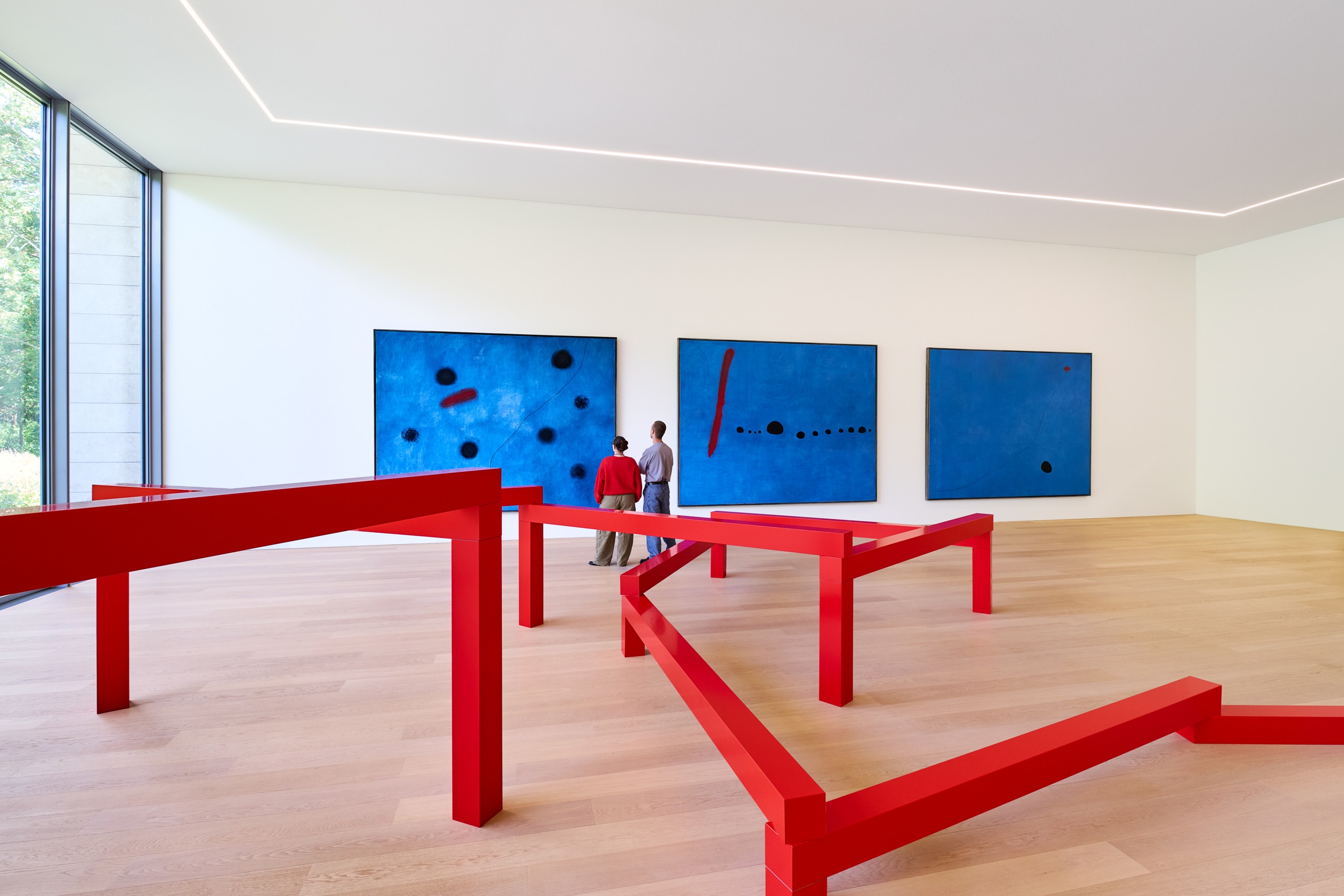
There is a temptation to describe such an arrangement as a meeting between intuition and calculation. That formula is too convenient. A painting can be carefully deliberated without announcing its procedure; a system can produce effects that exceed the terms in which it was conceived. The useful question is how each work makes its organisation available to perception. What seems spontaneous may hold a disciplined structure. What begins with a rule may produce unexpected freedom for the eye.
Etel Adnan’s Le soleil toujours (2021), also represented in the exhibition’s press selection, introduces a further material register through faience tiles. Here colour is carried by separate ceramic units. The work offers a way to extend the discussion of abstraction beyond a canvas surface: an image can also be assembled through the rhythm, edges and physical presence of its constituent parts.
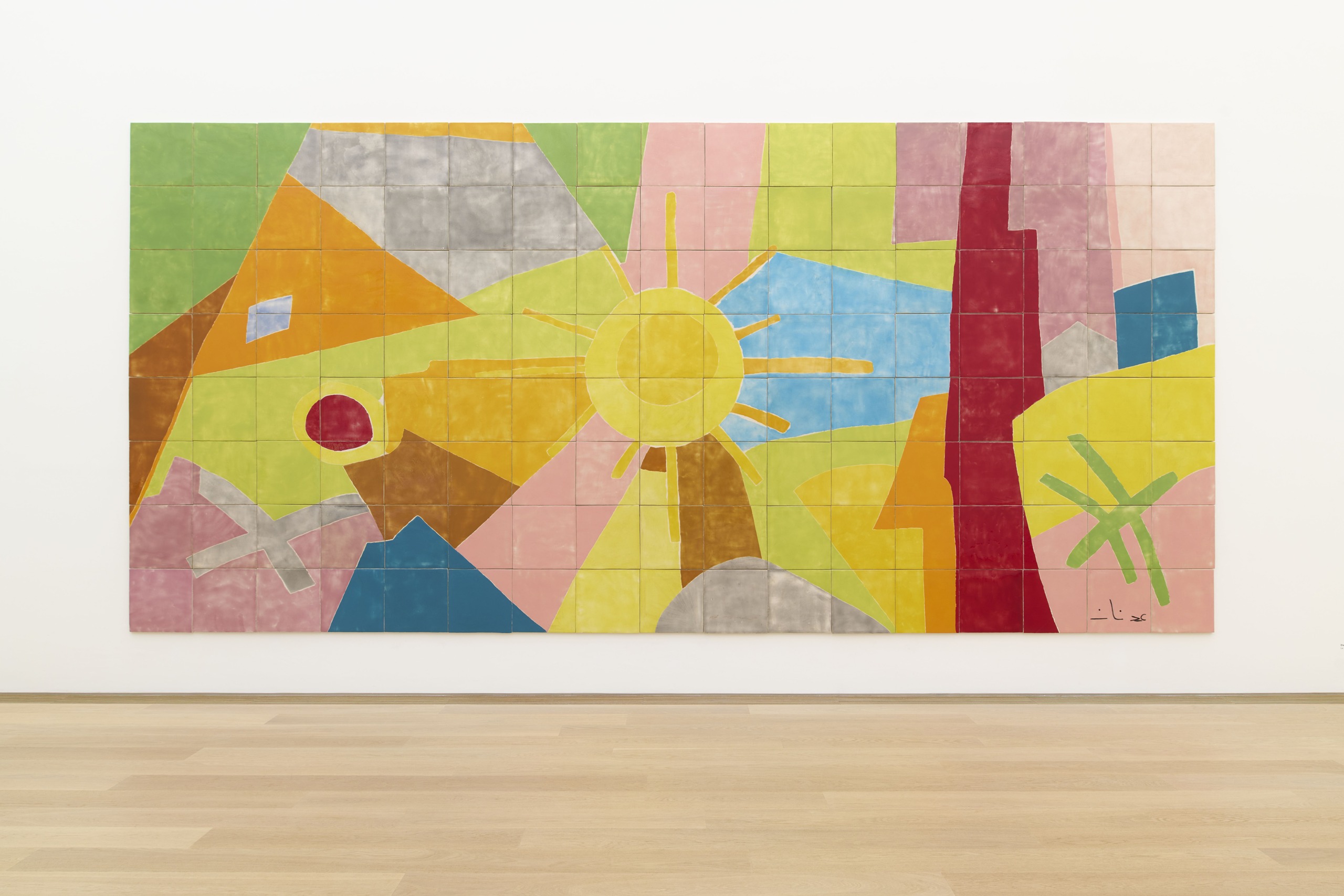
These examples suggest a productive limit to the exhibition’s broad claim about dialogue. Bringing works together can illuminate a formal problem. It cannot, by itself, provide the full histories behind their making. The display has to be read as an argument with a particular scope. Its strength depends on the specificity of the comparisons it enables.
The body and the image
Mueck’s Boy introduces a different test of recognition. ARoS, the Danish museum that owns the sculpture, records its making in 1999 and its acquisition in 2001. The work has become closely associated with that institution. Its visit to Voorlinden therefore brings an existing museum identity into the anniversary exhibition, rather than allowing it to stand simply as an example of Voorlinden’s own collection.
The sculpture’s crouching posture gathers the limbs around the body. Enlargement makes that gesture difficult to read as private. The figure seems to withdraw while becoming conspicuously visible. This tension offers more interpretive purchase than a general statement about the work’s capacity to astonish. Scale amplifies a posture whose emotional meaning remains uncertain.
Museumtijdschrift reports that Andy Warhol’s Camouflage (1986) hangs beside it. That juxtaposition opens a comparison between a body that appears guarded and a pattern associated with concealment. In the gallery, both become conspicuous. The connection can be understood through the mismatch between what a gesture or a pattern seems designed to do and what happens when it is presented for attention.
The works retain very different relationships to depiction. Mueck gives an anonymous figure an insistently particular surface. Warhol’s pattern disperses recognition across a graphic field. Together they suggest that visibility is a constructed condition. An image may conceal through fragmentation; a figure may be made more exposed by the very posture that seems to protect it.
There is also a distinction between recognising the subject and understanding the object. A photograph can communicate that Boy depicts a crouching child. Its unusual scale requires another reference, such as a person or the surrounding architecture, to become fully legible. The work’s identity survives reproduction, but the terms of an encounter with it change.
Gander’s mouse makes the inverse problem available. Its small dimensions ask for close attention, while the speakers extend its presence beyond its physical size. In both cases, a familiar body is given an unexpected relation to the space around it. This provides a concrete account of how a work might remain memorable: it interferes with an ordinary expectation about proportion, agency or address.
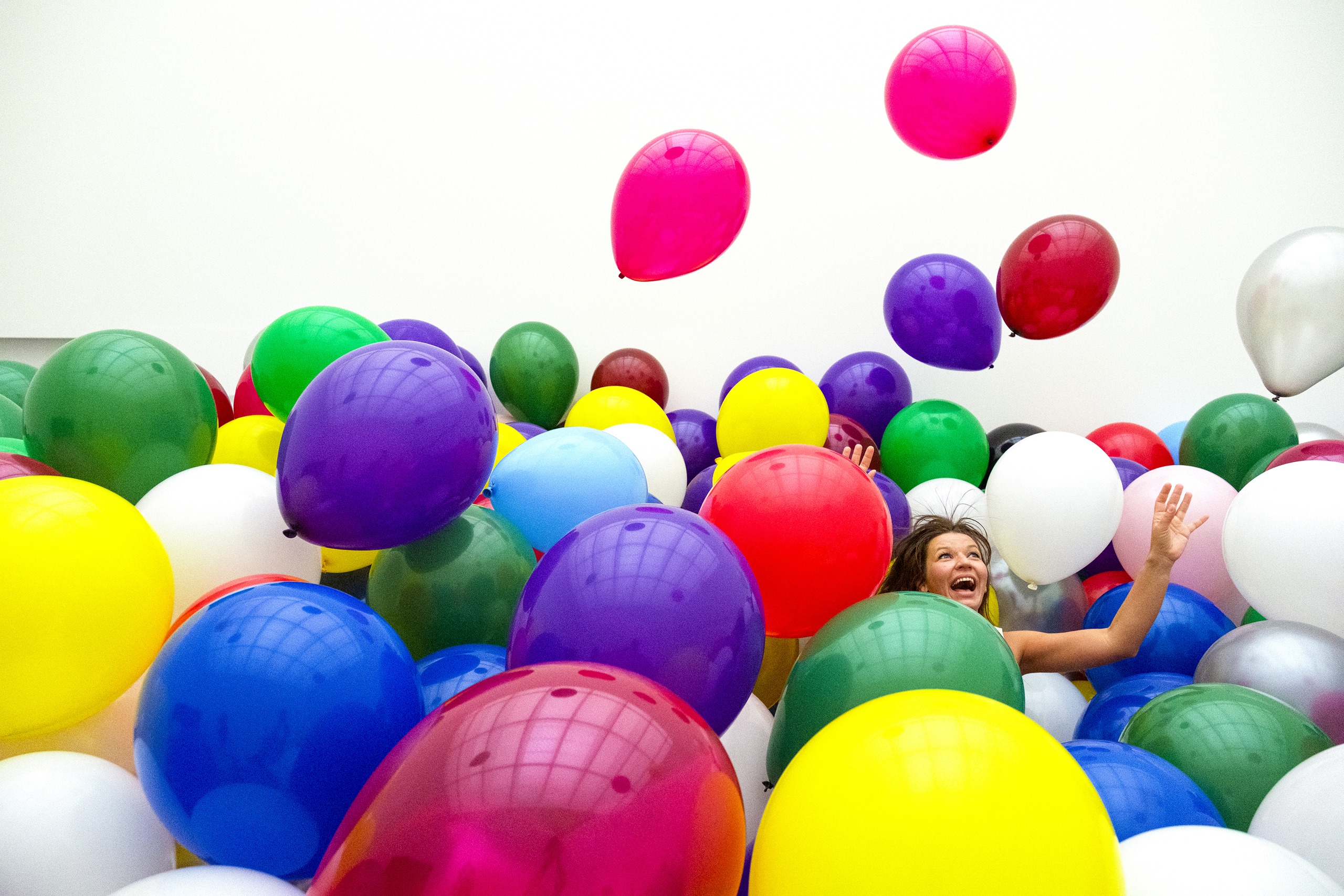
Martin Creed’s Work No. 1562, presented in the anniversary exhibition, changes the scale of the discussion again. Balloons occupy half the volume of a room. A familiar object becomes significant through repetition and quantity. The room itself supplies the measure of the work, making the relationship between occupied and unoccupied space part of what is being presented.
The balloons carry associations of celebration that suit the anniversary, but their accumulation also asks a formal question. How much of a room can be occupied before the room is perceived differently? A simple material and an intelligible rule are sufficient to alter the relation between a visitor and an architectural enclosure. The work’s economy is central to its effect.
Museum Voorlinden notes that the TUFTEX balloons are made from 100% natural rubber latex. The installation is in a separate room and can be skipped, though latex particles may reach nearby galleries or travel elsewhere in the museum with visitors. The museum advises visitors with a latex allergy to take this into account when planning a visit.
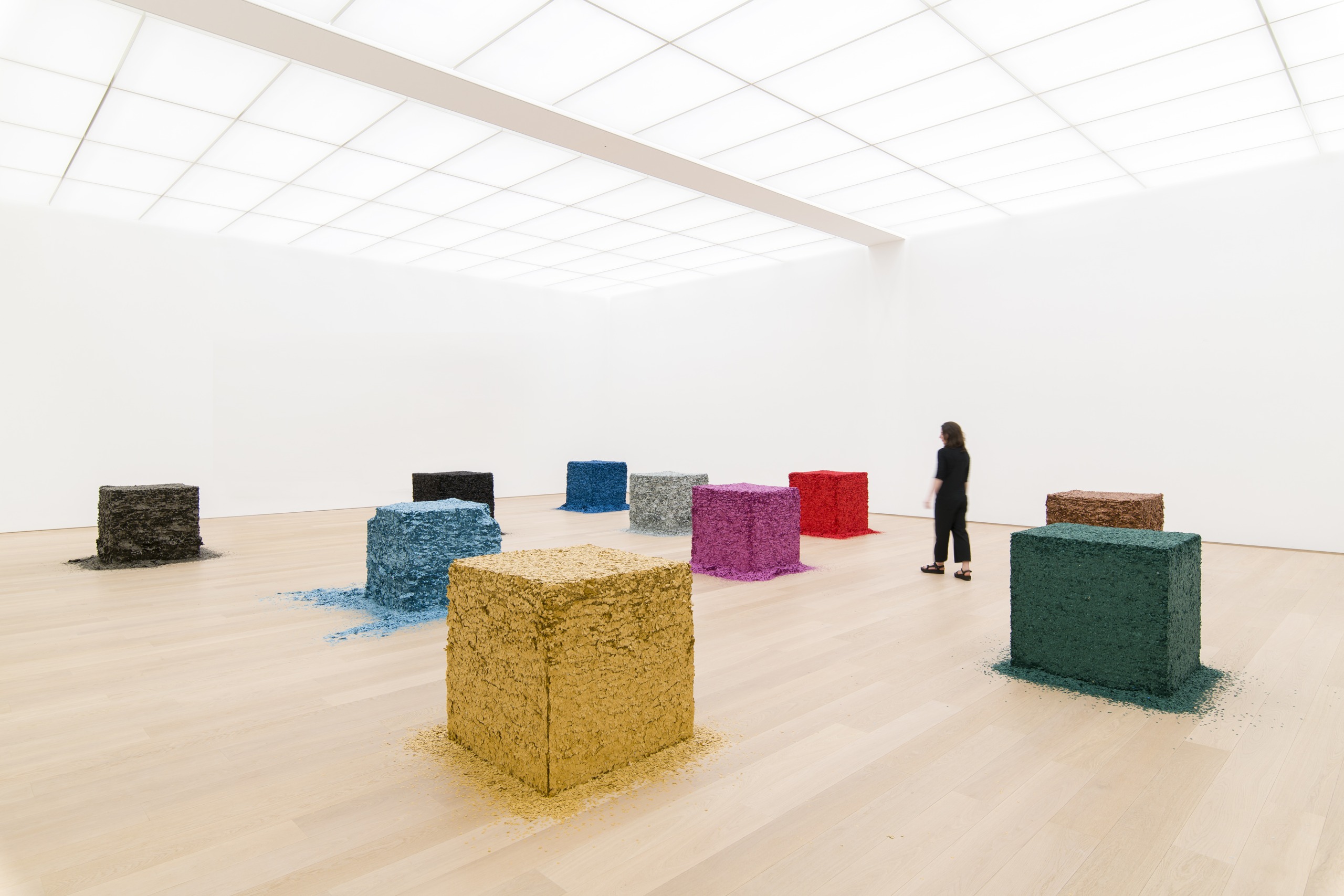
Lara Favaretto’s Birdman or (The Unexpected Virtue of Ignorance) (2018) offers another encounter with a material associated with festivity: confetti. The press documentation identifies the work as an installation with variable overall dimensions and individual elements measuring 90 centimetres in each direction. Loose, disposable particles become the substance of a defined sculptural form.
Read alongside Creed, Favaretto’s work directs attention towards the transformation of ordinary materials through accumulation. The two works need not share a curatorial pairing for the comparison to be useful. Both make quantity consequential. The difference lies in the organisation of the material and the kind of space it establishes: a room occupied by balloons, or a body of confetti given a measurable form.
The conditions of looking
Voorlinden’s architecture gives these encounters a particular setting. Designed by Kraaijvanger Architects, the building organises its galleries through walls running parallel to the dune edge. Secondary cross walls are conceived as movable. The plan combines spaces for changing exhibitions with works integrated into the building. This makes reconfiguration part of the museum’s architectural premise.
The roof is equally consequential. Angled aluminium tubes reflect daylight into the interior, with artificial lighting compensating when necessary. Kraaijvanger describes changing exterior light as a deliberate element of the design. The galleries are therefore supported by an elaborate apparatus that aims to make the conditions of display appear calm and unobtrusive.
That apparent ease deserves attention. Space, illumination and technical systems help make certain experiences of art possible. A glass sculpture’s optical behaviour, the legibility of a painted surface and the scale of a figure are all encountered within these conditions. The building participates in the exhibition’s argument even when it does not become the explicit subject of a room.
Gerhard Richter’s Fenster (Window), lent by Kunstpalast in Düsseldorf, offers a pertinent title within this context. A window ordinarily directs attention beyond itself. Presented as an artwork, that familiar designation becomes a reason to examine the act of framing. Its inclusion gives the discussion of architecture a specific object through which to consider how an exhibition directs and limits a view.
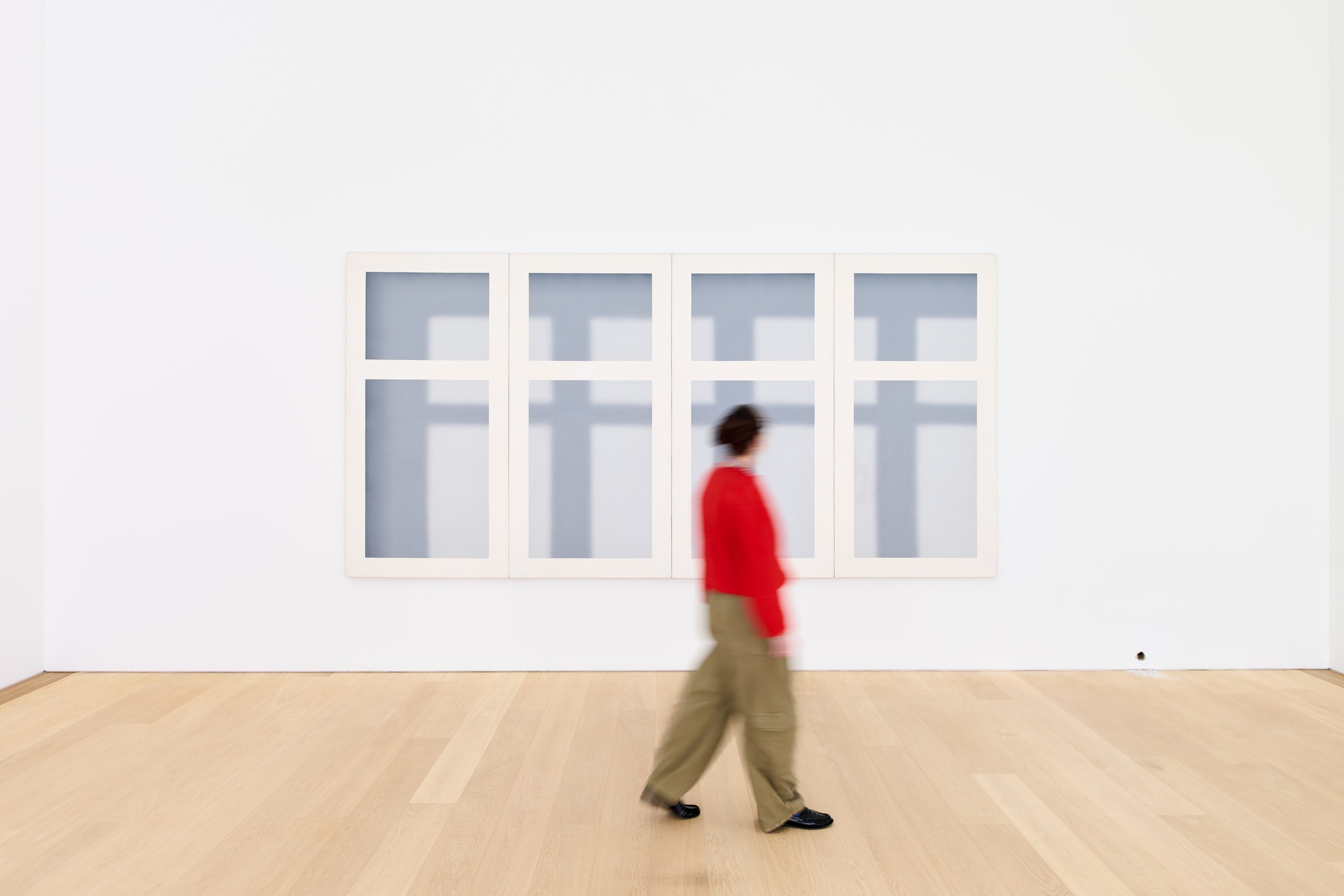
Architecture also helps explain why a successful image is not the same thing as a successful installation. A photograph selects a position and a moment. The exhibition allows different approaches and durations. An account based on the published documentation can identify the works, the recorded relationships and the questions they raise; it should leave room for what those fixed views do not establish about the visitor’s route.
This limit is especially useful in considering an exhibition of icons. Well-known works often arrive preceded by photographs. Their familiarity can make an encounter feel already understood. The physical organisation of a show has the capacity to interrupt that expectation, provided that it gives the objects more to do than confirm their recognisability.
Who makes an icon?
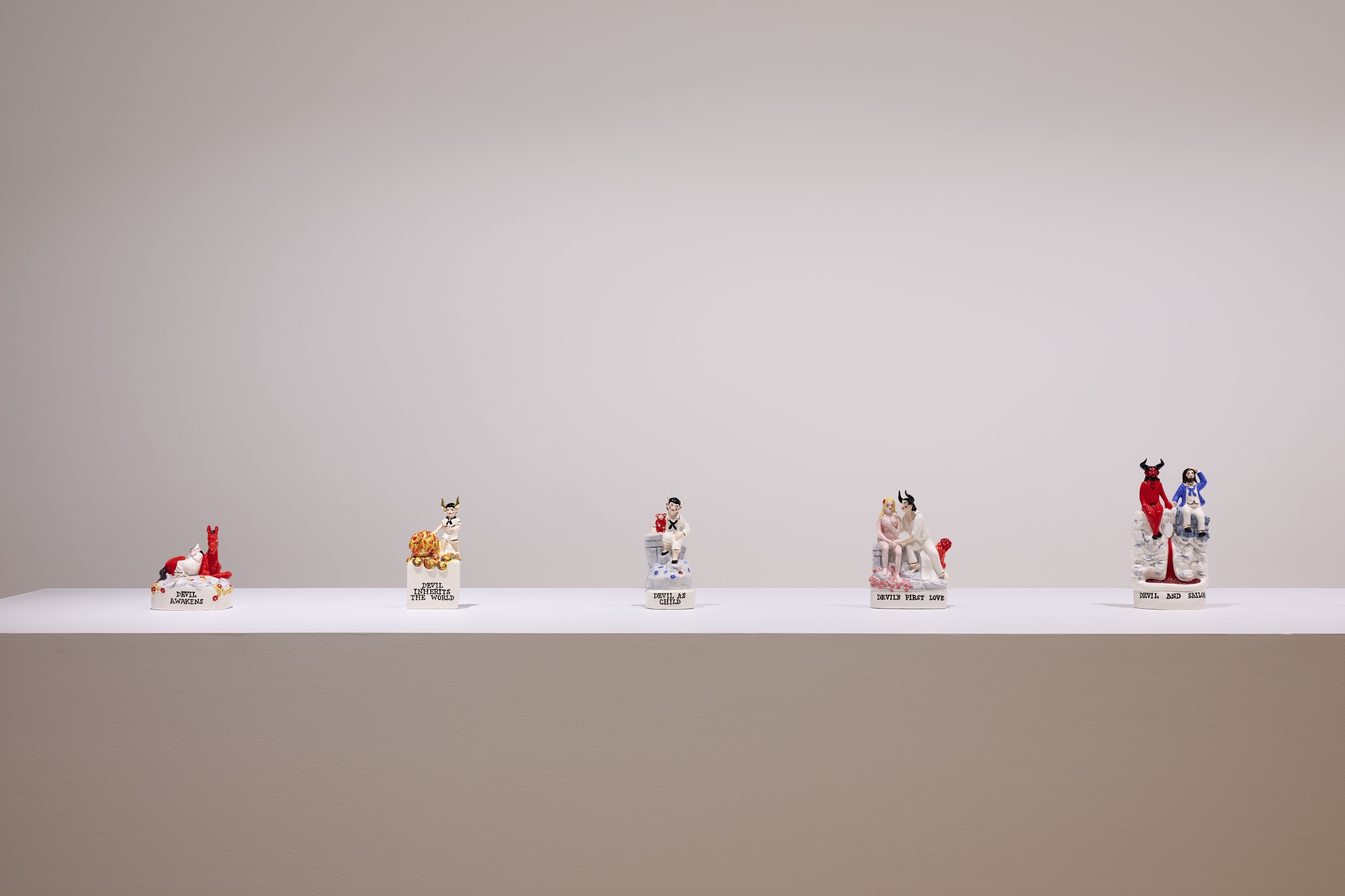
The exhibition’s title gives its works a shared distinction, but their routes to that distinction remain uneven. Some arrive with decades of scholarship and exhibition history; others are identified with the pleasures of a particular museum visit. Nick Cave’s The Devil – A Life (2020–24), a group of glazed ceramic works from Voorlinden’s collection, adds another complication: the relationship between an artist’s existing public identity and the reception of objects made in another medium.
The presence of such a work should encourage scrutiny of the category itself. Recognition can attach to an artist’s name before it attaches to a particular sculpture. A museum display can redirect that attention towards material, modelling and sequence. Whether the objects sustain it is a question to be answered through looking, rather than resolved by the familiarity of their maker.
The same discipline applies to the institution. Voorlinden’s claim for its collection is most persuasive when individual works reward the comparisons proposed around them. The anniversary provides the reason for assembling the exhibition. The encounters between objects have to provide the substance.
A strong juxtaposition gives the viewer something precise to notice: a difference in how colour occupies space, a pattern that complicates a figure’s posture, a material whose accumulation changes its character. These discoveries can be modest. They do not have to rewrite art history to justify the act of bringing works together.
The more ambitious question concerns what follows recognition. An icon can become a stopping point, its reputation accepted in place of attention. It can also become a starting point for examining how that reputation has been produced and what remains difficult in the work. Voorlinden’s anniversary offers both possibilities. Its lasting value will lie in the particular objects and relationships that encourage the second.
Boy provides a fitting image for that uncertainty. The figure is immediately legible and persistently strange, at once exposed and withdrawn. It commands recognition without surrendering its ambiguity. That unresolved quality gives the exhibition’s title something worth testing: whether a familiar artwork can still make looking feel unfinished.
Exhibition Credits
Celebrating the Icons of Art
Museum Voorlinden, Wassenaar, the Netherlands
12 September 2026–7 March 2027
Ron Mueck’s Boy is on loan from ARoS until 21 February 2027.
Images supplied and publication authorised by Museum Voorlinden. Reproduced with permission. Individual artwork, collection and photography credits accompany each image.
Editorial sources: Museum Voorlinden; ARoS; Kraaijvanger Architects; Museumtijdschrift.