
Now Reading: Siris: Contemporary art reawakens the sacred landscape of Herakleia
- 01
Siris: Contemporary art reawakens the sacred landscape of Herakleia

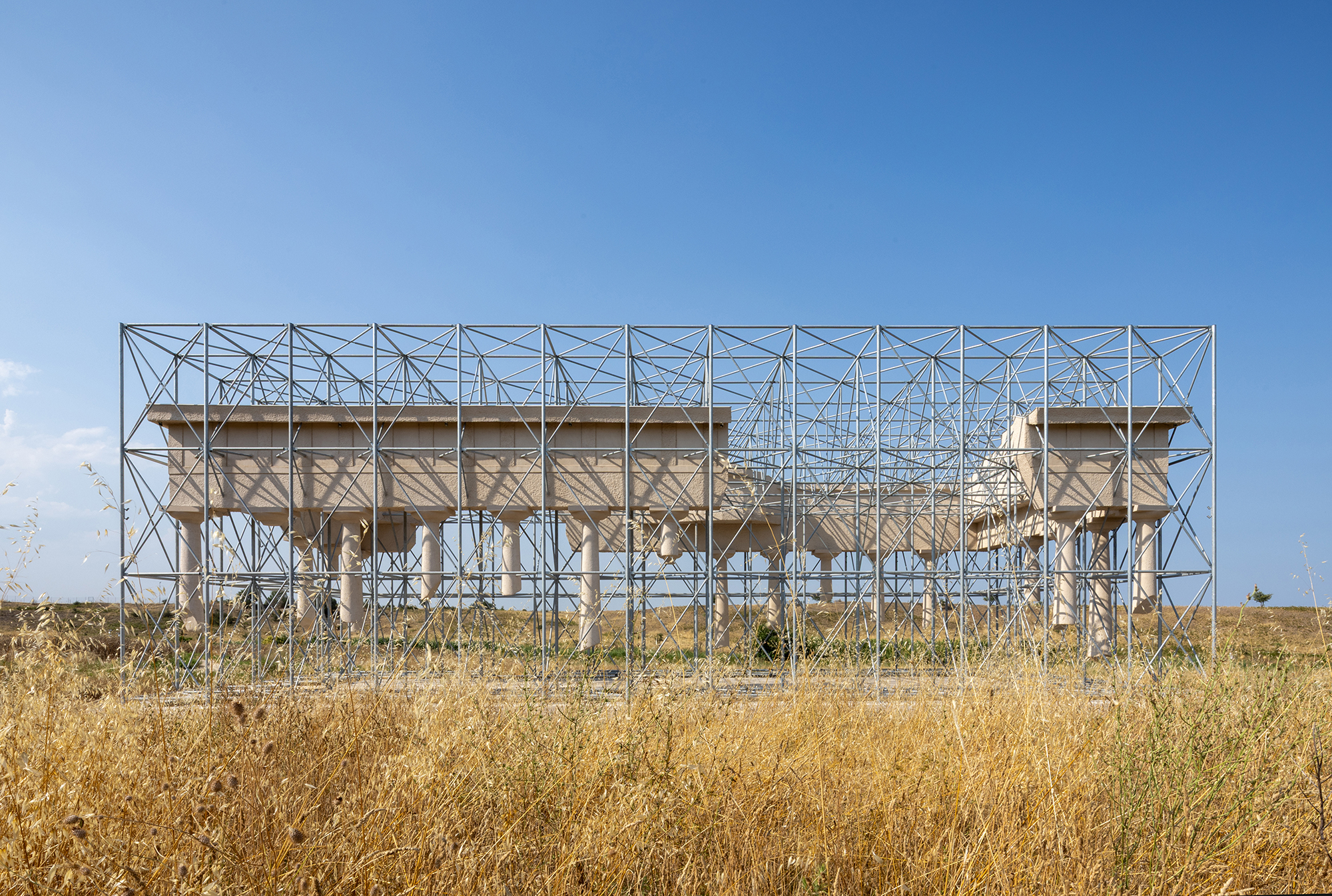

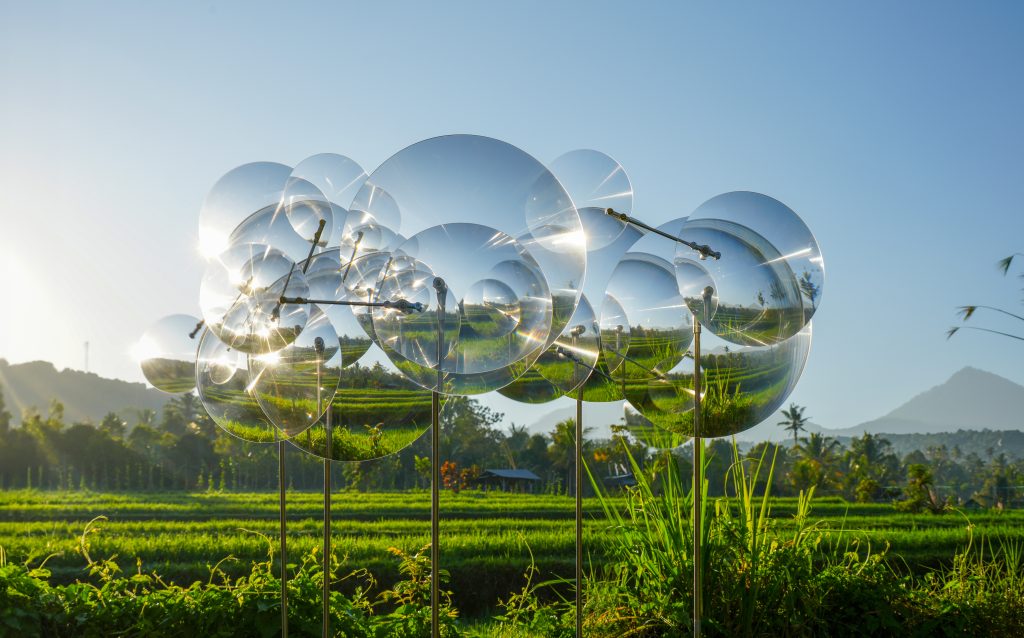
On 10 November, the Archaeological Park of Herakleia in Policoro, Matera, unveiled Siris, an expansive artistic enhancement project curated by STUDIO STUDIO STUDIO, the interdisciplinary laboratory founded by Edoardo Tresoldi with artistic director Antonio Oriente. Conceived as a dialogue between contemporary creation and ancient landscape, the project introduces three new artworks to the archaeological valley: Inverse Ruin by Belgian duo Gijs Van Vaerenbergh, Chora by Spanish artist Selva Aparicio, and Arbosonica, a sound-based work by Italian artist Max Magaldi featuring original contributions from poet Claudia Fabris and composer Daniela Pes.
The entire process is documented in a new film by Giovanni Troilo, known internationally for his work on contemporary art and culture.

A CULTURAL PROGRAM ROOTED IN ARCHAEOLOGY, LANDSCAPE, AND MEMORY
Siris forms part of a broader initiative titled Enhancement of Sacred Areas of the Archaeological Park of Herakleia and Creation of an Ecomuseum, promoted by the Italian Ministry of Culture and funded through the European FESR Program Cultura e Sviluppo 2014–2020. Originally overseen by architect Giuliano Zerillo for the now-discontinued Basilicata Regional Secretariat, the project is today carried forward by the Superintendence of Archaeology, Fine Arts and Landscape of Basilicata, under the network of the National Museums of Matera.


Set within the Vallata Mediana, a site where archaeological vestiges merge with the everyday life of an urban park, Herakleia hosts the remains of the Archaic Temple and the Sanctuary of Demeter. These fragile traces, barely legible due to centuries of erosion, become the conceptual anchor for the intervention. The artworks, designed and installed between September 2024 and spring 2025, were commissioned to STUDIO STUDIO STUDIO with the intention of revealing the archaeological strata through contemporary forms that maintain full reversibility and leave the site’s material integrity untouched.

REINTERPRETING THE SACRED THROUGH ART, ARCHITECTURE, AND SOUND
At the core of Siris lies an exploration of sacredness as a spatial, symbolic, and ecological condition. The intervention reconnects the architectural presence of the Archaic Temple and the ancestral aura of the Sacred Wood, binding them through sound – long considered a medium of divine manifestation in Mediterranean cultures.

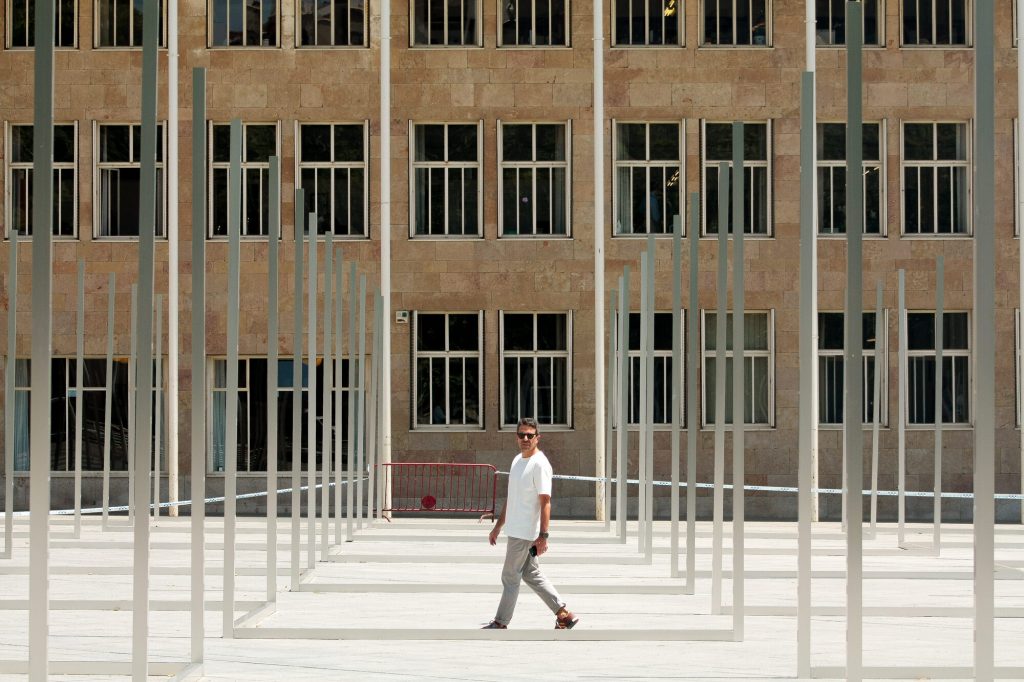
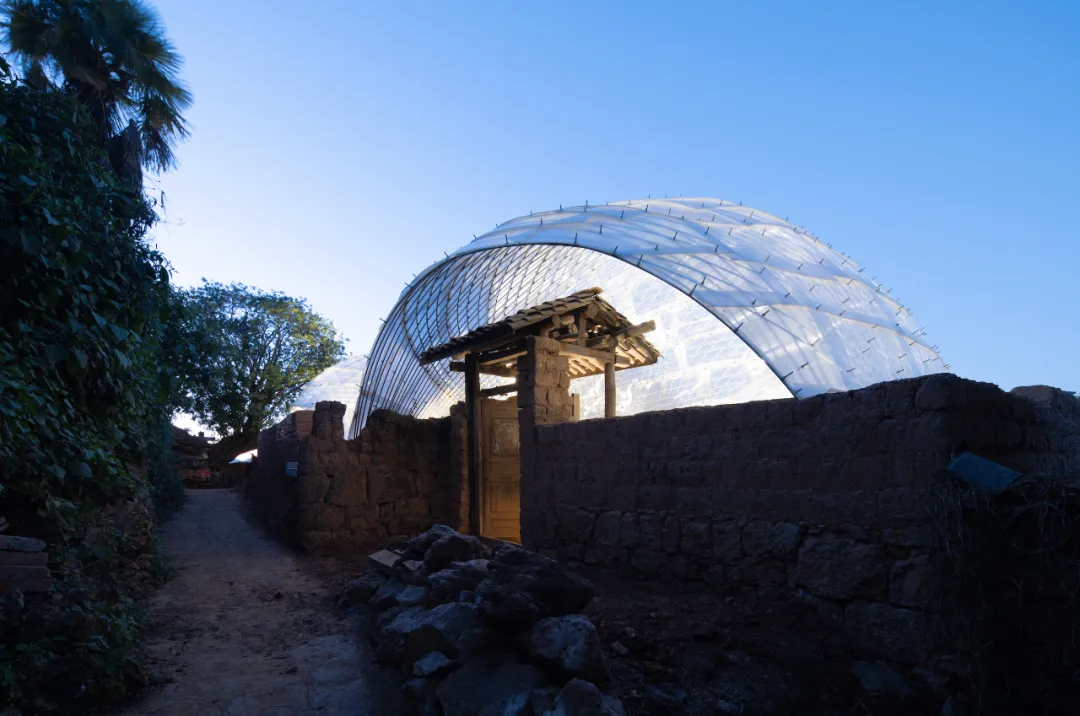
The artworks arise gently from a richly textured landscape shaped by millennia of human and natural forces. Herakleia becomes a living palimpsest where time folds, and archaeology, ecology, and artistry intertwine. Each work interprets the site from a distinct angle: Inverse Ruin manipulates architectural logic to the point of inversion, opening a visual void that reanimates the temple’s volumes; Chora introduces a tactile sculptural path that traces the lineage between ritual gesture and natural offering; Arbosonica adds an aural dimension that amplifies the ecosystem’s inner resonance. Together, these contributions build a collective identity in which cultural codes interlace and respond to each other, shaping an open framework for experimentation at the threshold of art, architecture, and landscape.


ARTISTIC PROCESS AND LOCAL IMMERSION
Antonio Oriente recalls that the concept for Inverse Ruin emerged during the initial artistic residency in 2021, when the team immersed themselves in the living culture of Basilicata to construct a chronological bridge between Magna Graecia and the present. He describes the approach of Gijs Van Vaerenbergh as an intelligent inversion of material presence, one that restores visual space to the archaeological remains while foregrounding the temporal fragility embedded in the ruins. Instead of evoking restoration or reconstruction, the installation introduces a new inhabitant of the Park—simultaneously foreign and native, vanished and alive.

For the works dedicated to the Sanctuary of Demeter, Oriente and the artists engaged with the memory of votive rituals and their transformations across centuries. Their research embraced the region’s living traditions, including the arboreal rite of the Maggio di Accettura, as part of an effort to situate the project deeply within the Lucanian landscape. Oriente underscores that this connection is also personal: he was born in Policoro and views Siris as a way of honoring the territory’s extraordinary heritage.
He describes Magaldi’s sound installation as an invitation into a meta-phenomenological dimension, a space where looking and listening converge without removing visitors from their surroundings. The experience requires no screens and no headphones, allowing the audience to encounter a musical and poetic journey that could belong to any era or to none at all. Working with Claudia Fabris and Daniela Pes, Magaldi becomes “an ambassador of the invisible,” revealing what is usually unheard yet always present.

A CONTEMPORARY ECOMUSEUM FOR A MEDITERRANEAN PAST
Siris constitutes a fundamental chapter in the creation of the Archaeological Ecomuseum of Herakleia, conceived to illuminate the history of Greek colonies established in the region from the seventh century BCE. The project aims to strengthen the relationship between the archaeological remains, the National Archaeological Museum of Siritide, and the surrounding territory, which is currently undergoing a series of interventions to improve accessibility and landscape coherence.

Through its reversible installations and interpretative structure, Siris offers a renewed understanding of the site that extends beyond academia. It invites specialists and general visitors alike to experience Herakleia not as a static historical enclave but as a living environment where ancient architectures, natural forces, and contemporary artistic languages can coexist. The result is a resonant re-evocation of sacredness – one that positions Herakleia as a vital locus for cultural reflection in the Mediterranean landscape.


Project Credit
Name: Inverse Ruin (Site specific artwork for Siris)
Curated by STUDIO STUDIO STUDIO founded by Edoardo Tresoldi
Artistic Director: Antonio Oriente
Promoted by Italian Ministry of Culture
Artists: Gijs Van Vaerenbergh / @gijsvanvaerenbergh
Photo: Roberto Conte