Now Reading: Ruben Greyson turns felled London trees into an irregular timber construction system
- 01
Ruben Greyson turns felled London trees into an irregular timber construction system

Ruben Greyson turns felled London trees into an irregular timber construction system
Re-Jig by Ruben Greyson proposes tools and construction systems that transform irregular timber from felled London trees into a locally sourced architectural resource.
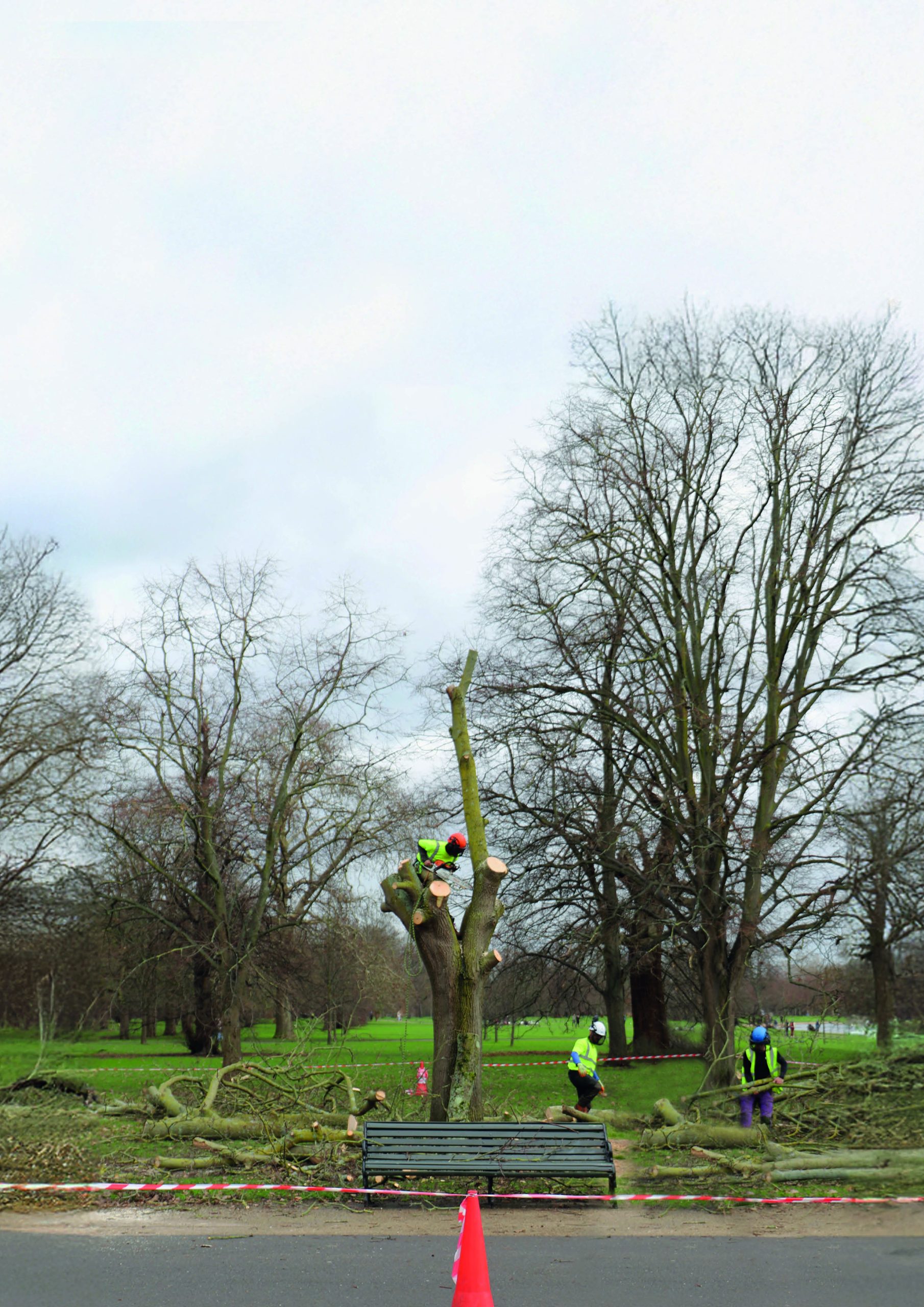
Around 10,000 trees are felled in London each year, and almost all of their timber is burned. Developed as a master’s thesis at the Royal College of Art, Re-Jig questions this loss in the context of the United Kingdom’s timber shortage. The project focuses on the mismatch between a readily available material and construction systems designed around standardised sections.
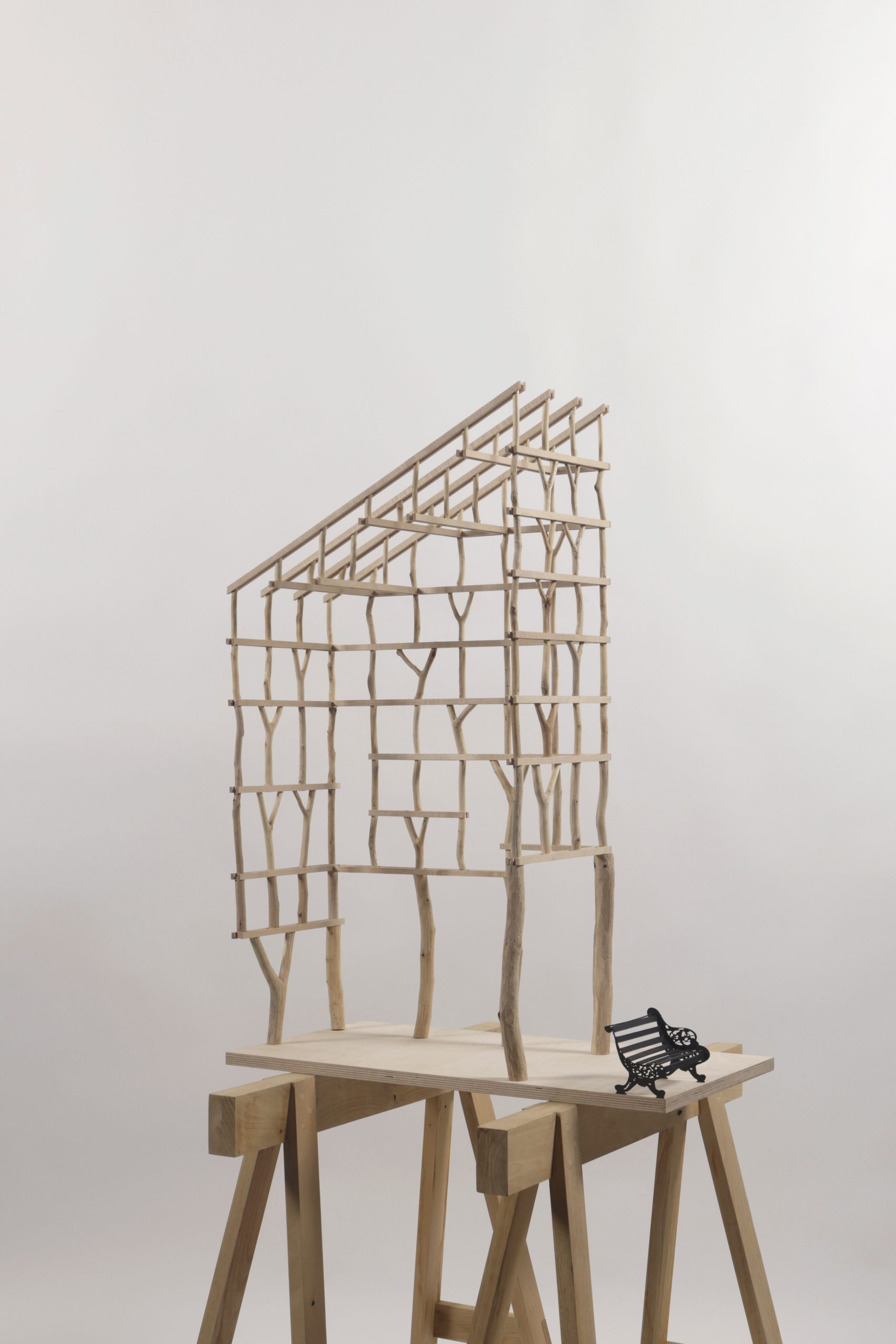
The crown of a tree is particularly overlooked. Although its smaller branches are difficult to mill into conventional square sections, crown timber can represent roughly two thirds of the usable wood in a tree. Greyson retains these irregular roundwood elements and treats their variation as the basis of the design rather than a defect to be removed.
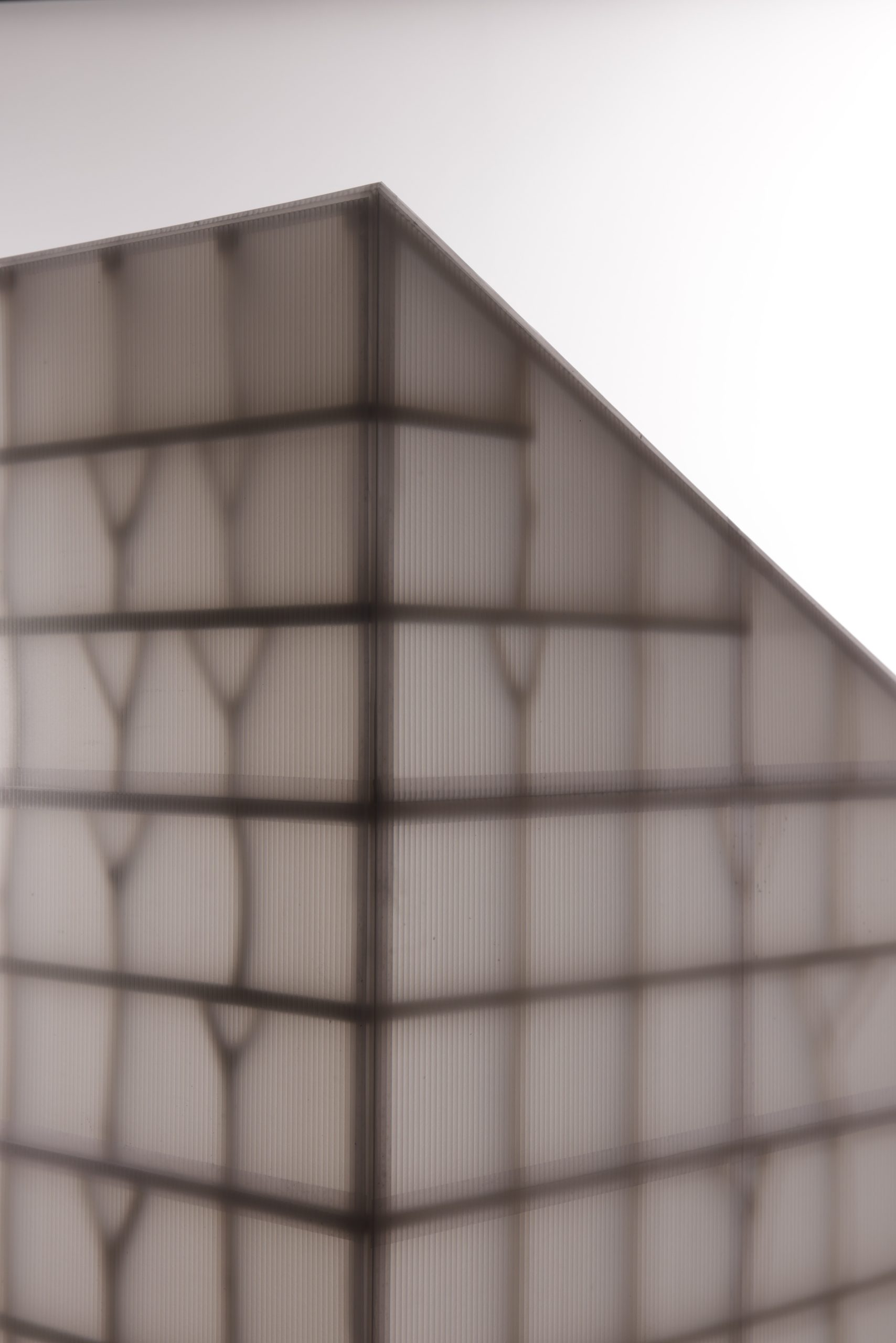
Re-Jig combines purpose-built tools with a repeatable structural logic. Irregular pieces are arranged in parallel rows, then connected by battens milled from the straighter trunk timber. Custom jigs allow consistent joints to be cut into elements that differ in diameter, curvature and orientation, making precision possible without forcing the material into a uniform profile.
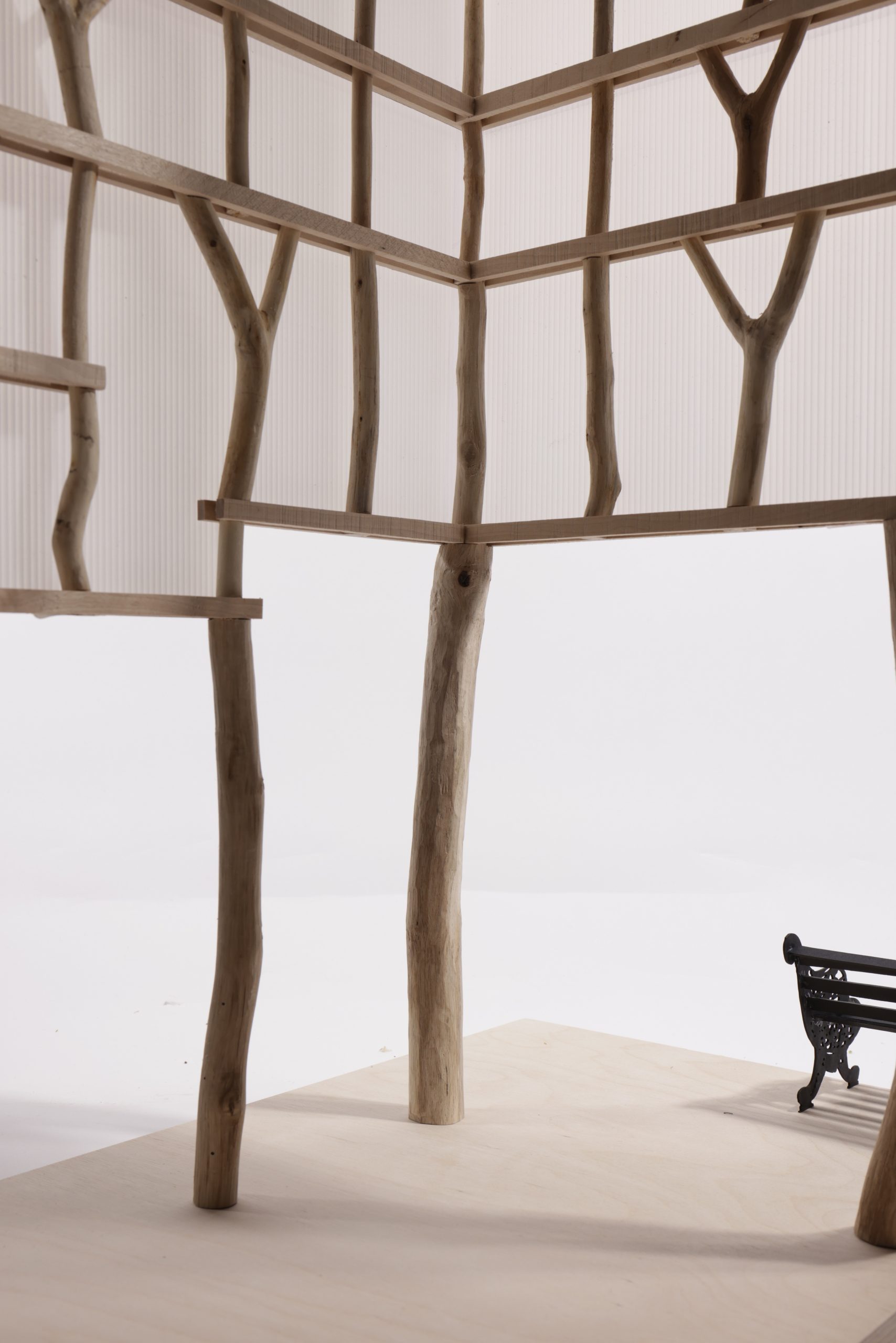
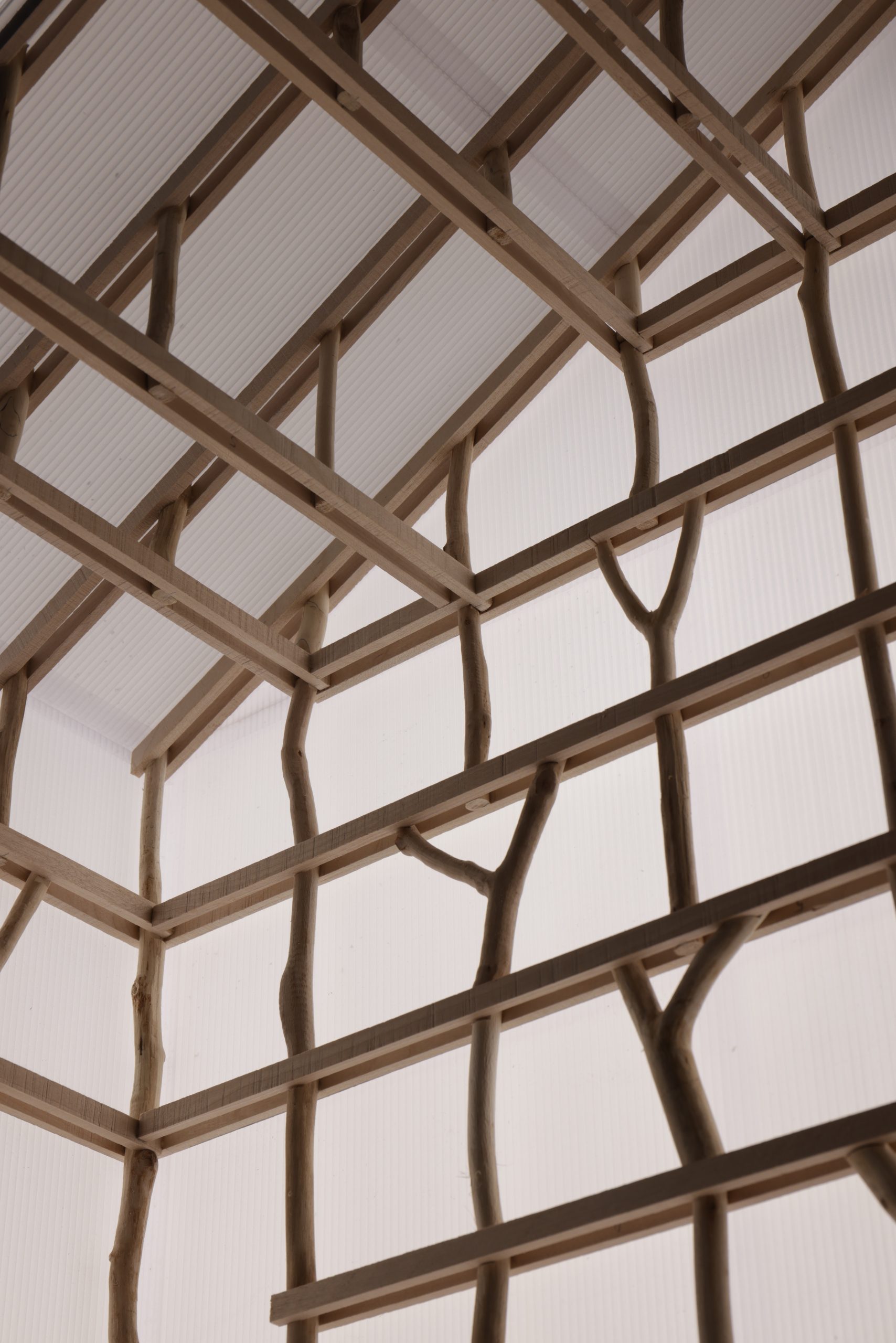
A speculative pavilion demonstrates what this system could produce from a single tree. The case study begins with a Norway maple felled in Kensington Gardens, which in reality was chipped and burned. In the alternative scenario developed by the project, the same tree supports a 201.7-cubic-metre structure and retains approximately 2.75 tonnes of carbon dioxide.
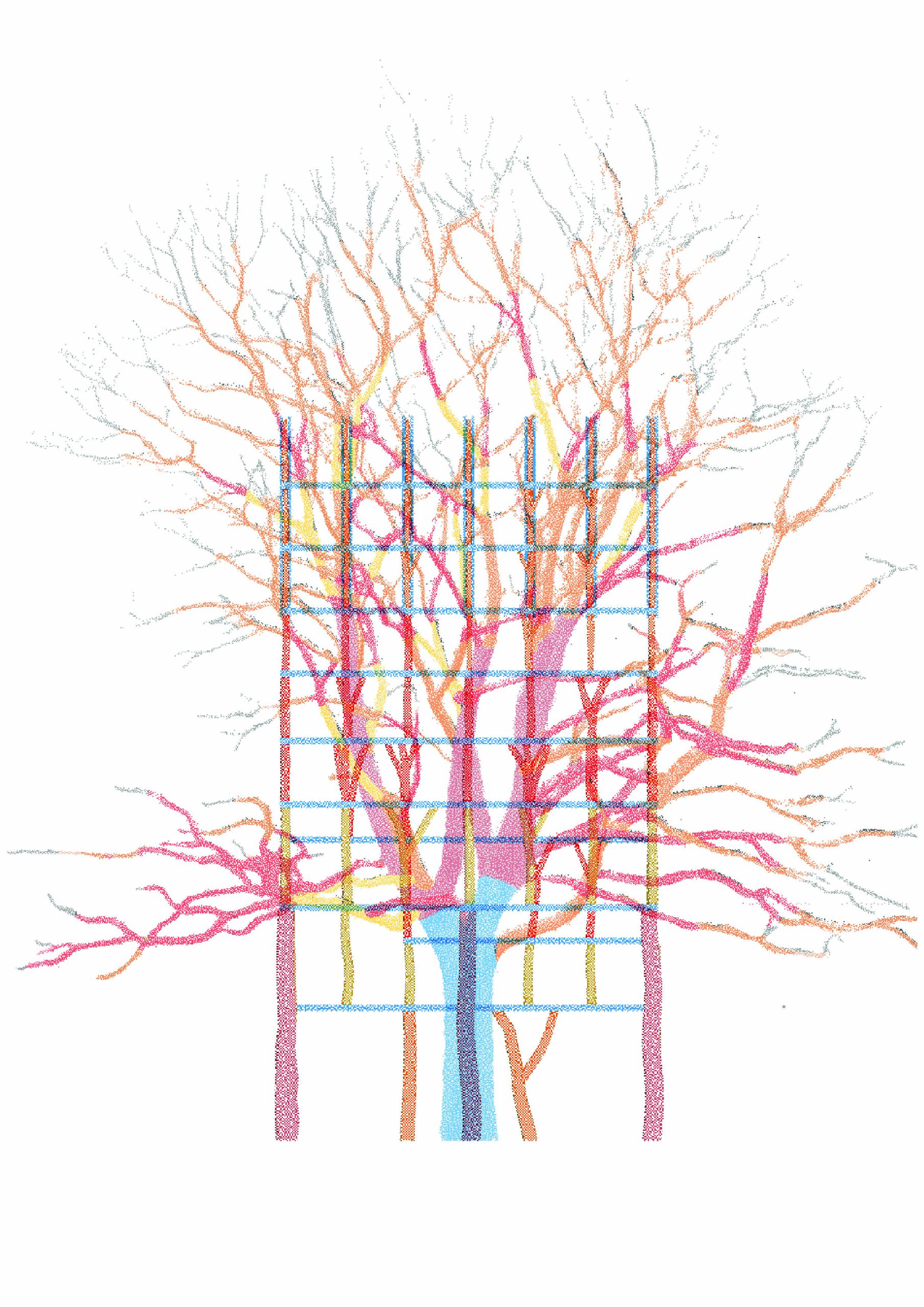
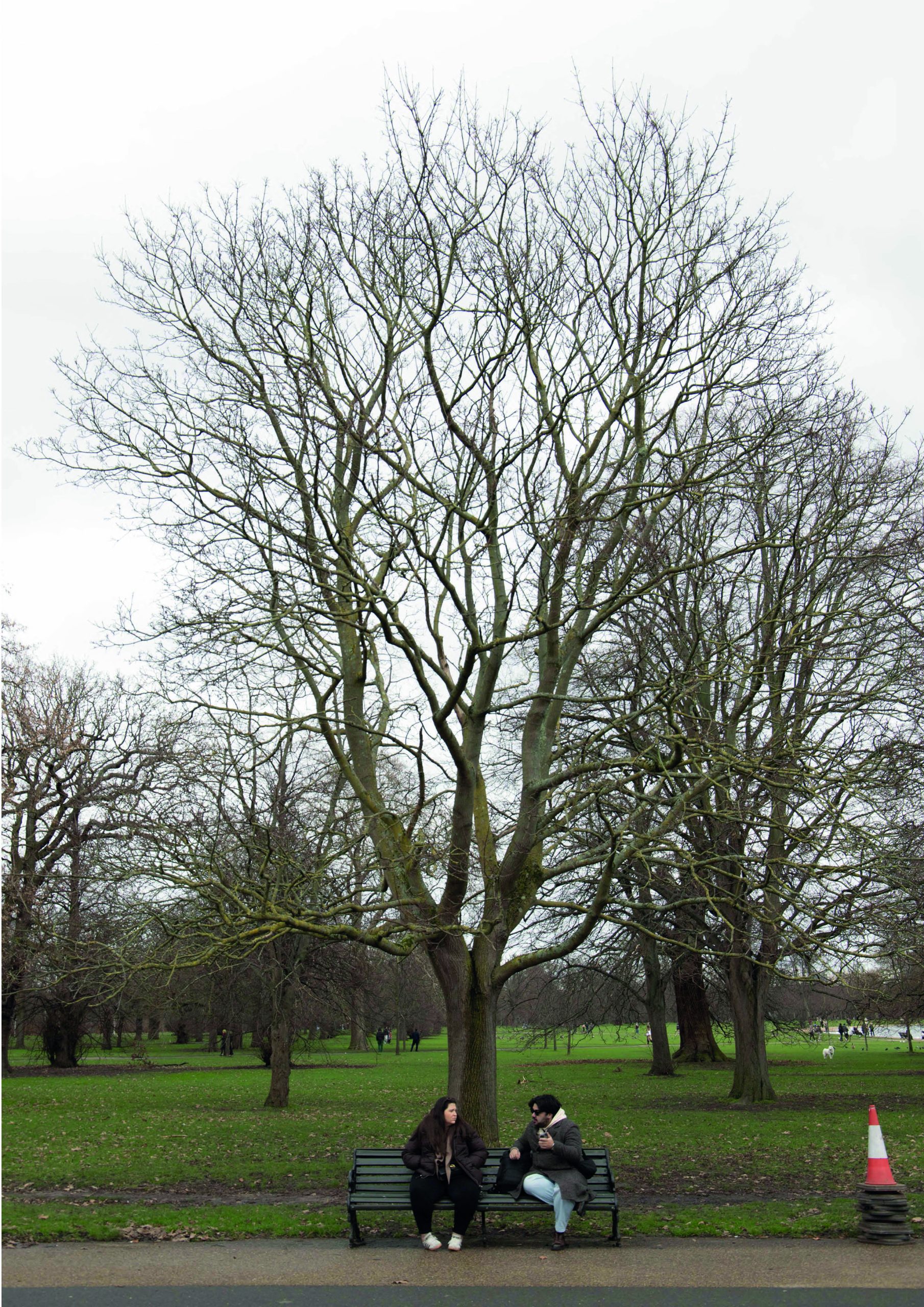
The proposal is not tied to one species, geometry or programme. Its tools and assembly principles can adapt to the distinct form of each tree and to different building uses. This flexibility suggests a local supply chain in which urban timber is surveyed, processed and assembled close to where it is felled.
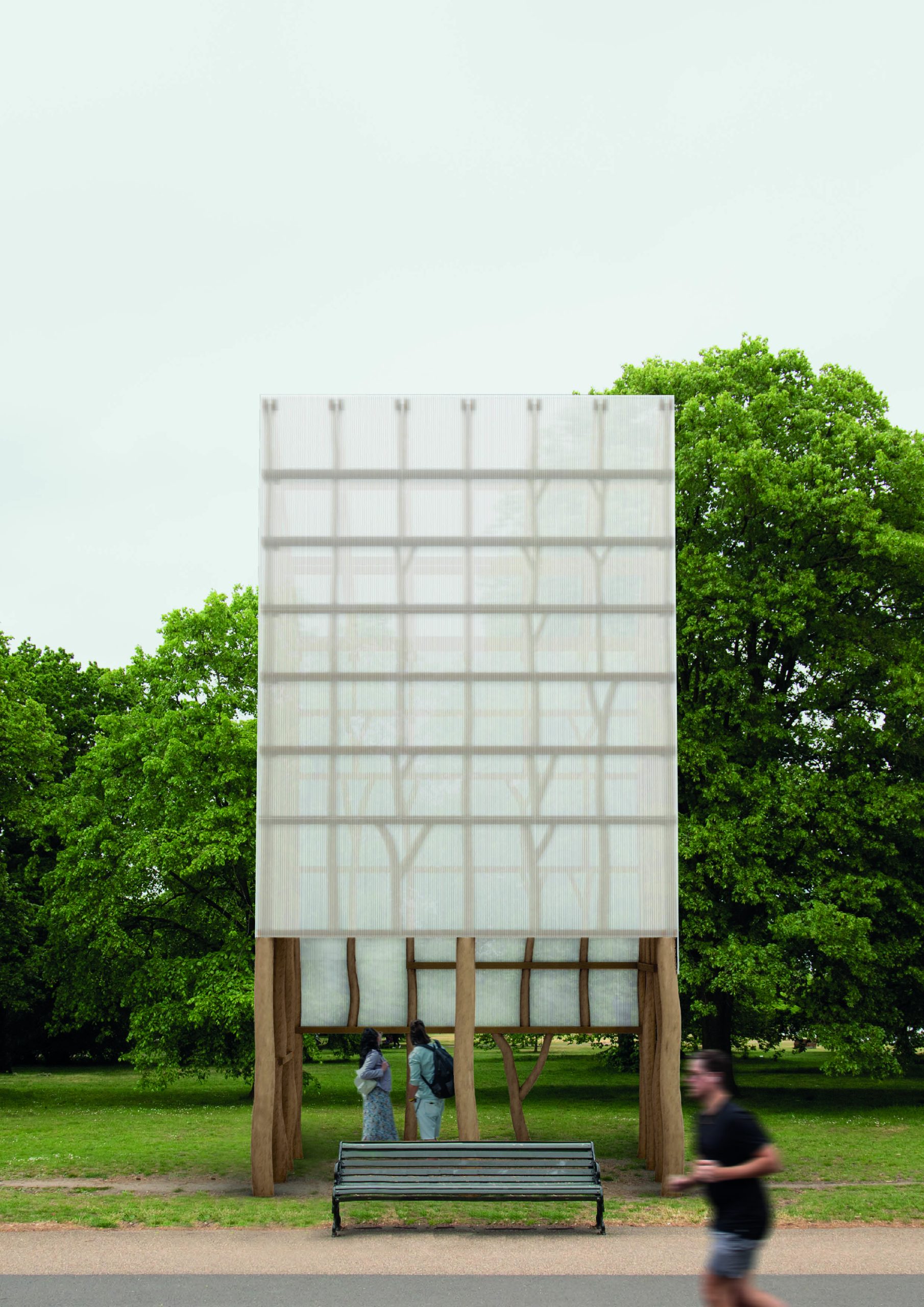
By working with the inherent strength and irregularity of roundwood, Re-Jig reframes waste as a design constraint with architectural value. The project links material efficiency, carbon storage and expressive construction, offering a practical alternative to incinerating a substantial urban resource.
Project Credits
Project: Re-Jig
Designer: Ruben Greyson / @rubenheathgreyson
Institution: Royal College of Art / @royalcollegeofart
Programme: MA Architecture
Location: London, United Kingdom
Year: 2026
Photography and drawings: Ruben Greyson / @rubenheathgreyson
Related Posts
Previous Post
Next Post
- The timeless elegance of domestic appliances: From the Iconic Braun KF 20 aromaster to the German design ethos

- Emilio Ferro on the light, sound and memory of a place
- At Maniwa, an architect’s family home opens to the neighbourhood
- What bronze remembers of the hand

- Caught in light: Moradavaga’s suspended shoal

- The making of Alex Chinneck’s impossible Dior windows