
Now Reading: Mandarin Oriental Costa Navarino settles into the Peloponnese landscape
- 01
Mandarin Oriental Costa Navarino settles into the Peloponnese landscape

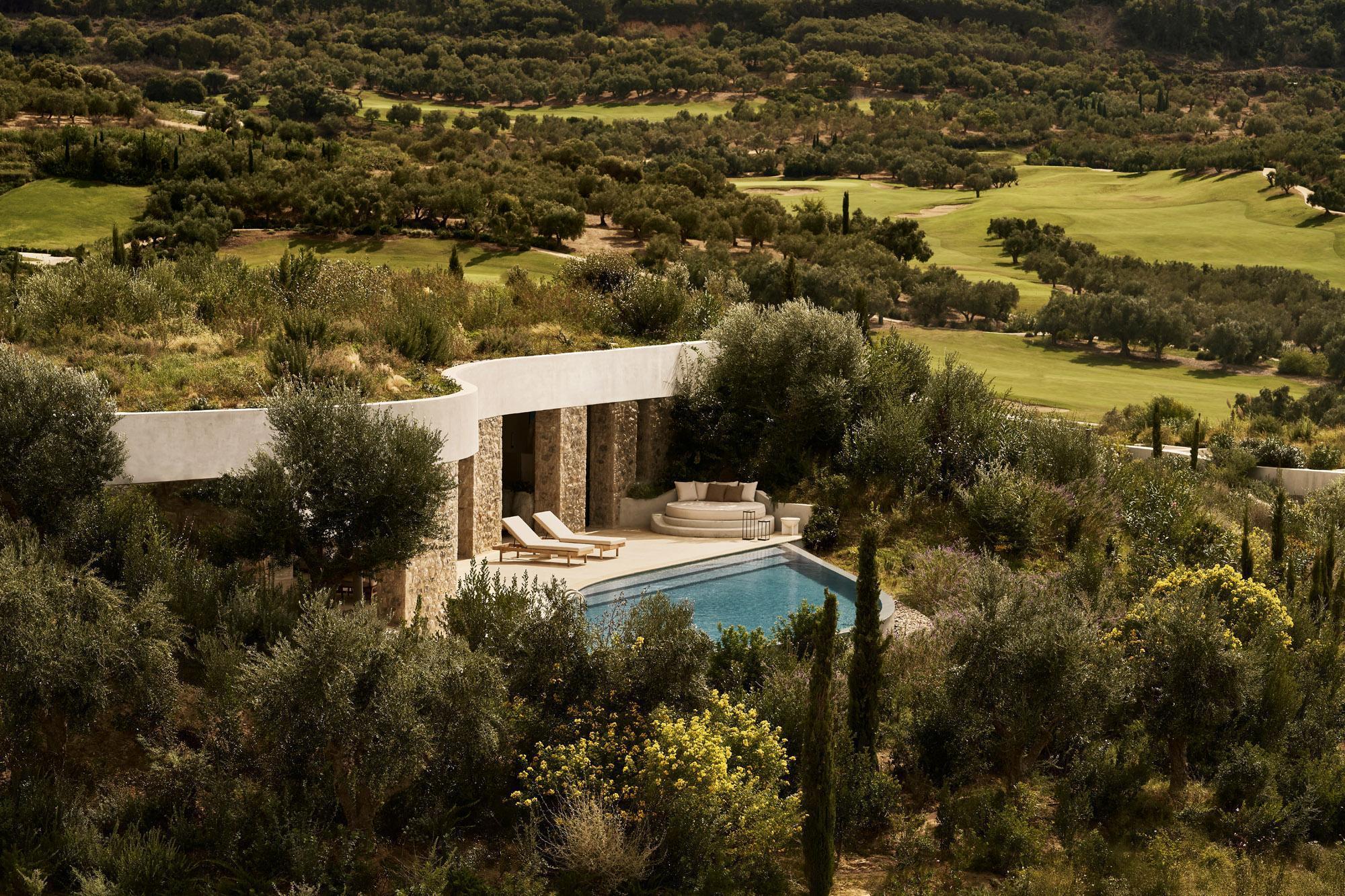

Set above the Bay of Navarino in the Peloponnese, Mandarin Oriental Costa Navarino is conceived as a luxury resort that does not impose itself on the landscape, but grows out of it. Designed by Alexandros N. Tombazis and Associates Architects S.A. in collaboration with K Studio, the project brings together hospitality, landscape, interior design and environmental thinking within a carefully dispersed architectural framework.

The resort belongs to Costa Navarino, a destination already shaped by a long conversation between tourism, ecology and the cultural memory of Messinia. Here, the ambition was not simply to create another international retreat, but to translate the standards of a global hospitality brand into a spatial experience rooted in land, climate and local forms of settlement.
The masterplan takes inspiration from the mandria, the traditional stone enclosures found in rural Greece. Built with pragmatic intelligence, these structures adapt to slopes, fields and natural boundaries without forcing geometry onto the terrain. At Mandarin Oriental Costa Navarino, this logic is reinterpreted at the scale of a resort.


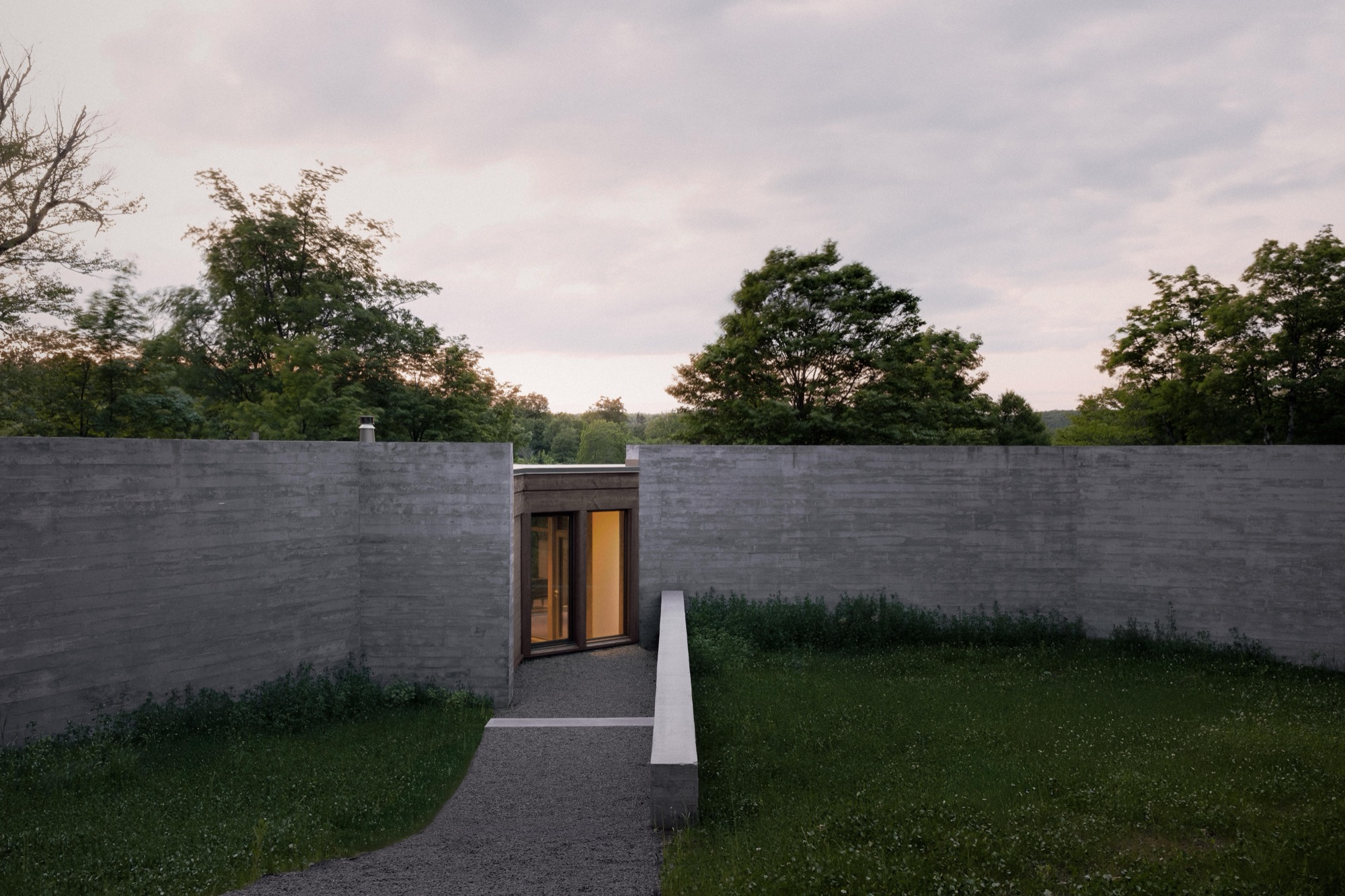
Rather than arranging accommodation around a single monumental building, the project is organised as a loose constellation of clusters following the contours of the hillside. Forty eight earth sheltered private villas with pools are embedded into the landscape, giving the resort a sense of intimacy despite its scale. Each unit feels autonomous, protected and connected to its own garden, while still belonging to a wider architectural village.
This decentralised structure also shapes the rhythm of the guest experience. Interiors open towards shaded outdoor spaces, creating a gradual sequence between room, terrace, courtyard and landscape. Deep openings, broad overhangs and filtered views produce a sense of refuge, while keeping the surrounding topography constantly present.

Mandarin Oriental Costa Navarino resists the visual language of resort spectacle. Its architecture is restrained, tactile and quiet. Stone, terrazzo and Mediterranean tones are used with precision, allowing material texture to carry much of the atmosphere. Interiors refer to the region without becoming nostalgic, while selected international details introduce the cosmopolitan character expected of a Mandarin Oriental destination.
The result is a hybrid form of hospitality. It neither replicates a traditional village nor erases the memory of one. Instead, it abstracts rural typologies through contemporary construction, careful planning and a softened material palette. The architecture gives guests a strong sense of place without reducing that place to decoration.


Space planning is deliberately intuitive. Views are framed from key interiors, circulation is kept clear and legible, and open air routes allow nature to remain part of the daily experience. The resort’s public areas, private villas, terraces and gardens are held together by a spatial language that values calm over drama.

The project’s relationship to climate is not only aesthetic. Its dispersed layout supports operational flexibility, allowing clusters of rooms or villas to be opened or closed according to seasonal demand. This improves energy performance without compromising the guest experience.
Outdoor circulation reduces the need for cooled internal corridors, while covered terraces, entry courtyards and semi protected thresholds moderate sun, wind and heat. The architectural language of shade becomes both a sensory and environmental device.
Passive strategies are central to the design. Planted roofs, thermal mass and cross ventilation help regulate internal conditions, while locally sourced materials, water efficient planting, low impact lighting and energy zoning reinforce the resort’s ecological agenda.


Alexandros N. Tombazis and Associates Architects has been working with Costa Navarino for nearly three decades. Founded in Athens in 1963, the studio has long been associated with bioclimatic design in Greece, having introduced energy conscious architectural thinking at a time when the term was still unfamiliar in the country.


For Costa Navarino, the practice has served as Lead Architect on several five star hotels in Messinia, including The Romanos, a Luxury Collection Resort, The Westin Resort Costa Navarino, W Costa Navarino and Mandarin Oriental Costa Navarino, the latter completed in collaboration with K Studio.
K Studio, also based in Athens, was founded by brothers Dimitris and Konstantinos Karampatakis. Over more than two decades, the practice has developed a body of work across hospitality, residential and public projects, often defined by immersive spatial experiences that draw from heritage, craft and context.
Mandarin Oriental Costa Navarino proposes a model of resort making in which luxury is measured less by display than by relation. Its architecture is international in standard but local in temperament. It offers privacy, comfort and refinement, yet remains attentive to terrain, climate and cultural continuity.
In doing so, the resort shows how contemporary hospitality can move beyond image making. It suggests that a destination can be expansive without becoming dominant, luxurious without excess and deeply rooted without imitation. At Costa Navarino, architecture, landscape and guest experience are brought into a calm and carefully balanced alignment.

Project Credit
Project: Mandarin Oriental, Costa Navarino
Location: Costa Navarino, Messinia, Peloponnese, Greece
Architecture: Alexandros N. Tombazis and Associates Architects S.A.
Collaborating Architect: K Studio
Number of Villas: 48 private earth sheltered villas with pools
Year: 2026
Photo: BREBA Claus Brechenmacher & Reiner Baumann
More Photos