Now Reading: Architecture dissolving into the chestnut groves of Moganshan
- 01
Architecture dissolving into the chestnut groves of Moganshan


Set on a mountainside in Moganshan, Zhejiang Province, Chestnut Grove Courtyard transforms a neglected agricultural structure into a quiet retreat embedded within a dense chestnut forest. Located beside Gaofeng Chan Monastery and surrounded by tea plantations, the project explores how small-scale architecture can reactivate rural landscapes while preserving their ecological and cultural atmosphere.

Rather than imposing a new architectural presence, the design approaches the site as a process of careful insertion. Existing terrain, vegetation and rural traces remain largely intact, allowing the architecture to appear as a series of light interventions dispersed through the forest.


A ZEN-INSPIRED SPATIAL SEQUENCE
The project is structured as a gradual spatial journey shaped by the surrounding landscape. At the entrance, a low stone wall and scattered natural rocks define a quiet threshold beneath mature chestnut trees. The restrained material palette of stone, gravel and timber establishes a subdued atmosphere where built elements recede into the forest environment.

Within the grove, a small serving pavilion becomes the first architectural focus. Its soft geometry is inspired by the rounded form of chestnut burrs, subtly referencing the agricultural identity of the site while echoing Zen notions of completeness and balance. A bamboo slatted canopy filters sunlight and casts shifting shadows across the space, reinforcing the sense that architecture here is inseparable from the surrounding forest.


-1024x699.jpg)
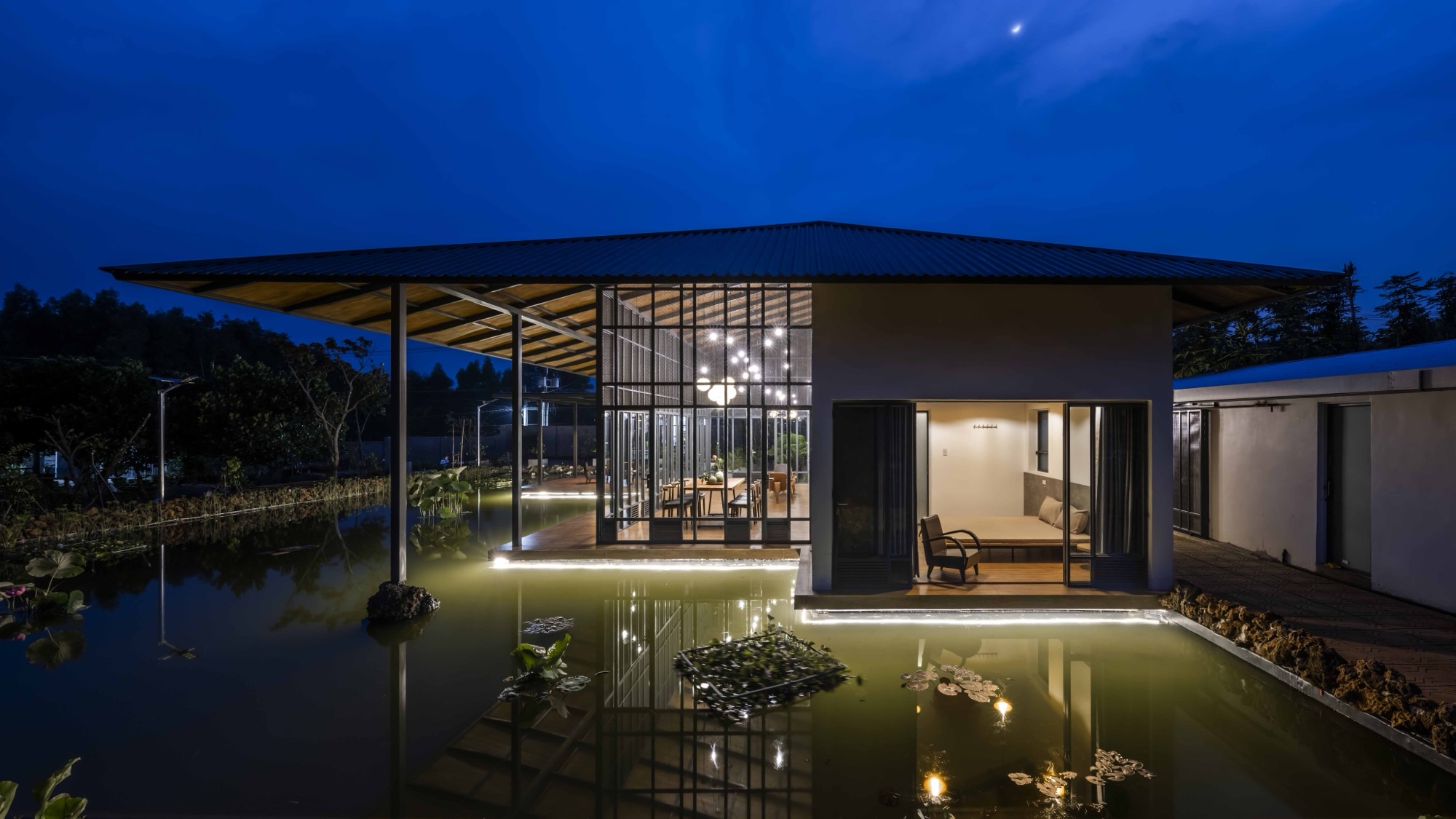
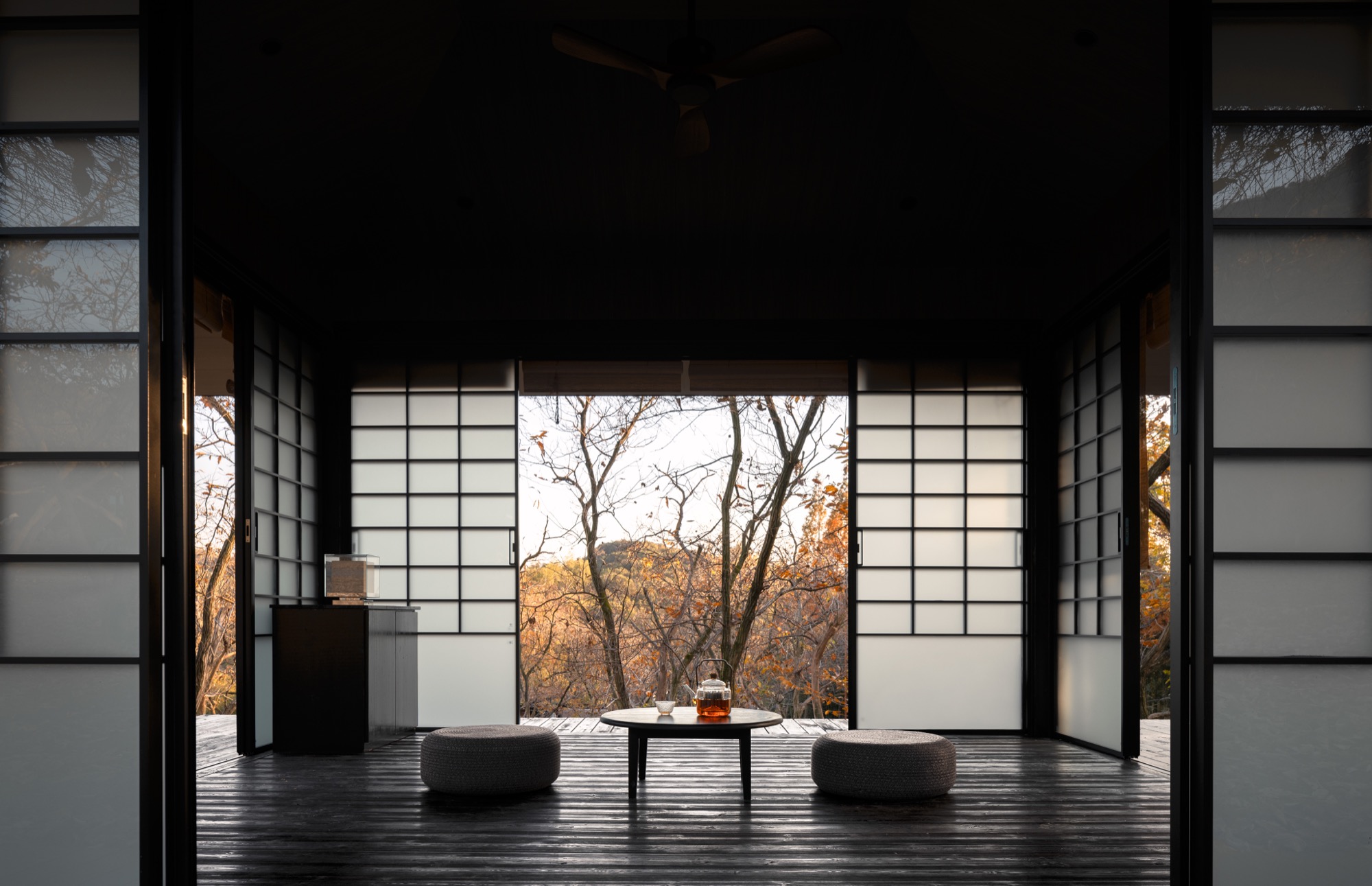
Opposite the pavilion, a tea house is positioned deeper within the chestnut grove. The building is lifted lightly above the terrain on a slender steel structure, allowing the natural ground and existing vegetation to remain undisturbed. From the hillside above, the structure appears embedded within the forest slope, dissolving the visual boundary between architecture and landscape.


Inside, dark timber surfaces establish a quiet interior atmosphere. Semi transparent screens organise the space while allowing light and shadow from the forest to permeate the rooms. Low tables and floor seating encourage a slower rhythm of occupation, while large openings frame views of the surrounding trees and distant mountains. The architecture acts less as an object and more as a device for observing the landscape.


A CAFÉ WITHIN THE WOODLAND
Further along the path stands the Lilin Coffee building, adapted from the original agricultural structure. The intervention preserves the existing pitched roof and basic form while refining the façade through dark timber cladding and large glass openings.


These transparent surfaces establish uninterrupted visual connections between interior and forest, allowing the surrounding vegetation to become part of the spatial experience. The building therefore maintains a quiet presence within the woodland, appearing as an extension of the landscape rather than a separate architectural object.
-1-1024x619.jpg)
Inside, the space functions both as a café and a place for quiet reflection. A small meditation area reinforces the project’s connection to the nearby monastery and its contemplative atmosphere.
-1-1024x564.jpg)

LANDSCAPE AS ARCHITECTURE
The eastern part of the site introduces water as a complementary landscape element. Spring water is guided through the terrain to form a small stream that flows gently through a bamboo grove before reaching a heart shaped pond. Wooden walkways and viewing platforms allow visitors to move close to the water while remaining immersed in the forest environment.
-1024x682.jpg)
-1024x682.jpg)
Nearby, a small tea pavilion continues the architectural language of dark timber and translucent screens. The interior frames views of bamboo, water and drifting mist, creating an intimate setting for tea drinking and quiet observation.


Hidden within the bamboo grove is a wind chime installation composed of slender red metal rods suspended vertically in a circular formation. Their movement in the wind produces subtle resonant sounds that echo through the forest, introducing a delicate sensory layer to the landscape.
-1-1024x734.jpg)
-1-1024x682.jpg)
ARCHITECTURE AS QUIET INTERVENTION
Chestnut Grove Courtyard demonstrates how minimal architectural gestures can reactivate overlooked rural environments. Through light structures, restrained materials and careful positioning within the landscape, the project allows the forest itself to remain the dominant presence.
-682x1024.jpg)


Rather than creating a destination defined by architecture, the design frames moments of stillness, observation and immersion in the natural surroundings. In doing so, it proposes an architectural approach that is less about form and more about atmosphere.
Project Credit
Project name: Chestnut Grove Courtyard at the Foot of Gaofeng Chan Monastery
Design period: April 2025 to December 2025
Design team: Parallect Design
Location: Gaofeng Village, Moganshan Town, Huzhou, Zhejiang Province, China
Site area: 10,300 square metres
Photographers: Wang Shang, Lilin Coffee
More Photos