Now Reading: Marius Troy and the atmosphere of the imagined
- 01
Marius Troy and the atmosphere of the imagined


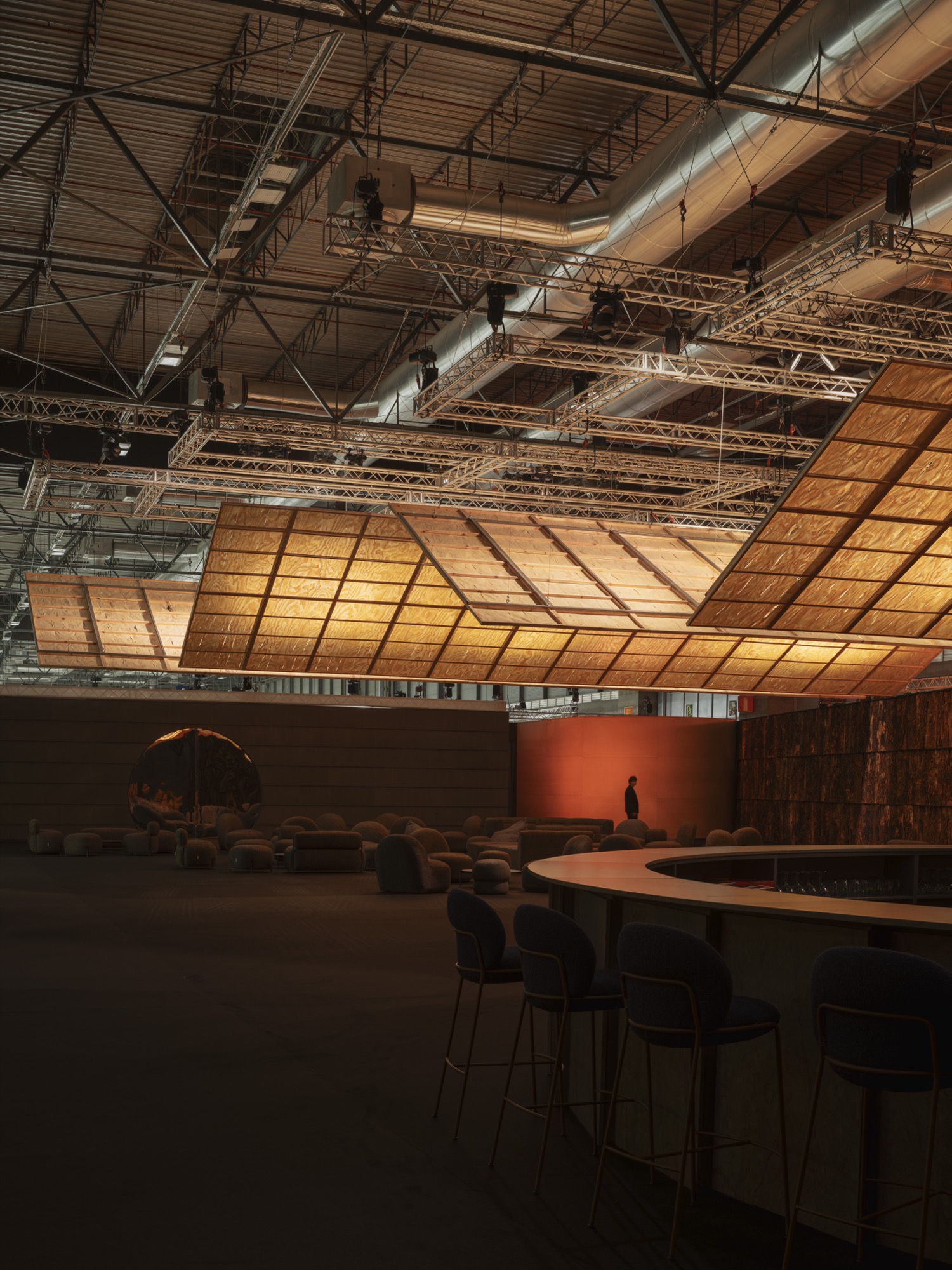
On 27 February 2026, Norwegian artist Marius Troy shared an image titled Les Perles du Ciel on Instagram as part of a conceptual series exploring humanity’s relationship with the mysteries that fall from the sky. The work is not presented as a realised installation but as an imagined spatial environment. Suspended high above a dim interior, an inverted vessel releases a cascade of luminous droplets that descend through darkness like fragments of light.


The image does not rely on spectacle. Instead it constructs a perceptual condition. Gravity appears ceremonial rather than physical, and water seems to exist somewhere between material and atmosphere. The surrounding hall reads less as architecture in the conventional sense than as a contemplative chamber, a place where light, matter and imagination intersect.


This sensitivity to perception runs throughout Troy’s practice. Based in the coastal town of Åsgårdstrand in Norway, he works across image making, new media and immersive environments. Before developing his independent artistic voice, Troy spent more than a decade working as an art director, photographer and curator within fashion and commercial image culture, collaborating with brands including Dolce and Gabbana, Dior, Nike and Oakley. The discipline of that world remains visible in his work. His images feel atmospheric and open, yet they are composed with precision.
Troy often frames his approach through three ideas: curiosity, discovery and challenge. These principles suggest a practice oriented less toward stable representation than toward opening perceptual thresholds. He has described his interest in creating objects that question assumptions about what is real. His works therefore function less as answers than as invitations to look again.
Imperfection forms an equally important dimension of this thinking. Troy has spoken about imperfection as a marker of authenticity, echoing the idea that light enters through the cracks in things. Within his images this notion becomes formal rather than rhetorical. Instead of pursuing the seamless surfaces often associated with machine generated imagery, his compositions retain softness, haze and emotional residue. Their strength lies not in technical polish but in the suggestion that something remains unresolved within the image.


Nostalgia also operates quietly within Troy’s work. Growing up among the subdued coastal landscapes of Norway, he developed an affinity for spaces shaped by silence and atmosphere. Nostalgia, in his own description, is not sentimentality but a form of emotional memory. It allows fragments of past sensations to reappear in new visual contexts. The resulting images often feel strangely familiar, as though they remember something that has never fully existed.
This sensibility informs Troy’s relationship with artificial intelligence. Rather than treating AI as an autonomous creative force, he consistently describes it as a tool. Much like a camera or brush, it becomes a medium through which internal images can be explored. The technology may generate visual possibilities, but authorship emerges through selection, composition and editing.
Atmosphere therefore becomes the central language of his work. Troy has remarked that atmosphere allows viewers to feel an image before they understand it. His compositions rarely unfold as narrative scenes. Instead they establish emotional climates. A space might appear quiet, luminous or suspended, inviting viewers into a state of reflection rather than explanation.
Les Perles du Ciel illustrates this approach with particular clarity. The suspended vessel and its descending droplets suggest revelation, but the work avoids fixed symbolism. The pearls implied in the title evoke gift, rarity and impermanence, yet the image leaves these associations deliberately open. The viewer encounters not a closed allegory but a field of interpretation.
This openness extends into Troy’s Aurum Portals series. Each work begins through a dialogue with generative image systems before being refined through Troy’s own compositional process. He curates, layers and colour grades the images until they reach a coherent atmosphere. The final works are released as limited edition prints, combining digital experimentation with a tactile sense of authorship.
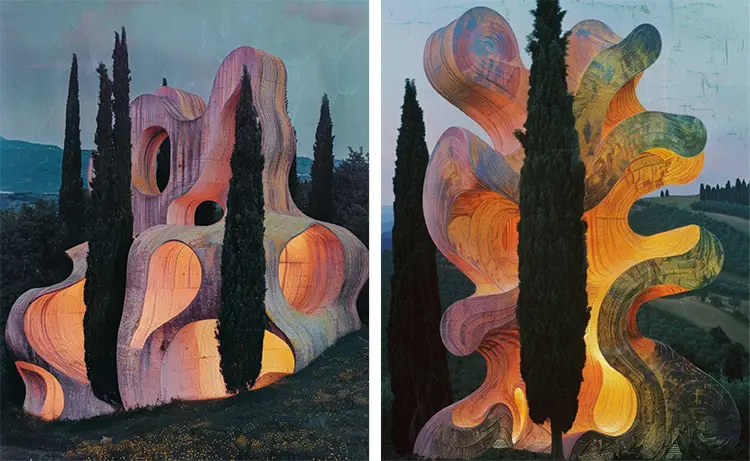
The motif of the portal itself offers an apt metaphor for Troy’s wider practice. A portal is neither a destination nor an escape. It is a threshold. In these images it becomes a symbolic passage between inner perception and external reality.
Troy has also begun translating these visual ideas into immersive environments. One of the most notable examples is HEKA, an installation that converts sound frequencies into evolving visual forms across a projected ceiling. Participants lie beneath the environment while audio signals shape the luminous patterns above them in real time. The work moves Troy’s interest in atmosphere from the speculative space of images into the embodied experience of installation.


In this shift from image to environment, Troy’s practice reveals a consistent concern with presence. His works invite viewers not only to observe but also to inhabit perceptual states. Light becomes architecture. Sound becomes movement. Image becomes atmosphere.
Within the rapidly expanding field of AI mediated art, Troy occupies a distinctive position. Many artists working with generative systems foreground technological novelty. Troy instead approaches the technology with restraint. The machine expands the visual field, but it does not dictate the emotional register of the work.
What ultimately defines Troy’s practice is its commitment to sensation. His images do not compete for attention through spectacle or complexity. They operate more quietly, asking viewers to slow down and enter the atmosphere they create.


Les Perles du Ciel remains a powerful entry point into this way of thinking. Though imagined rather than physically realised, the work reveals the essential structure of Troy’s art. It proposes a space suspended between memory and invention, where perception becomes fluid and meaning unfolds gradually.
In an era saturated with images, Troy’s work suggests another possibility. Instead of overwhelming the viewer, it offers moments of pause. Instead of asserting certainty, it opens thresholds of curiosity.
Through these imagined environments and immersive experiments, Marius Troy continues to explore how images can function not only as representations but as spaces of experience. His work reminds us that even in the digital age, the most compelling art often begins with something simple: the quiet sensation that another reality might be waiting just beyond the visible.
Photo Cover
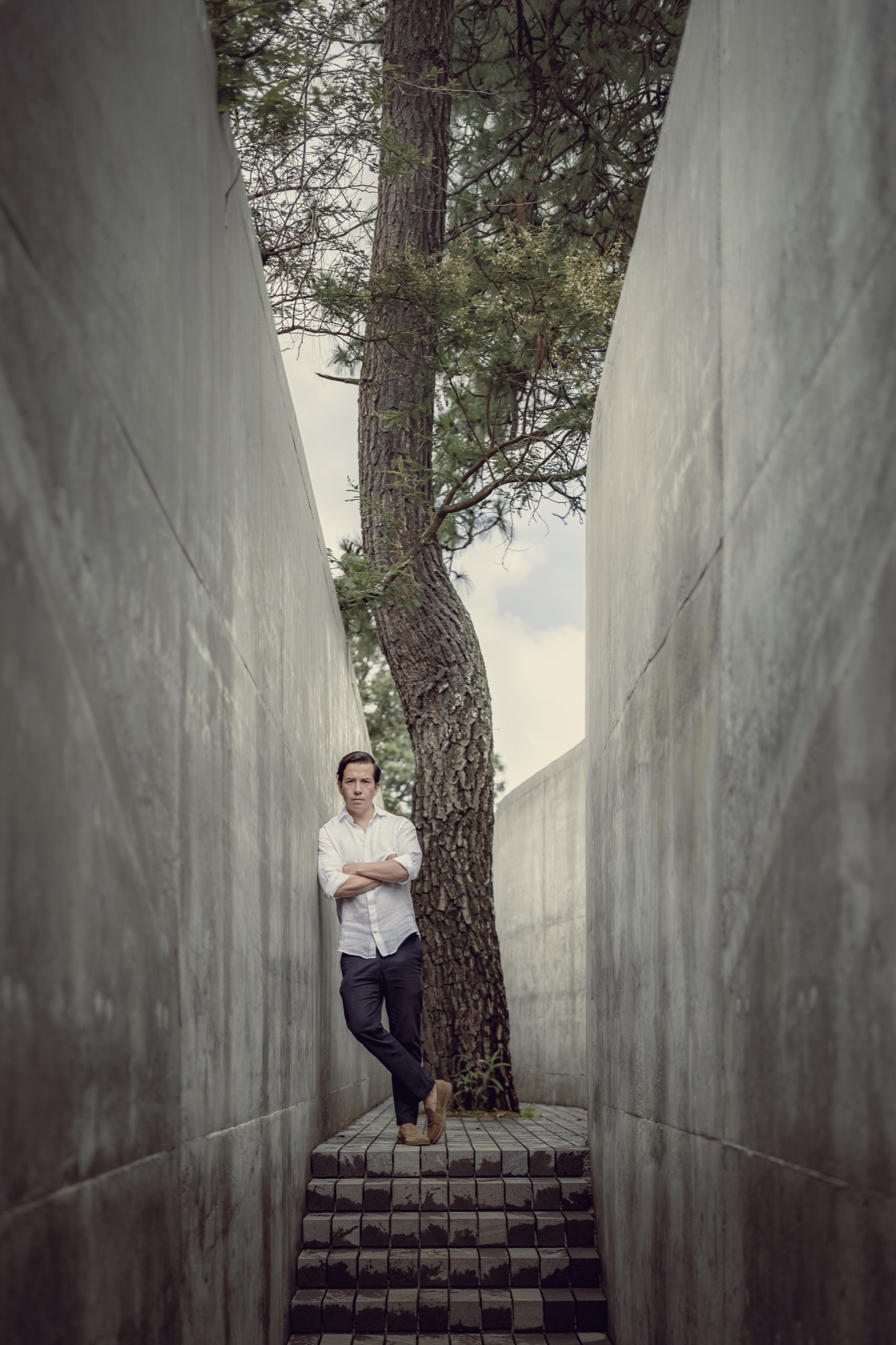
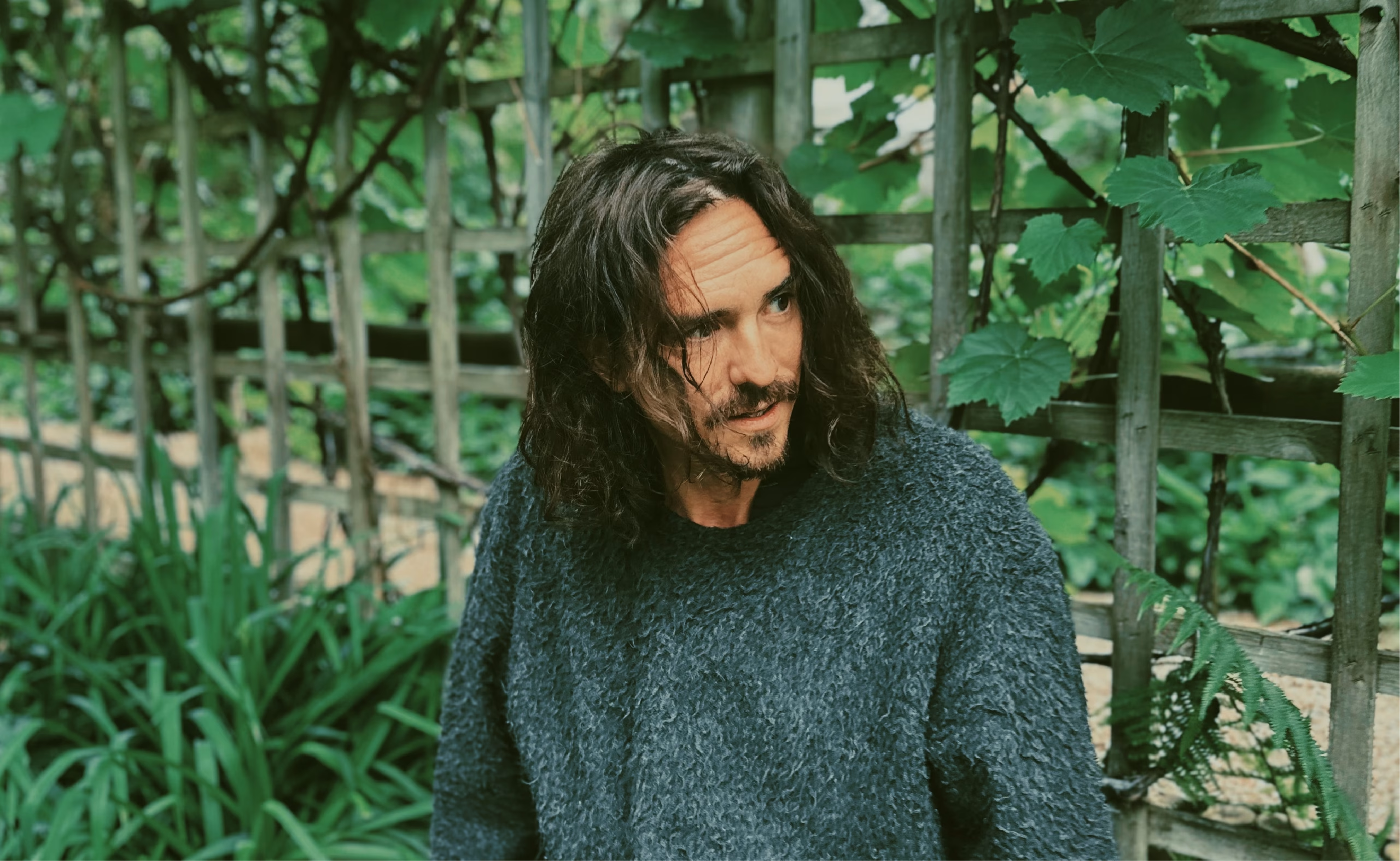
Portrait of artist Marius Troy. Credit: Image courtesy of Marius Troy.