
Now Reading: A farmhouse turned inside out
- 01
A farmhouse turned inside out

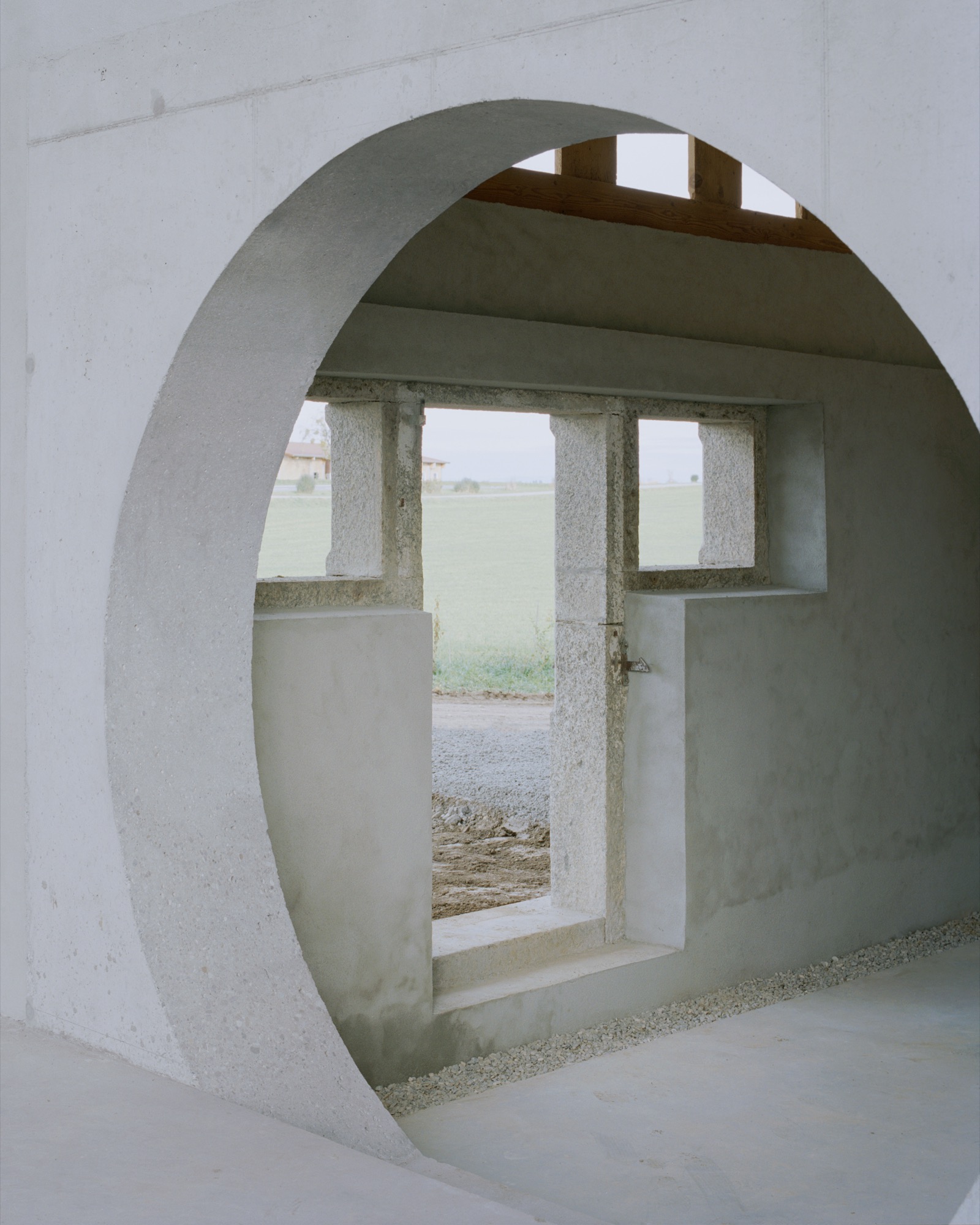

Set in La Bruyère, Vuisternens devant Romont, this project reconsiders the future of a 19th century farmhouse typical of the region, where domestic life and agricultural production were historically gathered beneath a single expansive roof. Stripped of its farming function and located outside the official building zone, the structure had become increasingly difficult to sustain. Its monumental volume contrasted sharply with the limited habitable surface allowed by regulation. Within this constraint, the client’s hybrid programme combining housing and permaculture offered a rare chance to requalify the entire building as a coherent architectural organism.

The project responds by inverting the farmhouse’s original logic. The former agricultural volume is transformed into the primary living space, while the south facing residential wing is completely emptied and reimagined as a greenhouse dedicated to permaculture. This reversal allows the building’s most generous spaces to support domestic life, while transforming the former dwelling into a productive landscape that extends the house into a cultivated environment.


Because the barn remains oversized for purely domestic needs, the intervention introduces a self contained volume set back from the existing envelope. This strategy creates a series of intermediate zones between old and new, which alternate between planting areas and covered outdoor spaces. These thresholds mediate between habitation and cultivation, interior and exterior, reinforcing the project’s ecological and spatial continuity.


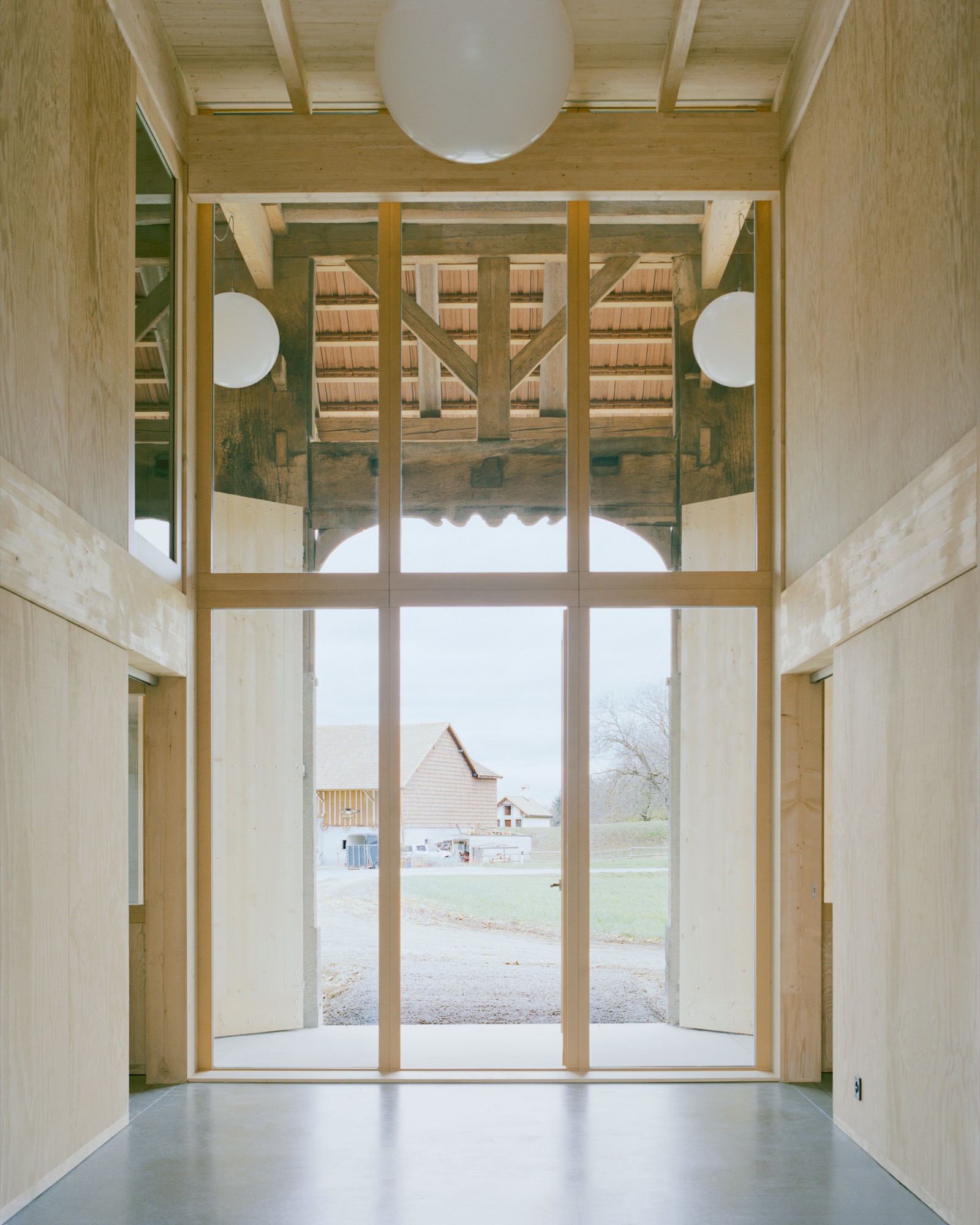
To root the new dwelling within the logic of the existing structure, the inserted volume is conceived as a timber structural grid aligned with the module of the original roof framework. Timber and glass walls complete this system, ensuring an efficient transfer of roof loads while avoiding the appearance of an alien insertion. The new architecture reads as a calibrated transformation rather than a rupture, allowing the historic envelope to remain legible.


The interior organization follows the cadence of the original farmhouse. Bays corresponding to former haylofts accommodate the main living spaces, benefiting from double height volumes and generous through views. In contrast, areas aligned with former stables and storage zones are articulated by terracotta brick cores that house service functions. These solid elements punctuate the plan while grounding it materially.


Lateral enfilades link the different rooms, reinforcing a continuous spatial experience and heightening the perception of the building’s exceptional scale. The result is a domestic landscape that preserves the memory of agricultural use while opening the farmhouse to new forms of living, production, and coexistence.


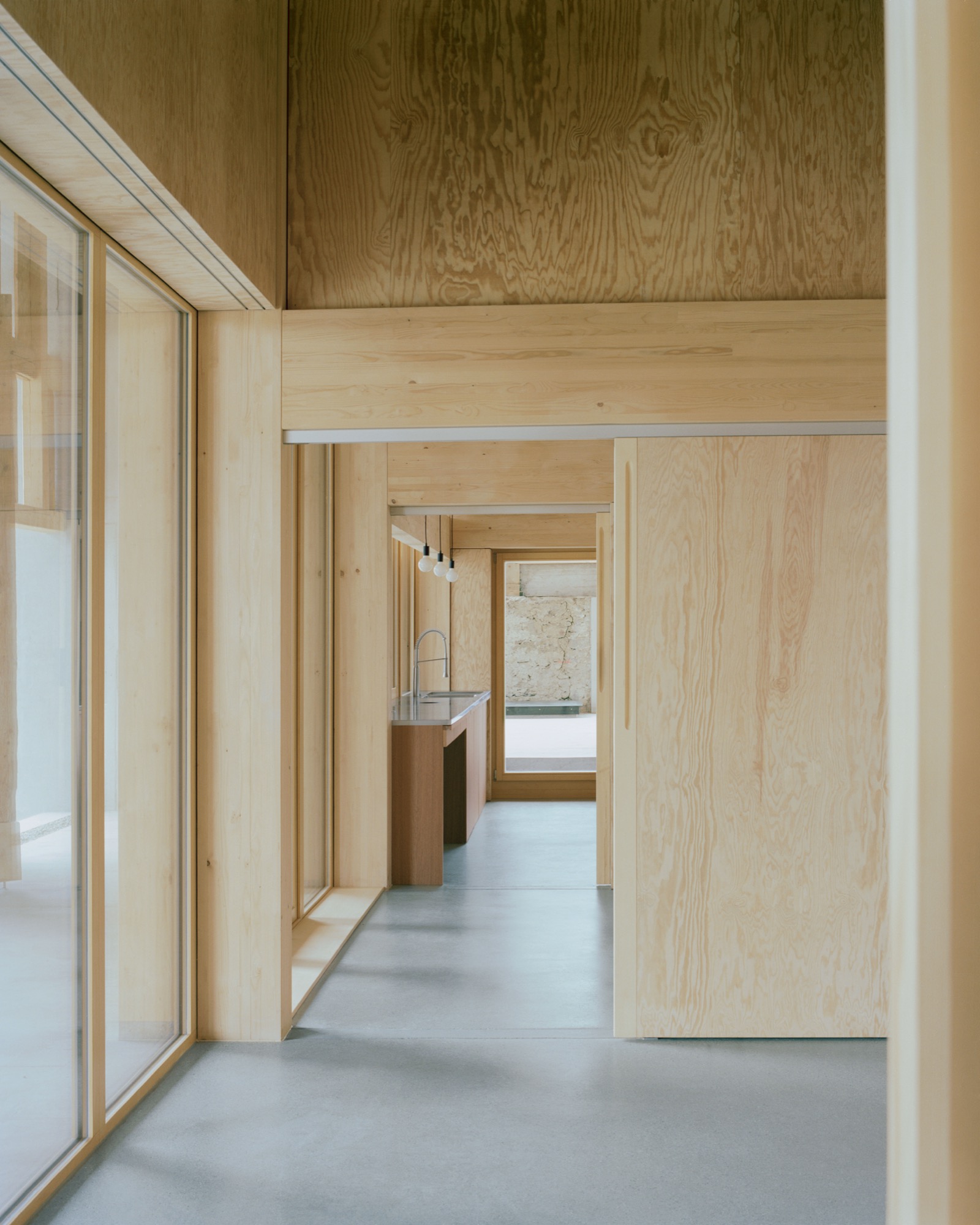
By reassigning functions rather than erasing them, The Inverted Farm proposes a precise and contemporary answer to rural reuse, where architecture becomes a mediator between heritage, regulation, and new ecological practices.


Project Credit
Project name: Conversion of a farmhouse in La Bruyère
Location: Vuisternens devant Romont, Switzerland
Design studio: BARD YERSIN architectes / @bard.yersin.architectes
Photography: Willem PAB / @willempab