
Now Reading: Modern architecture in pyongyang: monument ideology and the city of juche
- 01
Modern architecture in pyongyang: monument ideology and the city of juche

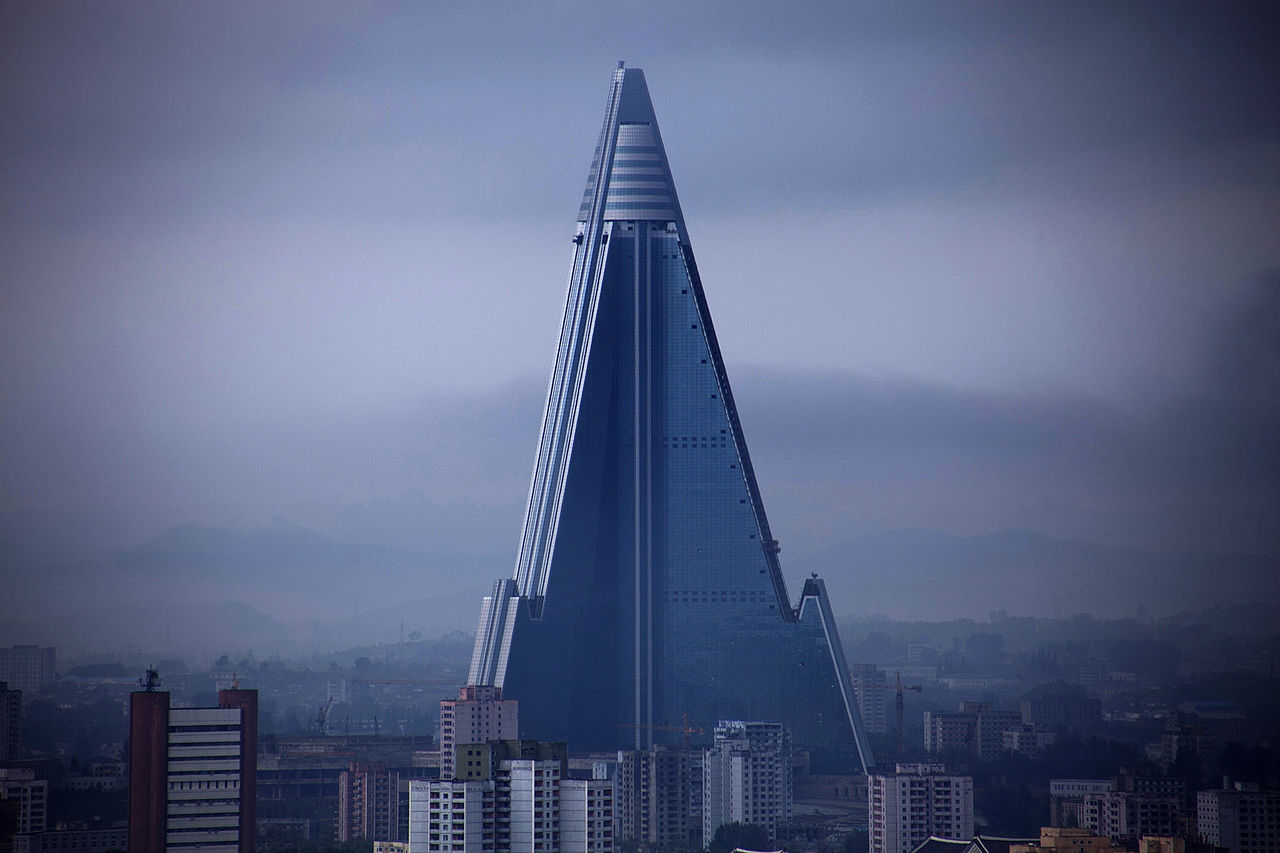

From the unfinished Ryugyong Hotel to Pyongyang’s pastel high rises, North Korea’s built environment reveals how architecture becomes an instrument of ideology discipline and endurance within a hermetically controlled city.
THE ENIGMA OF PYONGYANG
At dawn in Pyongyang, the Ryugyong Hotel rises from the haze with an almost implausible clarity. Its pyramidal mass, sharply inclined and unwavering, interrupts the low skyline with a scale that feels both deliberate and unresolved. Begun in 1987 at the height of late Cold War ambition, the 330 metre structure was conceived as a declaration of modernity, engineered to dominate not only the city but the narrative of a nation. Yet decades later, despite its glass clad revival, the building has never achieved functional completion. It exists suspended between monument and mirage. Standing at its base, one senses not failure but a condition of architectural stasis. The structure reveals how, in North Korea, architecture is not asked to adapt or evolve, but to endure, quietly bearing the weight of ideology aspiration and control.
Conceived during the competitive atmosphere of the final Cold War years, the Ryugyong Hotel was intended to surpass regional counterparts and project technical competence on a global stage. Rising to 105 floors, it promised revolving restaurants and panoramic views, signalling Pyongyang’s ambition to stand among the modern capitals of the world. Construction stalled in the early 1990s following economic collapse after the dissolution of the Soviet Union, leaving the concrete frame exposed for more than a decade. When the exterior was eventually clad in reflective glass in 2008 as part of a foreign telecommunications agreement, the role of the building subtly shifted. No longer oriented toward operation as a hotel, it became an image surface, later animated by choreographed light displays. Architecture, here, did not resolve into use. It resolved into representation.

The Ryugyong serves as a point of entry into North Korea’s modern architecture more broadly. It exposes a central paradox of the country’s built environment. Grand visions are pursued with unwavering resolve, yet remain perpetually suspended by economic limitation and ideological rigidity. Within this context, architecture does not merely shelter life. It performs belief. It is the apparatus through which the state projects resilience continuity and authority, even as material scarcity and international isolation intensify.
FROM RUINS TO DOCTRINE: THE FORMATION OF JUCHE URBANISM
Pyongyang’s modern architectural identity emerged from near total destruction. During the Korean War, extensive aerial bombardment reduced much of the city to rubble. Postwar reconstruction transformed Pyongyang into a blank slate, shaped through socialist planning principles and Soviet technical assistance. Broad boulevards axial alignments and monumental civic spaces replaced the prewar urban fabric, producing a city structured not for organic growth but for ideological legibility.
Under Kim Il Sung, architecture was tasked with embodying Juche, the state philosophy of self reliance and national sovereignty. Urban form became a pedagogical instrument. Buildings were arranged to reinforce hierarchy, directing movement toward ideological centres and ceremonial spaces. Monumentality was not ornamental but instructional, intended to cultivate collective consciousness through scale and repetition.
The 1980s marked a rare outward facing moment. As South Korea prepared for the 1988 Olympics, North Korea sought architectural counter symbols capable of asserting parity. The Ryugyong Hotel represented the most ambitious of these gestures, envisioned as both skyline icon and ideological statement. Its halted construction revealed the fragility beneath monumental intent. The collapse of external support networks in the 1990s brought widespread hardship, transforming unfinished projects into silent witnesses of interrupted ambition.

A CURATED CITY: PYONGYANG UNDER KIM JONG UN
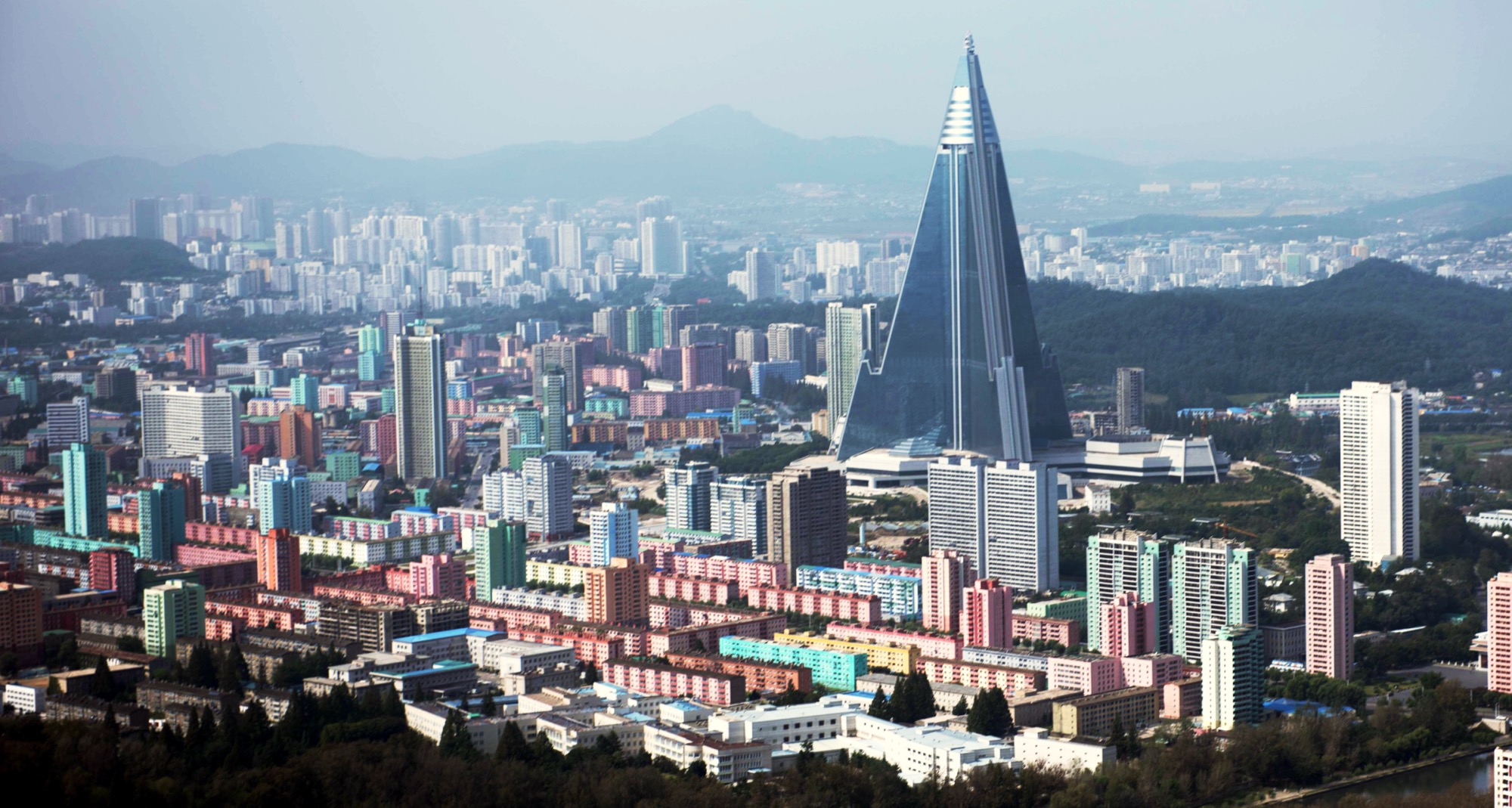
Since assuming power in 2011, Kim Jong Un has overseen an unprecedented wave of construction in Pyongyang. This period has seen the rapid emergence of residential districts leisure facilities and new urban landmarks, many characterised by a distinctly retro futuristic aesthetic. Pastel coloured towers curved facades and illuminated crowns now punctuate the skyline, marking a departure from the austere brutalism of earlier decades.
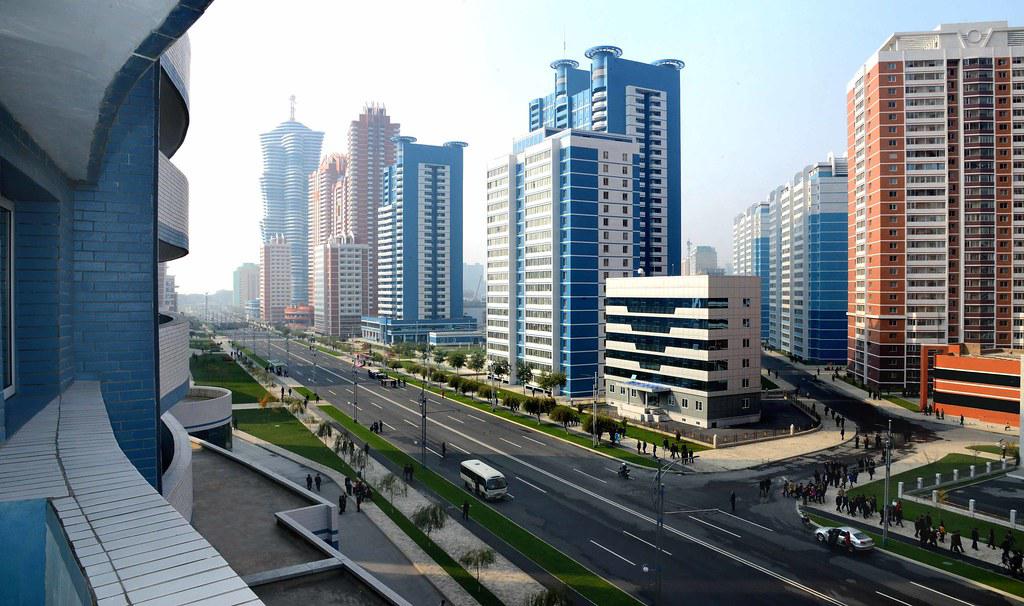
These developments are not merely residential. They function as symbolic environments, designed to reward loyalty and expertise while reinforcing social stratification. Housing allocation remains tightly controlled, with location and quality reflecting position within the state hierarchy.
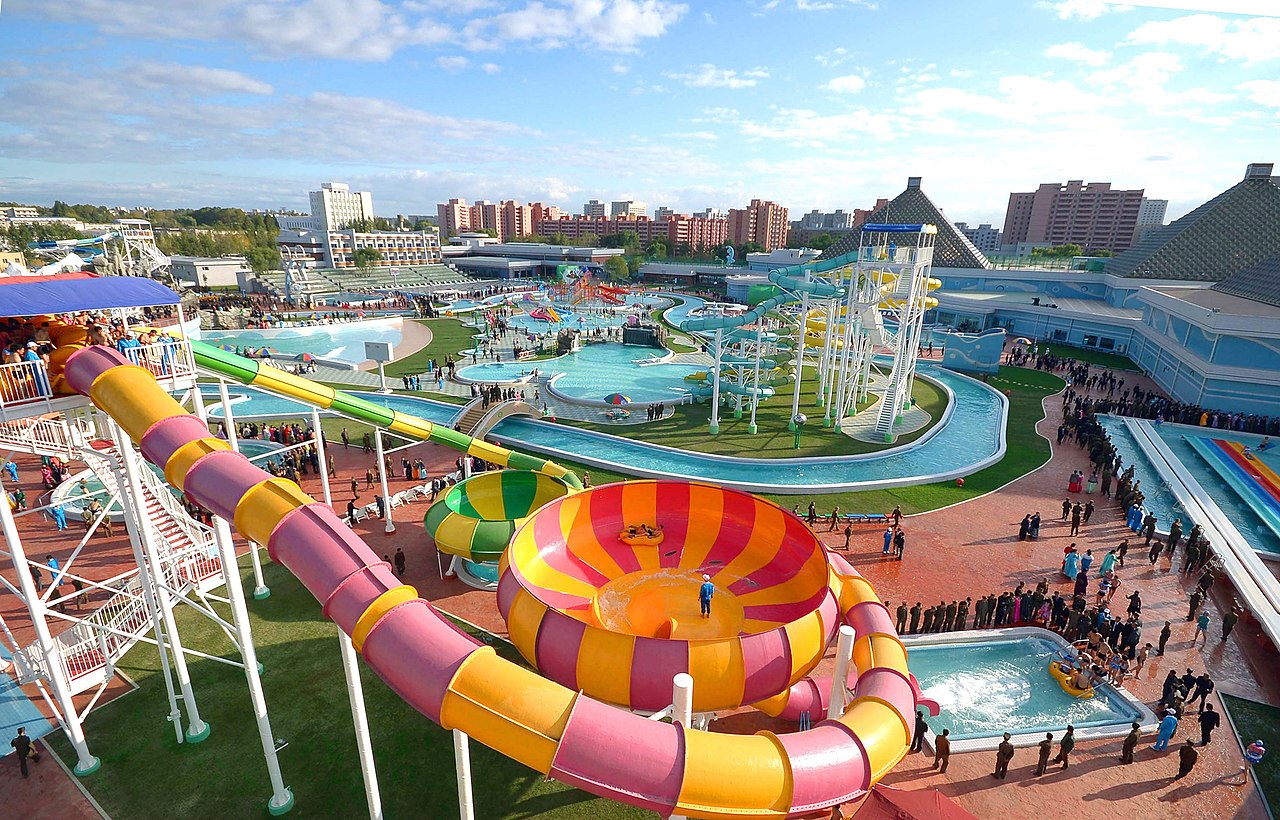
Leisure architecture plays a similarly strategic role. Water parks sports complexes and cultural centres create controlled spaces of enjoyment, reinforcing narratives of benevolent governance. Their expressive forms and vivid palettes evoke a vision of modernity rooted not in global contemporaneity but in a carefully curated future.
ARCHITECTURE AS INSTRUMENT
In Pyongyang, architecture operates as a central mechanism of governance. Urban planning disciplines movement visibility and congregation. Wide boulevards accommodate mass spectacles, while sightlines are managed to frame monuments and suppress unsanctioned views. Residential blocks are organised to facilitate oversight, embedding control within the spatial logic of daily life.
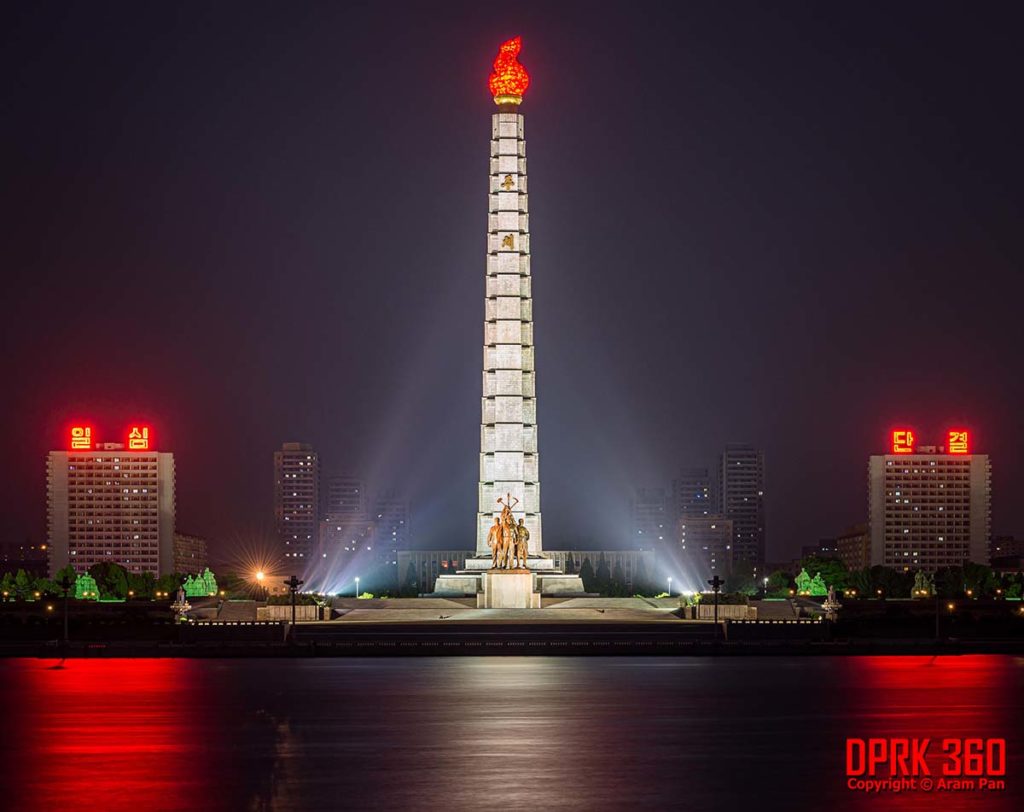
Symbolism permeates the built environment. Forms referencing mountains rivers and flames anchor architecture within revolutionary mythology. Monumental scale reinforces narratives of permanence, while repetition normalises ideological messages through everyday exposure.
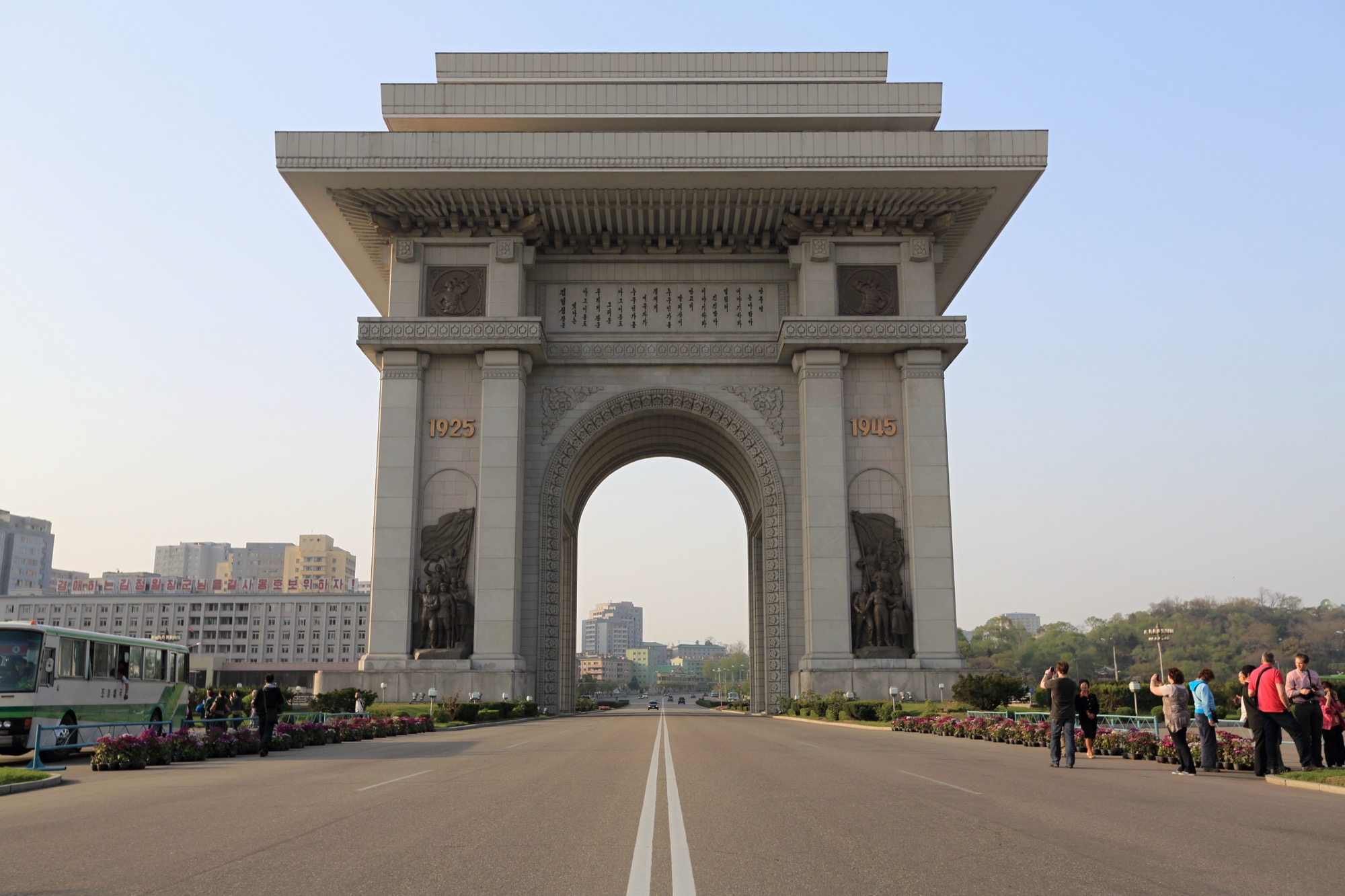
Unlike modernist traditions that privilege individual authorship or formal experimentation, North Korean architecture prioritises doctrinal clarity. Design is collective anonymous and subordinated to political legibility. Buildings do not invite interpretation. They instruct.

GLOBAL PARALLELS AND PERSISTENT ISOLATION
Pyongyang’s architecture invites comparison with other planned capitals and ideological cities, from Brasília to Ashgabat. Like these counterparts, it employs monumental form to materialise political aspiration. Yet North Korea’s profound isolation intensifies the effect. Cut off from international exchange, its architecture evolves inwardly, reiterating established motifs rather than absorbing external influence.

Speculation about future trajectories remains constrained by geopolitical realities. Large scale housing and tourism projects continue to be announced, yet progress remains uneven. Environmental pressure material scarcity and international sanctions limit the scope for genuine transformation. What emerges instead is a city perpetually under construction, where continuity matters more than completion.


Viewed through the lens of architecture, Pyongyang appears suspended between ambition and endurance. The Ryugyong Hotel, towering yet functionally absent, encapsulates this condition with striking clarity. It does not stand as a failed building, but as a monument to a particular conception of architecture, one in which form serves ideology and permanence outweighs adaptability.
For readers accustomed to the fluid exchange of ideas in global architectural culture, North Korea offers a stark counterpoint. Here, architecture is neither speculative nor experimental. It is declarative disciplined and singular in voice. To study it is not to admire its freedoms, but to understand the extraordinary capacity of the built environment to shape constrain and project belief.
Photo Cover
The Ryugyong Hotel in moody dusk light, its pyramid form a constant presence over Pyongyang’s streets. Credit: Wikimedia Commons