

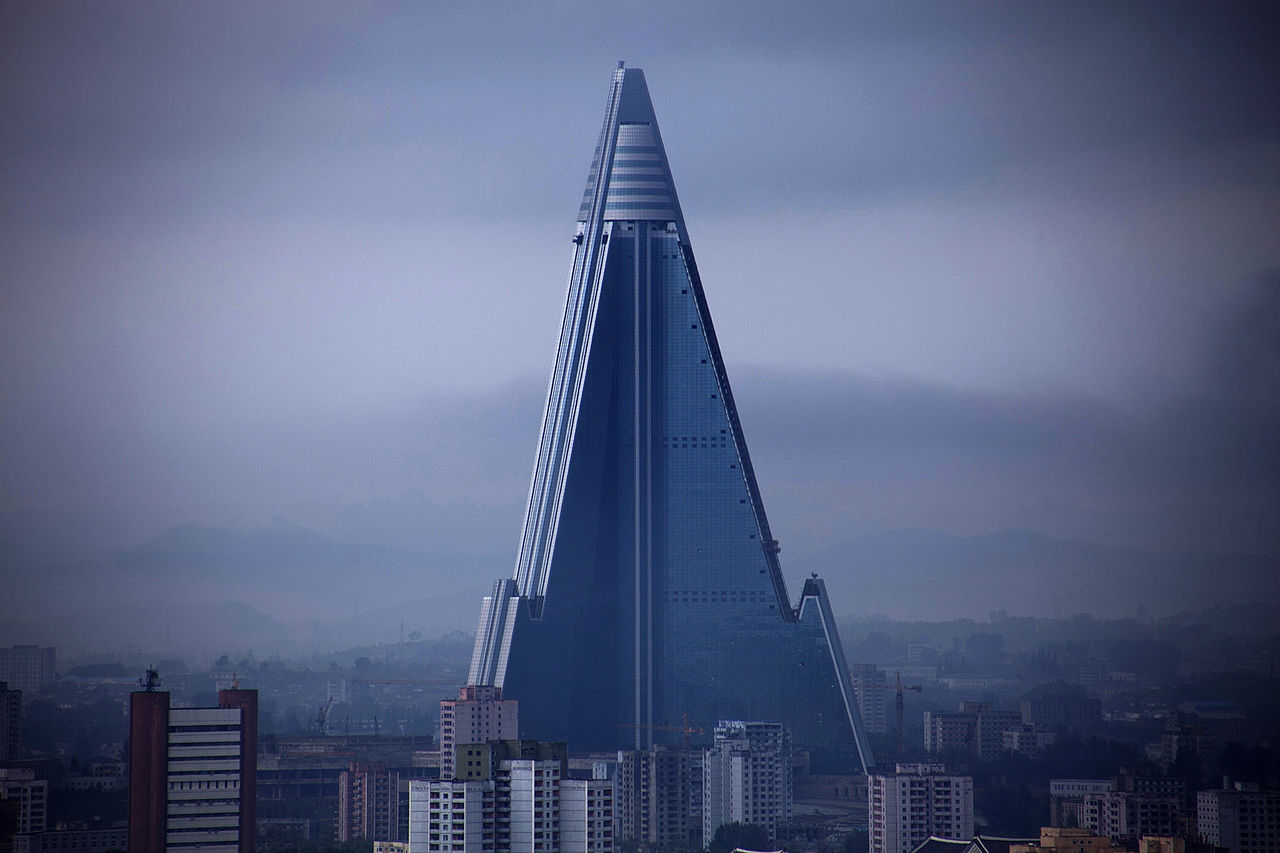
This essay examines the modern architecture of Pyongyang through the lens of ideology and urban form. From the unfinished Ryugyong Hotel to the city’s pastel high rises, the article explores how architecture in North Korea operates as a disciplined instrument of belief, governance and endurance. Positioned within a broader global context, the text reflects on monumentality isolation and the political capacity of the built environment.