
Now Reading: A concrete grid opens to earth, garden, and river
- 01
A concrete grid opens to earth, garden, and river

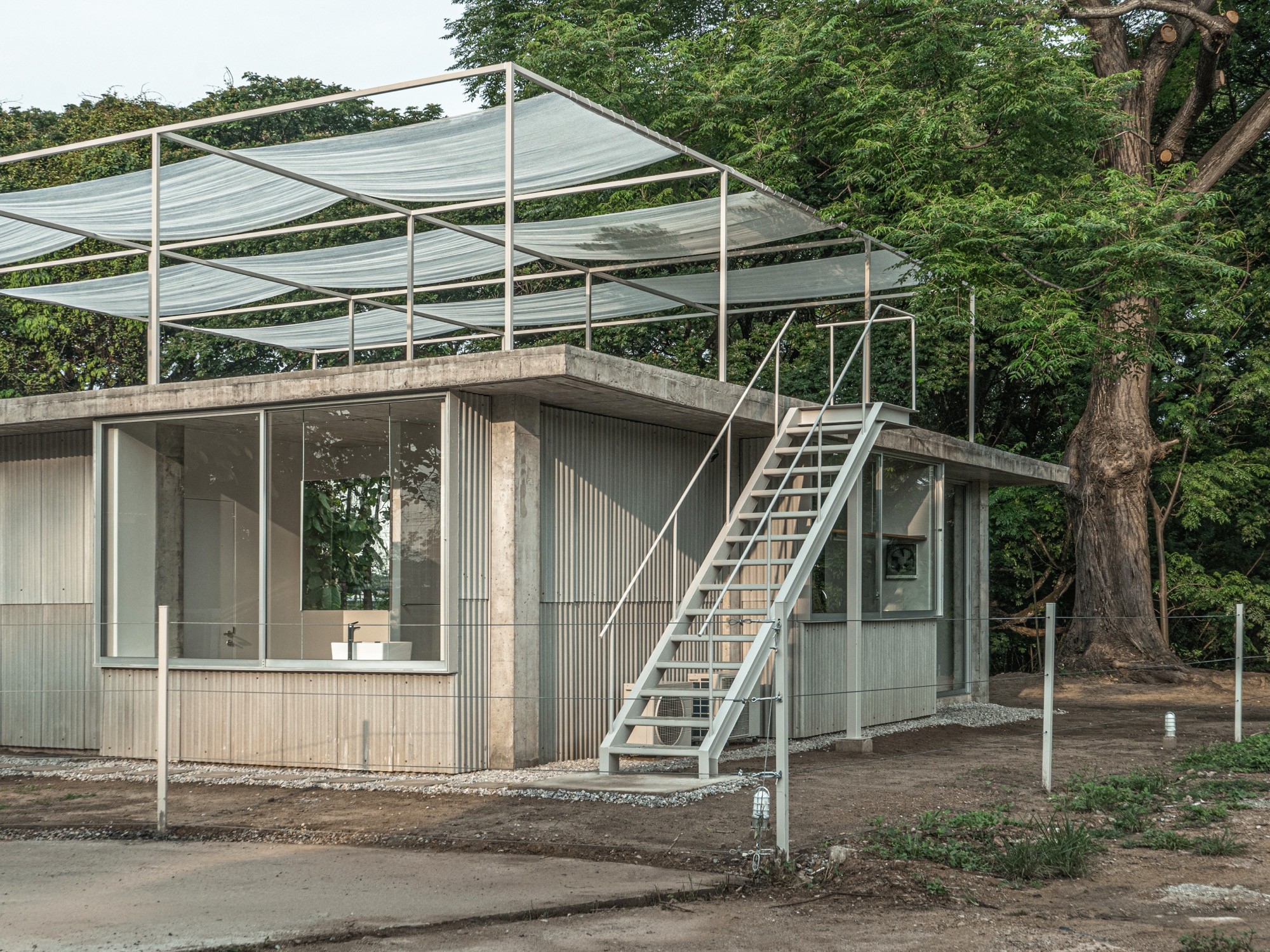

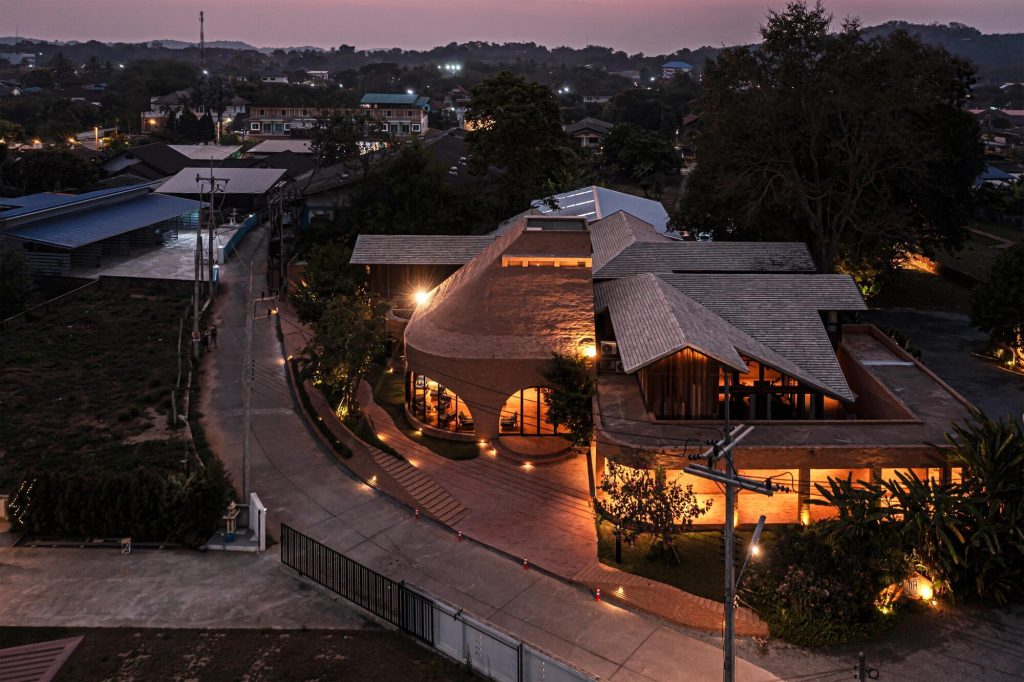
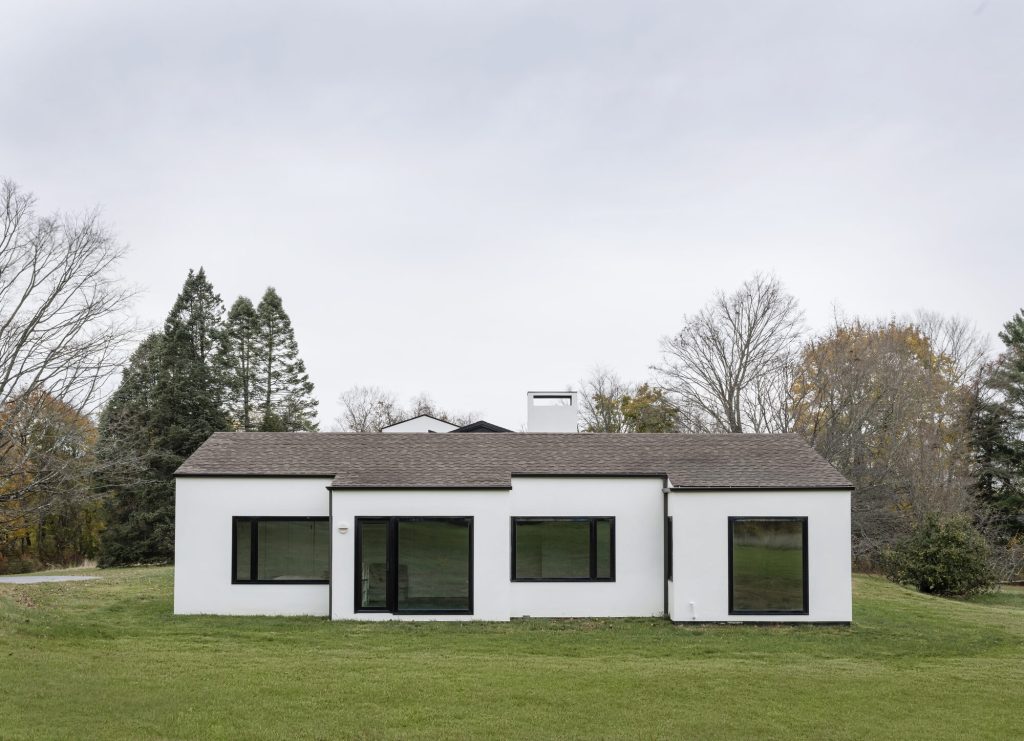
Nestled beside a quiet river in a residential enclave, this house is shaped by two conditions: dense planting and a wide western view toward the river’s bend, with a road pressing close on the east. From the street it reads as a restrained box, almost anonymous, defined by a single concrete roof slab held on a rigorous grid of columns. The grid does not dramatize the plan. It simply sets a calm order, allowing rooms to be divided and recombined with ease.


The project’s threshold is where its attitude becomes clear. When the gate like outer wall opens, the house stops behaving as an object and begins to act as ground. Boundaries soften as the earth floor, garden, river edge, and street align into a continuous field, encouraging daily life to spill outward and environmental forces to move inward. Sliding doors and partition walls sit within the column matrix to form three main zones under the roof, with no fixed hierarchy, only adjustable degrees of enclosure.


At the core, a porous earthen floor accepts gentle seepage and supports a cooler interior through airflow, turning humidity, wind, and shade into working elements of comfort. Above, the roof operates as a climatic buffer rather than a cap. Solar panels contribute energy, a steel frame carries adjustable sun shading fabric, and ventilated floor blocks reduce direct heat while sustaining cross ventilation. The house reads less as a finished form than as a small ecosystem, where earth, plants, rain, creatures, and humans share one adaptable framework.


Project Credit
Project name: House C
Location: Thailand, Chiang Mai
Design firm: Bangkok Tokyo Architecture / @bangkoktokyoarchitecture
Completed: 2023
Photo: Ratthee Phaisanchotsiri
More Photos