
Now Reading: Between communal memory and contemplation
- 01
Between communal memory and contemplation


In a contemporary architectural landscape increasingly shaped by speed, spectacle, and image consumption, the Pavilion of Ceramics and Tea Ceremony stands apart as a slow, inward-looking structure grounded in cultural continuity. Conceived by Nguyen Hong Quang, founder of toob studio, the project does not seek a formal fusion between Vietnam and Japan. Instead, it raises a more fundamental question: can distinct ritual traditions, shaped by different histories and modes of living, converge through a shared spiritual and material sensibility?
Drawing from the communal spatial logic of the Vietnamese ethnic Ede longhouse and its K’pan bench, the restrained introspection of the Japanese tea ceremony, and the atmospheric qualities of Phu Lang ancient village’s wood-fired kilns, the Pavilion unfolds as an architectural dialogue between collective memory and individual contemplation. In the following interview, Nguyen Hong Quang reflects on the conceptual foundations of the project, from the notion of “fired earth” as a shared cultural ground to the recontextualisation of everyday Vietnamese ceramics within meditative ritual practice, positioning architecture as a medium for slowness, attentiveness, and long-term cultural continuity.

What initially inspired you to bridge Vietnamese ceramics craftsmanship with Japanese tea ceremony rituals in this pavilion, and how did the concept of “fired earth” emerge as a central theme?
Nguyen Hong Quang: Vietnam and Japan both belong to the cultural sphere of the “Four Great Civilizations of Written Culture” (Tứ đại Đồng Văn), regarded as exemplary models of East Asian civilization. Within this shared cultural framework, values such as communal life, ritual practices, a close relationship with nature, and a deep respect for traditional craftsmanship have been formed and sustained over time. It is precisely this common cultural foundation that enables the two cultures, despite their differences in expression, to intersect and remain closely connected at a deeper level of thought and spiritual sensibility.

On this basis, the Pavilion takes its point of departure from the Vietnamese ethnice Ede longhouse, a vernacular architectural typology of Vietnam that functions not merely as a place of dwelling but as a spatial structure for social rituals, where communal life, customs, and collective memory are tightly interwoven. From this form, the project poses a question of cultural dialogue: whether the Japanese tea ceremony, with its emphasis on stillness, restraint, and heightened concentration, can be practiced within a structure that evokes Vietnam’s traditional ritual spaces.
The integration of Vietnamese ceramics with the Japanese tea ceremony is therefore not intended as a formal hybridization, but rather as an exploration of a shared spiritual ground between craft practices rooted in patience, repetition, and an intimate relationship with natural materials.

How did the traditional Ede longhouse and its K’pan bench influence your design philosophy, particularly in fostering a sense of community and ritual?
Nguyen Hong Quang: The traditional Ede longhouse, together with the K’pan bench, constitutes a critical architectural reference for understanding how built space can structure communal life through ritual. Within the longhouse typology, length operates not merely as a geometric dimension, but as a spatial manifestation of time, an architectural accumulation that reflects the gradual expansion of familial and social relations throughout the life cycle.
The K’pan bench, centrally positioned and longitudinally extended, transcends the role of a conventional piece of furniture. It functions instead as a primary spatial and social axis, mediating collective activities, dialogue, and ritual practices within the domestic-ceremonial space.
Consequently, the Pavilion adopts a comparable logic of spatial continuity and axial organization, in which architectural elements are deliberately arranged to foster gathering, shared presence, and participation through a slow, ritualized mode of spatial experience.
In what ways does the pavilion’s spatial organization reflect a dialogue between Vietnamese cultural memory and Japanese contemplative practices?
Nguyen Hong Quang: Vietnamese cultural memory is evoked through the elongated spatial configuration associated with the longhouse typology and the K’pan bench. In parallel, Japanese meditative practices are articulated through the use of deliberate voids, controlled emptiness, and a carefully calibrated experiential rhythm.
Rather than standing in opposition, Vietnamese cultural memory and Japanese meditative practices operate in a complementary relationship. The former emphasizes communal continuity and collective presence, while the latter deepens the interior, introspective dimension of spatial experience. The Pavilion thus emerges as a mediating architectural construct, where memory and meditation coexist within a slow, open-ended structure that invites multiple readings and interpretations.

Could you describe the key sources of inspiration from Phu Lang village’s kilns and how they shaped the lighting and atmospheric elements in the design?
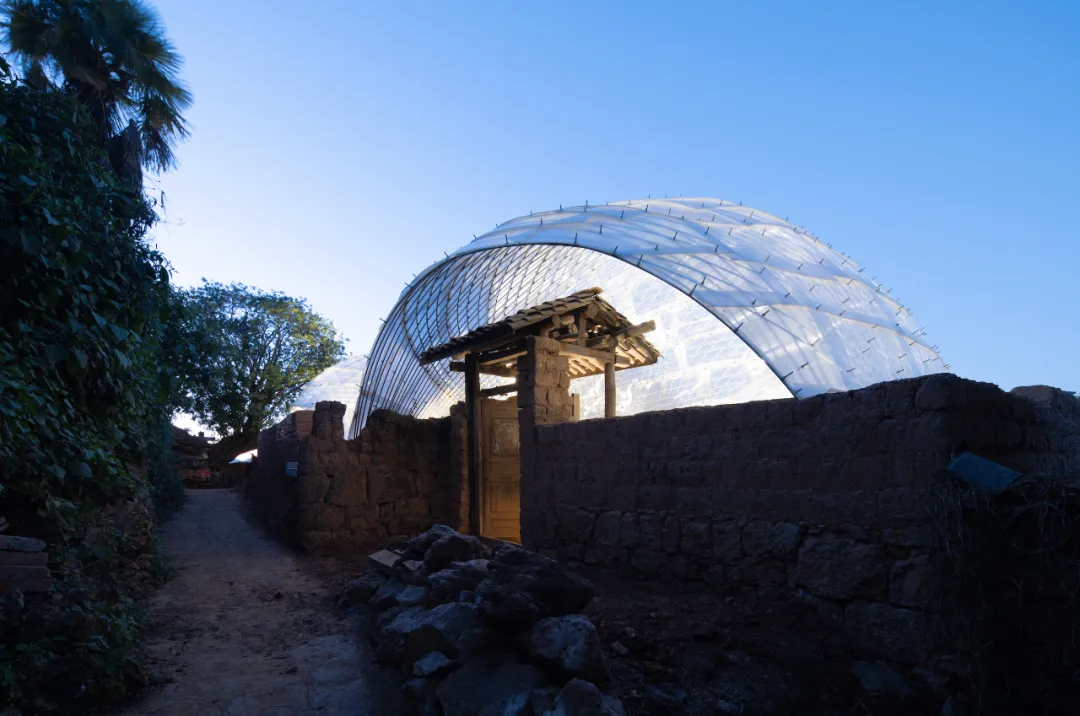
Nguyen Hong Quang: The Phu Lang kiln embodies architectural characteristics that are distinctly Vietnamese, from materiality to formal expression, and is closely associated with traditional wood-firing techniques sustained across generations. The kiln is typically embedded into the terrain or constructed with a deliberate incline, enabling the upward propulsion of heat and flame during the firing process. Its elongated body is subdivided into multiple consecutive chambers, commonly ranging from five to ten, forming a linear configuration that, when viewed from a distance, recalls the image of a reclining dragon. The kiln vault is constructed as a shell-like curved enclosure using refractory bricks, allowing heat to be evenly distributed and efficiently retained.

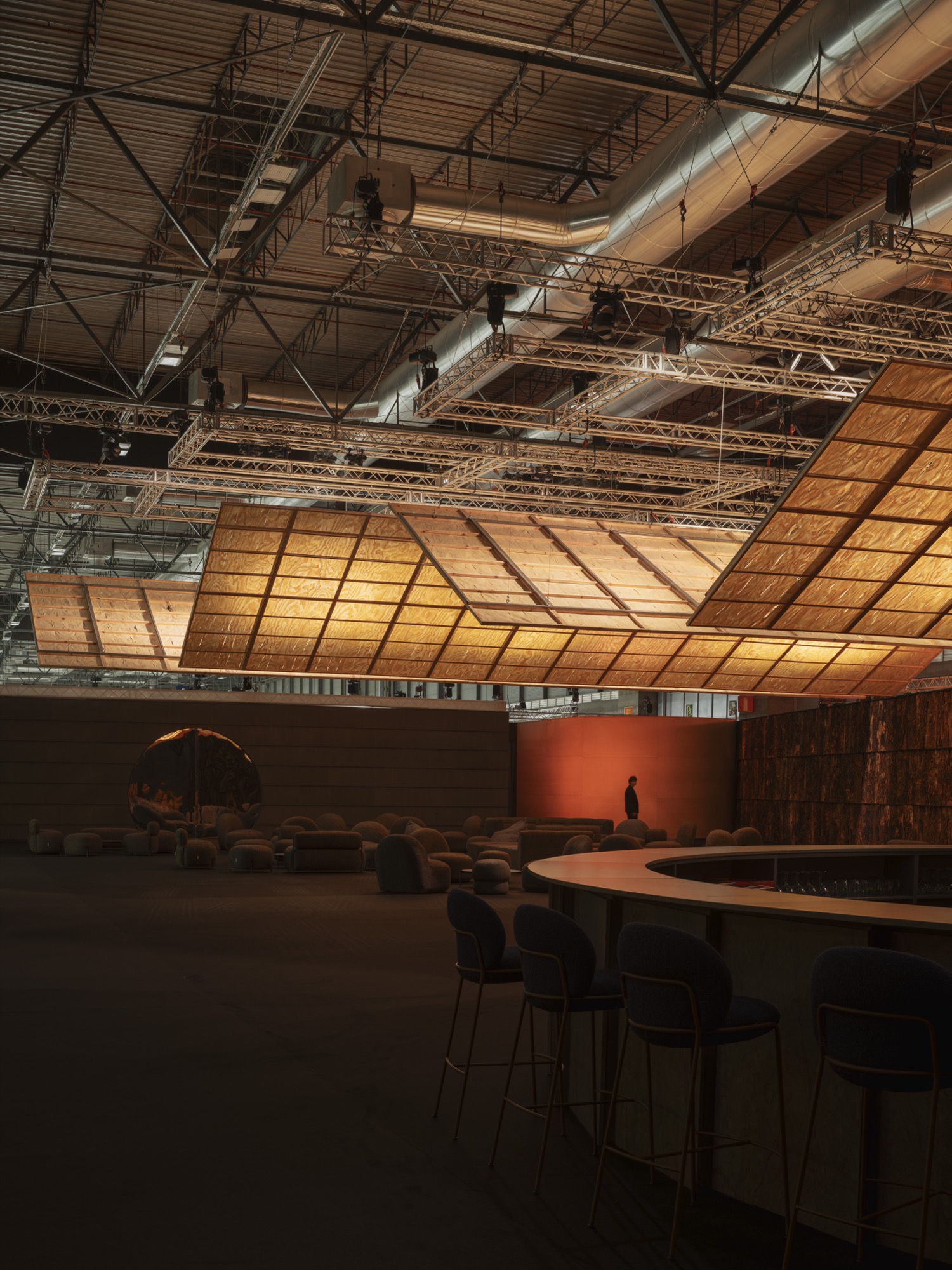
The traditional kilns of Phu Lang constitute a key reference for the Pavilion’s approach to light. Rather than treating the kiln as a purely technical structure, the Pavilion draws from the spatial experience it generates: controlled illumination, dense atmospheric conditions, and a multisensory mode of perception. This approach encourages visitors to slow down, observe attentively, and engage with the subtle transformations of material and space.


What architectural perspectives guided your choice of a restrained interior with black-finished wood panels, and how do they create a neutral backdrop for cultural exchange?
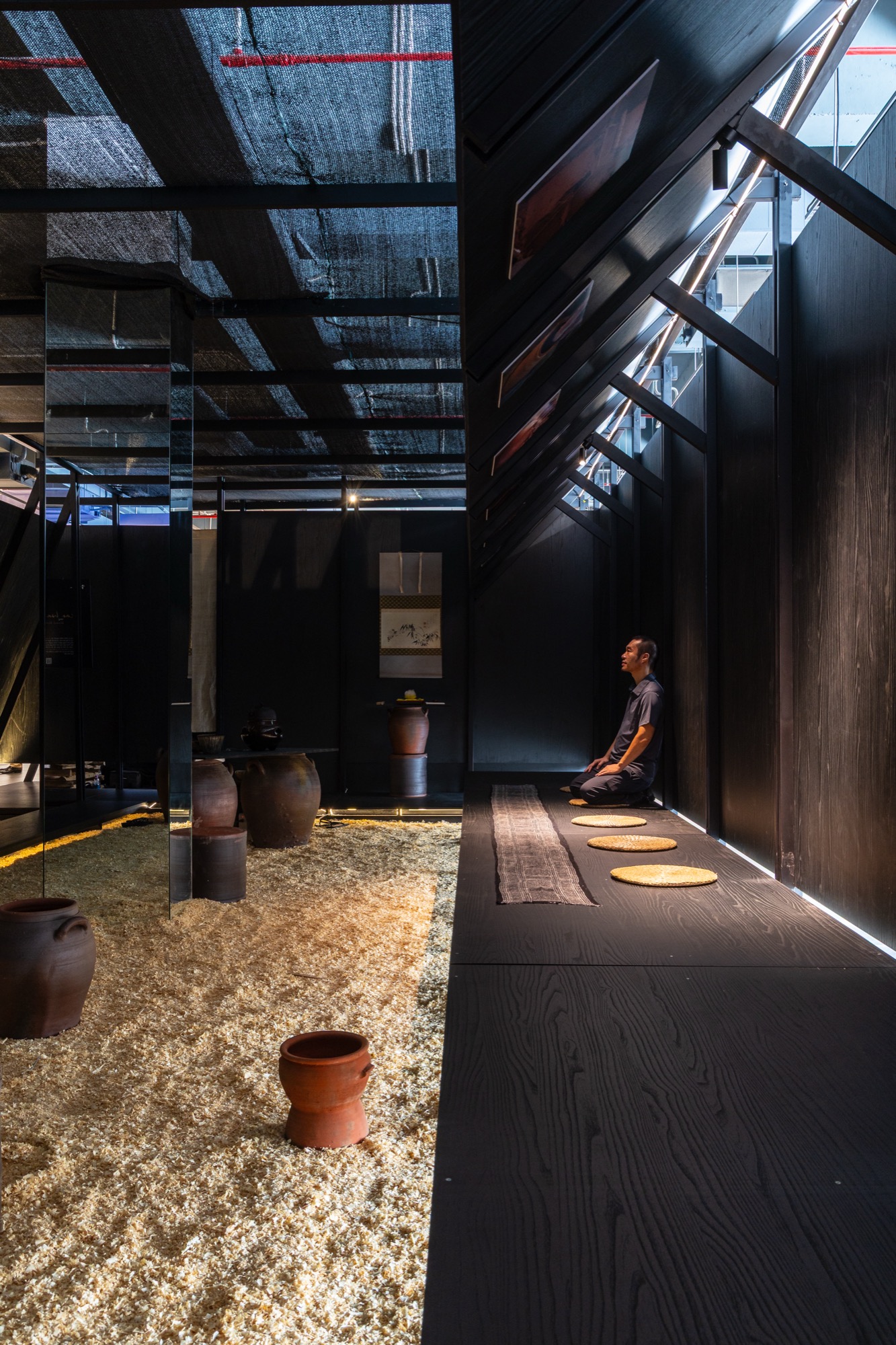
Nguyen Hong Quang: Black is employed as a visual backdrop, causing the spatial structure to recede and allowing light, ceramics, and the gestures of the tea ceremony to become the primary elements guiding the experience.
What challenges did you encounter in recontextualizing everyday Vietnamese ceramic jars and vats as functional elements in Japanese tea ceremonies, and how did you resolve them?
Nguyen Hong Quang: The greatest challenge lies in the differences in ritual conventions and scale of use. Traditional Phu Lang ceramics were typically crafted for everyday life, with large proportions, thick walls, wide openings, and pronounced handmade marks.
Our solution was not to standardize the ceramics. Instead, jars and vessels are redefined in terms of function. The tea ceremony space is designed with greater flexibility, accommodating variations in scale and form. This shift in roles allows Vietnamese ceramics to be present naturally, while still respecting the tea ceremony’s essence as a meditative practice.

In what innovative ways does the design encourage tactile interaction with the ceramics, and what role does this play in bridging the viewer with the artisans’ labor?
Nguyen Hong Quang: The exhibition hall encourages tactile interaction with the ceramics through deliberate spatial and material arrangement. Positioned at the center of the Pavilion and surrounded by circulation paths, the ceramic pieces rest on golden sawdust floors, while black wooden walls enclose the space and beams of light from outside filter in, illuminating the golden base. From here, every viewpoint draws attention to the handmade marks of each ceramic piece on the luminous surface.
This direct engagement connects visitors with the artisans’ labor, allowing them to experience the slow, meditative process of creation, while the architecture guides conscious movement, framing these encounters and shaping the overall experience.


Looking forward, how do you envision the pavilion influencing broader conversations on cultural continuity and slowness in contemporary architecture?
Nguyen Hong Quang: By emphasizing formal reduction and spatial structuring that generates a slow experiential rhythm, the Pavilion functions as an intermediary state, where cultural layers are not nostalgically reenacted but transformed into contemporary experiences, allowing users the opportunity for contemplation and reflection.
In this way, the Pavilion can serve as a small precedent, demonstrating architecture’s potential to engage with long-term cultural flows, rather than merely responding to short-term demands of the market or media.

Article Credit
Text: Kai Nakamura
Photo: Trieu Chien