Now Reading: Oscar Niemeyer from Palazzo Mondadori to the Essence of Brazilian Architecture
- 01
Oscar Niemeyer from Palazzo Mondadori to the Essence of Brazilian Architecture

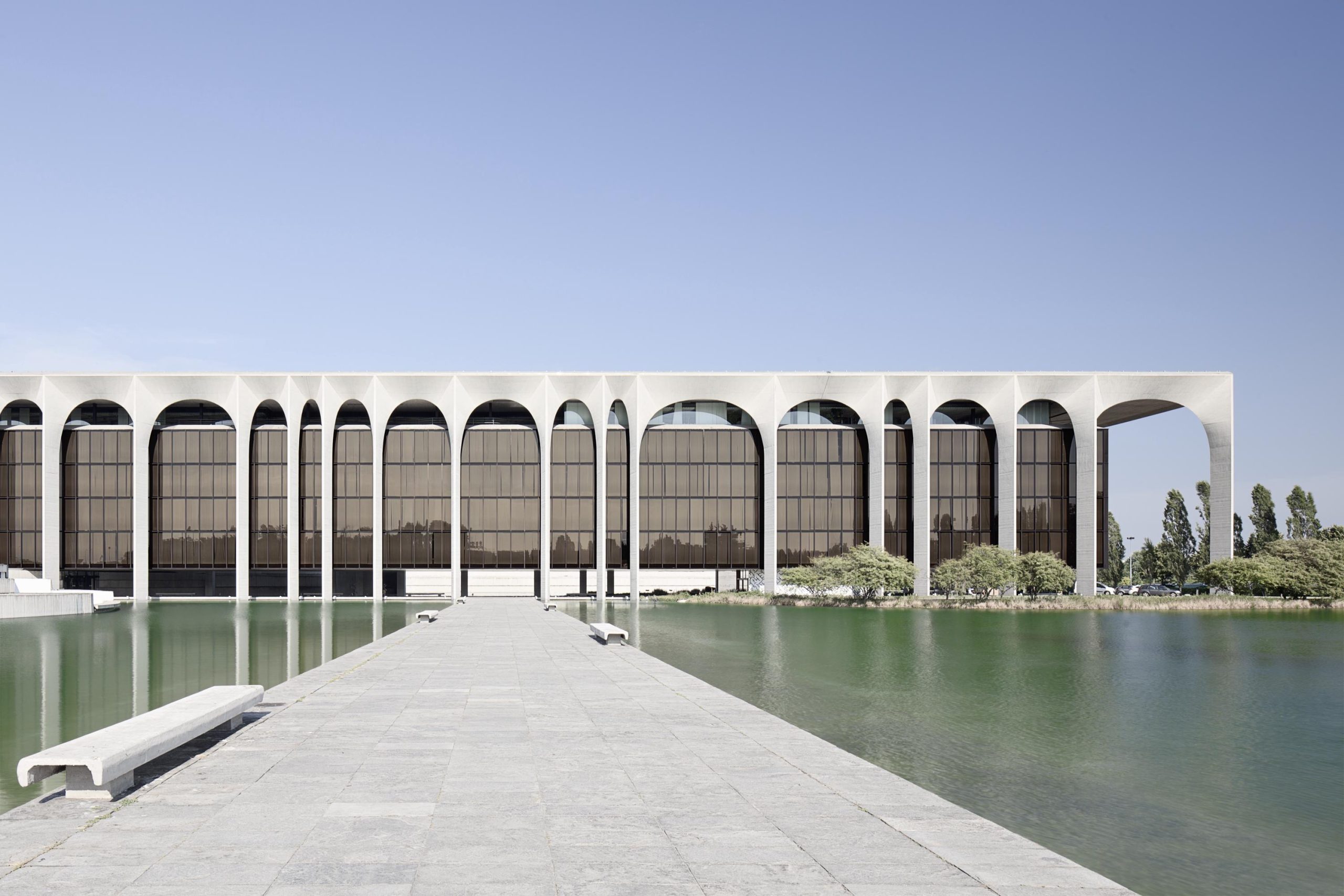

Segrate, a suburb of Milan, late afternoon in late autumn. Pale golden light stretches across the artificial lake designed by Pietro Porcinai. The surface of the water is calm, almost unnaturally still, reflecting the surrounding landscape with deliberate clarity. From a distance, Palazzo Mondadori emerges like an apparition. A vast rectangular glass volume hovers above a sequence of monumental white parabolic concrete arches, touching the ground lightly, almost tentatively, as if preparing to lift off. The arches follow no strict symmetry. Some open wider, others tighten, producing a slow rhythm of compression and release. The building neither asserts itself with classical European gravitas nor submits to the rigid codes of orthodox modernism. It hovers. It breathes. It unsettles.
Completed in 1975, Palazzo Mondadori remains the most lucid and controlled expression of Oscar Niemeyer’s architectural language on European soil. At sixty eight, an age when many architects begin consolidating their legacy into repetition, Niemeyer instead refined his vocabulary with remarkable precision. This was not merely an office building commissioned by a major publishing house. It was a restatement of a position sustained throughout his career. Architecture, for Niemeyer, does not reside in the certainty of the right angle, but in the freedom released by the curve when structure, landscape, and human perception are allowed to interact.
“I am not attracted to straight angles or to the straight line, hard and inflexible, created by man,” Niemeyer once wrote. “I am attracted to free flowing, sensual curves. The curves that I find in the mountains of my country, in the sinuousness of its rivers, in the waves of the ocean, and on the body of the beloved woman.”

This declaration, drawn from his memoirs and reiterated across interviews, was never meant as a decorative slogan. It was a deliberate reframing of modernism itself, articulated from a geographic and cultural distance that allowed its principles to be questioned rather than inherited intact.
ORIGINS OF A LANGUAGE
Oscar Niemeyer Soares Filho was born in Rio de Janeiro in 1907. He arrived at architecture indirectly, graduating from the Escola Nacional de Belas Artes in 1934 after initially working in his father’s typography business. The decisive encounter occurred two years later, when Le Corbusier travelled to Brazil as a consultant for the Ministry of Education and Health building in Rio de Janeiro. Working under Lucio Costa, Niemeyer absorbed the principles of European modernism while quietly testing their elasticity.

The Pampulha complex in Belo Horizonte, commissioned between 1940 and 1943 by the then mayor Juscelino Kubitschek, marked a decisive turning point. The Church of Saint Francis of Assisi, composed almost entirely of continuous concrete curves, announced a new architectural sensibility. Reinforced concrete, previously associated with rational efficiency and industrial discipline, became elastic, expressive, and deliberately sensual. Structure ceased to be hidden logic and instead became visible gesture.

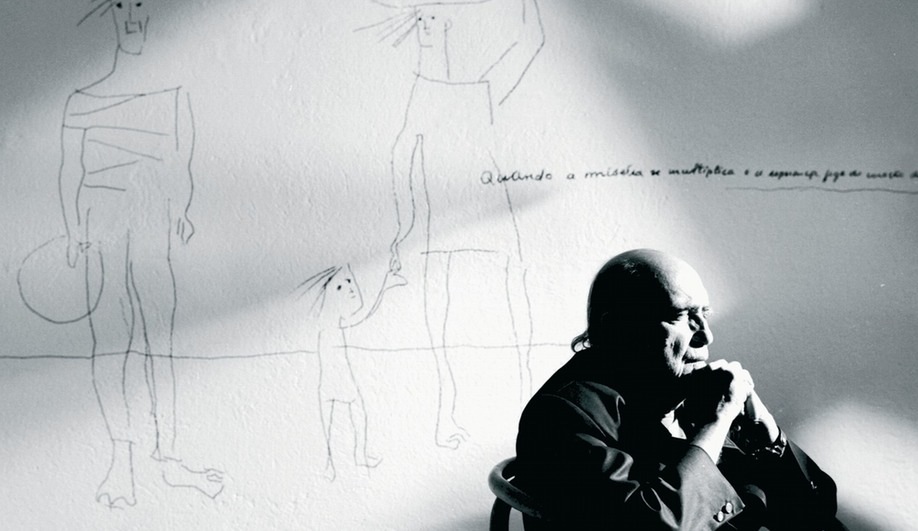
Where Le Corbusier pursued order, modularity, and the discipline of the machine, Niemeyer pursued freedom and pleasure. “Form follows feminine,” he famously wrote in his Copacabana studio, a provocation that condensed his rejection of moral austerity in modern architecture. His design method reinforced this stance. Niemeyer sketched rapidly and intuitively, trusting an internal dialogue shaped by memory, landscape, and desire. Structural resolution followed later, entrusted to engineers tasked with translating intuition into stability, often under considerable strain.
CONCRETE AS A POETIC INSTRUMENT
Across his long career, Niemeyer’s architecture relied on a limited yet precise set of operations, repeated with variation and refinement.
First was suspension. Buildings are frequently lifted from the ground, resting on pilotis or parabolic supports that reduce their apparent weight and allow space, air, and landscape to flow beneath. Architecture touches the earth lightly before rising away from it. At Palazzo Mondadori, the entire office volume is elevated above the water, its mass countered by the elegance and rhythm of the arches below. The act of lifting is not merely structural but symbolic, transforming gravity into visible tension rather than burden.
Second was the curve itself, not as ornament but as structure. Niemeyer favoured parabolic and hyperbolic forms pushed close to their limits of equilibrium. These curves do not seek efficiency alone. They seek a moment of instability, a sense that the building is constantly negotiating its own balance. White concrete surfaces, smooth and continuous, reinforce the impression of an architecture shaped by gesture rather than assembly.
Third was landscape. Niemeyer rarely conceived buildings as autonomous objects. Water, vegetation, sky, and horizon were integral to the architectural composition. At Segrate, Porcinai’s lake reflects the arches, softening their monumentality while amplifying their presence. The building exists not as an isolated form but as part of a carefully calibrated environmental sequence.
Finally, there was joy. Niemeyer consistently rejected functionalism as an end in itself. Architecture, for him, was a public art capable of offering dignity and delight beyond utility. This conviction aligned with his lifelong political commitments. A committed communist awarded the Lenin Peace Prize in 1963, Niemeyer went into exile in Paris after Brazil’s military coup in 1964, continuing to design across Europe, Africa, and the Middle East.
FROM BRASILIA TO SEGRATE
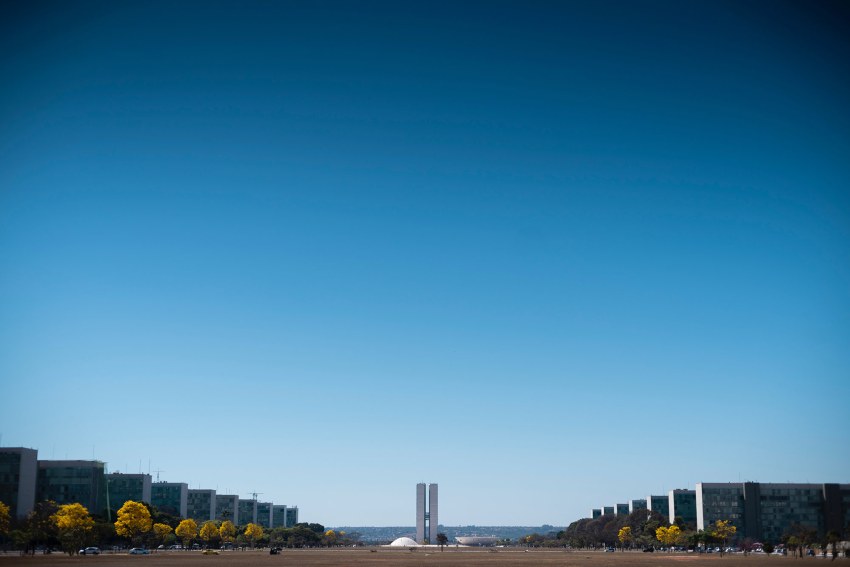
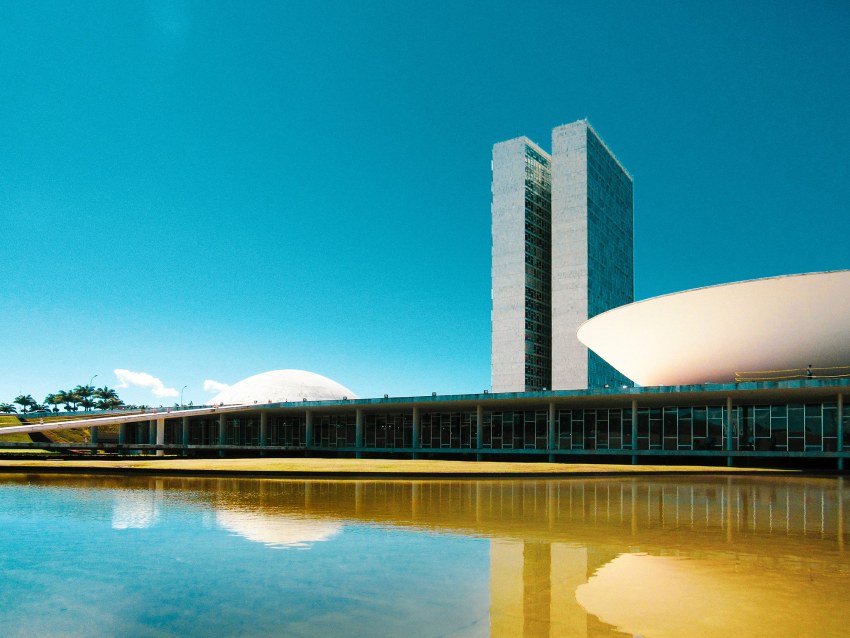
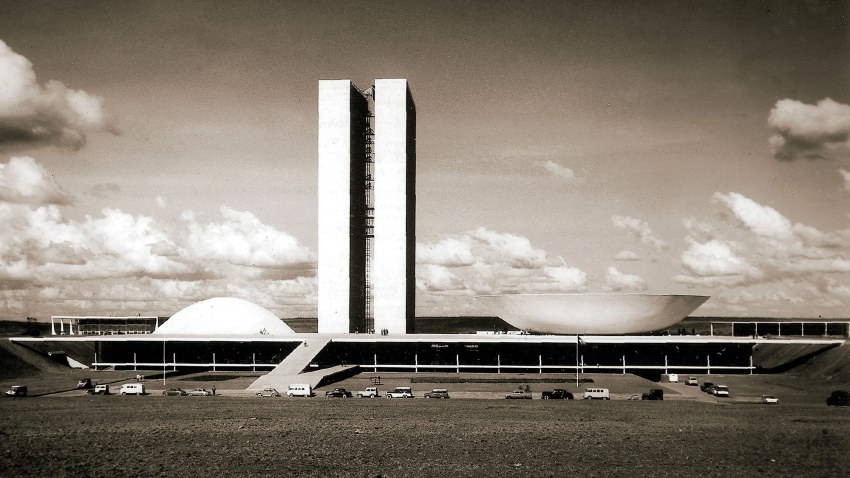
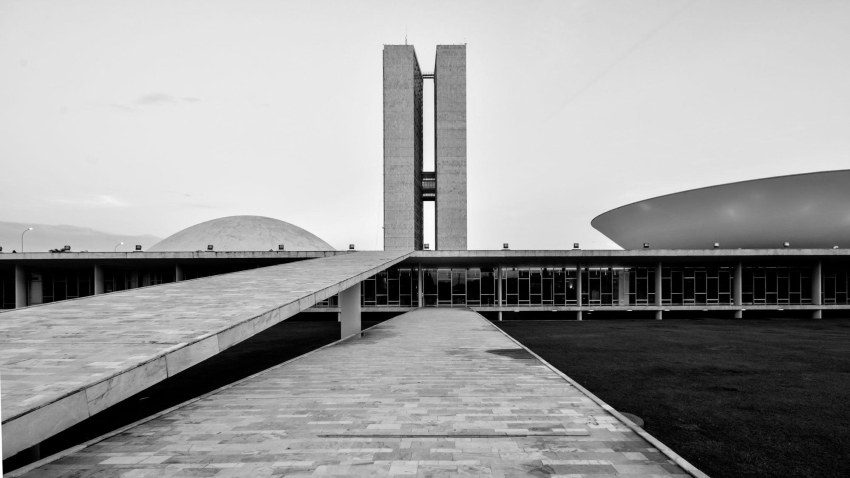
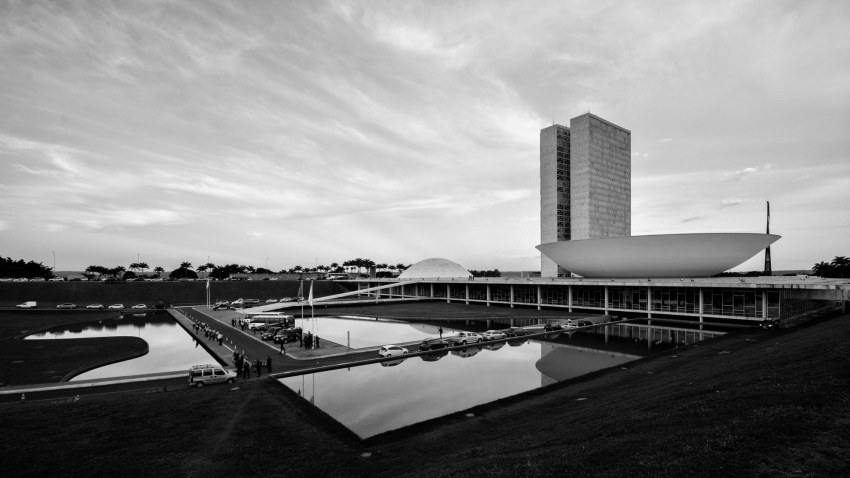
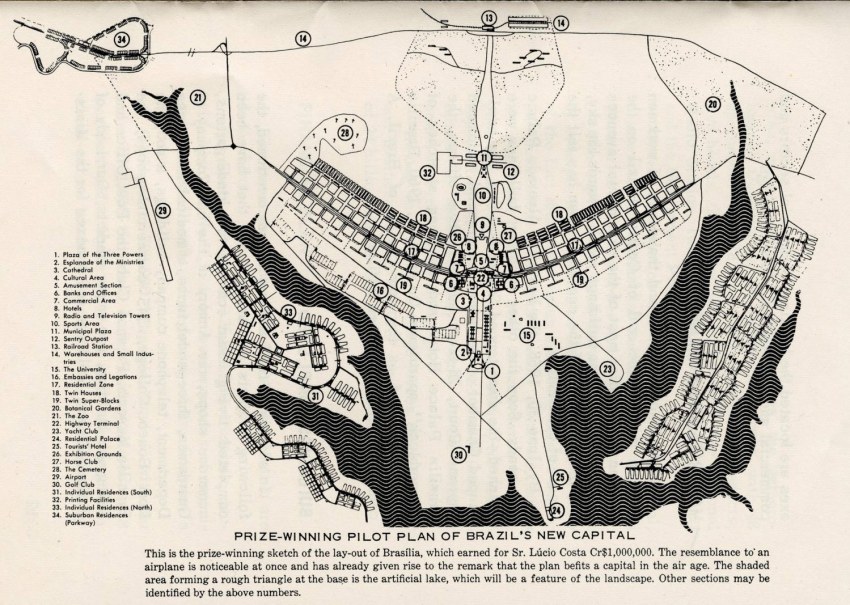
Brasilia, constructed between 1956 and 1960, remains Niemeyer’s most ambitious undertaking. Working with Lucio Costa, he designed the principal civic buildings of a capital created from nothing. The Palácio da Alvorada, the National Congress, and the cathedral translated his language of curves and suspension into a monumental civic scale. Yet Brasilia also revealed the tensions inherent in his work. While visually powerful, the city struggled to accommodate everyday life, exposing the distance between architectural clarity and social complexity. Monumentality, in this context, risked becoming estrangement.

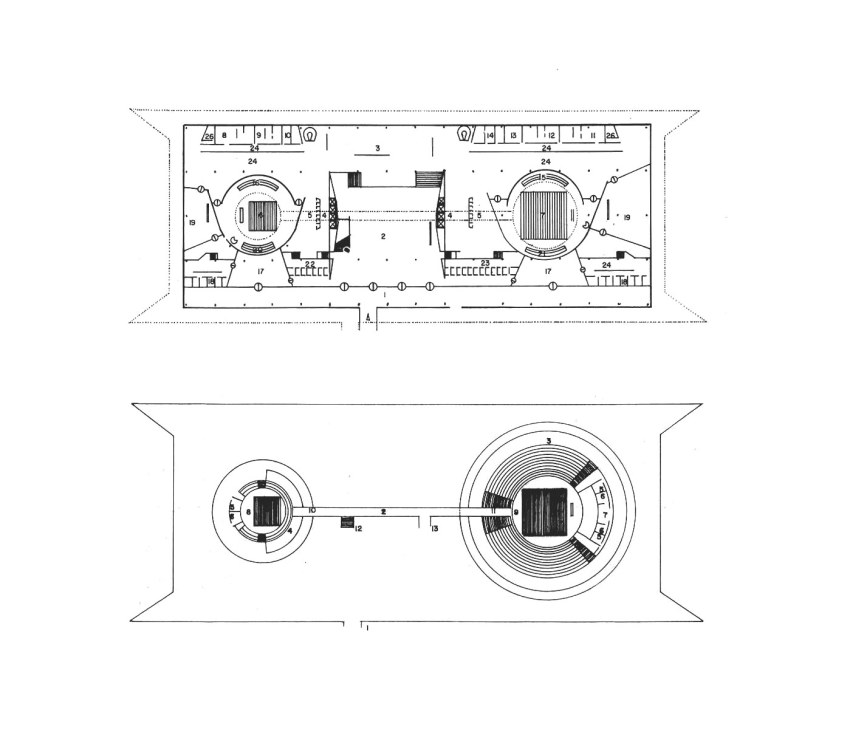
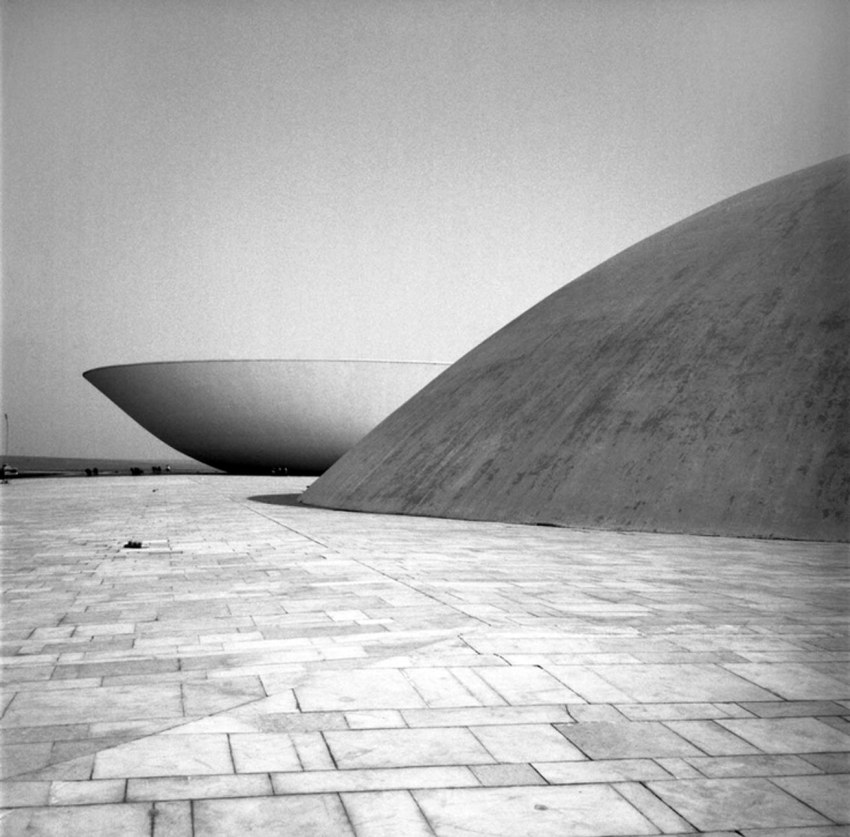
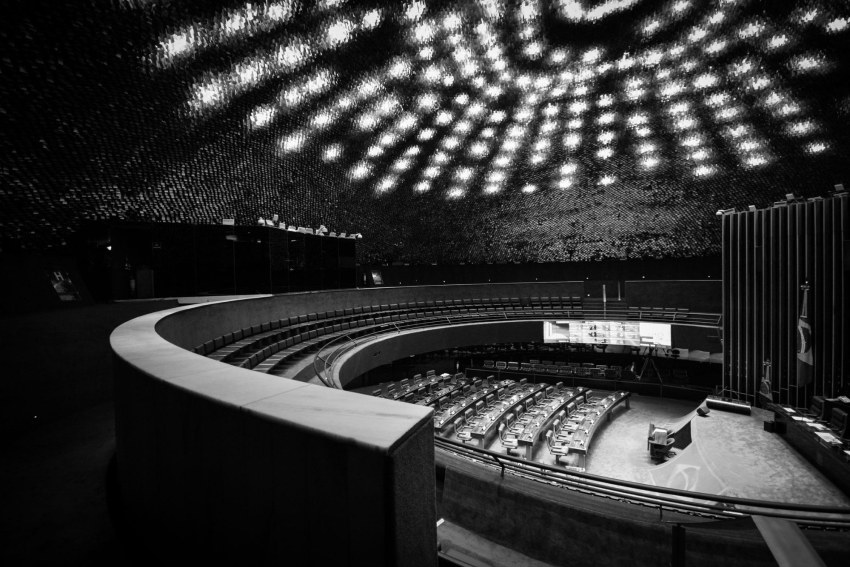
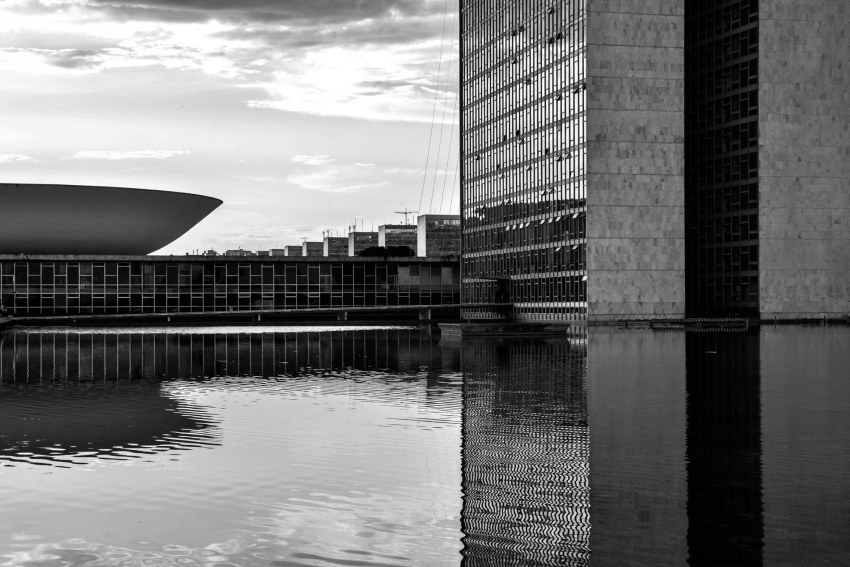
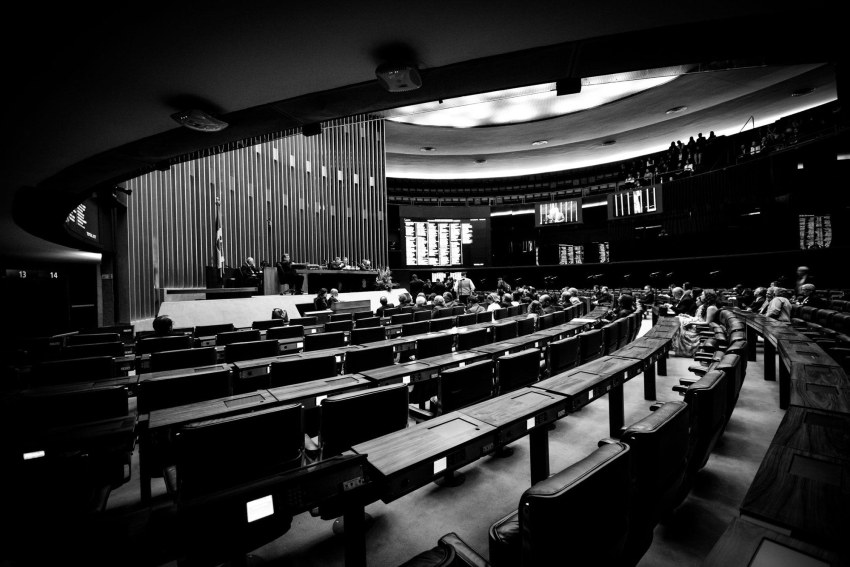
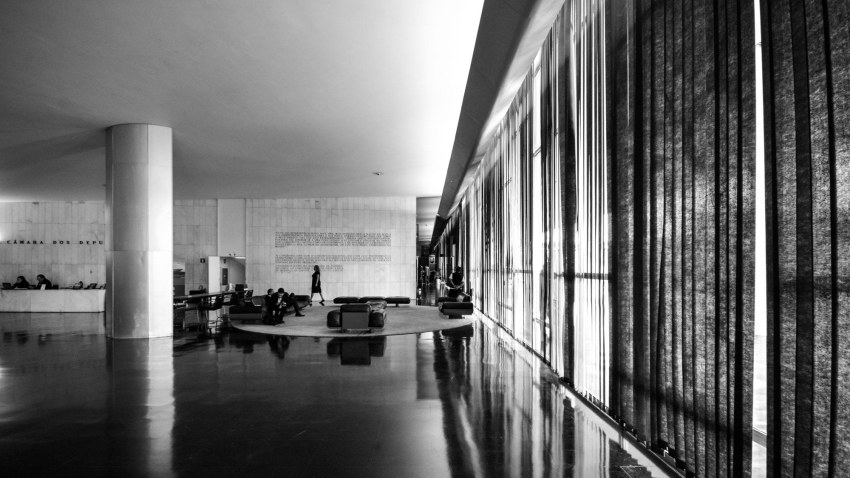
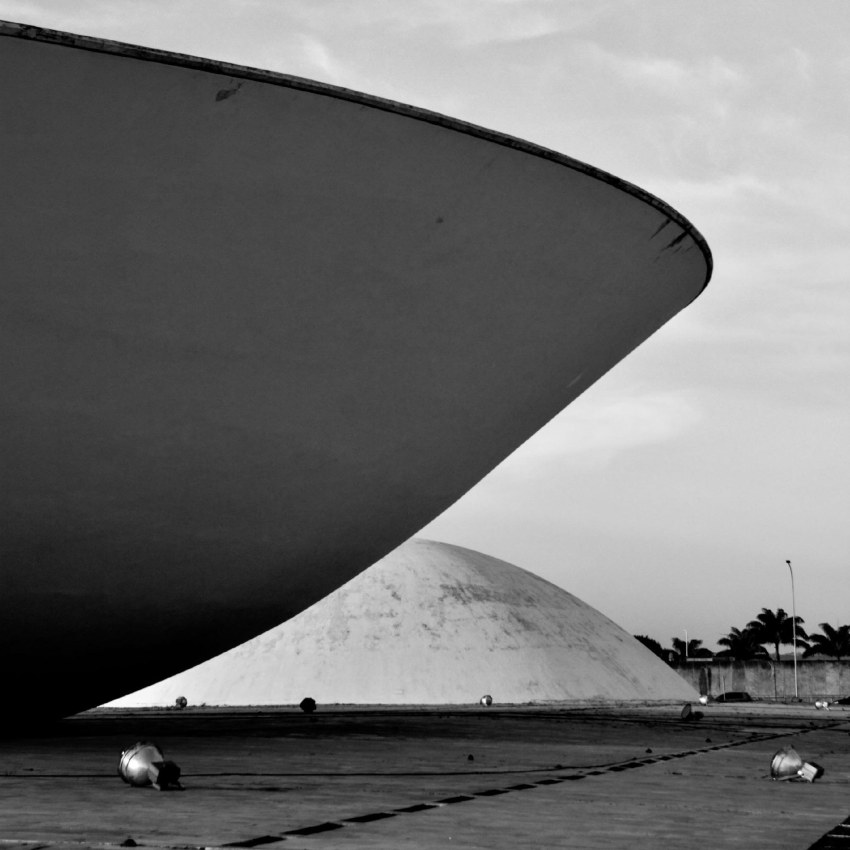
Exile in Europe offered a different architectural terrain. In Paris, Niemeyer designed the headquarters of the French Communist Party between 1965 and 1971, defined by its low profile dome and subterranean spaces. Authority was expressed not through vertical dominance but through controlled horizontality. Shortly after, he began work on Palazzo Mondadori. Here, corporate architecture became a testing ground. Rather than reinforcing hierarchy through mass and solidity, Niemeyer destabilised it. Elevation, rhythm, and reflection replaced heaviness and control.
If Brasilia was the architecture of conviction, Palazzo Mondadori is the architecture of precision. The curves are measured, their asymmetry deliberate. Movement replaces symmetry. Lightness counters authority. The building is fully aware of its European corporate context, yet quietly resistant to its conventions.
LATE WORKS AND CONTINUITIES
Niemeyer’s productivity never diminished. The Museum of Contemporary Art in Niteroi, completed in 1996, rises above Guanabara Bay like a hovering vessel, reiterating his fascination with suspension and horizon. The Oscar Niemeyer Museum in Curitiba, opened in 2002, transforms an institutional structure into a sculptural presence. Even in his final years, projects such as the International Cultural Centre in Aviles, completed in 2011 when he was 104, demonstrate an undiminished commitment to formal experimentation.

Recent renovations of Palazzo Mondadori confirm the resilience of Niemeyer’s architecture. The building has adapted to contemporary use without sacrificing its original spatial logic. This capacity for renewal reinforces the idea that his work is not a relic of postwar optimism but a living architectural proposition capable of absorbing change.

The Curve as Resistance
Oscar Niemeyer died in 2012, just days before his 105th birthday. Yet his architecture continues to resonate, particularly in an era dominated by digital optimisation and algorithmic complexity. His curves, drawn by hand and resolved through intuition, stand in quiet opposition to systems that prioritise calculation over experience.

At Segrate, as evening settles over the lake, Palazzo Mondadori catches the final light. The glass volume glows briefly, the arches reflected below. The building neither declares nor explains itself. It simply holds its position, suspended between ground and sky, reason and emotion. It is, ultimately, a single line drawn with confidence. A curve that continues to bend modernism toward a more human horizon.
Photo Cover
Palazzo Mondadori at golden hour: the floating glass volume and rhythmic parabolic arches reflected in Pietro Porcinai’s lake. Credit: Davide Galli / Divisare