Now Reading: OMA’s Mushroom Pavilion Opens at Casa Wabi in Puerto Escondido
- 01
OMA’s Mushroom Pavilion Opens at Casa Wabi in Puerto Escondido


A PAVILION FOR CULTIVATION AND COMMUNITY
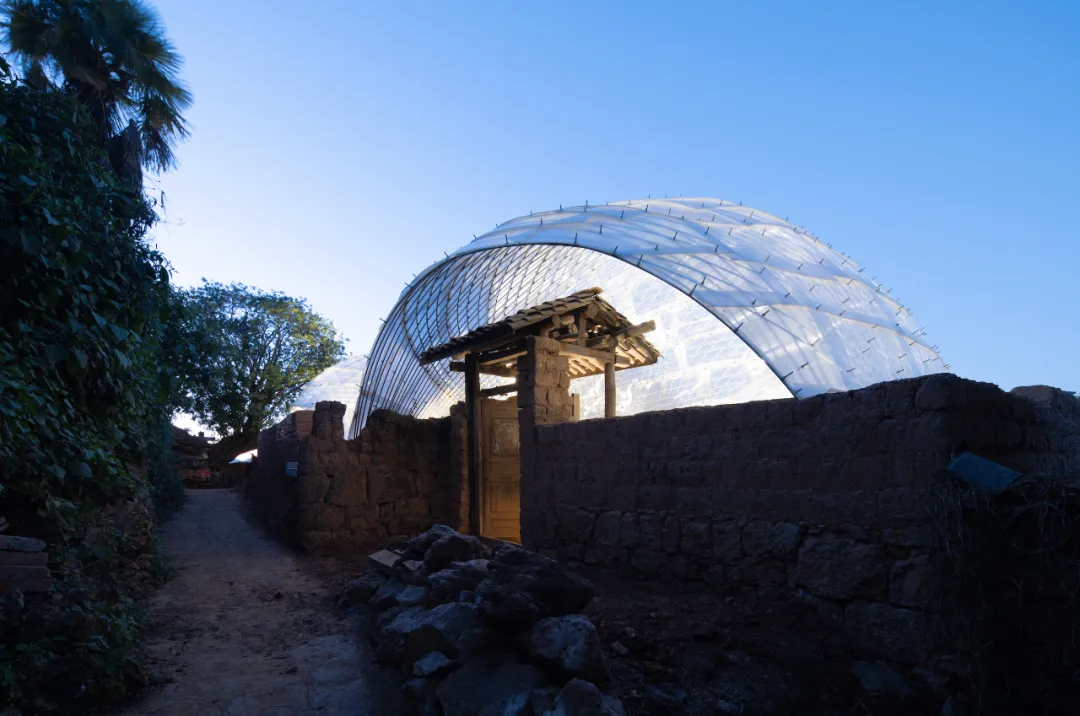
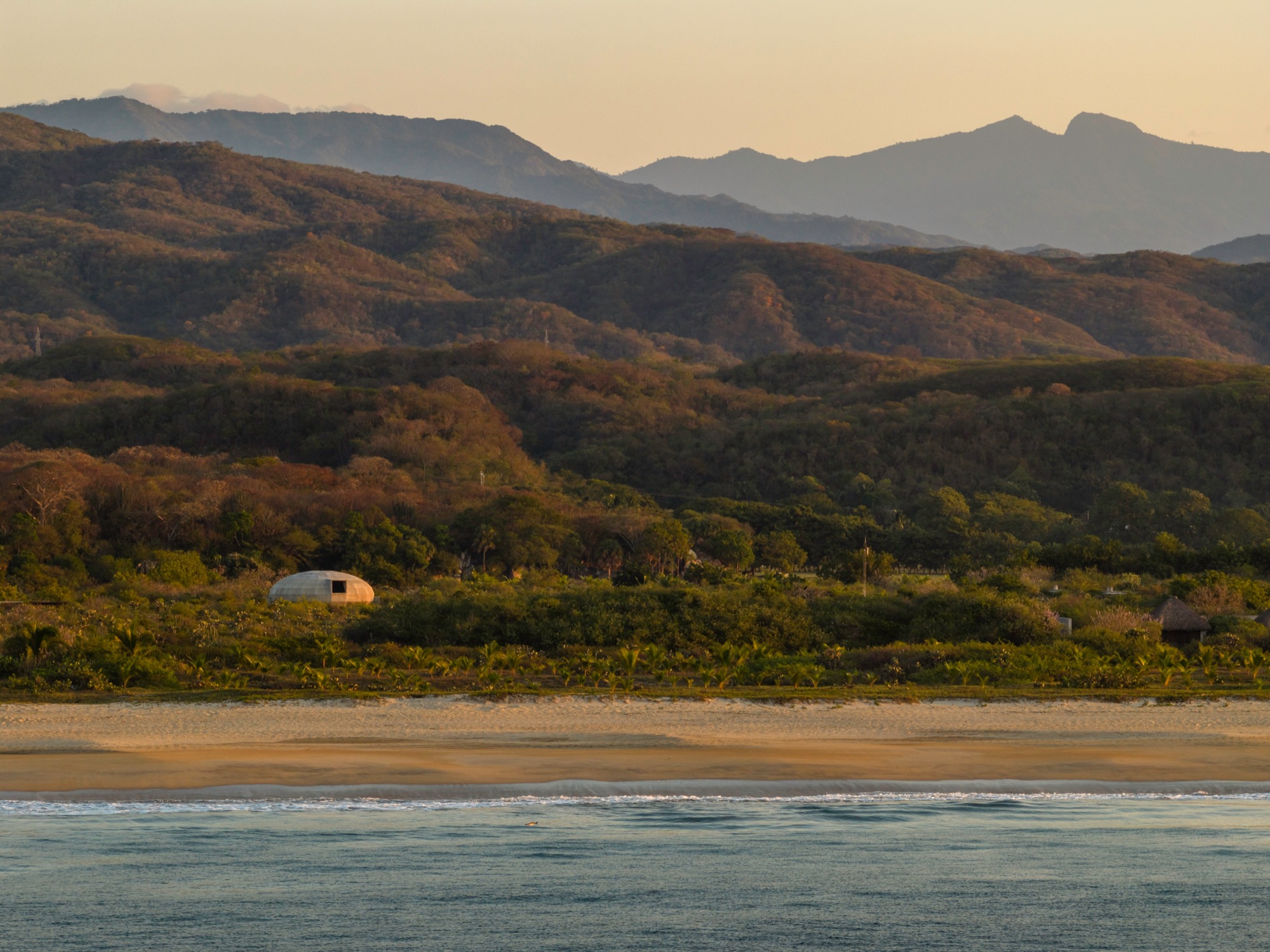
Set within the coastal landscape of Oaxaca, the Mushroom Pavilion by OMA has opened at Fundación Casa Wabi in Puerto Escondido, Mexico. Conceived as both an agricultural facility and a gathering space, the pavilion expands the art foundation’s network of cultural and community programs. Founded by Mexican artist Bosco Sodi, Casa Wabi occupies a vast natural site stretching between the Sierra Madre mountains and the Pacific coast. Within this environment, the new structure introduces a spatial platform where food cultivation, art, and community engagement converge.

The project marks OMA’s first completed building in Mexico. Led by OMA partner Shohei Shigematsu alongside project architects Shary Tawil and Caroline Corbett, the pavilion reflects an architectural approach that merges functional precision with environmental sensitivity. Its presence on the 65-acre campus reinforces Casa Wabi’s ongoing exploration of the relationship between art, nature, and local craft traditions.

ARCHITECTURE ORGANIZED AROUND MUSHROOM CULTIVATION
The pavilion takes the form of a simple ellipsoidal volume, its geometry carefully calibrated to support the cultivation of mushrooms. Inside, the domed interior is organised into three operational zones dedicated to fruiting, incubation, and storage. These chambers surround a central gathering space that acts as the spatial and social core of the structure.

The lower half of the pavilion is stepped in a circular amphitheatre formation. Rather than functioning as seating, the stepped terraces accommodate shelves for handmade terracotta mushroom pots produced by local artisans. This arrangement transforms the cultivation process into a collective spectacle. Visitors and workers alike can observe the entire cycle of mushroom growth from multiple vantage points, creating a panoptic spatial experience that merges production and exhibition.

LIGHT, VENTILATION AND LANDSCAPE
At the centre of the dome, a circular oculus opens the pavilion to the sky. Natural light pours into the cave-like interior, illuminating the cultivation chambers while establishing a direct relationship between interior and atmosphere. Additional openings around the perimeter provide cross ventilation, allowing air to circulate naturally through the space.

At the top of the stepped terraces, a viewing platform and portal frame views across the surrounding vegetation towards the Pacific Ocean. The pavilion’s three-dimensional form curves inward at its base, reducing the building’s contact with the ground. This gesture preserves the natural terrain and allows native guayacán trees to continue growing around the structure.


CONCRETE, TIME AND MATERIAL TRANSFORMATION
Constructed from poured-in-place concrete, the pavilion is finished with a burlap-stamped exterior texture. The material choice responds to the mineral conditions of the site, particularly the region’s iron-rich water. Over time the surface will oxidise, gradually changing colour as it reacts with the surrounding environment.

Rather than resisting these transformations, the architecture embraces them. The pavilion is designed to weather, rust and evolve visually, allowing time and climate to become part of the building’s material narrative.


AN INCUBATOR OF FOOD AND SOCIAL EXCHANGE
For Shohei Shigematsu, the project represents an opportunity to merge architectural experimentation with a program rooted in community life.
According to Shigematsu, the pavilion was conceived as a space dedicated to mushroom cultivation while also functioning as a social incubator where local residents, visitors and artists can gather. The architecture supports agricultural production but equally enables educational workshops, communal events and cultural exchange.

For the Japanese architect, contributing to Casa Wabi also carried symbolic significance. The art foundation is deeply influenced by Japanese philosophy, and the pavilion extends this dialogue through spatial clarity, material honesty and a close relationship with landscape.

Through its hybrid program and sculptural form, the Mushroom Pavilion expands Casa Wabi’s ongoing exploration of art, craft and ecological awareness. Positioned between forest and ocean, it operates simultaneously as agricultural infrastructure, architectural landmark and community catalyst.


Project Credit
Project name: Casa wabi mushroom pavilion
Location: Puerto Escondido, Oaxaca, Mexico
Site: Located within the 25-hectares site of Casa Wabi on the Pacific coast
Program: Pavilion 200 sm 2,153 sf
Design firm: OMA / @oma.eu
Partner-in-Charge: Shohei Shigematsu / @shohei_shigematsu
Photo: Rafael Gamo / @rafaelgamo
Concept diagrams, model photos, and drawings: OMA

More Photos